Social structures and social identities
Sociology can be thought of as containing theories of the structure of society and theories of the social construction of individuals and individual identity.
Most major theories of sociology include both.
In these lectures I will be looking at how theorists imagine the structure of society and how they relate their big vision of the whole to their theories of the social interactions that create our personal identities as individuals.
The theorists I discuss include Karl Marx and Friederich Engels (who lived in the 19th century), Emile Durkheim (who died in 1917), Talcott Parsons, who was the major sociology theorist of the mid-twentieth century, and Pierre Bourdieu, who died in 2002,
Other theorists who enter the discussion are William Shakespeare, Jean Jacques Rousseau, Mary Wollstonecraft, John Stuart Mill, whose ideas partly reflect those of his partner, Harriet Taylor, Jean Piaget, Shulamith Firestone, James Fulcher and John Scott, some pre-historic picture theorists, and an anonymous working class folk song. I have also used the theories of Middlesex University students who have studied these subjects.
In relation to education, class and social structure, I discuss the theories of Julienne Ford and concepts she argued over in correspondence with Cyril Burt. This correspondence took place in 1970, one year before Burt died, when Julie Ford was in her mid twenties.
The web page is divided into lectures on:
Socialisation - identity - and interaction
| Sex - Gender - Sexuality | Related terms |
| Education | Related terms |
| Inequality - Poverty - Wealth | Related terms |
| Work, Employment and Leisure | Related terms |
| Stratification, Class, Status | Related terms |
We will begin each lecture by discussing the meaning and use of its main terms in relation to Britain today. We will do this by looking at a report published in 2010 called "How Fair is Britain?"


dictionary
Ideas Systems and Academic Theories
Becks
Bourdieu
Durkheim
Engels
Gramsci
Marx and Engels
Mill
Parsons
Socialisation - identity - and interaction
|
How fair is
Britain?
The bulk of the 2010 "How Fair is Britain?" review is a collection of "data about the chances, choices and outcomes in life of different groups of people. It considers the experience of groups of people who share common characteristics in terms of:
All these characteristics relate to the identity of groups and individuals. The data in the Review relate to activities across different areas: All these areas can be related to aspects of the social structure of Britain. |
Structure one: Marx and
Engels
In simplified diagrammatic form, Marx and Engels argued that society can be
divided into a material base (foundations) and a structure built on top of
that (superstructure).
| SUPERSTRUCTURE |
| MATERIAL BASE = PRODUCTION AND REPRODUCTION |
The superstructure consists of everything else apart from production and reproduction: including law, the state and human consciousness.
Production means making things. Marx and Engels wrote about modes of production. These are different ways in which society can be structured to create what it needs to exist.
We may think of this as different ways of organising the economy. Theorists such as Marx and Engels and John Stuart Mill thought that economics is basic to understanding society. We call this approach to sociology political economy. Marx and Engels called their particular version historical materialism
In 1846, Marx and Engels wrote
" The first premise of all human history is, of course, the existence of living human individuals. Thus the first fact to be established is the physical organisation of these individuals and their consequent relation to the rest of nature. "
" Men... begin to distinguish themselves from animals as soon as they begin to produce their means of subsistence,.. "
" This mode of production must not be considered simply as being the production of the physical existence of the individuals. Rather it is a definite form of activity of these individuals, a definite form of expressing their life, a definite mode of life on their part. As individuals express their life, so they are. "
In the 19th and century, and for much of the twentieth century, men in the
western world tended to find their identity in their role in production.
One of my grandfathers, for example, was a copper-smith in a factory that
made
railway engines. It was his position in life. He wore blue
overalls
that smelt of burnt copper, wore a cloth cap like all the other working
class men, read the Daily Herald newspaper and was an officer in his
Trade Union. When he went on holiday, it was to the local seaside that
everyone else went to, wearing a suit and bowler hat for the special
occasion.
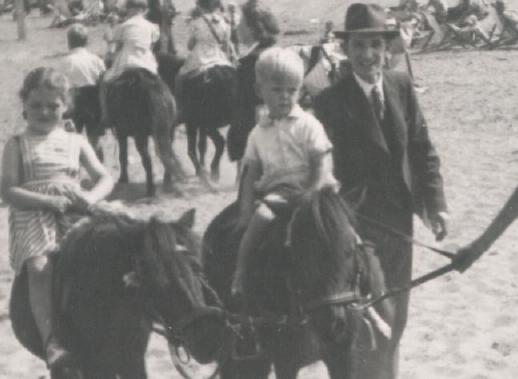
The little boy on the donkey is me, Which brings us to the question of
Reproduction means making more people to take over production. Production means creating the means of existence (the economy) reproduction is used for re-creating the human beings who make the society. This re-creation is not simply biological, it includes the whole process of education (socialisation) through the family and the education system.
Engels, in 1884, wrote (my emphasis)
"According to the materialistic conception, the determining factor in history is, in the final instance, the production and reproduction of the immediate essentials of life. This, again, is of a twofold character. On the one side, the production of the means of existence, of articles of food and clothing, dwellings, and of the tools necessary for that production; on the other side, the production of human beings themselves, the propagation of the species. The social organisation under which the people of a particular historical epoch and a particular country live is determined by both kinds of production: by the stage of development of labour on the one hand and of the family on the other.""
In the 19th and century, and for much of the twentieth century, women in the western world tended to find their identity in their role in re- production.
|
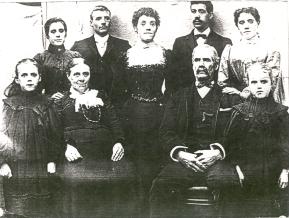
Mary Jane Urmston was born in Lancashire in 1854. In 1874 (aged 19) she married John McKenzie (aged 21) who became a "boiler stoker" and "locomotive driver at the Pearson and Knowles Coal and Iron Co. Ltd". Mr McKenzie believed in his wife not knowing what he earned. They had 12 children, of whom 5 were buried before they were two years old. The youngest (my grandmother) was born in 1894. |
Consumption means eating things, using things, buying things. Commodities are things we buy or sell. Marx wrote that commodities are the distinguishing feature of capitalist societies. He argued that they blind us to the real nature of the social structures that make us what we are. This idea is developed by Zygmunt Bauman in many of his writings. He argues that, in the second half of the twentieth century, the western world became on in which people find their identity in commodities.
The Penguin Dictionary of Sociology says
"Socialisation may be divided into three stages: the primary stage involves the socialisation of the young child in the family; the secondary stage involves the school; and the third stage is adult socialisation, when actors enter roles for which primary and secondary socialisation may not have prepared them fully (for example, becoming an employee, a husband or wife, a parent)"
Emile Durkheim in Moral Education on the sociology of education.
This diagram of Durkheim's ideas, drawn by Dina Ibrahim, shows how, at one and the same time:
|
In the first stage of childhood, the child's mind is developed within the family until it has the intellectual foundations to go to school. The family develops the child's consciousness of self and self-confidence. In the second stage of childhood, the child goes to school. Here, he or she is not a "special" family member, but learns to be part of a group of equals and to play the game according to general rules. It is the foundation in morality that is necessary for wider society. Durkheim's ideas on family, school and society were developed further by Jean Piaget and Talcott Parsons. |
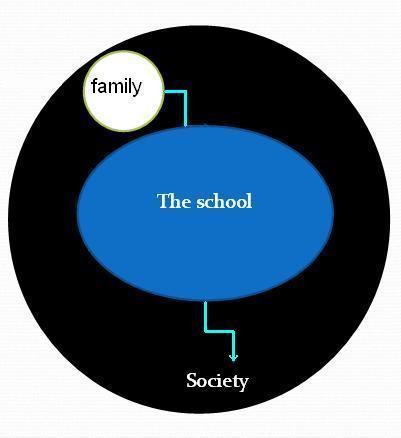
There are things that interaction in the family can do that school and wider society cannot do. There are things that interaction at school can do that the family and wider society cannot do. There are things that interaction in the wider can do that the family and school cannot do. Durkheim invites us to think about what these things are. |
Identity 1: Woman
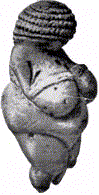
|
"We thought the figure represented a woman of some kind a because of her voluptuous figure which was full and well rounded. Due to the shape and size of the figure, we identified it as being a fertility symbol and some of us felt that it could be a nursing mother that is also linked to fertility. She has no face." (Middlesex University students, February 2000) |
Identity 2: Scholar

|
"We thought this represented the face of a man. Was he a king or a scholar?
Our reason for thinking he might be one of these was that the shape of the
face was quite elongated with a high forehead that gave the impression of
some one quite learned. What was most interesting was that we all presumed
that the face was a man and not a woman." (Middlesex University students,
February 2000)
These images are pre-historic. They are before history and so before "western thought". Diana Coole argues that, in "western thought" "the female principle, and all it represents - nature, flesh, appetite - is to be subordinated to that of the male, signifying culture, spirit and reason." |
Interaction and social structure
If we model our ideas on those of
Jean Jacques Rousseau
we can divide human interaction into voluntary interaction and forced
interaction. Emile Durkheim, who in many ways followed Rousseau, makes a
similar division. He argues that there are
divisions of labour in society that are established by voluntary
interaction and forced divisions of labour.
Here is an example of forced interaction

|
A forced contract: "Be my slave or I will blow your brains out" |
|---|
Rousseau argued that real human society requires consent and has to be based on reason.
John Stuart Mill argues that
About Gender
the 2010 "How Fair is Britain?" review says that:
As
we have seen in discussin John Stuart
Mill, law used to
prevent women from being equal with men. It prevented women from having the
same rights in marriage, the same education and employment opportunities
and the same political rights as men. In the mid-19th century, being a
woman would mean you could not
go to
university, could not work as a doctor or lawyer, and
could not vote.
About
Sexual Orientation the 2010 "How Fair
is Britain?" review says that:
Theory - Gender and social structure
In these lectures on social structures and social identities, we are
looking
1) How theorists imagine the structure of society and
2) how they relate structure to the social
interactions that create our personal identities as individuals.
Two concepts that help us to relate identity to social structure are
role and
socialisation
In 1959 Talcott
Parsons wrote
About one in a hundred babies have mixed features, but 99% of babies are
clearly a boy or a girl.
Every baby has a different
personality and some of these differences may
relate to his or her physical identity as a boy or a girl. However, on the
basis of this underlying physical difference, socialisation creates
sex roles
(gender roles).
The little girl and boy on the seaside ponies are
distinguished by their clothes and by their hairstyle, for example. She
wears a dress and has long hair tied by a ribbon, whilst he has short hair,
a shirt and short trousers.
Sex-roles decided in
primary socialisation in the
family
Parsons argues that human desires (motivations) are not simply
biological,
but are produced by the interaction of biology and social experience. That
is, our biological needs are given shape by
socialisation. All societies
need to
motivate people to perform their
roles. In the
social system as a
whole, this is done by the family and by socialisation.
The family establishes
"certain foundations" of what the child will want
out of life. But,
according to
Parsons, the only way in which children are
irretrievably made "different" in the family is in sex role. By the time
school starts, children have learnt to be boys and girls, and which they
are is
"stamped" on their personality.
School directs children to their future
As far as I know, Parsons doe not discuss girls in school. He did make
a
study of boys in school and, from this, he argued that the early
school
largely decides what the child's future status in life will be.
I am going to speculate that he would have argued that the school also
decided (at
that stage in American history) that the future of most little
girls would be as wives, housewives and mothers.
As a child develops, biological differences develop that differentiate
girls
and boys much more than when they were small children. (See
Shakespeare's
Seven ages of man Age three
the
lover)
Back in the
18th century
Jean Jacques Rousseau wrote a
guide to educating children that argued that boys and girls
should have the same education until their bodies began to alter at
adolescence. From then on, the boy should be educated as a citizen, and the
girl should be educated to be his wife.
Mary Wollstonecraft argued against Rousseau about this. She
argued (see
Vindications of the Rights of Woman) that it is not so much
biology that decides what a girl becomes, but her social experience.
Parsons argued that the
differentiation of men and women's personalities may be
due to
the
functional
needs
of society. Differentiation here means that the "maleness" of boys and the
"femaleness" of girls is developed by society, roughly parallel with their
body's development, so that they become different in a complementary way.
In terms of our
three stage socialisation model, this means that a child learns
his or her gender role in its family, then the school develops separate
career paths for the boys and girls in response to the needs that society
communicates to it.
By functional needs Parsons means something necessary to keep the social
system working. In other words, American society moulded men and women to
meet needs that all social systems have. The interplay of forces we need to
analyse is not just between biology and education, but between biology,
education and social needs.
Robert Freed Bales, a student of Parsons, pioneered the study of small
groups in an experimental setting. His observations of university
volunteers working on group tasks he set, were used to support a theory
that all groups have a need for
instrumental and affective leadership.
Affectivity is a state of feeling (pleasurable or painful). In our
relationships we have to choose how much feeling we allow ourselves.
Parsons argues that when we are seeking goals (instrumental roles), or
making moral decisions, we discipline or even renounce our feelings. In
"expressive" contexts, however, we indulge our emotions
However, Parsons and Bales argued, all group tasks require an element of
each. The group needs a leader who will focus it on how to achieve its task
(instrumental-orientation), but it also needs a leader who will focus it in
how to resolve the inter-personal problems that this creates (affective
orientation).
What applies to small groups also applies to societies. Societies need
groups where people resolve their emotional problems, as well as groups
where they get on with tasks. In mid twentieth century America the
emotional unit was, increasingly, the nuclear family, and the emotional
leader of the nuclear family was, increasingly, the mother.
In
1955 Parsons and Bales wrote
In the years that followed, a new feminist movement developed in America
that questioned these very issues. Why does the woman get landed with being
the mother, and why does she have to do it in families dominated by, and
provided for by, men?
Parsons was criticised by many faminists, but by prising sex-roles away
from biological determination and focusing on the interplay between
biology, socialisation and social pressures, he can be seen as preparing
the way for the theoretical work of the feminists.
TABLE OF SOME IMPORTANT SEX-RELATED TERMS IN SOCIAL THEORY
The meanings of the terms we use differs from author to author. In the
following table I start with the definitions
James Fulcher and John Scott give in the textbook
Sociology and then draw on my own
Social Science Dictionary with a Durkheim bias (Words to
describe social reality)
one meaning in Fulcher and Scott - at least three meanings in common
culture
MAN AND WOMAN
Marx and
Engels
Marx and Engels on structure
We used this diagram to show how Marx and Engels argued that
society can be
divided into a material base (foundations) and a structure built on top of
that (superstructure).
Law, which we discussed at
the begining of the lecture, is part of the superstructure. So
is
culture.
According to this historical
materialist model, all the changes in law and social
attitudes to sexuality and gender, should be related to underlying changes
in economic and reproductive relations.
The original
(1848) and 1859) model had class struggle and economics as
the base. Engels produced
the complete model in
1884.
Shulamith Firestone's converted it into a chart in
1971
The evolution of gender structures
Development of
private property
in land, cattle &
slaves.
Engels defines it as:
1. Ancient mode of production based on slavery
2.
Feudal mode of production based on serfdom
3.
Capitalist
mode of production based on free labour
(Descent is traced by the male line)
takes over as male power is increased by the
development of property.
The family becomes a one-sided monogamy in that women cannot have sexual
relations with men other than their husbands whilst men are allowed sex
with other women, through prostitution, for example. Engels called this
hetaerism
developed with commerce, because it became necessary to
regulate everyone within a given territory, irrespective of family.
The slave state,
feudal
state and bourgeois (modern) state were different
forms.
SOCIALISM
Then to:
COMMUNISM
The People and ideas article on
Engels and
gender also discusses the responses of Simone de Beavoir and
Shulamith Firestone to Engels' theories.
We will relate theories of the structure of society to theories of the
social construction of individuals and individual identity.
I want to start by looking at two individuals whose lives illustrate the
interaction of individual identity and vision with broader questions of
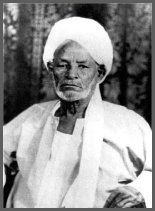
social structure. Both Babiker Badri, a Sudanese pioneer of women's
education and Malala Yousafzai of Pakistan illustrate that education
matters to people.
Do you agree with education for women?
Agree or disagree, there is no doubt that it will alters the social
structure. Identity and structure inter-act. That is why Babiker taught his
grandchldren and why Malala was shot.
Chapter ten: Education
"A wealth of evidence shows that education is a key determinant of life
chances".
"As well as being a right in itself, education is an enabling right,
allowing individuals to develop the skills, capacity and confidence to
secure other rights and economic opportunities".
"Educational attainment has been transformed in recent years. Around half
of young people are now getting good qualifications at 16 (5+ A*-C GCSEs or
equivalent including English and Maths), and in 2008/09, 2.4 million
students enrolled in higher education in the UK - a considerable change
from a time when educational opportunities were only available to a
minority of young people".
What is Education?
The English word to educate come from Latin words that relate to drawing
out a person's potential. So each of us has an inborn growth potential, but
it is developed in different direct.ons by society.
This is one meaning of the concept of education and it is one that links
together personal identity and social structure in an easy to understand
way.
Education is an aspect of socialisation
We think of socialisation as having three stages:
Primary (first stage) socialisation:
Secondary (second stage) socialisation:
Tertiary (third stage) socialisation:
William Shakespeare wrote of our identity developing in seven
stages. In
modern terms, four of these seven stages correspond to stage in the
education structure
The family - primary education
Marx and Engels, and many others in the mid-19th century, challenged their
society to add socialised (school) education to family education. School
education should not blind us to the importance of family education, as
this
extract from
Where Women Have No Doctor - A Health Guide for Women
(1997).
illustrates
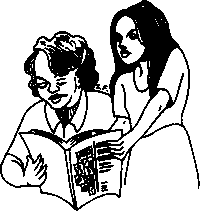
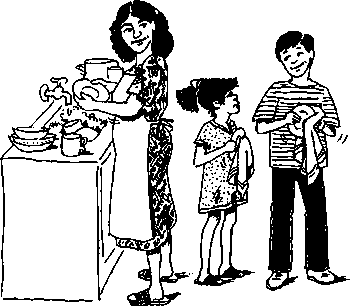
As mothers, we have the power to change who our children will
become:
We can raise our children for a better world.
Schools - socialised education
Education is not the only
function of schools
I will point out three functions. These functions may be
latent (hidden) or manifest
Childcare - A hidden function
Childcare is an example of a hidden (latent) function. Schools are not
intended to free parents from child-care, but they do for a significant
portion of the day and this enables parents to do other things, such as
going out to work.
This importance of this latent function is illustrated by the effects of
the
1970 Education (Handicapped Children) Act. Until this Act, some
handicapped children had been considered "incapable of education".
As a consequence of the Act, school education was provided for
all children and, as a consequence of that, parents of handicapped children
found they could continue looking after their children instead of the
children going into an institution. Eventually, the institutions closed.
Selection - the controversial function
Selecting which people should have which jobs is the function of schools
that reveals most to us about the relation of the school as constructor of
identity and the structure of society.
We can look at this in terms of the role that a person is trained to
plays in society.
Talcott Parsons argues that
roles relate
identity
(who we think we are) to
social
structures. The role we learn does not just tell us who we are,
it also tells us what we may reasonably expect to do in society.
Social class and education
History and terminology
1842 on Acts prohibiting young children working also required
working children to be educated
A
series of Acts between 1870 and 1918 made education free
and
compulsory for children from five years old to ten, then to eleven, then to
fourteen. Education provided for the "childhood" period is known as
elementary or primary.
Education provided for the adolescence period is
known as secondary
Under the UK's
1944 Education Act, secondary education was compulsory
and free for (almost) all children from eleven years to
fifteen years (from 1947) and then 16 (from 1973).
Tripartite
1965 Circular "requesting" a comprehensive system.
Comprehensive education was to "end selection at
eleven plus and to eliminate separatism in secondary education"
The stage beyond
secondary education is not compulsory. It can be referred to as
tertiary (third level).
University level education ("higher" education in the UK)
generally
begins at 18. It can begin earlier or at any later age.
1964/1966 The Binary System under which "new
polytechnic" would become "education's equivalent of the comprehensive
school" (Eric Robinson 1968)
In the next part of the lecture we will look at the
tripartite system and the development of academic,
technical and basic secondary education - and also what it meant for
further and higher education.
The "tripartite" system did not emerge new and fully formed from the 1944
Education Act. The education system was evolving and the Act tried to
impose some order on the structure that existed. The following story of
Fred and Pauline Moore illustrates, amongst other things, how "technical"
education in the 1940s bridged secondary and tertiary education.
A "technical" education in the 1940s
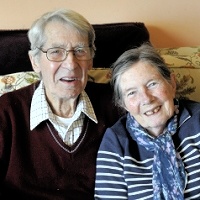
Fred and Pauline Moore were both 82 in 2012.
They both went to "Hendon Technical College", and met there when they were
thirteen years old.
1943/1944?
A
1939 book said "Middlesex is an important centre of
manufacturing industry and commerce, and under these conditions the public
system of technical education has acquired an added importance. The County
Council's programme of school building contemplates the provision of well-
equipped technical colleges in all the important industrial centres in the
County."
The "Technical College" Fred and Pauline attended may have become "Hendon
Secondary Technical School" after the 1944 Act. It remained part of the
college until
1959.
When he left school
1945/1946? Fred Moore "got a job at an export
company". Shortly afterwards, was employed as a secretary in the same
office. Fred and Pauline travelled on the tube together to work and
discovered they both enjoyed the theatre and began going to shows together.
At 18
1949?, Fred, like all young men at the time, was required
to do
National Service in the armed forces. He proposed to Pauline
when
he was de-mobbed
1951? and she married him at St Margaret's Church,
in Edgware on
5.9.1952. The wedding reception cost £25 and
Fred Moore was earning £4 a week at the time. (Camilla Goodman,
Chesham: Your Community website 7.9.2012
The
Binary System
In the late 1950s and early 1960s, National Service ended and young men
were free to think of 18 as an age to aspire for higher education and the
possibility of social mobility out of the class they were born into. Even
young women could have the same dream - but that was a more radical
thought. The secondary school part of technical colleges separated into
separate buildings and the technical colleges began to plan for entirely
adult education. At the same time, in the secondary modern schools,
children were sitting exams that showed that many of them were as capable
as children in grammar schools. It was time for an educational revolution
and everyone was arguing about the direction it should take. In the 1960s
"education" was the fastest growing specialism in sociology.
Charles Spearman
1863 - 1945
Cyril Burt 1883
- 1971
Julienne Ford
1946 -
Sociology and the
average or normal person
In 1846.
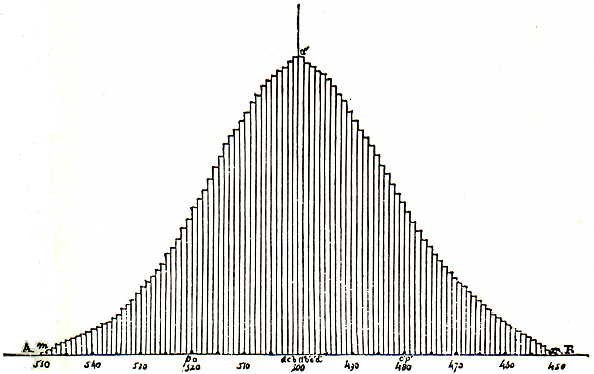
Adolphe Quetelet studied "the chest circumferences of 5738
Scottish soldiers." This is the "data plot", or graph, that he used to
illustrate his findings:
Most of the solders had medium chests, but some had exceptionally large
chests and some had exceptionally small chests. Quetelet called the
majority
in the middle "average" or "normal" - Sociology would be about studying the
"normal man" and how some people deviated from that. Later, the curve was
described as the
"normal curve"
Sociology and
IQ
How fair is selection?
What work you do, how much money you earn, and your social status are
closely related to your Socio Economic Classification.
Cyril Burt
argued that the education system could make choosing who got
what job fair.
Intelligence Quotients were, he argued, a scientific way of
measuring a child's real ability and showing how they fitted the
normal curve of ability.
The
eleven plus examination was based on such tests. It was supposed
to show (for example) when a working class child had the inner mental
ability to do well if given the right education. These children would be
selected out of mainstream education and sent to grammar, or possibly
technical, schools. In this way social mobility would be facilitated
and natural ability and education, rather than class, would decide who got
the best jobs.
Cyril Burt told Julie Ford
In the
1950s and 1960s a re-thinking of theories of intelligence took
place centred round the work of the Swiss psychologist
Jean Piaget. This suggested that intelligence is not so much an
innate (inborn) ability as something that develops in stages, dependent on
the environment that the child experiences.
Julie Ford summarised the arguments against intelligence tests
Talcott Parsons and others had shown that intelligence tests successfully
predicted the occupation that children would enter when they left
school.
This, however, Julie Ford argued, was an illusion:
TABLE OF SOME IMPORTANT EDUCATION-RELATED TERMS IN SOCIAL THEORY
The meanings of the terms we use differs from author to author. In the
following table I start with the definitions
James Fulcher and John Scott give in the textbook
Sociology and then draw on my own
Social Science Dictionary with a Durkheim bias (Words to
describe social reality)
The 2010 "How Fair is Britain?" review says that:
This relates life-span to Socio-economic group.
Socio-economic group's are our most used tool for describing the
stratification
of a nation's social structure
Socio-economic group classifies people according to their occupation
(socio) and income (economic). The United Kingdom system (as used in the
2001 census)
classifies people as
Our system of arranging groups like this is just over one hundred years old
-
See history
The United Kingdom system focuses on occupation. The reason for this is
related to activities like trying to relate health and life-span to social
class.
In
1928 the man who devised the system,
Thomas Stevenson gave a paper on 'The Vital
Statistics of Wealth and Poverty' in which he argued that
"culture" is more
important than material factors [See
Marx] in explaining the lower mortality of the
"wealthier classes".
Culture included knowledge of health and hygiene
issues. He argued that this was more easily equated to occupation than to
income and wealth.
1) How theorists imagine the structure of society and
2) how they relate structure to the social interactions that create our
personal identities as individuals
To do this with inequality, wealth and poverty, let us listen to an
anonymous song that British soldiers sang in the trenches in the
first world war about the seduction and
suicide of a woman who was poor, but honest. The chorus of this
is
Nothing, it may seem, can be more
personal and more
individual than
suicide. Nothing more
structural than the distribution of wealth and
poverty. The song describes the structure within which the
interactions
between the rich man and the poor woman takes place. In one verse we see
how wealth is related to
political
power
and how poverty might lead a woman
to prostitution:
It seems that structure has determined her
personality: she walks the
streets "in shame".
However, the song makes her an
active
agent in
social interaction, even
after her death.
rich and poor not the same the whole world over
The concept of inequality is most often associated with images of wealth
and poverty. Two distinct images spring easily to mind, the image of
wealthy people and poor people in the same society (See
Big Issue)
, and the starker image
of international inequality that comes to us with appeals for famine
relief (See
Oxfam).
Why are they different images? A careful reading of Fulcher and Scott
reveals that it is because our images of inequality are related to the
social reality of society. (See
Durkheim).
There are real societies that we
call nations
and real inter-relations between them that we call international relations.
At the present stage of history, the
solidarity within nations is greater
than the solidarity across national boundaries.
Marx argues that economic inequality plays a key role
When we read about the rich man and the poor woman
We are reminded of Marx and Engels arguing in the
Communist Manifesto (1848) that
inequality, wealth and poverty are not just economic
The song also reminds us that inequality is not just economic.
The song is
about the relations between a rich man and a poor woman and
Marx and Engels (in particular) pointed to the double standards in sexual
morality that helped to secure male domination of women.
(See hetaerism above)
Fulcher and Scott speak of
"various dimensions" of inequality which include:
amongst
others.
They relate these
structured inequalities to the different
"life chances" of
the different groups.
Relative wealth and poverty can also be defined to include more than just
economic wealth. This is done by the United Nations in its Human
Development Index which combines data on life expectancy, education and
the material standard of living into a single statistic. It is also being
done by the United Kingdom's Office of National Statistics, which is
experimenting with Wellbeing indicators health, personal
relationships, work, education, personal finance, political participation
and environmental conditions which will be combined into a single statistic
to be used, eventually, alongside Gross Domestic Product statistics. See
the
social science dictionary entry on Wealth
STRUCTURED INEQUALITY
Robert Merton, a student of
Talcott Parsons analysed society in terms of structure and
culture. He argued that there could be a strain between the two. The
culture could set out ideals that the structure made difficult to achieve.
A similar idea underlies what
Fulcher and Scott say
about structured
inequality.
culture
In England the Conservative Party usually sets out the benefits of the free
market and the Labour Party puts more emphasis on the power of the state
bureaucracy to achieve the welfare of the people. However, different views
structure
[MOBILITY -
Fulcher and Scott
2007" pages 741-744]
If the development of the market and the development of bureaucracy are
both seen (in our culture) as aiming at greater
equality of
opportunity, we might expect to see reduction of poverty and the
development of an increasingly open society in which people moved up (and
sometimes down) the social ladder.
Fulcher and Scott present evidence to show that in some respects, and from
some views, this is what happened in Europe and the United States. However
1) Studies of social mobility (movement between classes) in Britain showed
that "people were more likely to remain where they were born than they were
to rise or fall"
(Fulcher and Scott
2007 p.741)
2) In the United States "the effects of universalism... were partially
counteratcted by the persistence of racism and of disadvantages linked to
ethnicity".
(Fulcher and Scott
2007 p.744)
These conclusions (and others) suggested to the researchers that there are
structural features in the societies that are at odds with the cultural
ideals. What these structural features might be are matters of debate, but
we might suggest that the existing
hierarchies of inequality have ways of
resisting downward mobility of the people at the top, and upward mobility
of people at the bottom.
Parsons study of Boston schools showed that children from different classes
were assessed on what he considered universalistic criteria. They were not
rewarded because of who their parents were, but because of their
achievements.
As a result, many children from lower classes planned to go
on to college, and, Parsons says, going to college was the main thing that
decide who went into the higher classes.
Parsons looked at boys from different classes but of similar ability
measured by
IQ tests meant to tell what a child is capable of. He found
that amongst the pupils with the greatest ability
If almost a third of the brightest working class boys go to college and
change class that certainly suggests some mobility. But there a forces at
work in the opposite direct, for almost 90% of the upper class boys go on
to college.
What are the structural forces against mobility? Finance would appear to be
one force. Ambition might be another. Discrimination might be another.
These are matters for investigation.
As we have seen, boys from black families were much more unlikely to
advance than boys from white families. A reason for this could have been
that, on average, black pupils had less innate ability than white pupils.
IQ tests seemed to support this finding. In the 1960s, however, researchers
suggested that IQ tests did not measure an innate fixed ability, but only a
stage of development that a child had reached. It was argued that the
family life of many black children (with mainly manual class parents) did
not develop their abilities in the way that the life of many white (mainly
middle class) families did.
1963 to 1968 empirical research in French schools
1979 (in French) Distinction: A Social Critique of
the Judgment
of Taste
Argument: Power defines taste.
The children of different classes learn different habits of mind and
behaviour in the family.
As a result, children expect different things from life.
A working class child might not expect photography to be an art form, for
example. He or she might become a photographer who took straight pictures,
whilst a child from an "artistic" home might pursue photography a art
school.
In this way, stratification is perpetuated by the culture we learn at home.
TABLE OF SOME IMPORTANT INEQUALITY-RELATED TERMS IN SOCIAL THEORY
This table first inter-relates the definitions
James Fulcher and John Scott give in the textbook
Sociology. It also links this to material in my own
Social Science Dictionary with a Durkheim bias (Words to
describe social reality)
Three theoretical issues raised by the study of inequality are
Stratification, control, and
conflict
"Work and Wealth:
"The mean gender pay gap for women and men working full-time in 2009 was
16.4 per cent; and progress today appears to be grinding to a halt. Women
aged 40 earn on average 27 per cent less than men of the same age. Women
with degrees are estimated to face only a four per cent loss in lifetime
earnings as a result of motherhood, while mothers with no qualifications
face a 58 per cent loss.
"By the age of 22-24, figures suggest that 44 per cent of Black people are
not in education, employment or training, compared to fewer than 25 per
cent of White people. One in four Bangladeshi and Pakistani women work,
compared with nearly three in four White British women, and only 47 per
cent of Muslim men and 24 per cent of Muslim women are employed.
"Pakistani and Bangladeshi men's earnings fall 13 per cent and 21 per cent
below what might be expected, and Black African Christian and Chinese men
experience pay penalties of 13 per cent and 11 per cent.
Fifty per cent of disabled adults are in work, compared to 79 per cent of
non-disabled adults.
Chapter eleven: Employment
Context - Industrial society
Speaking of "industrial society" often involves two ideas
Industry can be used as a word for part of the
economy: Manufacturing and
trade as distinct from agriculture and services.
This idea is joined with the idea of an industrious social order in most
concepts of an industrial society.
John Stuart Mill, in
1848, for example, spoke of
This might be illustrated by the leisured classes of slave owners or
landed aristocracies in pre-industrial societies. Mill said
post-industrial society
As heavy industry has become a less important part of advanced economies,
the idea of a post-industrial society has developed. This term was used in
a book title by the French sociologist Alain Touraine in 1969 and by the
USA sociologist Daniel Bell in 1973.
hardware and software societies
A similar contrast has been made by Zygmunt Bauman when he distinguishes
between "solid modernity" which is related to railways and factories and
"liquid modernity" which is related to computers and networks. [See
Thinking Sciologically the
Bauman and May way]
Similarities and differences
Compare the picture of the twenty-first century call-centre below with the
picture of an assembly line in 1913 below that. Think about the
similarities and the differences.
A Ford assembly line in 1913
Fordism
Henry Ford was born in
1863
in Michigan, USA. In
1896 he made a self-
propelled vehicle which he named the Ford Quadricycle. The photograph below
shows Henry and Mrs Ford driving his first "car" it many years later.
In 1908 he
began the manufacture of cars for the general public.
A new term in the United States vocabulary that has been traced back to
1914 is assembly line. The journal Engineering
said "labour costs may be... reduced... by the use of sliding assembly
lines"
In 1926
the Encyclopedia Britannica included an article on "mass production" over
the name of Henry Ford (although he did not write it). The term began to
supersede "Fordism" as the popular term for the process using assembly
lines. (external link missing). The term Fordism regained currency through
the
writings of the Italian marxist
Antionio Gramsci
Features of Fordism
A standard product produced cheaply in large numbers
for a mass market by mainly semi-skilled workers doing
simplified and routine tasks on an assembly line.
Some key dates in the development of Fordism and post-Fordism
1492 Christopher Columbus landed on an American island in
his search for a way to India. Marx and Engels wrote in
1848
Manufacture and the division of labour preceded steam by
about two hundred years. The splitting of the tasks in needle
and pin manufacture is often taken as an example.
1763 Steam and
Machine
1776 Britain's American colonies declared themselves
independent and Adam Smith published his An Inquiry into The Nature and
Causes of
the Wealth of Nations
The United States that became independent were economically relatively
advanced parts of America. Parts of the American continents were the source
of images of primitive, undeveloped economies. Adam Smith contrasted this
with the wealth of European countries and put the difference down to the
division of labour between societies, within societies, and within
"factories".
Adam Smith's example of the division of labour within a factory was taken
from a French pin-factory in which each step in the making of the
pin was a separate stage in a process carried out by different people.
1836
Bridgewater Foundary
1934
Gramsci on America and Fordism - Available in English in
1971
June 1935 Alan Turing tried to envisage a machine that
would decide the provability of any mathematical assertion presented to it.
His paper "On Computable Numbers..." in January 1937 laid the
mathematical foundations for modern computers that can handle complex
thought patterns much more complex than older, mechanical, machines.
A "computable number" is any number that can be defined by some rule.
Turing's imaginary machines linked the world of abstract symbols to the
material world of metal and glass. Valves and then silicon chips would
later sort out thought at speeds beyond the speed of thought
December 1943
"Colossus" the first electro-mechanical computer was installed
as part of the British war effort. It was top-secret. The technology
introduced a previously unimaginable flexibility into what machines could
do.
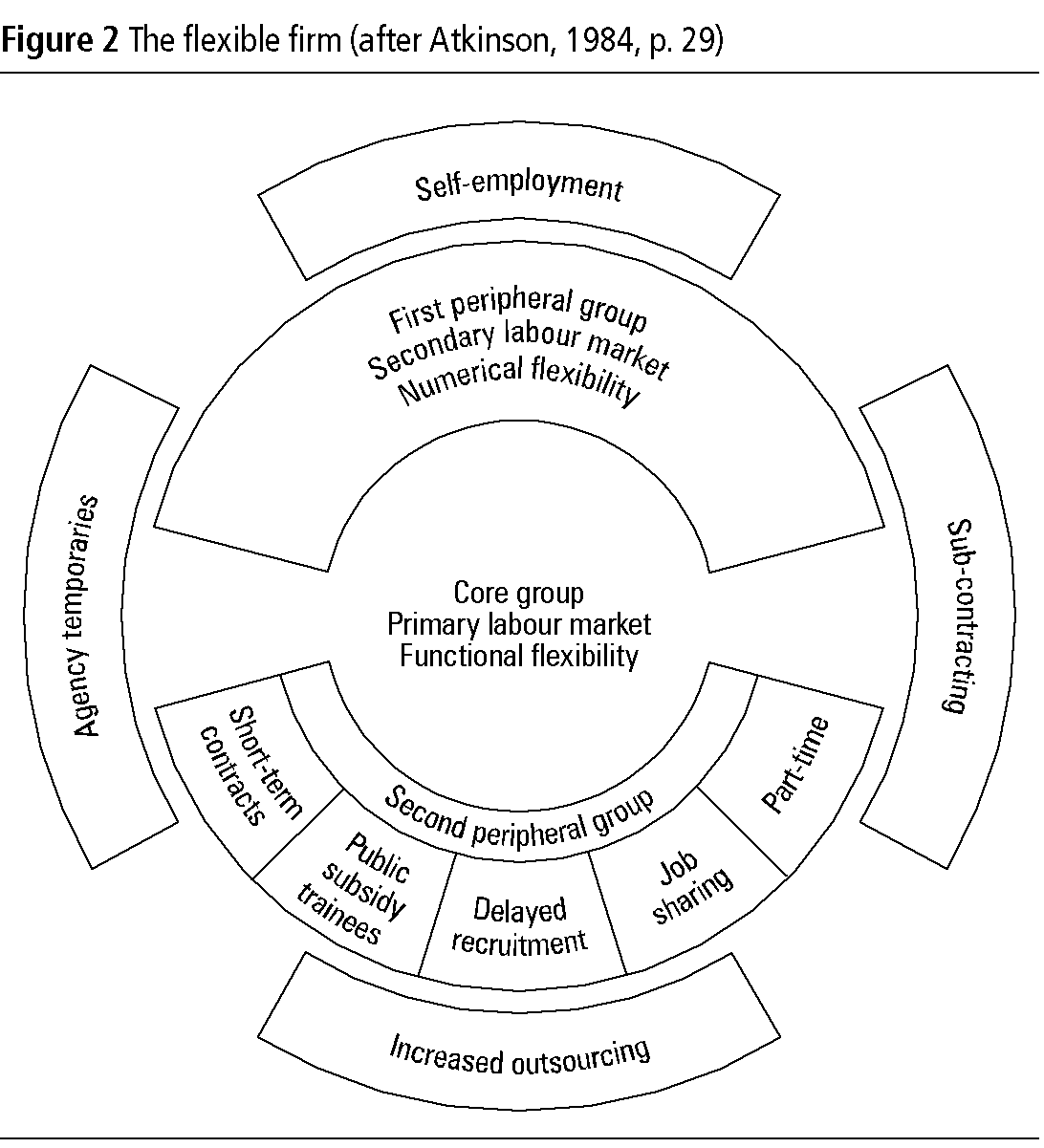
1984 John Atkinson Flexibility, Uncertainty and Manpower
Management
Flexible Firm Model
FLEXIBLE EMPLOYMENT
Until the late 1970s, in most of the industrially developed societies jobs
were relatively plentiful, and most people believed they had a relatively
secure and prosperous future. Today, it seems, those times have long since
gone.
Politicians and business leaders tell us that we must adapt in a rapidly
changing global economy, or suffer painful economic decline. It seems
particularly harsh if we are poor, or unemployed, or possess few skills or
educational credentials. But, even highly qualified, skilled professionals,
face a more insecure future, with frequent changes of job, and unreliable
incomes.
The uncertainties of rapidly changing markets as well as the need to cut
labour costs have forced employers to seek new ways of matching the demand
for labour with changing market conditions. These include:
1. Relocating more labour intensive aspects of their business to parts
of the globe where labour is cheaper. Examples are the so-called 'sun-belt
zones' in the southern USA, or the 'export-processing zones' established by
government's in many developing countries, including China.
2. Global corporations have also sought to match their various labour
and technical requirements to the different skills available in various
parts of the world. They can do this by dispersing their production,
managerial, technical, or administrative departments to different
locations, often in different countries across the globe. Everything can be
managed and coordinated through global electronic information and
communication networks.
post- Fordism
Gendering of occupations - domestic labour
A person's gender role refers to the way a community defines what it is to
be a woman or a man. Each community expects women and men to think, feel,
and act in certain ways, simply because they are women or men. In most
communities, for example, women are expected to prepare food, gather water
and fuel, and care for their children and partner. Men, however, are often
expected to work outside the home to provide for their families and parents
in old age, and to defend their families from harm.
Unlike the physical differences between men and women, gender roles and the
activities associated with them are created by the community. Some
activities, like preparing food and caring for children, are considered
'women's activities' in many communities. But others vary from place to
place - depending on a community's traditions, laws, and religions. Gender
roles can even vary within communities, based on how much education a
person has, her race, or her age. For example, in some communities women of
a certain race are expected to do domestic work, while other women have
more choice about the jobs they hold."
Multi-tasking
In "developed" Western societies the divisions between men's work and
women's work has changed. Compare the following picture with the one's
above. What similarities and differences do they suggest between gendered
work in different societies? What is the lady doing on the telephone? Could
she
be running a business from home? If so, what kind of business?
Radical social theorists in the first half of the nineteenth century argued
that industry was liberating women by providing them with paid employment
and freeing them from dependence on men. This argument was made by, amongst
others, Friedrich Engels and Karl Marx, and Harriette Taylor and John
Stuart Mill.
But, as Marx and Engels pointed out, capitalist industry also undermined
the family
The Coal Mines Act of 1842 and the Factory Acts from 1844 tried to prevent
the destruction of the family by modern industry. We saw, when speaking of
education, that they were important in introducing compulsory
schooling for working children.
You can find out more about life for men, women and children in a
nineteenth century coal mine by
clicking on this link
Notice that homelife and education can both be regarded, from one
perspective, as freedom from work (leisure) and from another perspective as
work. Notice also that the different perspectives are related to gender
feminisation of work
Read "Growing employment of women" Fulcher and Scott pages 75-78
Have we stopped identifying ourselves through our employment?
Henry Ford's cars were made in one size and all painted one colour
(black).
TABLE OF SOME IMPORTANT WORK-RELATED TERMS IN SOCIAL THEORY
The meanings of the terms we use differs from author to author. In the
following table I start with the definitions
James Fulcher and John Scott give in the textbook
Sociology and then draw on my own
Social Science Dictionary with a Durkheim bias (Words to
describe social reality)
Go back to Inequality
Mrs Alexander's Hymns for Little Children, first published in
1848, launched the hymn
"All Things Bright and Beautiful", in which the natural and
social orders are praised as the creation of God:
Each little flower that opens,
The rich man in his castle,
This verse appears to refer to the story of the rich man "Dives" and
the poor man "Lazarus"
Illustration (by Palmer?) to 1871 sheet music "Dives and Lazarus"
In a
story told by Jesus, Dives is a rich man and Lazarus is a poor
hungry man who sits at his gate hoping to eat the crumbs that fall from the
rich man's table. After death, their situations are reversed and Lazarus is
taken care of by Abraham in heaven whilst Dives finds himself in hell.
Dives pleads with Abraham to help him. Abraham tells Dives that in life we
have the morality of religious law and prophets to guide us towards a
caring compassionate society of mutual help. after death, it is too late.
The social values set out in Mrs Alexander's hymn have been described as
paternalism or maternalism or even the granny
state.
They are the principles of those who are well off (the higher strata)
caring and providing for those who are not (the lower strata)
In
The Communist Manifesto, which was also published in
1848. Marx and Engels called ideas like this feudal socialism. They
were ideas that wanted to go back to past
(feudal) relations of dependency and submission, with social
care. Marx and Engels suggested they were just a ploy on the part of the
aristocracy to secure the support of the workers
Also in 1848, and for similar reasons, Harriet Taylor and John Stuart Mill
wrote about
dependency theory
which makes the ruling class responsible for the welfare of the ruled.
The arrangement of society in strata (layers - as in rock formations), is
another word for
hierarchy.
In 1706 a dictionary defined strata as "layers or beds of different kind of
earthy matter, that lie one over another"
19th century social theorist began to compare this to the structure of
society. In
1850, for example,
Thomas Carlyle wrote
Social stratification used to be used (as by Carlyle above) just in
reference to class, but more recently some social theorists have argued
that common characteristics such as race/ethnicity and gender also rank
people into strata.
Science in
1848, when Mrs Alexander's Hymn was published, included ideas of
geology and class. In both, scientists were interested in how structures
change - in what we call
evolution.
Karl Marx and Friederich Engels in
The Communist Manifesto (also
1848) wrote that
Geology and
evolutionary view of world history
In
1815, William Smith's map A Delineation of the Strata of
England and Wales with part of Scotland was the first geological map to
identify the layers of rock based on the fossils they contained rather than
on their composition
Saint Simon and
Marx and Engels and evolutionary view of social history.
Different social strata at different times:
slavery,
serfdom,
domestic and
wage labour
This American picture of an agricultural worker in the 19th century reminds
us of the slavery we know most about: the slavery of Africans taken as
commodities across the Atlantic from the
15th Century.
However,
ancient civilisations, like those of Greece and Rome were made
possible by slavery. These slave societies ran from about 800 years before
Christ to the time of the prophet Muhammad. The Greeks made slaves of
(white) foreigners that they called "barbarians".
In western Europe this method of production gave way to feudal relations
and then to free labour. But, as free labour developed in Europe, Europe
developed slave labour abroad.
Serfdom
Between the slave-owning empires of Ancient Greece ad Rome and modern
societies where owners of capital employ free wage earners, was the
feudal period. The bottom layer of the feudal system were the
serfs
Serfs were semi-free workers who owed their lord labour on his land
and received, in return, the right to work on land where they could grow
their own crops.
This illustration is from a book of Psalms (Psalter) made about
1310-1320. The man with the stick is not a slave-driver.
He is the "Reeve" or manager of the Lord's estate. In some manors it was
the custom for the serfs themselves to elect the Reeve. The serfs had their
own rights to grow crops on strip-fields and graze animals on the common
land, but they owed the Lord service fr so many days a year. They could not
leave the Lord, so they were not free. But neither were they slaves.
Serfs escaping and becoming freemen in towns was one of the origins of
free-labour.
Two forms of free labour that we should consider are domestic (home-
based) work and wage work, especially the wake work in factories that we
discussed under
"Fordism"
Mill and Taylor's comment: the position of women
The article argues against
paternalism and for self-determination.
Paternalism is where a benevolent, but authoritarian, government provides
for the welfare of the people. It is the kind of policy associated, at the
time, with people like
Lord Ashley.
Mill and Taylor argued that, after the basic necessities of life have been
met, freedom is the most important human need. Freedom meaning, for them,
the opportunity to develop one's own life according to one's own values,
rather than living, however comfortably, under the control of someone else.
The working class, they argued, were rightly taking this power into their
own hands.
Women, they added, should do the same.
Mill and Taylor presented two models relevant to the position of both
labourers (Mill 1848
par 1) and women (Mill 1848 pars
3 and
18). They
opposed the theory of dependence and protection (Mill 1848 pars
2-8) and
supported that of self-dependence (Mill 1848 pars
9-16).
Dependency theory makes the ruling class responsible for the welfare of the
ruled. According to this approach, the rich should regulate the social
environment beneficially, and educate the poor in socially constructive
ideas (Mill 1848 par
3).
Dependency theory also says men should be providers and protectors for
their wives (Mill 1848 par
18). This, Mill and Taylor suggest, treats
workers and women as children (Mill 1848 pars
12 and
25).
Mill and Taylor argue that it is both undesirable and too late to treat
workers or women as children: The working classes were taking their
interests into their own hands (Mill 1848 pars
9-10), leading to an
increase in their education and intelligence (Mill 1848 pars
12 following).
Some women were beginning to take the same path (Mill 1848 par
25). The
process, (taking place for the same reasons in both cases: Mill 1848 par
18), was beneficial because it was essential for
self-development (Mill
1848 pars
12-20).
Bibliography
Mill, 1848, Principles of Political Economy. Section On the Probable
Futurity of the Labouring Classes. Paragraph numbers from
http://studymore.org.uk/xmil1848.htm
Max Weber distinguished between status and class. Status can refer to
prestige, and this does not need to be related to wealth or class. So, in
analysing society, Weber believed we should consider both economic class
and social status. An academic, for example, may have status, but be poor.
Weber argued that we cannot reduce everything to class or economics.
Her other two meanings are
I look up to him because he is upper class but I look down on him because
he is lower class. I am middle class.
I know my place.
I get a feeling of superiority over them.
I get a feeling of inferiority to him but a feeling of superiority over
him.
I get a pain in the back of my neck
Rene Cutforth (1976) in Later Than
We Thought wrote of the trilby hat as "the universal headgear of the
middle classes ... By the thirties it had certainly become degenerate ...
It was a hat which had lost all aspiration: it had become a mingy hat".
The Oxford English Dictionary
defines something as "cloth-cap" if it is "pertaining to or characteristic
of the working class"
Rosemary Crompton and current relevance - Are we all just
individuals?
Rosemary Crompton contrast the
above sketch with a BBC2 series in
1996 called Parsons on Class
The argument of this, she says, is that
Tony Parsons meets the
In the
1966 comedy sketch class was fixed in both the
occupations
and the clothing of the three individuals. The banker wore a bowler, the
shop-keeper wore a trilby and the man in the market wore a cloth cap. In
the
1996 documentary occupation and lifestyle are more
flexible. The
aristocrat saves money by sending his children to state schools, the family
with working class roots play golf and bankers aspire to be aristocrats
whilst middle class people save money to send their children to private
school .
It could be argued that class has become a style of shopping!
This relates to the idea that identity is replacing class as
a significant tool of sociological analysis.
This is related to a move from
Fordism to post-Fordism or
post-Industrial society
Zygmunt Bauman relates it to the move from hardware to software
times.
Work (occupation) used to provide a focus for the development of class-
based identities in industrial societies. This was especially so in the
case of communities based around employment, such as mining villages, or
industrial towns where people worked in local factories.
But, according to
Ulrich Beck and Elisabeth Beck-Gernsheim (2002), increasing
insecurity associated with the
flexible labour
market mean that both class and status are losing their
significance. (Crompton p.75).
Ulrich Beck
and
Elisabeth Beck-Gernsheim
refer to this process as
individualistation
Individualisation is a shift in our social relations from valuing
community and inter-connectedness
to valuing
individualism and
autonomy
Speaking of Western Germany, Urich Beck says that, since the mid
1950s
In the new conditions
Which, in plainer English, means that once a person's life was decided by
the community (class) they were born into, but now they choose it.
TABLE OF SOME IMPORTANT STRATIFICATION-RELATED TERMS IN SOCIAL
THEORY
The meanings of the terms we use differs from author to author. In the
following table I start with the definitions
James Fulcher and John Scott give in the textbook
Sociology and then draw on my own
Social Science Dictionary with a Durkheim bias (Words to
describe social reality)
© Andrew Roberts
My referencing suggestion for this page is a bibliography
entry:
Roberts, Andrew 11.2011 - Social structures and social identities
Available at http://studymore.org.uk/structur.htm
and intext references to (Roberts, A. 11.2011).
See ABC
Referencing for general advice.
Andrew Roberts likes to hear from users:
John Stuart Mill in
The Subjection of Women on the sociology of
education.
"
It arose simply from the fact that from the very earliest twilight of human
society, every woman (owing to the value attached to her by men, combined
with her inferiority in muscular strength) was found in a state of bondage
to some man.
"
"
We now live in a state in which the law of the strongest seems to be
entirely abandoned as the regulating principle of the world's affairs:
nobody professes it, and, as regards most of the relations between human
beings, nobody is permitted to practise it.
"
"
Nobody thinks it necessary to make a law that only a strong-armed man shall
be a blacksmith. Freedom and competition suffice to make blacksmiths
strong-armed men
"
"the true virtue of human beings is fitness
to live
together as
equals claiming nothing for themselves but what they as freely
concede to everyone else..
To these virtues, nothing in life
as at
present constituted gives cultivation by exercise. The family
is a
school of despotism.."
"Citizenship, in free countries, is partly a school of society
in
equality;
but citizenship fills only a small place in modern
life,
and does not come near the daily habits or inmost sentiments.
The
family, justly constituted, would be the real school of the
virtues
of freedom."
(
Mill, J.S. 1869/Dent1985
p.260)
Sex -
Gender -
Sexuality
How fair is
Britain? (2010) surveys the "chances, choices and outcomes
in
life" of
people with different "characteristics"
(identities). Two of the identities it
talks about are
gender and
sexual orientation. It relates these to
the
social structure of English
law
"the only characteristic fundamental to later roles which has
been clearly "determined" and psychologically stamped in by" [the time a
child goes to school] .. is sex role. The ... child enters the system of
formal education clearly categorised as boy or girl, but beyond that his
role is not yet differentiated..."
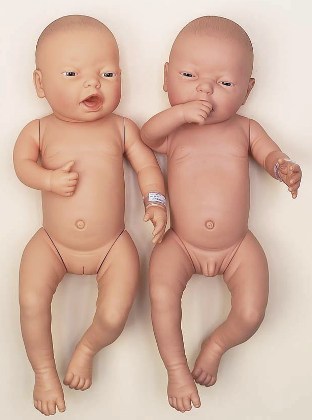
These "anatomically correct" dolls illustrate the main
physical identity
that parents look for in their new-born children. Is it a girl, like the
one on the left, or a boy, like the one on the right?
"
It is because the human personality is not "born" but must be "made"
through the socialisation process that in the first instance families are
necessary. They are factories which produce human
personalities."
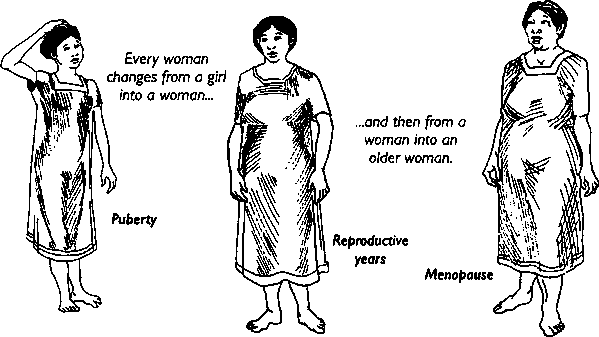 This picture is taken from
Where Women Have No Doctor - A Health Guide for Women
(1997). The text underneath the picture says:
This picture is taken from
Where Women Have No Doctor - A Health Guide for Women
(1997). The text underneath the picture says:
"In many ways, a woman's body is no different from a man's. For
example, women and men both have hearts, kidneys, lungs, and other parts
that are the same. But one way they are very different is in their sexual
or reproductive parts. These are the parts that allow a man and a woman to
make a baby. Many of women's health problems affect these parts of the
body.
"

"we argue that probably the importance of the family and its function for
society constitutes the primary set of reasons why there is a social as
distinguished from purely reproductive differentiation of sex
roles."
"The problem is not why [differentiation]
appears ... but why the man takes the more instrumental role, the woman the
more expressive, and why ... these roles take particular
forms."
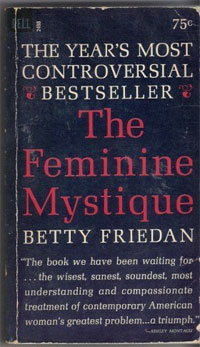
19.2.1963 The Feminine Mystique by Betty Friedan published.
Read the
Wikipedia article.
click for dictionary
SEX
Fulcher and Scott use this word for "The physical and anatomical
differences that are held to distinguish men and women"
The
other main meaning is a short form for sexual intercourse. It is
also used for any kind of physical contact between individuals for pleasure
of the type that might lead to sexual intercourse. It can also refer to
thought and symbols about such things, Fulcher and Scott call these
activities
sexuality.
GENDER
Fulcher and Scott use this word for "Expectations of the way that men and
women are expected to feel, think and behave"
One's gender can just mean one's
sex in the sense of being either male or female. In its richer
sense, gender refers to all the characteristics that attach to being male
or female, including ones that are of cultural origin.
SEX ROLE
Fulcher and Scott say gender role is the "specification of the way
in which
men and women are expected to feel, think and behave". They say
sex-role
means the same, but "implies that the behaviour of men and women is shaped
by their
sex rather than by
gendered expectations"
SEXUALITY
Fulcher and Scott: The activity that people find physically arousing and
those aspects of identity, lifestyle, and community associated with this
activity.
Sexuality refers to sexual desires in general or to the way people
experience sexual feelings. Fulcher and Scott use it instead of
sex in order to distinguish "what sex are you?" from "do you
like sex?".
SEXUAL ORIENTATION
Sexual orientation is not in Fulcher and Scott's glossary or index. In the
text they appear to use sexual identity as an alternative term. They
refer (critically) to the concept that people are "heterosexual,
homosexual, or possibly bisexual" (pages 165 to 168)
MAN
Man is not in Fulcher and Scott's glossary.
"Man" can mean human or male. In its
gender free sense, it can mean the human species or it can mean
a human individual. Or man can mean male, the counterpart to female
(woman). Over 2,000 years ago, Aristotle wrote "Out of these two
relationships between man and woman, master
and slave,
the
first thing to arise is the family..."
(Aristotle
1252b9)
FAMILY
Fulcher and Scott say this is "a much debated term" often defined as "a
social group based on marriage, biological descent, and adoption". They
offer as a "less exclusive" definition: "a small group of closely related
people who share a distinct sense of identity and a responsibility for each
other that outweighs commitments to others"
We tend to think of families as parents and children (See nuclear
family). Read
the dictionary article to see what a range of groups the word
has covered.
Talcott Parsons says that the family is an institution around
which the structures of
kinship, control of
sex relations and
socialisation tend to cluster.
MARRIAGE
Marriage is not in Fulcher and Scott's glossary.
Marriage is a religious or civil ceremony that joins a man and a woman in a
permanent (until broken) relationship which is usually completed
(consummated) by their sexual union.
Biology being biology, this usually creates children and makes a
nuclear family
KINSHIP
Fulcher and Scott: A network of relatives (kin) who are connected by common
descent or marriage
Kinship is a much wider network of relationships than what we call the
nuclear
family of parents and children. We might compare it to the idea
of an extended
family. Like
family, it is an important concept in linking
personality to
social structure
. See patriarchal families and
democratic or
companionship families
SUPERSTRUCTURE
MATERIAL BASE = PRODUCTION AND REPRODUCTION
Based on
Shulamith Firestone's chart
THE ECONOMY
REPRODUCTION
(Family)
and socilisation
GOVERNMENT
(Politics)
Early societies existed by gathering wild
plants and hunting animals. They were Nomads. About
10,000 years ago, some of these nomadic groups settled down and
developed
agriculture. They became
tillers of the soil.
Matriarchy (Mother-right) was a system where family lineage was
traced
through the mother. Following
Henry Morgan, Engels argues that such systems reflect an earlier
history of the family when women had more respect and honour
Gens is government based on family
connection instead
of territory. It suited a nomadic form of economy.
"the form of kinship organisation which prides
itself on its common descent...and is bound together by social and
religious institutions into a distinct community"
(Engels 1884 par. 3.2)
In Europe, Engels argues, such a family system em of government preceded
the establishment of the
Greek and Roman States. In Greece and Rome we step
directly from the Gens to Civilisation (p. 34) That is, we move from family
government to state government
(Less than 3,000 years ago)
Engels argued that the development of private property led to patriarchy:
Wealth accumulated outside the home - which was women's domain - and so
shifted the power base to men.
Men decided they wanted to ensure "their" wealth passed to "their"
children. Men, therefore, had to the sexual possession of the women.
"The overthrow of mother-right was the world historical defeat of the
female sex. The man took command in the home also; the woman was degraded
and reduced to servitude, she became the slave of his lust and a mere
instrument for the production of children."
"With the patriarchal family, we enter the field of written
history"
CIVILISATION
as town & country
merchants develop.
PATRIARCHY
THE STATE:
Revolution leads first to:
The freedom of women becomes possible
Under Socialism the state will be used to suppress the old
classes. Under Communism the state will wither away.
Education
The next four lectures are about closely related subjects:
Education -
Inequality - Poverty - Wealth -
Work - Employment - Leisure -
Stratification - Class - Status.
Babiker Badri (above right) established women's education in the Sudan in
1907. Out of his work developed the
Ahfad University for Women. Afhad means "for our grandchildren"
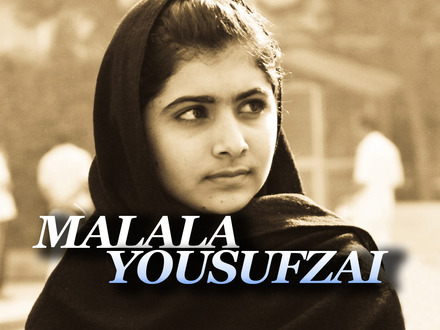
Malala Yousafzai, aged 15, was shot and wounded, for working to promote
education.
How fair is
Britain?
Family
School
Society
identity stage
education stage
infancy
family and pre-school
childhood
primary
adolescence
secondary
young adult
tertiary:
further and/or higher
As mothers, we teach our children every day of their lives:
School
Skills
Destiny
Grammar
Academic
White collar
Technical
Technical
Skilled
Secondary modern
Basic and practical
Semi-skilled and manual
Hendon Technical College was in what is now the Hendon Campus of Middlesex
University.
In 1970,
Julie Ford (aged 24) and
Cyril Burt (aged 87) wrote long letters to one another about the
relationship of education to class, work, inequality and social structure.
They had very different ideas about this, and would never have agreed.
Statistics were, in Julie Ford's words the "test" ground on which a
"cricket match" between their two world visions was played. The issue
between them was the limits of social engineering: Julie Ford believed a
a "class-less society" was possible and desirable. Cyril Burt believed it
neither possible nor desirable.
Adolphe Quetelet 1796 - 1874
big chests
medium chests
small chests
"broadly speaking, occupations requiring an average or medium degree of
ability are by far the commonest... those requiring the highest and rarest
degree of ability are comparatively few. I suggest therefore that what is
needed is ... the matching of each individual's occupational class with his
innate abilities"
"it is now accepted that talent is not a fixed genetic trait,
there is no finite 'pool of ability' to be tapped by increasingly
sophisticated selection procedures. Talent, rather than being given by
birth is, it is now believed, partly produced by school
experience". (Ford, J.
1969, p.20)
"the predictive power of intelligence and aptitude test
reflects nothing more than a self-fulfilling prophecy... children learn to
limit their achievement to that which is expected of them"
(Ford, J. 1969,
p.20)
click for dictionary
EDUCATION
Fulcher and Scott
INTELLIGENCE
Fulcher and Scott
How fair is
Britain?
Higher managerial and professional occupations
Lower managerial and professional occupations
Intermediate occupations (clerical, sales, service)
Small employers and own account workers
Lower supervisory and technical occupations
Semi-routine occupations
Routine occupations
Never worked and long-term unemployed
In these lectures on social structures and social identities, we are
looking at
"It's the same the whole world over,
Isn't it a blooming shame?
It's the rich what gets the pleasure,
It's the poor what gets the blame."
"See him in the House of Commons,
Passing laws to combat crime,
While the victim of his evil,
Walks the streets at night in shame."
"When they dragged her from the river,
Water from her clothes they wrung,
And they thought that she had drownded,
Till her corpse got up and sung....."
"It's the same the whole world over,
Isn't it a blooming shame?
It's the rich what gets the pleasure,
It's the poor what gets the blame."
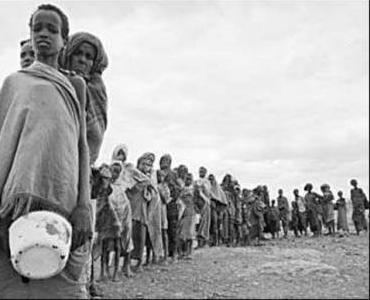

"See him in the House of Commons,
Passing laws to combat crime,
While the victim of his evil,
Walks the streets at night in shame."
"The bourgeoisie has at
last, since the establishment of modern industry and of the world market,
conquered for itself, in the modern representative state, exclusive
political sway. The executive of the modern state is but a committee for
managing the common affairs of the whole bourgeoisie."
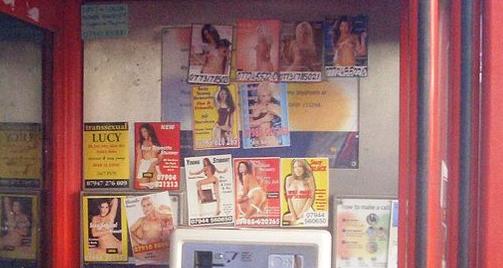
MARKET
AND
STATE
"
Universalism involves treating all people in the same way... In
a universalistic system , all are free to achieve social goals through
their own individual efforts" (Fulcher and Scott 2007") p.724)
"Universalism has generally been seen as operating most
effectively through either a market mechanism or a bureaucratic mechanism"
(p.724)
"agree in ... involving universalitic standards..."
(Fulcher and Scott
2007 p.724)
We can use our
earlier diagram to think about how inequality
relates to the social structures of the family, school and society outside
them.
"the working-class 'aesthetic' is a dominated 'aesthetic' which
is constantly obliged to define itself in terms of the dominant aesthetics"
click for dictionary
EQUALITY
Fulcher and Scott: A condition in which all members of a society are equal
to one another in one or more measuarable respects. Includes
"equality of
opportunity",
"equality of outset" and
"equality of outcome"
INEQUALITY
Fulcher and Scott do not include in their glossary, but say (under
"A structure of inequality and
domination",
p.12) that "some groups benefit
more" from societies activities (see
life-chances). They say the "various dimensions" of inequality
include:
class,
ethnic,
gender,
religious and nationality inequalities
within
nations and international inequalities between nations.
POVERTY
Fulcher and Scott (page 728) say that poverty and
wealth are best defined
in relation to one another. Relative to what is
"normal for citizens in a
particular society", the poor are those who are deprived of, or even
exluded
from full public life. In a "theory box" they distinguish this concept of
relative
poverty from the concept of absolute poverty
ABSOLUTE POVERTY
Fulcher and Scott (page 728) say that an absolute view of poverty tries to
measure it in terms of a fixed and unchanging baseline. Poverty is seen as
defined as physiological subsistence or fixed human needs.
RELATIVE POVERTY
Fulcher and Scott: A condition where people follow a way of life that is
deprived relative to the standard of living that is customary or accepted
as
normal in their society. They are unable to fulfil the rights of
citizenship to the full.
WEALTH
Fulcher and Scott: The opposite of poverty
(relative poverty). because of their income and asset, the
wealthy are able
to enjoy life chances and lifestyles that are superior to those that are
recognised as normal for citizens in their society. Wealth is the basis of
privilege.
LIFE CHANCES
Fulcher and Scott: The
opportunities that a person has to acquire income, education,
housing, health, and other valued resources. They are the basis of
inequalities.
OPPORTUNITY
Fulcher and Scott define
equality of opportunity as a condition in
which entry to all social positions is governed by criteria of
universalism: they are open to all on the basis of merit, rather
than being limited by birth or social background
OUTCOME
Fulcher and Scott define
equality of outcome as a condition in
which all members of a society enjoy the same standard of living and
Life-chances
OUTSET
Fulcher and Scott define
equality of outset as a condition in
which all start out from similar positions in the competition for
advantages, as in a competitive race.
How fair is
Britain?
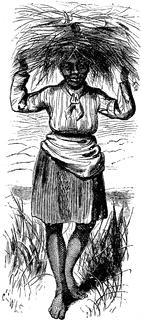
Agriculture
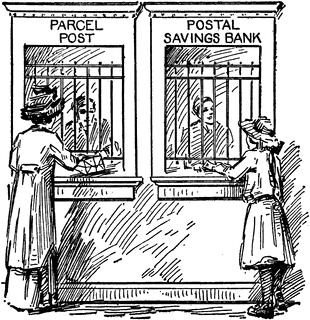
Services
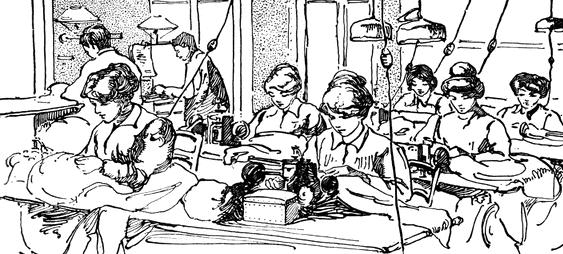
Industry
"the great social evil of a non-labouring class"
"I do not recognise as either just or salutary, a state of
society in which there is an 'class' which is not labouring"
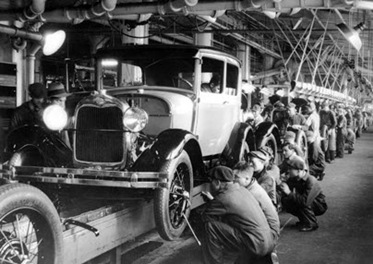
Fordism is one development of industrial society. It
refers to a
system of
mass-production developed by Henry Ford in the car factories he set up in
the United States. These became a model for the low-cost production of
standard goods for a mass market.
"Mass production and mass-consumption were interdependent and
linked by the advertising provided by the mass media" (Fulcher and Scott
2007, p.693).
solid and liquid modernity
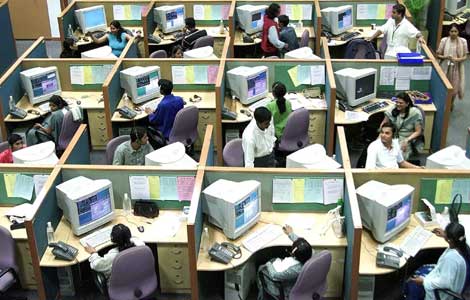
Picture of a call centre posted 14.5.2012 by Paul Skeldon in an
article on internet retailing
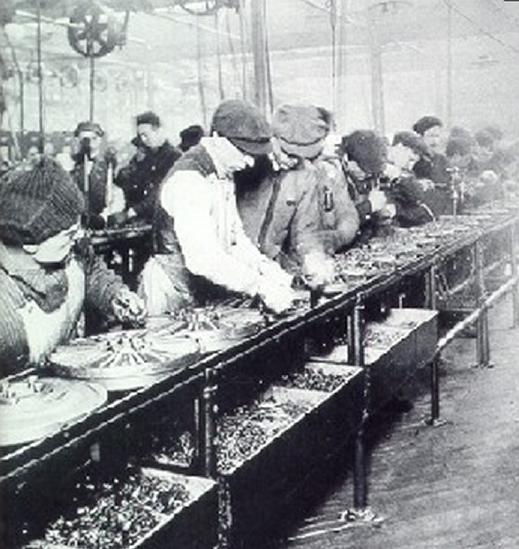
Fulcher and Scott pages 693 following
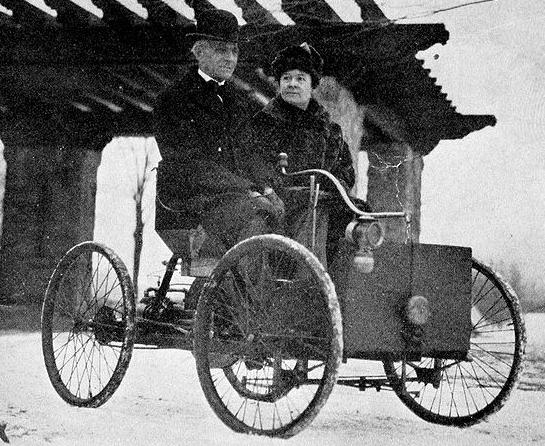

Henry Ford's Model T automobile.
1934 Antionio Gramsci's notes on America and Fordism -
But Americans could not read them until 1971.
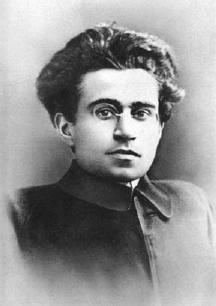

"Modern industry has established the world market, for which the discovery
of America paved the way".
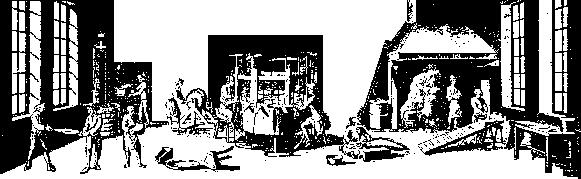
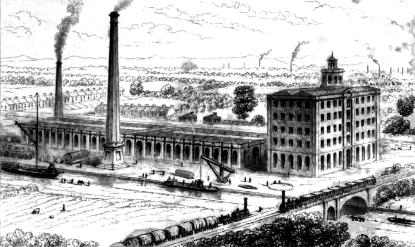
1908
Henry Ford's Model T automobile
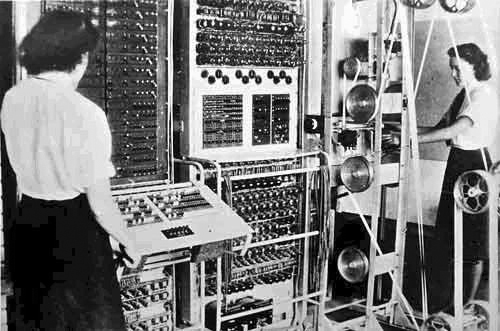
[This section by Malcolm Richardson]
Fulcher and Scott pages 693-697
Fordism
Post-Fordism
Product
Standard
Diverse
Priority
Cheapness
Quality
Market
Mass
Segmented/niche
Work tasks
Fragmented and repetitive
Multiple and varied
Skills
Mainly semi-skilled work
Multi-skilled worker
Labour force
Occupationally divided
Integrated and flexible
Management
Centralised
Decentralised
Industrial relations
Conflictual
Cooperative
Trade unionism
Multiple and independent
Singe and integrated
These two pictures are taken from
Where Women Have No Doctor - A Health Guide for Women
(1997). This part of the book is about Sex and Gender Roles and it
explains that:
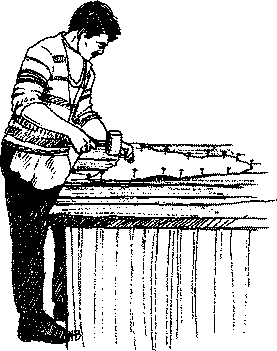
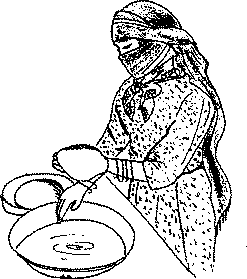
"Each person is born with either a girl's body or a boy's body.
These physical differences determine a person's sex, which does not change
overtime.

"The bourgeois claptrap about the family and education, about the hallowed
co-relation of parent and child, becomes all the more disgusting, the more,
by the action of modern industry, all family ties among the proletarians
are torn asunder and their children transformed into simple articles of
commerce and instruments of labour." (Marx and Engels 1848,
paragraph 2.46)
The coal mines and factory Acts controlled the extent to which women could
work in industry. This was controversial and social theorists such as
Harriette Taylor argued that it was wrong to treat women as children in
order to reinforce motherhood and women working at home.
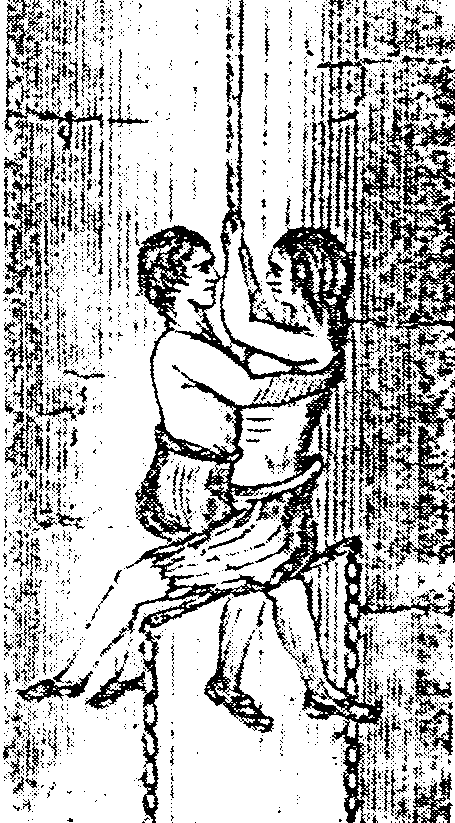
Two semi-naked teenagers descend into a 19th century mine by the rope lift.
Many illegitimate children were said to be conceived in the mines.
"Car factories now provide a wide range of models, each of many
variations in style and engine power, and many optional extras. The decline
of mass
production
was interwoven with the decline of mass
consumption,
where major changes were also taking place. The decline of
class
and
community as sources of
identity and the growth of
individualism meant that
consumer goods were seen increasingly as an expression of personal
identity. This was no longer a matter of the work a person did of the place
they came from but of what they wore, what they drove, where they took
their holidays." Fulcher and Scott page 694.

This part of the lecture has not been written, because I was looking at
the plants in my garden

No. This is not me. - It is a friend looking at plants in my
garden
click for dictionary
WORK
Fulcher and Scott
other main meaning
Stratification,
Class,
Status
Being written
If I do not finish on time I will bluff
Like this
I know what I am talking about and if you cannot understand me it is
because you are all upside down!
How fair is
Britain?
All things bright and beautiful,
All creatures great and small,
All things wise and wonderful:
The Lord God made them all.
Each little bird that sings,
He made their glowing colours,
He made their tiny wings.
The poor man at his gate,
He made them, high or lowly,
And ordered their estate.
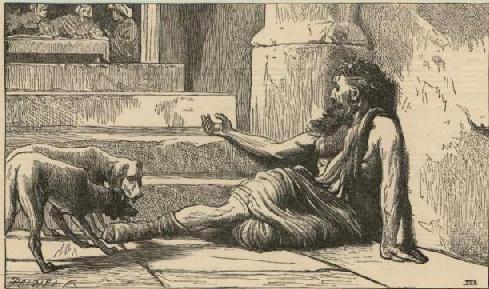
"The
aristocracy, in order to rally the people to them, waved the proletarian
alms-bag in front for a banner."
Stratification
in
geology
and
society
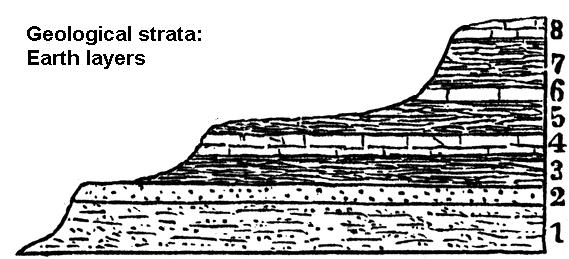
"in the lowest broad
strata of the population..are produced men of every kind of genius."
(Carlyle, T. 1.4.1850)
An
1840 cartoon showed social strata as layers in a beehive
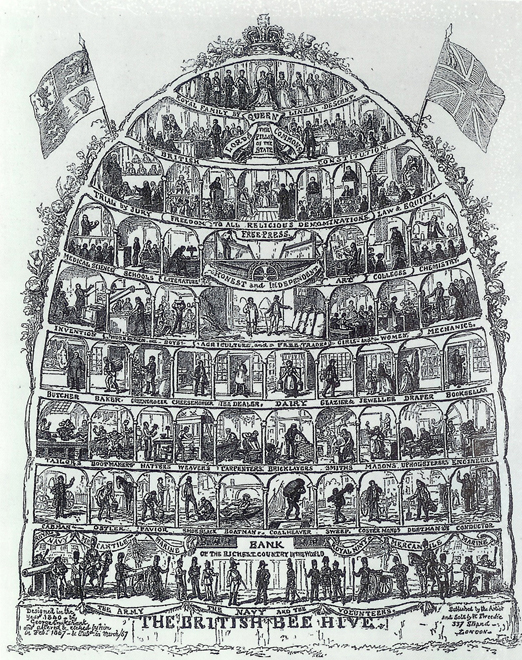
"The history of all hitherto existing society is the history of class
struggles."
Class struggle was the power that heaved stratas of society into
new positions.
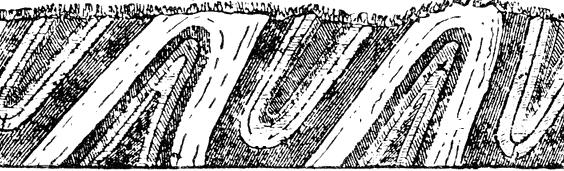

In the
12th century the Chinese philosopher Zhu Xi wrote "I have seen
on high mountains conchs and oyster shells, often embedded in the rocks.
These rocks in ancient times were earth and mud, and the conchs and .and
oysters lived in water, Subsequently everything that was at the bottom came
to be at the top, and what was originally soft became solid and hard"
Slavery is a property relationship. The slave is owned. The English word
had its origin in a Latin word for "captive", on the basis that people
captured in war lost all rights and became the property of their captors.
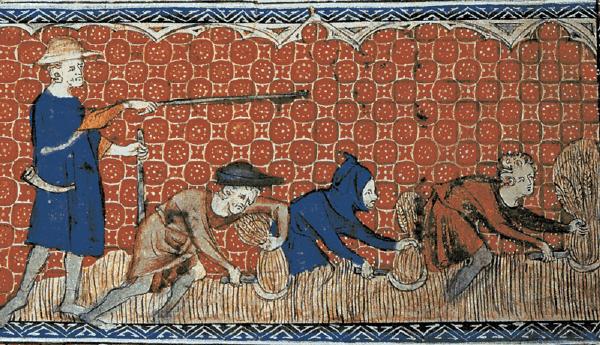
Harriet Taylor (1807-1858) provided the ideas for an article
"On the Probable Futurity of the Labouring Classes" in a book by
John Stuart Mill that was the standard text book on economics in the second
half of the 19th century.
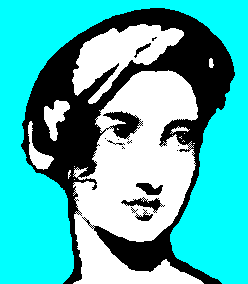
summary of Mill and Taylor's essay

Rosemary Crompton in Class and Stratification (2008,
p.15) speaks of 'Class', a multifaceted concept
7.4.1966 BBC "Frost report" comedy sketch on the British
class system.
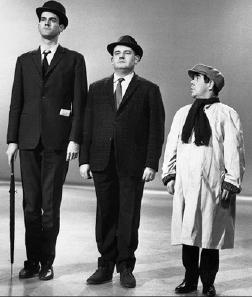
I look down on them because I am upper class.

In this comedy sketch, John Cleese as the upper class man wears a bowler
hat
"the headgear
that once defined British civil servants and bankers"
(Telegraph 5.10.2012)

Ronnie Barker as the middle class man wears a trilby.

Ronnie Corbett as the lower class man wears a cloth cap.
"contrasting aristocrats who sent their children to state
schools with low-paid workers who paid for private education, keen golf-
club members who lived in local authority housing, and self-made men who
had brought their own private shooting rights."
"particular kinds of consumption practices are no longer tied
to particular status groups"

Gordon-Duff-Pennington family "aristocrats who sent their children to state
schools"
who own a castle in
Cumbria, to see what life is like for the upper classes. This family once
owned 23,000 acres of Cumbria but has now been reduced to 1,800.
They battle to preserve Muncaster Castle (the ancestral home). Their
aristocratic Britain "is gone" "Now it's the successful businessmen who bag
the pheasant" (07/03/1996 On Your Uppers)

The Jones family who live in Maghull, Liverpool, who paid for private
education for their children. Talking to them about
"about their lives,
aspirations and hopes for the future as members of the middle class."
(21/03/1996 Keeping up with the Joneses: last programme)
The Annely family low-paid workers on the
Blackbird Leys estate outside
Oxford, whose roots are working class but who are upwardly mobile.
The working class Annely family have adapted to a middle-class way of life.
"The factories have gone and so have the whippets". They are "keen
golf-club members who lived in
local authority housing". "The red flag is kept flying only over the 18th
hole" (14/03/1996 Up with
the Workers)

2013
Journalist Harry Wallop argues that in our consumer society, class no
longer depends so much on how you earn your money as on how you spend it.

"the unstable unity
of shared life experiences mediated by the market and shaped by status,
which Max Weber brought together in the concept of social class, began to
break apart. Its different elements (such as material conditions dependent
upon specific market opportunities, the effectiveness of tradition and of
precapitalist lifestyles, the consciousness of communal bonds and of
barriers to mobility, as well as networks of contact) have slowly
disintegrated'
(Beck, U. 1986/1992 p.96)
"class biographies, which are somehow ascribed, become
transformed into reflexive biographies which depend on the decisions of the
actor"
The last word
click for dictionary
STRATIFICATION
Fulcher and Scott
other main meaning
STRATIFICATION
Fulcher and Scott:
See
stratification and hierarchy and
class
CONTROL
Fulcher and Scott:
CONFLICT
Fulcher and Scott:
 Study
Link
Study
Link
 Andrew Roberts' web Study Guide
Top
of
Page
Andrew Roberts' web Study Guide
Top
of
Page
 Take a Break - Read a Poem
To contact
him, please
use the Communication
Form
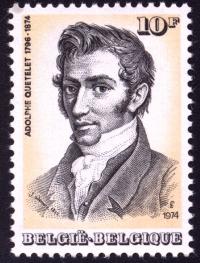
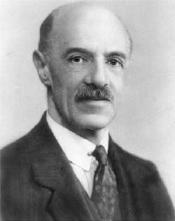
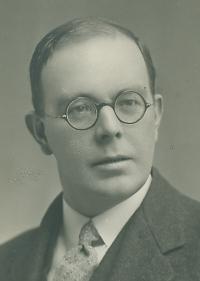
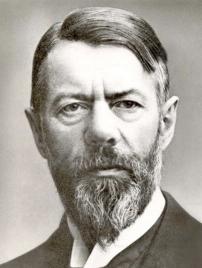 Max Weber