Recommended web address http://studymore.org.uk/sshglo.htm   -   click for referencing advice
  • Society and Science Home Page

    Social Science Dictionary with a Durkheim bias

    Words to describe social reality

    See also mind words   other words
    Social Science History
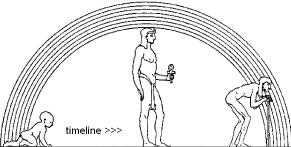
    Society and Science History TimeLine
    Durkheim index: "Consider social facts as things"
  • home
page
to Andrew Roberts' web site
    people

    home page for
society and
science

    Index

    A B C D E F G H I J K L M N O P Q R S T U V W X Y Z

    Absolute
    Acting
    Action
    Action Frame of Reference
    Actor
    Adaptation
    Agency
    Agent
    alienation
    Altruism
    Anarchy
    Anomie and Anomy
    Anthropology
    association of ideas
    Atomism
    Autonomy
    Autocrat
    Authority
    Authoritarian
    Average man

    Barbarism
    Behaviour
    behavourism
    Biology
    Biological Organism
    Body
    Body Image
    Body Language
    Borough
    Bourgeoisie
    Brutalisation

    Capitalism
    Carceral
    Caste
    Career
    charisma
    Childhood
    Church
    Citizen
    Civilisation
    Clan
    Class
    Classical economists
    code
    Collaborate
    Collaboration
    Collective Conscience
    Collective Mind
    Collective Representations
    Common Conscience
    Common Sense
    Common Law
    Communicative Action
    Community
    Community Disintegration Theory Competition
    Conflict
    Conservative
    Constitutional
    Constructed Order
    Construction
    Context
    Contextualise
    Contract
    Convention
    Cooperate
    Cooperation
    Core Gender identity
    Corporatism
    Crime
    critical theory
    Critical thinking
    Cultural Constructs
    Cultural Goals
    Cultural Ideals
    Culture

    Dasein
    decode
    Degeneration Theory
    Democracy
    Despotic
    Deviance
    dialectic
    dialogue
    Dictator
    Discourse
    Disintegration Theory
    Dispositive
    Distinction
    Divine Right of Kings
    Division of Labour
    Domination
    Dynamics
    Dysfunctional


    Ecology
    Economics
    Economists
    Ecosystem
    ego (Freud)
    Egoism
    Embodied Self
    Embodiment
    Emotion
    empirical
    empiricists and empiricism
    empowerment
    Enlightenment
    epistemology
    Equality
    essence
    Equilibrium
    Ethnicity
    Ethnography
    Ethnology
    Ethnomethodology
    Eugenics
    Evangelical Revival (British)
    Everyday life
    Evolution
    existence
    existentialism

    Facts
    family
    fascist
    Feminism
    Feudalism
    Field
    field work
    Fordism
    Force
    Freedom
    Function
    Functional
    Functionalism

    Gender
    Gender identity
    general will
    Generation
    Genetics
    Genotype
    Gens
    Globalisation
    Goal Attainment
    Governance
    Government
    Group

    Habit
    Habitualisation
    Habitus
    Hereditary
    Heteronomy
    Hierarchy
    History
    Historic Social Structures
    Historical materialism
    Holism
    Houshold Economy
    Human Ecology
    Humanity

    id (Freud)
    ideal types
    Identity
    Ideology
    Imagination, society and science
    Image
    Imperative
    Individual and society
    Infantilise
    Inscribe
    Institute
    Institution
    institutionalisation
    Institutions and Mind
    Integration
    Interaction
    Internalise
    Interpellate
    Interpretive
    isomorphic structures

    Kinship
    Knowledge


    Labour theory of value
    Latency
    Latent
    Law
    Legitimate
    Liberal
    libido (Freud)
    liquid modernity
    Lifeworld
    logic

    Magic
    Magistrate
    Man, Mankind, Humanity
    mana
    Marginal Utility
    Marxism
    Mass Media

    Mass Society
    materialist
    Matriarchal
    Meaning
    mechanical solidarity
    Media
    Medieval
    Meetings
    Methodological individualism
    Methodology
    Microcosm
    Mind
    Mode of Production
    models
    Modern
    Modern State
    moral
    Moral Sciences
    moral statistics
    Movement
    Mutual
    Mutuality
    Myth

    Narrative
    Nation
    Natural
    Natural law
    Nature
    neo-classical criminology
    Networks
    Normal person
    Norms
    Nuclear family

    Obedience
    Objectivism
    Order
    organic solidarity
    Organisation
    Organism
    Orientation
    Other

    Panopticon
    participant observation
    Parts of self
    Parts of society
    passion
    Patriarchal
    Pattern
    Pattern Maintenance
    Pattern Variables
    Performativity
    Phenomenological
    Phenotype
    Philosophy
    Pluralism
    Political and Politics
    Political Economy
    Position
    Positive law
    Positive Criminology
    Positivism
    Postmodernism
    Power: gun and ideas
    Power: Hierarchical
    Power: Pluralist
    Pragmatics
    Pragmatism
    Praxis
    Precedent
    Prescription
    Primary socialisation
    Prison
    Process
    Production
    Prices
    Primitive
    Profane
    Proletariat
    Property
    Public Discourse
    Public Opinion
    Public Sphere
    Punishment

    Race
    Rate
    rationalists and rationalism
    Realism
    reason
    Reciprocal Development
    Recontextualise
    reductionist
    (Durkheimian swearing)
    reification
    (Weberian swearing)
    Relativism
    Religion
    Represent
    Reproduction
    Robotics
    Role
    Rules

    Sacred
    Sacrifice
    Savagery
    science
    Scientific socialism
    Secondary socialisation
    Self
    Sentiments
    Sex
    Sexuality
    Slavery
    Social Action
    Social Construction
    Social Contract
    Social Darwinism
    Socialisation
    Social Dynamics
    Social facts
    Social Movement
    Social Order
    Social Science
    Social Space
    Social Statics
    social statistics
    Social (sub) Structures
    Social Structures in history
    Social System
    Social System Needs
    Social Structure
    Social System Parts
    Society
    Society's Parts
    Sociology
    Solidarity
    solid modernity
    Sovereign
    Spatial
    Speech
    Spontaneous Order
    standpoint theory
    State
    State of Nature
    Statics
    Status
    Strain
    Stratification
    Structuralism
    Structure
    structural functionalists
    Subconscious
    Subject
    Subjection
    Subjective
    sub-systems of human action

    sui-generis - also

    super-ego (Freud)
    Supernatural
    surveillance
    Survivals
    symbol
    symbolic interaction
    System

    Taboo
    Technologies
    Them and us
    Theology
    Theosophy
    theory
    tissue
    total institution
    totalitarian
    Totem
    Tradition
    Tribe
    Truth
    Type
    Typification
    Tyranny

    Unconscious
    Underlife
    USA Sociology
    Utilitarianism

    Value
    Verstehen
    Virtual Community

    Weltanschauung
    World-view

    Zeitgeist


    If you have not found it here: click the spider to try somewhere else:
    links to other dictionaries


    click for the ABC Study Guide
index


    Middlesex
University, 
London, England
Mission to put
students first


    Society

    Society is the most general term in modern English for the body of institutions and relationships within which a relatively large group of people live. (Williams, R. 1976)

    Society may not be visible,
but its symbols are

    Society may not be visible, but its symbols are. Click on the fishing bird to know more.

    "every aggregate of individuals who are in continuous contact form a society" ... "individuals must adhere materially, but it is still necessary that there be moral links between them."   (Durkheim, E. 1893/1933 p.276)

    Individual means something that cannot be divided: a unit complete in itself. In the above quotations it refers to single human beings, which is what we usually mean when we say "an individual". In this sense, sociologists later than Durkheim have spoken of "the self" in relation to society. One can, of course, speak of an individual society.
    See also Herbert Spencer's definition of society

    To some people, common sense says society is not real
    (Social atomism or methodolological individualism contrasted with social holism)
    Or does not exist

    For Durkheim, society is originally everything, the individual nothing:
    Durkheim index on society

    Society's parts

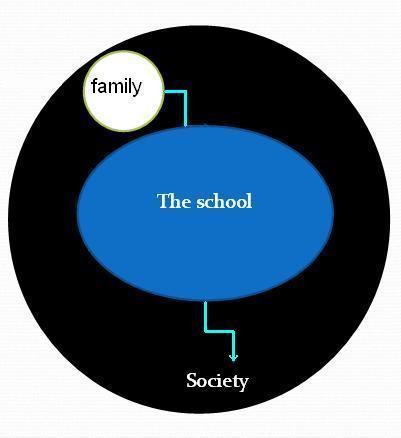
    Filmer and Locke made different analyses of family and politics as parts of society. Filmer argued that political power derives from family power, but Locke said that we should not confuse: paternal or parental power with political power, or either of them with with despotical power.

    Hegel suggested that society (the whole) has three corners: the State ( politics), Civil Society (the economy) and Private Society (the family).

    One of the activities of social theorists has been to theorise about how the parts of society inter-relate.

    USA sociologists, like Talcott Parsons tend to treat society as created by individuals, rather than a reality in itself. However, Parsons argues that individual actions are directed to other people and that, in the inter-action of individuals, a social system emerges. Society, therefore, emerges as a reality. Robert Merton belongs to the same school of thought (Structural Functionalism) as Parsons.

    Parsons uses four interrelated systems ("sub-systems of human action") to analyse this human reality: the biological system, the personality system, the cultural system and the social system

    Social systems have a structure - which can be represented as a diagram of their parts. But the system is dynamic, it moves. It is also comparable to a living organism in that it has needs.

    Four empirical structural clusters

    Parsons identifies four especially important empirical "clusterings" of social structure: 1) Kinship, sex and socialisation [family] - 2) Stratification of occupational roles [class] - 3) Power, force and territory [ State, politics] - 4) Religion and similar systems of orientation and adjustment. (See Parsons, T. 1951 page 152).

    Parsons says social systems have four needs which correspond to parts of the social structure. Three of these fit in with Hegel's division: adaptation (relating to the economy), goal attainment (relating to politics) and latency (relating to the family). Parsons's fourth need is integration, which he relates to religion.

    See Parsons 1951 - 6/7.1956 - 1966

    Playing the creativity ball game: Starting with society - individual - government - we went through solidarity - social - suicide - peer-pressure - drugs - prison - to social glue - division of labour - social view (looking at things Weber's way) - conformity - state of nature - naturist - nudist - rebel - conformity - deviance - religion - anomie - conflict theory - disagreement - anarchy. We discussed the relationship of anarchy to the theories of Hobbes, Locke, Weber and Durkheim. We asked what would give an anarchist society solidarity and whether the state increased or decreased individual freedom.

    Sociology: The science of society. See Durkheim and Weber's Contrasting Imaginations: Who is the Sociologist?. The original French word (Sociologie) was created by Comte in 1839 and there is a sense in which sociology was invented in France. .

    The Emerson timeline (external link) puts the term in context. The French Wikipedia contains (or contained) the disputed claim the the term dates back to 1788/1789. This appears to be incorrect.

    The similarly constructed word "Psychology", for the science of mind, had existed in English since the late 17th century.

    External links to Wikipedia articles on:
    on Sociology   on Anthropology

    At one time of consultation, Wikipedia said "Sociology is the study of social rules and processes that bind and separate people not only as individuals, but as members of associations, groups, and institutions." Then adding as a "typical textbook definition" the "study of the social lives of humans, groups and societies". Durkheim argues that sociology is the scientific study of society: Of the real social forces that contrain our individual actions (social facts).

    Thinking Sociologically

    "Thinking sociologically" is an approach that starts from meaningful individual perceptions and actions rather than the reality of society (which may be disputed). It is a Weberian as distinct from a Durkheimian approach. Bauman and May write "individual actors come into the view of sociological study in terms of being members or partners in a network of interdependence... how do the types of social relations and societies that we inhabit relate to how we see each other, ourselves and our knowledge, actions and their consequences?... to think sociologically is to make sense of the human condition via an analysis of the manifold web of human interdependency.. (Bauman, Z. and May, T. 2000 pages 5 and 9)

    USA Sociology

    In the United States of America, beliefs about society tend to use State of Nature theory as axioms. USA Sociology explores the idea that individuals construct society, without always recognising that to do so is a product of particular societies, at particular times.

    A "general statement" "intended to develop a unified conceptual scheme for theory and research in the social sciences" was published by nine USA social scientists in 1951. Theory was to be based on a "theory of action" in which "the point of reference of all terms is the action of an individual actor or collective of actors".

    Social Science Is a broader concept than sociology. It includes all the sciences with social content, including psychology, politics, economics, human geography, anthropology, etc. The term dates from the late nineteenth century. Older terms with a similar meaning include sciences humaines (human sciences - a French term dating back to the 17th century) - sciences de l'homme (sciences of man) - sciences morales et politiques (moral and political sciences - See 1770 and 1795) - moral sciences, a term used by J.S. Mill in 1843 and by Cambridge University in 1851

    See Porter and Ross 9.2003
    "Moral Statistics" is another term where "moral" may mean social rather than ethical. In the term "moral insanity", moral can mean behavioural or emotional rather then to do with the intellect.


    Anthropology

    Anthropology means the scientific study of human beings. For a time in the 18th and 19th centuries it tended to mean the study of human physical characteristics, but has been extended to cultural and social characteristics. It is the science of humankind in the broadest sense. (See man).

    Ethnology is a mid-nineteenth century term for the science of nations or races. The Ethnological Society, founded in London in 1843, became The Anthropological Society in 1863. In the United States, a New York based American Ethnological Society was started in 1842. A Bureau of Ethnology was established by an Act of Congress in 1879 and the Anthropological Society of Washington at the same time.

    Anthropology has tended to theorise about the evolution of human beings, physically and culturally and to take a cross cultural approach. There is no strict division between anthropology and sociology, they overlap.

    Some well known studies of society that are based on anthropology are Engels' The Origin of the Family, Private Property and the State (1884), Durkheim's The Elementary Forms of Religious Life (1912), and Freud's Totem and Taboo (1913).

    These are based on studies of pre-literate societies. In the twentieth century however, the scope of antthropoloy was extended to all societies. Robert Park wrote, in 1925

    "Anthropology... has been mainly concerned... with the study of primitive peoples. But civilised man is quite as interesting... Urban life and culture are more varied, subtle, and complicated, but the fundamental motives are in both instances the same. The same patient methods of observation which anthropologists... have expended on the study of the life and manners of the North American Indian might be even more fruitfully employed in the investigation of the customs, beliefs, social practices, and general conceptions of life prevalent ... on the lower North Side in Chicago..."

    anthropo comes from the Greek anthropos for human being. ethno, from the Greek ethnos for nation, is used in combination for nation, people or culture. So, by a strange convolution, one gets ethnomethodology, in sociology, which is a method of theoretical analysis of individuals constructing and maintaining the social order (culture?) of everyday situations - Like coping with the complex negotiations of meaning involved in buying a newspaper from a newspaper stall.

    More straightforward: ethnography (writing about race) is used for the scientific description of nations, races or peoples, with their different customs. Utah State University has a collection of student ethnographies online from a field trip to Peru. In 2000 a joural to link anthropology and sociology was launched with the title Ethnography. See also ethnicity

    Anthropometry Measurement of the height and other dimensions of human beings, especially at different ages, or in different races, occupations, etc.

    Anthropomorphic Shaped in human form


    Social System: See society and society's parts - Parsons on society's parts

    In a social system parts are arranged in a pattern of relationships that, together, makes the system.

    See Talcott Parsons' 1942 definition

    Talcott Parsons argues that each of us is an actor playing a role within a system of relationships. He analyses the real (concrete) system we are in into social system, cultural system and our own personality system. (Extracts)

    " a social system consists in a plurality of individual actors interacting with each other in ..." [an environment]... whose relation to their situations, including each other, is defined and mediated in terms of a system of culturally structured and shared symbols." (Parsons, T. 1951 p.5)

    Human relationships being made by means of symbols, links Parsons' system theory to the theories of the symbolic interactionists. Both also, use role as a key concept. The two bodies of thought are, arguably, complementary - With structural functionalism concentrating on analysing social structure, and symbolic interactionism analysing everyday social interaction at social- psychology level. See the argument of C. Wright Miils that social science should be the study of the intersection within social structure of personal biography (and everyday social interaction) and history.

    Parsons argues that "Every social system is a functioning entity". It is

    a system of interdependent structures and processes such that it tends to maintain a relative stability and distinctiveness of pattern and behaviour as an entity"

    In some ways, its behaviour is analogous to an organism.

    ( 1954 Essays, p.143)


    Social System Needs:
    Talcott Parsons says that societies (like all systems and organisms) have needs which must be fulfilled if they are to survive.

      "...process in any social system is subject to four independent functional imperatives or "problems" which must be met adequately if equilibrium and/or continuing existence of the system is to be maintained." (Parsons and Smelser 1957 p.16)

    Social system needs - functional needs - functional imperatives - all seem to refer to the same things: Things a system requires if it is to stay alive and thrive. These needs exist because of the system's relationship with its environment and because of the internal working of the system.

    Parsons says that all societies have four basic needs:

    Every social system must adapt - set goals - integrate - and provide for its latent needs. The initials AGIL are often used to help us recall these four needs.

    See analysis of Society's parts by Parsons


    Absolute or Constitutional

    Constitutional rule is limited - by laws or by the will of those who are ruled, for example. Absolute rule (or absolutism) is the converse of constitutional. It means that a rule is not limited.

    The word absolute comes from being absolved (set free) of the bonds of responsibility. This is the meaning of free in title of King James's book The True Law of Free Monarchies (1598). The absolute monarch is free of the constraints of law: "having absolute power; arbitrary, despotic" (New Shorter Oxford Dictionary). This political use of the word absolute started in the late 16th century. The theory of absolute monarchy developed fully in the 17th century. The final end of absolute monarchy (and the establishment of constitutional monarchy) in Britain was 1688, but in France it was not until 1789.

    From the start, some theorists of political absolutism (Filmer, for example) modelled their arguments on the family where a benevolent father had powers given to him (by God or nature) to rule over his wife and children. The family was the model for political society.

    Criticising both the political and the family model, John Stuart Mill wrote

    "Whether the institution to be defended is ... political absolutism, or the absolutism of the head of a family ... we are presented with pictures of loving exercise of authority on one side, loving submission to it on the other - ... Who doubts that there may be great goodness, and great happiness, and great affection, under the absolute government of a good man? Meanwhile, laws and institutions require to be adapted, not to good men, but to bad. Marriage is not an institution designed for a select few. Men are not required, as a preliminary to the marriage ceremony, to prove by testimonials that they are fit to be trusted with the exercise of absolute power"

    Locke distinguishes paternal from political and from despotic power. In Locke's theory, one gains natural, political, freedom, on becoming an adult able to control one's own life. However, natural freedom can be forfeited (lost because of an offence). When this happens, society's power over the offender becomes despotic.

    There are many words used by theorists to describe absolute rulers or rulers similar to them. These include autocrat (self + rule) despot; dictator (from the Roman magistrate appointed in time of crisis); tyrant, but tyranny also implies that the rule is oppressive or cruel (See John Stuart Mill's use of the term, for example)

    despot Originally Greek for master or lord. A late 19th century dictionary defines despot as "a ruler... exercising absolute power in a state, irrespective of the wishes of the subject"; and despotic as both absolute and arbitrary government. Arbitrary government is by the will of the ruler, without regard for rules or laws. It is capricious and unpredictable.

    Durkheim compares despotism to childhood: "A despot is like a child; he has a child's weaknesses because he is not master of himself. Self-mastery is the first condition of all true power, of all liberty worthy of the name. One cannot be master of himself when he has within him forces that by definition, cannot be mastered."

    Whilst Locke separates despotic power from family (paternal) power (see above), John Stuart Mill applies the concept "despot" to the rule of men in families, at least when it is based only on their being men. See Mill index


    Alienate - Alienation

    See Rousseau and Marx and Engels


    Action Interaction

    Max Weber wrote: In action is included all human behaviour when and in so far as the acting individual attaches a subjective meaning to it.

    Meaning The meaning of something is what it refers to or stands for. If you mean to do something, you intend to do it. Meaning and action are intimate relations.

    Behaviour contrasted with Action

    When you blink, it is behaviour, you intend nothing, it has no meaning, it is not an action. If you wink you intend something, it is not just behaviour, it is action.

    Blinking: the involuntary closing and opening of the eyelids that happens all the time that we are awake.
    Winking: Closing one eyelid briefly as a signal to someone else, perhaps to suggest that what you have said is a joke, or has a hidden meaning.

    Social Action

    Max Weber wrote:

    " Action is social in so far as, by virtue of the subjective meaning attached to it by the acting individual (or individuals), it takes account of the behaviour of others and is thereby orientated in its course."
    Action Frame of Reference

    Talcott Parsons began his theory (1937) with the "Action Frame of Reference", a development of the "Voluntaristic Theory of Action" that he saw as developing in social theory. He then moved on (1951) to analyse of social systems in terms of the action frame of reference.

    At some time in 1950, Parsons and eight other USA Social Theorists reached agreement on a General Statement respecting concepts for a "Theory of Action". They wrote that "In accordance with already widespread usage, we shall call these concepts the frame of reference of the theory of action"


    Actor See both action and role

    Someone who acts - that is does things with intent, meaningfully, as distinct from behaving without meaning. (See action).

    Another word for actor, in this sense, is agent: Someone who does something.

    How does action relate to social structure? Think of action and you probably think of people freely choosing to do things. How does that happen if the structure of society is deciding what they do? Relating action to structure is what is meant by the "problem of agency and structure".

    Actor can also mean role-playing - as actors do on a stage.


    Adaptation - Adjustment - Accommodation - Assimilation

    To adapt is to alter to make fit for use. To adjust is to arrange things so that they fit together or harmonise. Accommodation is (usually) human beings adapting themselves to one another's needs. Assimilation is to take in or absorb something.

    Adaptation in biology and ecology

    Robert Park says that The term adaptation came into vogue with Darwin's theory of the origin of the species by natural selection. As this suggests, adaptation is a term relating to the way an organism alters itself in relation to its environment. [See Introduction to Darwin's Origin of Species]

    Jean Piaget (9.8.1896-1980) applies this to the psychological development of human beings.

    Piaget argues that we have mental structures that adapt (alter) in response to challenges the environment presents to our activities. Schema are elements of these structures. They are variable ways of acting which have a common feature. For example, we grasp different objects with different muscle movements, but there is an overall plan of acting.

    The adaptation of a mental structure is a two-sided process. The two sides are accommodation and assimilation. In accommodation, the existing schema is altered in order to adapt to a new element in the environment. In assimilation, the new object of experience is incorporated into the existing schema.

    The two processes take place together. An example is a child who can grasp large objects, but not small ones. To learn to grasp small ones, s/he has to attempt to grasp them: This is attempting to assimilate the small object into the existing grasping technique. In doing so, however, the technique will need to be modified: That is, it will accommodate to the new task.

    Park and Burgess

    Park and Burgess also make use of the three concepts of adaptation, accommodation and assimilation. (See Ecology). They do so in a different way to Piaget. They use adaptation for the unconscious biological alteration of organisms in relationship to one another, and accomodation for the conscious alteration of human beings in realtion to one another.

    "adaptation is applied to organic modifications which are transmitted biologically; while accommodation is used with reference to changes in habit, which are transmitted, or may be transmitted, sociologically, that is, in the form of social tradition"

    Assimilation is a more thoroughgoing form of accomodation. Through intimate relationship, people comw "into possession of a common experience and a common tradition"

    Talcott Parsons' Adaptation

    Adaptation (he maybe thinking of the adaptation of the society to its environment) is one of the four basic needs that Parsons says that all Social Systems have. All societies need a mechanism to allocate resources. In the social system as a whole, this is done by the economy.

    Parsons also says that adaptation is a specialist function of the organism

    Economy and Civil Society

    In Hegel's analysis of society, the economy is rooted in civil society, which includes the judicial and police system that make transactions possible.

    See also Political Economy

    Erving Goffman's two types of adjustment

    Goffman defines two types of adjustment of people to institutions. Primary adjustments are ones that harmonise the individual with the institution on the way that is intended. Secondary adjustments are habitual ways in which people get round the organisation's assumptions about what they should do and be. The totality of such secondary adjustments is an organisation's underlife


    Altruism - Egoism

    Egoism is the older word - Although it only dates back to the late eighteenth century. It is from ego, the Latin for I. It means the same as when people say "me - me - me - me - me"! It is about selfishness or following self interest in opposition to other peoples interests.

    Social theories developed from Hobbes are egoistic. They assume that following individual self interest is natural and that what needs to be explained is how self interest can be restrained enough to make society possible. So, Herbert Spencer, who writes in the tradition of Hobbes, says

    "The promptings of egoism are duly restrained by regard for others." (quoted in the Shorter Oxford Dictionary)

    Altruism is a word formed by Auguste Comte in 1851, to talk about benevolent, in contrast to selfish inclinations.

    Two great schools of sociology, one built on Hobbes and the other on Rousseau, can be distinguished by whether they consider altruism a real, solid aspect of human nature. Following the tradition of Rousseau, Emile Durkheim wrote:

    "altruism is not destined to become, as Spencer desires, a sort of agreeable ornament to social life, but it will forever be its fundamental basis" (Durkheim 1893 p.228)


    Anarchy

    From Greek for without a chief.

    As a political fear, anarchy is chaos. Thomas Carlyle wrote:

    "Without sovereigns, true sovereigns, temporal and spiritual, I see nothing possible but an anarchy; the hatefullest of things."

    But there is also a political theory that sets it out as an ideal. Geoffrey Keith Roberts in his book on Anarchy defines it as:

    "The organisation of society on the basis of voluntary cooperation, and especially without the agency of political institutions, i.e. the state."

    The quotations are from the Oxford English Dictionary

    William Godwin


    Animism

    "The theory which endows the phenomenon of nature with personal life might perhaps conveniently be called 'animism'" (E.B. Tylor "Religion of Savages" 1866)


    Aryan

    In the wake of national socialism, aryan is a highly contentious term. Following the Wikipedia link above and examining the struggle over the term there (see discussion page, for example) may indicate how contentious it is.

    I have included Walter Theimer's, critical, 1939 dictionary entry on Aryans in the file on National Socialism

    Max Müller, in 1861, speaks occasionally of an Aryan race (pages 213, 245, 246, 256). More often, he uses terms like the "Aryan family of speech". He made clear in 1888 that his use of Aryan was as a cultural rather than a biological concept:

    "Aryas are those who speak Aryan languages, whatever their colour, whatever their blood. In calling them Aryas we predicate nothing of them except that the grammar of their language is Aryan"


    Authority See also legitimacy
    authoritarian and authoritarianism

    The Plain English Dictionary says that "If someone has authority over a group of people, they have the legal right or power to tell them what to do"

    Authority is a special kind of power. It is not just force. The word's origins are linked to ideas of God as the "author" of our being.

    There is something magical about authority and many social theorists have discussed its special qualities as a key to understanding society. (See, for example, Rousseau, Weber, Freud and Scruton)

    Authority is the right to enforce obediance. A crook with a gun may have the power to force you to obey, but does not have the authority to do so.

    Hobbes argued that submitting to force can create a duty to obey, but Rousseau replied:

    "Force is a physical power, and I fail to see what moral effect it can have. To yield to force is an act of necessity, not of will - at the most, an act of prudence. In what sense can it be a duty? Let us then admit that force does not create right, and that we are obliged to obey only legitimate powers"

    We tend to say that a government has authority if is legitimate.

    Authority and arbitrary power

    Authority can be contrasted with reason. This appears to be what Mary Wollstonecraft does in Vindication of the Rights of Woman, chapter one, where she is discussing "The Rights and Involved Duties of Mankind". She says

    "any ... maxim deduced from simple reason, raises an outcry - the Church or the State is in danger, if faith in the wisdom of antiquity is not implicit; and they who ... dare to attack human authority, are reviled as despisers of God and enemies of man"

    Here, authority is the people in power, and it is associated with what Max Weber called "traditional authority" and Wollstonecraft calls "the wisdom of antiquity".

    Wollstonecraft is supporting what we might call the "authority of reason". She associates (traditional or established) authority with arbitrary power. Arbitrary power is not governed by reason (See absolutism). She associates reason with the power of the people, when informed by the free discussion of ideas, and says:

    "when once the public opinion preponderates, through the exertion of reason, the overthrow of arbitrary power is not very distant"


    Authoritarian and authoritarianism

    Authority is an old English word, coming from French and Latin after 1066 (the Norman conquest). Authoritarian (late 19th century) and authoritarianism are relatively new words. Authoritarian means in favour of obedience - in politics, the family, or wherever. An authoritarian style of government is called authoritarianism.

    Here is the definition of Authoritarian from a 1939 Political Dictionary (English). In 1939, Italy (Fascist) and Germany (Nazi) were proud to be authoritarian:

    "Authoritarian: a term denoting a more or less dictatorial system of government, as opposed to the democratic system based on the people's sovereignty. Adherents of authoritarianism criticise the alleged disunion and inefficiency of the democratic system, and praise the alleged advantages of a strong State authority. The question where the bearers of this authority derive it from is left open."


    Average and Normal

    The idea of an average or normal person is an historical construction. This is reflected in the history of the word "normal". An important stage in the development of the concept was the idea of "the average man" (l'homme moyen) put forward in the work of Quetelet (1835). But what we mean by normal or average can mean different things. See, for example, the different mathematical meanings for average.

    See also norms


    Biology

    Biology (the 'science of life') is the study of living organisms. See also body.

    Talcott Parsons distinguishes biological systems from personality - social - and from cultural systems. In this sense, the biological relates to the physical organism and its processes as distinct from the processes relating to the structure and organisation of the personality, of social inter-relations and of culture and language.


    Biopower

    This word is used by Michel Foucault. It includes forms of knowledge - (discourses). For example, medical theories about how women should give birth to their babies are a form of power. This kind of knowledge shapes what women do with their bodies.


    Body

    The material frame of humans or animals. The word derived, at one stage, from the word for corpse. It is the flesh as distinct from the spirit.

    René Descartes argued that the body is a machine which, in humans, but not animals, is directed by the soul.

    A biological analysis of the body analysis of the body as a machine only gives us one view of it. (See Foucault) Human bodies are also shaped and organised by society. This is sometimes expressed by saying bodies are socially inscribed. Michel Foucault says

    "the body is also directly involved in a political field; power relations have an immediate hold upon it; they invest it, mark it, train it, torture it, force it to carry out tasks, to perform ceremonies, to emit signs."

    Associated concepts: embodiment - embodied self -
    See Grosz - habitus - Mead - Sawicki -


    Body
    Image

    Explained by Oby Barnes, May 2007 essay:

    Body image is the picture of my body that I have in my mind. It is different from the body that I actually have. My body image may be fatter than I really am. In other words, I imagine myself to be a bit on the fat side. I may also imagine myself to have smaller breasts than I have. Perhaps I see a man with a floppy chest and think "he has bigger breasts than me". If I compared, I would see that I have breasts and he has just got a floppy chest, but my feelings give me a picture of my body that is different than the real body. My body image is not the same as my real body. It is not the same as the image I have in my photograph album. The image of my body that I see in the mirror is somehow related to what I imagine in my mind - But my mind's body image is what I have even when I am not looking in the mirror, and it can be very different.

    Quotation from Elizabeth Grosz used by Oby in illustration:

    "The ego is like an internal screen on which the illuminated images of the body's outer surface are projected. It is not a veridical map, a photograph, but a representation of its degrees of erotogenicity, of the varying intensities of libidinal investment in different body parts. The ego is an image of the body's significance or meaning for the subject; it is as much a function of fantasy and desire as of sensation and perception. (Grosz. E. 1992 pp 268-269)."


    Body Language

    Body language is one of the systems of communication, apart from speech, that humans use. It is a language that does not distinguish us from other animals. Most of it consists of (unconscious) behaviour rather than (deliberate) action. Examples of body language are the way we sit and the gestures we make. In a group discussion, leaning forward may indicate an interest in what is being said. As with speech, body language can communicate false messages. If someone leans back and closes his eyes in order to concentrate, other group members can interpret it as lack of interest. Body language can be brought under the control of the conscious mind and used to improve relations. Smiling and nodding at a speaker can improve the speaker's confidence by suggesting support and interest from the listeners.

    George Mead called body language a conversation in gestures:

    " Language is part of social behaviour. There are an indefinite number of signs or symbols which may serve the purpose of what we term language. We are reading the meaning of the conduct of other people when, perhaps, they are not aware of it. There is something that reveals to us what the purpose is - just the glance of an eye, the attitude of the body which leads to the response. The communication set up in this way between individuals may be very perfect. Conversation in gestures may be carried on which cannot be translated into articulate speech."

    See Semiotics   Darwin

    Embodiment and Embodied self

    Theories that relate human thought and identity to the body are sometimes called theories of embodiment or of the embodied self.

    Mead: presents the self and the mind as "the importation of the conversation of gestures into the conduct of the individual organism".

    A gesture is an action of the body that is cut short and becomes a symbol. Thus a dog's snarl is the start of a bite that is not carried through. Mead calls the interchange of snarls and barks between dogs a conversation.

    In human beings, symbolic conversations of gestures become internalised so that one human being repeats in his or her own head the responses of other human beings to his or her own gestures. So, if we snarl, we also understand how others will perceive our snarl and understand how and why they respond.

    Mead talks of the "individual organism" 'taking' the "organized attitudes" of other people which are "called out by its own attitude, in the form of its gestures" . This image of ourselves as others see us, is a pattern of their responses to our gestures which we have taken inside us, or internalised.

    This ability to think of ourselves as others may see us - to see and respond to our own gestures as if we were someone else - is part of the process whereby - in the course of evolution - mind, self and society develop from the interaction of animals.


    Bourgeoisie, Borough, Bourgeois ,

    The bourgeoisie are a social class who make their money from the capital they own. They make money from money, or from owning businesses. They are distinguished from the landowning aristocracy, who make their money from rents, and the working classes who make their money by their labour. The word comes from the same source as borough. Originally the bourgeoisie lived in towns (like the city of London) where they had freedoms to trade and govern themselves granted by the king.

    Because they are the class between the aristocracy and the labouring class, bourgeoisie is sometimes used as another word for middle class. Because many of the richest and most powerful people in modern society make their money from finance or business, bourgeoisie is sometimes used as another word for upper class. In using the word you need to be sensitive to its context. A landowning Earl, for example, is upper class, but not bourgeois.

    Bourgeois is also used as a word for attitudes that some people believe to be typical of the bourgeoisie. If someone calls you bourgeois, they probably do not mean that you make your money from capital, or that you live in a town. They probably do mean that you are conventional, humdrum, unimaginative or selfish and materialistic. They could mean that you are an opponent of communists.


    Brutalisation

    Engels speaks of brutalisation repeatedly in his The Condition of the Working Class in England. He means that social conditions reduce people to responding like animals, or even things.

    The idea relates back to Rousseau's idea that society transforms people from an animal state to a human state in which they act morally (in accordance with the general will) rather than according to natural desires. Natural animal desires are thought of as determined - the animal just does what its instincts lead it too - whilst the human, moral, will is free and self- determined.

    "Under the brutal and brutalising treatment of the bourgeoisie, the working-man becomes precisely as much a thing without volition as water, and is subject to the laws of Nature with precisely the same necessity; at a certain point all freedom ceases."

    In Engels' analysis, society can not only make us human, it can also undo our humanity. And when society brutalises, it also de-moralises. But Engels argues that rebellion offers the worker the choice of freedom rather than determination and, consequently, the opportunity to restore humanity.

    "When people are placed under conditions which appeal to the brute only, what remains to them but to rebel or to succumb to utter brutality?"

    " The workers... strive to escape from this brutalising condition, to secure for themselves a better, more human position"


    Capitalism See Modern

    Capitalism has become the term for the present period of social history that Saint Simon, in 1817, called industrial and Marx and Engels, in 1848, described as modern bourgeois society

    Industrial now is usually associated with the development of machinery and, especially, machinery powered by steam (mid 18th century on). Saint Simon and Marx both date the origins of present society well before this.

    Saint Simon divided the history he knew about at two crucial points: at about the third/fourth century AD and about eleventh/twelfth century AD. These divided the three systems that scientific history could identify: that based on slavery, which had polytheist ideas; that based on feudalism, which had theological ideas; and the industrial system that had positive or scientific ideas.

    The fully developed systems were divided by critical periods of turmoil and change. At the time he wrote, Saint Simon considered that the industrial system had not yet achieved its maturity, and the last remnants of the feudal system were not yet extinct. It was a long slow process. Comparing the turmoil of the early 19th century to that of the third/fourth century AD, he writes:

    "The philosophical revolution which then took place consisted in the passage from polytheism to theism. Once this revolution was completed, once theism was organised, a corresponding political revolution resulted, which consisted of the passage from the ancient social order which had existed amongst the Greeks and the Romans to the one that was later established among modern peoples...

    The transition which is now taking place is composed, like the preceding one, of two elements: one philosophical and one political. The first consists in the passage from the theological system to the terrestrial and positive systems; the second, in the passage from the regime of arbitrary rule to a liberal and industrial regime.

    The philosophical revolution has long since begun, because we should trace its origins back to the study of positive sciences introduced into Europe by the Arabs more than ten centuries ago. To complete this revolution we have to accomplish only one more thing: we must finish the comprehensive work necessary for the organisation of a positive system, whose elements now exist isolated.

    The transition in its political form can be said to date from Luther's Reformation. Although this political transition has been less catastrophic than the political transition from polytheism to theism, it has already produced great misfortunes; it was the issue behind the Thirty Years' War, the two English Revolutions of the seventeenth century, and the French Revolution"


    Carceral

    Of, or belonging to a prison. Word came into English in the sixteenth century from French.

    Ted Odgers is an imaginary left-wing university lecturer invented by Laurie Taylor. His April 2006 analysis of university reforms shows how the carceral system (below) can be used to explain almost everything:
    "When you analyse all these new management tools, you begin to see that they are nothing more than a subtle way of controlling the workforce. What we are seeing here is an extension of what Foucault called the carceral archipelago. We're all in a Panopticon now. You know, one of those round things where the guards in the middle can see everyone in the cells. Just transplant that to the university and you'll see what I'm getting at" (Laurie Taylor's University of Poppleton Calendar 2006 The Times Higher Education Supplement)

    Michel Foucault refers to the carceral system which became complete in 1840.

    Foucault's images of a carceral system are related to his analysis of a response to a plague stricken city and Bentham's model institution, the Panopticon. Foucault says:

    " The panoptic schema, without disappearing as such or losing any of its properties, was destined to spread throughout the social body; its vocation was to become a generalised function. The plague-stricken town provided an exceptional disciplinary model: perfect, but absolutely violent; to the disease that brought death, power opposed its perpetual threat of death; life inside it was reduced to its simplest expression; it was, against the power of death, the meticulous exercise of the right of the sword. The Panopticon, on the other hand, has a role of amplification; although it arranges power, although it is intended to make it more economic and more effective, it does so not for power itself, nor for the immediate salvation of a threatened society: its aim is to strengthen the social forces - to increase production, to develop the economy, spread education, raise the level of public morality; to increase and multiply."


    Career

    In its broadest sense, a career is a path through life. Erving Goffman writes about the moral career of patients to distinguish the path through changing social roles and expectations from the path taken by any underlying disease. He says

    "Traditionally the term career has been reserved for those who expect to enjoy the rises laid out within a respectable profession. The term is coming to be used, however, in a broadened sense to refer to any social strand of any person's course through life" (Goffman E. 1961A p.119)

    When someone enters a total institution, he or she

    "begins some radical shifts in his moral career, a career composed of the progressive changes that occur in the beliefs that he has concerning himself and significant others." (Goffman E. 1961A p.119)

    This is a development of Parsons' idea of the sick role. We can see the person's social role developing. What happens in the course of his illness is a combination and interaction of his or her changing social roles (moral career) and the physical and psychological progress of the disease.


    Caste See Class -
    Caste is a European word for a European understanding of social divisions in Hindu India. Websters (American) 1913 dictionary says that the laws of Brahmanism divide people into four hereditary groups: the Brahmans, or priests; the Kshatriyas, or soldiers and rulers; the Vaisyas, or husbandmen and merchants; and the Sudras, or labourers and mechanics. Men of no caste are Pariahs, outcasts. "The members of the same caste are theoretically of equal rank, and same profession or occupation, and may not eat or intermarry with those not of their own caste."

    Caste is also used in other contexts where social stratification appears to be hereditary.

    See 1936 William LLoyd Warner "American Class and Caste"
    1944 "When we say that Negroes form a lower caste in America, we mean that they are subject to certain disabilities solely because they are "Negroes" in the rigid American definition and not because they are poor and ill-educated" (G. Myrdal 1944 An American Dilema)


    Childhood See Family - Equality - Freedom - Hierarchy - Internalise - habitus durable - Infantilise - Latency
    "No other mammal grows at so a tempo as man, there is none that takes so long to grow up after birth; none with so long a senility" Louis Bolk

    The Dutch theorist, Louis Bolk (1866-1930), argued that human beings are distinguished from other animals by retaining features that in other animals are left behind in the womb.

    Our embryonic, foetus like, characteristics, make us more adaptable than other animals. A particular feature of this is the long period of "childhood" when we are particularly adaptable.

    Childhood, however, is more than a biological period. It is socially structured as well. Originally, in English, the word child was similar to the word for an unborn baby. This may relate to there being a much shorter period of childhood in the past than now.


    Citizen See Borough - City - Equality -
    The word citizen was used for someone who lived in a city (town, borough). The cities and boroughs of medieval Europe gained rights from the monarch that allowed them to trade and gave freedoms to the people who lived in them that people in the feudal countryside did not have.
    A broader meaning of citizen is someone who is a full member of his or her nation, with full rights and responsibilities. The 1911 Encyclopedia contrasts citizen in this sense with "alien".


    City Also see politics and civilisation -

    "The city is ... the natural habitat of civilised man... all great cultures are city-born... world-history is the history of city men. Nations, governments, politics, and religions - all rest on the basic phenomenon of human existence, the city." (Oswald Spengler, Untergang des Abendlandes, 4, p. 106, quoted by Robert Park)


    Clan   Gens   Tribe   Sib Also see politics - state - nation - race

    Each of these words is used to describe a society based on family ties. Clan is a word from the Scottish and Irish languages. Some anthropologists use clan for groups that trace their descent through the mother (matrilineal); gens for ones that trace their descent through the father (patrilineal) and sib to cover both types. [See Weber]

    Gens was a sub-division of the Roman curia or tribe. [See Engels on gens]

    Tribe was used by anthropologists to describe a grouping of smaller family units thought to have preceded the nation in the evolution of society. This is the definition from the 1911 encyclopedia:

    "any aggregate of families or small communities which are grouped together under one chief or leader, observing similar customs and social rules, and tracing their descent from one common ancestor. Examples of such enlarged families are the twelve tribes of Israel. In general the tribe is the earliest form of political organisation, nations being gradually constituted by tribal amalgamation"

    Gentile See Gens

    In Latin gignere meaning "give birth to" in the sense "beget" (Adam and Eve beget Cain, who beget someone else, etc) gave rise to gens for clan or race, and gentilis for people belonging to other clans/races. In the Latin Bible (Vulgate) gentilis (translated into English as gentile) was used for people who are not Jews.

    Nineteenth century anthropology used gentile for people organised politically in families (gens - tribes), instead of states.


    Class a Raymond Williams keyword
    See status

    In general terms a class is any number of people or things grouped together, graded together or thought of separately from other groups, especially if we are thinking in terms of quality. First class passengers and second class passengers on trains, for example, are distinguished by the quality of the carriage and seats they have paid for. In education a class is a group of people taught together, or the quality of a British degree.

    See Caste
    In sociology, class usually refers to a division of society thought of as a kind of layer in the social cake. We speak, for example of upper class, professional class, lower class and working class. A class is always part of the whole (society), never the whole itself.

    Developing the theories of Saint Simon (see below, under capitalism), Marx and Engels argued in the Communist Manifesto that conflict between changing social classes is the motor that moves history from one stage to another.
    ""The history of all hitherto existing society is the history of class struggles""     [See below under political economy]

    In the theories of Marx and Engels, as in those of other political economists, classes are defined by their relation to production. The two main classes of capitalism are the bourgeoisie and the proletariat. Engels in Principles of Communism (1847) calls the proletariat the "working class of the 19th century". They are people who live by selling their labour-power - Wage earners. In The Condition of the English Working Class (1845) he traced the origin of the proletariat to the industrial revolution.


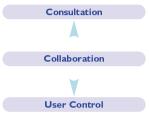
    Collaborate, Cooperate
    Mutuality

    Collaborate and cooperate both mean working together to achieve something. Mutuality has a related meaning.

    Cooperation and Time Management


    Collective Conscience
    Common Conscience
    Also see common sense

    "The totality of beliefs and sentiments common to average citizens of the same society forms a determinate system which has its own life; one may call it the collective or common conscience." (Durkheim 1893 pp 79-80)

    Freud uses the concept of the Collective Mind


    Collective Representations
    Cultural Constructs
    See Represent

    A collective representation is the way that a Durkheimian theorist might refer to what a Weberian might prefer to call a cultural construct. Both refer to things that exist for everyone's use, like calendars, languages, symbols, social institutions, stories and myths. For example, the Christian image of the cross, is a Collective Representation and a Cultural Construct. We may have private, personal meanings for the cross symbol, but out there in society it has a collectively understood meaning.

    The difference between Durkheimian and Weberian theory is that the Durkheimian treats such objects as social realities external to individuals: realities that shape individual lives. (The Durkheimian treats "social facts as things"). The Weberian thinks of these things as being constructed (at some time) by individuals for use in social activities.

    Durkheim says

    "Collective representations are the result of an immense cooperation, which stretches out not only into space but into time as well; to make them, a multitude of minds have associated, united and combined their ideas and sentiments; for them, long generations have accumulated their experience and their knowledge"

    Time


    Community
    a Raymond Williams keyword
    see different types of group
    Belonging - Ecological - Virtual - Academic - Disintegration
    External links: Wikipedia - New World

    A community can mean a group of people living in the same area. This place based definition is central to the idea of an ecological community, which is a significant concept in social theory.

    However, community more usually refers to a group that you belong to, that you feel you belong to, and that you share important things with. - A definition that does not apply to animal and plant communities, or to many aspects of human communities when considered as based on place.

    The word community has been part of the English language since the 14th century . It came from French and Latin words that link to the idea of things being held in common.

    Raymond Williams says that its complexity of meaning is due to its being used to refer to matters that are of "direct common concern" (e.g. a community of interests) and also to various forms of organisation (e.g the university community) which may reflect those common interests.

    Although, in this way, community can refer to organisation, it has a warmth and closeness compared with the coldness and distance of the "state". It also has a breadth of values, compared with the narrow focus of economics. It can, therefore, be meaningful to divide society into state, economy and community. When this is done, a central part of the community is the family.

    Williams says that community differs from other terms for social organisation, such as state, nation and society, because it is never used unfavourably. It is always a good word. ( Williams, R. 1976 pp 65 to 66)

    Community and some concepts that can be related:
    active citizenship - participatory democracy

    "Community has been stripped of its original identity and turned into a commodity for private consumption which makes it a concept made to the measure of the current liquid modern for shaping and training its inhabitants "as consumers first,and all the rest after'" (Bauman, Z. 2004? p.66)

    External link: Communitarianism
    Professor Steve Fuller, Warwick and Tokyo

    Nazi ideas on community Adolph Hitler's Mein Kampf develops ideas of natural selection through the struggle for survival. The simplest (earliest) biological organisms struggle with one another as individuals. The struggle at a human level is between racial organisms. Hitler says: "The instinct for the preservation of one's own species is the primary cause that leads to the formation of human communities. Hence the State is a racial organism, and not an economic organisation.". The evolutionary movement from self-preservation to community-preservation is made possible by the development of sacrifice

    Ecological Community

    The word community is also used for a group of interdependent plants or animals growing or living together in natural conditions or inhabiting the same locality.

    As this is applied to associations of plants and animals, it has none of the subjective feeling of identity that is attached to usual uses of the word in a human context.

    When Park and Burgess apply the ecological term community to human groups, they apply it to relationships that are not necessarily conscious (see index), whereas society is applied to relationships that are necessarily conscious (see index). Human community, in their concept, therefore range from ones with little or no conscious (subjective) identity, to ones with a lot.

    Wirth (in the same book) distinguishes community and neighbourhood on the basis of "sense of unity". In simple societies, he says, local community and neighbourhood are the same. Kinship and common tradition bind people together. In the city, however, this sense of unity may be lost. Here, Wirth is using "community" in its more familiar use, not its ecological use (which includes neighbourhood).

    Park and Burgess define community by place:

    " Community is the term which is applied to societies and social groups where they are considered from the point of view of the geographical distribution of the individuals and institutions of which they are composed."

    [Problems with the place based definition of community are that some communities (nomadic ones) move and others are dispersed (for example the "diaspora" and others are virtual

    Starting from this concept of people and institutions relating together within a defined space, Burgess distinguishes three distinct conceptions of community:

    ecological community

    cultural community

    political community


    Virtual Community

    Virtual indicates an electronic equivalent of something in the real world. An early use (about 1987) was virtual reality which is the impression of being in a real space, whereas the experience is really created by a computer. You might, for example, feel you are sitting at the wheel of a car and have to avoid obstacles.

    Virtual now means something imagined rather than physically present. The Open University, for example, started a course in the spring of 1992 that was taught almost entirely on computer networks "to explore the possibilities of virtual classrooms"

    The Whole Earth Review (1989) spoke of computers creating a "shared reality" for their users. It is this shared reality , and those that use it. that we speak of as a virtual community. Howard Rheingold published a book with this title in 1993.

    In this sense, the internet has created a world wide academic community by enabling a free and open expression of ideas. But it is one that does not have the warmth of face to face relationships. A 1999 paper from the web team at Middlesex University described how they envisage the university intranet helping to build community.

    The relationships between computers and humans in academic life are analysed by Charles Crook in Computers and the Collaborative Experience of Learning. See also some suggestions I made about the relation of computers to the academic community and some discussion points, including the alternative concept of collegiate learning.


    Academic Community

    "A University should be an academic community inter-twined with a social community: A community that talks about issues over coffee, but argues its points with research and initiative" (David Medawar)

    Discussions with staff and students show that, for many, the idea of an academic community is something they value, or regret when it is absent. The idea includes not only the warmth of mutual support, but also the vibrance of debate, the excitement and stimulation of ideas, and the defence of the right to hold and express ideas. I discussed some of these issues in "Freedom, Community and North Circular" in 1998.

    Skills valued by an academic community


    Community Disintegration Theory
    Social Disintegration Theory

    The early 19th century saw many theorists argue that political, economic and social changes were undermining community. This was seen as a cause of insanity by Esquirol.

    Ashley Cooper said that the disintegration opened the door for the "demons" of chartism [democracy] and socialism. Thomas Carlyle called the money relationship that replaced community the cash-nexus. Engels built on Carlyle and, in the Communist Manisfesto, Marx and Engels wrote:

    "The bourgeoisie, wherever it has got the upper hand, has put an end to all feudal, patriarchal, idyllic relations. It has pitilessly torn asunder the motley feudal ties that bound man to his "natural superiors," and has left no other bond between man and man than naked self-interest, than callous "cash payment."

    Durkheim argued that the political, economic and social changes establish new bonds more than they undermine old ones. He argued that the division of labour in modern society creates an organic solidarity between people. Community disintegration, if it happens, is not, according to Durkheim, the normal, healthy development of modern society, but the result of abnormal forms of the division of labour.

    Ironically, many theorists interpret Durkheim as arguing the community disintegration theory.

    To take an easily accessible example, Joe Dunman says:

    "Industrialisation in particular, according to Durkheim, tends to disolve restraints on the passions of humans. Where traditional societies--primarily through religion--successfully taught people to control their desires and goals, modern industrial societies separate people and weaken social bonds as a result of increased complexity and the division of labor...Perhaps more than ever before, members of Western society are exposed to the risk of anomie"

    Durkheim thinks modern society strengthens bonds between people by the division of labour (organic solidarity). Joe Dunman, himself, begins with the quote from Durkheim

    "...The state of anomie is impossible whenever interdependent organs are sufficiently in contact and sufficiently extensive. If they are close to each other, they are readily aware, in every situation, of the need which they have of one-another, and consequently they have an active and permanent feeling of mutual dependence."
    By clicking on this quote, and reading it in context, you will see that Durkheim argues that norms are spontaneously generated between people who have a mutual dependence if they can inter-act freely. It is not division of labour that makes people unsure of norms, but the anomic division of labour.

    The community disintegration theory is widely ascribed to Durkheim. Anthony Giddens' textbook on Sociology, for example, suggests Durkheim argued anomie is a consequence of the loss of traditional constraints in modern society. It says "... the notion of anomie was first introduced by Emile Durkheim... who suggested that in modern societies traditional norms and standards become undermined without being replaced by new ones. Anomie exists when there are no clear standards to guide behaviour in a given area of social life..." (Giddens 1997 p.177). Earlier in the book he writes: "According to Durkheim, processes of change in the modern world are so rapid and intense that they give rise to major social difficulties, which he linked to anomie, a feeling of aimlessness or despair provoked by modern social life. Traditional moral controls and standards, which used to be supplied by religion, are largely broken down by modern social development, and this leaves many individuals in modern societies feeling that their daily lives lack meaning." (Giddens 1997 p.9) No references are given. If you read my article on Norms and Anomie you will see that Giddens has omitted Durkeim's analysis of modern society as fundamentally healthy, and replaced this healthy picture with allusions to Durkheim's description of the abnormal forms of modern society. In doing so, he represents Durkheim as arguing for a theory that Durkheim was arguing against! Some of these issues are discussed by students on The Durkheim and Merton Page

    According to Roger Hopkins Burke "Social disintegration theory has its origins in the notion developed by Emile Durkheim that imperfect social regulation leads to a variety of different social problems, including crime; as developed by the Chicago School there was a call for efforts to reorganise communities to emphasis non-criminal activities." Hopkins Burke, R. 2009 page 350)


    Competition
    Conflict
    Cooperation
    In their Principles of Sociology (1921), Park and Burgess distinguish between competition, which they say takes place without social contact, and conflict which involves social contact.

    According to Marx and Engels:

    The history of all hitherto existing society is the history of class struggles.

    According to Robert Merton

    To the extent that a society is stable,... conformity to both cultural goals and institutionalised means is the most common and widely diffused [adaptation]. Were this not so, the stability and continuity of the society could not be maintained...


    Conservative and Liberal

    The root of the word liberal is "free". It is a political philosophy that puts the emphasis on freedom. The root of conservative is conserving. It is a political philosophy that puts the emphasis on preserving the established order.


    Consumption - Consumer - Consumerism

    1957; Consumers Association fonded by Michael Young


    Construction - Social Construction - Generation

    To construct is to build. The idea of physically building can be extended to mental building - forming something in one's mind.

    Berger and Luckmann published a book called The Social Construction of Reality in 1966. In this, they argued:

    "reality is socially constructed... the sociology of knowledge must analyse the process by which this occurs... The man in the street inhabits a world that is 'real' to him... and he 'knows'... that this world possesses such and such characteristics... He takes his 'reality' for granted. The sociologist cannot do this, if only because of his systematic awareness of the fact that men in the street take quite different 'realities' for granted as between on society and another"

    This concept of knowledge being constructed was applied to the knowledge contained in statistics by Jack Douglas in The Social Meanings of Suicide (1967). "Official statistics" are generated (produced - socially constructed) by agencies such as government departments, and, Douglas argued, one has to study how they are generated before making use of them (or not) to draw scientific conclusions.

    A fairly simple illustration of the argument that official statistics should not be accepted at face value concerns incidents of suicide that are hidden and not recorded. If suicide statistics from a Catholic culture show a lower rate than from a Protestant culture, the reason may be that suicide is considered more of a disgrace in the Catholic culture and so people make greater efforts not to record a death as suicide. If this is the case, it would not be safe to conclude from the statistics that the (real) suicide rate is lower in Catholic cultures. (See Douglas, J. 1967, pages 206 following)


    Context - Contextualise - Recontextualise

    The context of a piece of writing is the words around it. These words may give it its meaning. For example, the word "mother" has a different meaning in "My mother loved me" than it does in "That was the mother of all wars". The words around it give it a different interpretation.

    But everything, not just words, has a context. That is, a setting or surrounding. This setting helps us to interpret it. We understand a person running, for example, differently if he or she is racing towards a bus, racing away from the police, or racing along a race track.

    To contextualise is to place something in its context. To recontextualise is to change something's context.


    Corporate See Corporatism

    The original word meant a body, and survives in this meaning in the word corpse, which is now used for a dead body.

    Corporate and Corporation usually refer to an organisation (a business, for example) which has a legal existence distinct from its individual members.

    Park (1925) says we can think of the city as

    "the place and the people, with all the machinery and administrative devices that go with them, as organically related; a kind of psychophysical mechanism in and through which private and political interests find not merely a collective but a corporate expression."

    Here corporate has its source meeting of like a body. The parts are not just collected together, they are "organically related"

    Corporatism See corporate

    R. E. Pahl and Jack Winkler argued in 1974 that a political vocabulary that "sees the alternative pure forms of economy as simply capitalism or socialism" is "blinkered". They wanted to re- introduce the term Corporatism as "a distinct form of economic structure". This was the term that Mussolini used for the economic organisation of Italy under fascism. Pahl and Winkler argued that it fitted the social order that was emerging in response to the the crisis of capitalism that people saw in the 1970s.

    "This corporatism is a comprehensive economic system under which the state intensively channels predominantly privately owned business towards four goals, which have become increasingly explicit during the current economic crisis: Order, Unity, Nationalism, and Success."

    It was a direction in which political economic development might have gone - but it did not


    Crime and Deviance See also punishment

    Macionis and Plummer define crime as "the violation of norms a society formally enacts into criminal law"

    See Durkheim on crime, especially The Division of Labour, Book one, chapter two

    Macionis and Plummer define deviance as "the recognised violation of cultural norms". That is, they argue that a deviation from a cultural norm that is not responded to as deviance, is not deviance.

    Again, see Durkheim on crime


    Critical theory  

    "Critical theory" is often contrasted with positivism. Herbert Marcuse (a critical theorist) says in Reason and Revolution (1941/1955)

    " Hegel's critical and rational standards, and especially his dialectic, had to come into conflict with the prevailing social reality. For this reason, his system could well be called a negative philosophy, the name given to it by its contemporary opponents. To counteract its destructive tendencies, there arose, in the decade following Hegel's death, a positive philosophy which undertook to subordinate reason to the authority of established fact." (Marcuse 1941/1945, p.vii)

    The term critical theory is usually applied to the work of members of the Frankfurt School - notably Max Horkheimer (1895-1973) - Theodor Adorno (1903-1969) - Herbert Marcuse (1898-1979) and Jurgen Habermas (born 1929)

    See also Zygmunt Bauman


    cultural: relating to culture or the cultivation of the mind and behaviour. The cultural system is distinguished from the biological - personality - and social systems by Talcott Parsons.

    Culture   See cultural system as part of human reality and cultural constructs

    Culture comes from cultivation. The idea of tending crops was applied to the education of people. Then, in the 19th century, people spoke of a society's culture, meaning (at first) the level of mental achievement the society had achieved, and then the way of life, language, ideas, religion, arts and sciences of a society or group.

    In 1871, Edward Burnett Tylor's Primitive Culture said:
    "'Culture' is that complex whole which includes knowledge, belief, art, morals, law, custom, and any other capabilities and habits acquired by man as a member of society"

    Culture changes over time and differs from society to society. Tylor argued that the similarities and differences between cultures could both be explained by scientific laws.

    "The condition of culture among the various societies of mankind is a subject apt for the study of laws of human thought and action. On the one hand, the uniformity which so largely pervades civilisation may be ascribed, in great measure, to the uniform action of uniform causes; while on the other hand its various grades may be regarded as stages of development or evolution, each the outcome of previous history, and about to do its proper part in shaping the history of the future" Tylor, E.B. 1871, v.1, p.1)


    Culture and society: In 1817 Saint Simon distinguished between political or social systems and philosophic systems. His idea of philosophic system was probably as broad as Tylor's description of culture. (See L'Industrie). Following Saint Simon, social theorists have attempted, in different ways, to relate the development of cultures to the development of social systems.

    The politicization of 'culture' by Susan Wright (1998) describes the history of the concept and some current political uses. Clicking on the title should take you to a copy on The Royal Anthropological Society's web site. (Another copy)

    Culture is one of Parsons' four sub-systems of human action. The cultural system specialises in the function of pattern-maintenance.

    Words related to culture:

    Tradition That which is handed down to us: See Weber "eternal yesterday"

    Precedent A yielding to what has gone before. In law, a precedent is a judicial decision that becomes a source of law for later cases of a similar kind.

    Zeitgeist mid 19th century german word from Zeit time and Geist spirit. It means the spirit of the age. It is about movement in culture and society: the trend of thought or feeling in a period. This can be seen, for example, in the simultaneous, but independent development of similar themes in literature and art. The spirit of the laws refers more to cross-cultural comparison.

    World-view or Weltanschauung. See Wikipedia

    Discourse

    Ideology

    Narrative

    Cultural goals and institutionalised norms and cultural ideals

    Robert Merton says that two elements of social and cultural structures are of immediate importance:

    1) "culturally defined goals, purposes and interests, held out as legitimate objectives" for members of a society. "They are the things 'worth striving for'".

    2) Regulatory norms acceptable in achieving these goals. Many procedures which from the standpoint of the individuals would be most efficient in securing desired values - the exercise of force, fraud, power - are ruled out of the institutional area of permitted conduct.

    Together, we might consider the goals and norms of a society as its ideals. The ideals of different societies differ, and to explain why people behave in any particular way we need to consider, amongst other things, the cultural ideals of the society they belong to.

    Questions

    Does the "American Dream" define the culturally defined goals of the United States?

    Is "equality of opportunity" a political and cultural ideal in the United Kingdom. If so, how does ideal relate to reality?

    How does goal attainment relate to politics?

    Is the Declaration of the Rights of Man and of the Citizen a cultural ideal for France and/or the world?

    Is Islam a cultural ideal?

    Can ideals and social structures conflict? What happens if they do?

    Degeneration Theory Dissolution

    Used by E. H. Ackernecht, (1959 ch.7) for a theory that the human race is in danger of deteriorating morally and physically and that this is demonstrated by the hereditary transmission of insanity. Ackernecht says the "theory of degeneration" was "formulated by J. Moreau de Tours (1804-1884) who since 1850" had been arguing that causal explanations of insanity should be sought in "a multiform hereditary predisposition which could, for example, account also for scrofula and rickets". Such predispositions could be recognised by "stigmata" (body signs). The fully blown degeneration theory was developed by Benedict Augustin Morel [See 1857]. Also Rousseau 1755 and atavism

    Dissolution See Degeneration Theory and Evolution

    In Herbert Spencer's theory of evolution and dissolution, everything that exists is either coming into being and developing or breaking down and going away.


    Democracy

    Democracy is one of the six forms of Government analysed by the Greek philosopher/scientist Aristotle. He divided forms of government into two groups according to whether they were in the interest of the people or the interest of the rulers. Each group was then divided into three according to whether the rulers were one, a few, or many.

    See Aristotle's table

    For most of Western history, democracy has been considered a bad form of government that made it difficult for politicians to act in the common good. Today, democracy tends to be considered a good form of government in that it encourages politicians to act in the common good. A useful exercise would be to think about what made the difference.


    Dialectic See Dialogue

    The dialectical method is based on an analysis of the way thought moves in conversation when it is seeking truth. A thought is put forward. It describes reality inadequately. The inadequate thought generates its own negation or contradiction. We are confronted with two opposing thoughts, but this conflict is resolved (transcended) by a new thought that somehow unites the two opposing thoughts in a new, more adequate, representation.


    Many words used in social science evolved from the word dialogue. These include dialectic and discourse.

    External link Wikipedia on Dialogic

    Discourse See the discursive

    The general meaning is dialogue, conversation.

    The kinds of dialogues or conversations we have provide us with a shape to our world. Our understanding of who we are can be undermined by someone who appears to use our language, but alters its meaning. Roy Porter wrote (1987)

    " The writings of the mad challenge the discourses of the normal"

    This reflects the idea of Michel Foucault in Madness and Civilisation that sanity and madness are separate conversations that only communicate with difficulty.

    See how discourse relates to the idea of self

    Building on this idea of separate language worlds, Foucault, and social theorist generally, have used the word discourse to describe whole structures of thought within which discussion takes place (see also ideology). Feminism, for example, might be described as a discourse or a set of discourses. The idea is that there are structures of thought that are not rigid dogmas, but which guide the thinker and close off options.

    Lois Shawver roots Michel Foucault's use of the word discourse in a quote from Archaeology of Knowledge (page 138)

    "Archaeology tries to define not the thoughts, representations, images, themes, preoccupations that are concealed or revealed in discourses; but those discourses themselves, those discourses as practices obeying certain rules."

    The discursive means the field of discourse. See Stuart Hall for a use of the phrase. It should not be confused with being discursive, which means rambling in one's discourse.

    Discursivity

    Michel Foucault (22.2.1969) writes of "founders of discursivity". These are writers who "have created the possibility for something other than their own course, yet something belonging to what they founded". His examples are Marx and Freud. Frank Pearce argues that Durkheim was another example.


    Distinction

    The following translations from a French dictionary (French Academy 1932-1935) shows how the word "distinction" is related to both class and taste.

  • A distinction is an action to clearly separate one thing from another. "This book makes no distinction between chapters"

  • La distinction du bien et du mal means the mental action of separating what is good from what is bad. (In morals and taste)

  • A distinction is something that establishes or indicates a difference between people: Hierachical distinctions - social distinctions
    "Lifestyles are thus the systematic products of habitus, which, perceived in their mutual relations through the schemes of habitus, become sign systems that are socially qualified (as distinguished, vulgar etc.). (Bourdieu, P. 1979/1984 p. )

    See article Taste/Taste Culture by Michèle Ollivier and Viviana Fridman - International Encyclopedia of the Social and Behavioral Sciences


    Dispositive

    Foucault introduces the "dispositive" by describing it thus: "a heterogeneous ensemble, which comprises discourse, institutions, architectural establishments, regulatory decisions, laws, administrative measures, scientific statements, philosophical, moral or philanthropic dogmas, in short, everything that is said and not said. However, it is not these elements alone which result in the dispositive but rather that it describes the manner in which these elements interact. The "dispositive" is, thus, "the net that can be connected between these elements." (Foucault Dispositive of Power 1978) (source)


    Ecology

    The word was coined in Germany by Ernst Haeckel in 1866, who defined its as the study of the relationship of organisms with their environment. By 1900 the word was sufficiently unknown in Britain to be absent from The Concise English Dictionary. Literary, Scientific and Technical and, in 1902, a British magazine specialising in ecology was called The New Phytologist

    The 1911 Encyclopedia Britannica defined oecology, or ecology as "that part of the science of biology which treats of the adaptation of plants or animals to their environment".

    A concept of plant ecology that later became important for human ecology is succession. The Chicago botanist, Henry Cowles developed this concept in study of the vegetation of sand dunes.

    "Cowles argued that the natural succession of plant forms in time could be traced in physical space as one moved inland from the open lake beach across ancient shorelines through the shifting dunes to the interior forest. Along this route, scrubby beach grass would give way to flowers and more substantial woody plants, cottonwoods and pines would be seen yielding to oaks and hickories, and one would finally encounter the climax forest of beeches and maples" (external source)

    Animal ecology was developed by Charles Christopher Adams (1913 USA) and Charles Elton (1927 United Kingdom), amongst others.

    The term Human Ecology was used by the Scottish theorist, Patrick Geddes, in his writing on city development on 1904 and 1915 [source].

    The Chicago (USA) sociology of Robert Park and Ernest Burgess was centred on ecological concepts. In their 1921 textbook of Sociology they developed concepts of competition - conflict - adaptation - accommodation and assimilation which allowed them to adapt theories used for the analysis of "plant communities" to the analysis of human inter-relations. Of these concepts, conflict accommodation and assimilation are particularly relevant to the human world, whereas competiton was typical of plant communites. They wrote

    "It is only in the plant community that we can observe the process of competition in isolation, uncomplicated with other social processes. The members of a plant community live together in a relation of mutual interdependence which we call social" [see example] "probably because, while it is close and vital, it is not biological. It is not biological because the relation is a merely external one and the plants that compose it are not even of the same species. They do not interbreed. The members of a plant community adapt themselves to one another as all living things adapt themselves to their environment, but there is no conflict between them because they are not conscious. Competition takes the form of conflict or rivalry only when it becomes conscious, when competitors identify one another as rivals or as enemies."

    In his Presidential Address to the American Sociological Association in 1925, Park said:

    "The sociologist's interest in human ecology is in man's relation to other men as found in the definite and typical patterns which the population assumes in natural areas. In so far as social structure can be defined in terms of position, and social changes in terms of movement of the population, social phenomena are subject to mathematical measurement."

    Park's Chicago web biography says

    " Human ecology was a phrase Park coined, borrowing concepts of symbiosis - invasion - succession - dominance - gradients of growth, superordination, and subordination from the science of natural ecology. Such concepts of interaction and dynamic mobility in society were useful in redirecting sociology from reform to scientific analysis without denying the social importance of knowledge."

    ecology only part of the story

    Park and his Chicago colleagues argued that ecology is one of three fundamental processes shaping the city. The other two are cultural and economic. The ecological forces are the result of competition and are "not the result of the design of anyone"


    Ecosystem

    "Eco" in ecosystem comes from ecology. It means the system of living beings occupying an area with common features (for example, a lake, a field or an area of a city) together with the physical environment they interact with. Living beings includes human beings.

    Arthur Tansley introduced the concept of ecosystem to ecology in 1935. His earlier (1920) work on psychology shows the importance of systems to his theoretical understanding of human reality.

    Human ecosystem: External link: Wikipedia -


    Education See Culture - Family - Reproduction - Socialisation -

    The English word to educate come from Latin words that relate to drawing out a person's potential.

    Durkheim wrote

    " It is in our public schools that the majority of our children are being formed. These schools must be the guardians par excellence of our national character. They are the heart of our general education system."


    Emotion

    Emotion is central to Mary Wollstonecraft's evolutionary perspective on society and history. She writes:

    " For what purpose were the passions implanted? That man by struggling with them might attain a degree of knowledge denied to the brutes, whispers Experience. "

    Emotion is central to Emile Durkheim's perception of what makes society real. For Durkheim, solidarity and society are the foundation of our feelings.

    Crime, Durkheim argues, is defined as "an offense to collective sentiments" that are not superficial, but "emotions and tendencies which are strongly ingrained in us"

    Emotion is central to Sigmund Freud's vision of the evolution of society and the individual. In our collective history and personal development we are shaped by the forces of love and sex, betrayal and hatred, murder and guilt, compromise and reconciliation.

    Charles Darwin's Expression of the Emotions in Man and Animals is a starting point for George Herbert Mead's analysis of the evolution of mind, self and society.


    Enlightenment

    Enlightenment means what its says - a light shines and we see the world. It is the process by which reason and science are supposed to have opened the world up to us.

    Although often linked to specific events, such as the French Revolution, there are four periods of intellectual history (with a focus on different countries) often spoken of as periods of enlightenment. The word is also used generally for a process that may still be going on.

    Immanuel Kant wrote (1784) that

    "Enlightenment is man's emergence from his self-imposed immaturity. Immaturity is the inability to use one's understanding without guidance from another"

    So enlightenment is also the process by which human beings take control of our lives and become autonomous - self-directing. It is a description of humanity gaining freedom - See, especially, Rousseau - Hegel - and John Stuart Mill's concepts of freedom.

    Has the enlightenment project failed

    Critical theorists claim it has, but what do they mean?

    Here is my (over) simple answer -

    At the beginning of the 20th century liberal and socialist theorists expected society to progress towards greater rationality and greater democracy. The continuation of the enlightenment process.

    Then came National Socialism - when German voters "democratically" gave up freedom to a regime that was authoritarian and anti-reason.

    This is the "failure of the enlightenment project" that the critical theorists were analysing after the second world war.

    By this time, most of them lived in America. America got richer. Americans thought they were free. Perhaps the enlightenment project had not failed after all? Oh no! said the critical theorists. It has failed, because modern advertising and things like that have destroyed our freedom.

    But, not everyone agrees that the Enlightenment project has failed. Parsons argues that (despite what critical theorists and others argue) people in America had more freedom (in 1970) in more spheres than at any other time in history - and that the process is still progressive.


    Equality

    John Locke lived in and approved of a hierarchical society but wrote that reason teaches us that:

    "being all equal and independent, no one ought to harm another in his life, health, liberty or possessions."

    Many social theories take as an axiom that there is a natural equality between human beings. The same social theorists may hold that there is a natural hierarchy to human society. The two concepts are not necessarily contradictions. Consider, for example, a parent and child. The hierarchy is evident. The parent controls the child. Does this mean that the parent has a greater value than the child? Or that the parent and child are not "equal and independent" beings?

    We understand the human world by thinking of the other person as ourself. Reading what I write, you understand it by thinking of me as someone like you who is trying to communicate with you. Looking into the face of a baby you do the same without words. This equality of being is an aspect of what social theorists mean by natural equality. It is an equality that exists irrespective of differences of age, rank, race, religion, size, ability, wealth or whatever.

    Arguing against equality as a basis of social policy, the conservative theorist Ian Gilmour writes:

    "The difficulty is that men are manifestly not equal. In some ways of course the difference between them are less important than the similarities. Most people accept that all men are equal in the sight of God, which takes us back to Coleridge's idea that no man should be treated as merely a means to an end. In this sense the phrase 'all men are equal means all men are men and should be treated as such." (Gilmour, I. 1977/1978 Inside Right pp 175-176)

    The way in which the similarities between humans are more important than the differences (in some respects) is the issue that theorists are often highlighting when they make natural equality an axiom of their social theories.

    This natural equality is linked to natural freedom. (Notice Locke's phrase "equal and independent"). Rousseau is adopting the axiom of equality when he writes:

    "Man is born free; and everywhere he is in chains"

    In the sense I have defined it, a belief in equality, can be found in most social theorists to different degrees and with varying emphasis. It appears to be completely absent from Nazi theory.

    Locke's idea of equality is explored in Social Science History chapter 2


    Equilibrium

    A state of equal (equi) balance (librium).

    Balance is measured mechanically by scales and the idea of equilibrium is an important part of the physical science of mechanics, going right back to the ancient Greeks. (See Statics)

    Equilibrium has been used in economics, from the late nineteenth century, for the point at which the forces of supply and demand are matched and prices stable. The image here is of a system that balances itself. If prices are high, people do not buy all the goods, sellers lower the prices. If they fall far enough, all the goods are bought and there is a shortage. Prices are raised and this encourages more provision of the goods at the same time as it reduces purchases. In this way, the market moves towards a price that balances supply and demand.

    The idea of a system that is self-balancing has since been applied widely in the social sciences, including psychology and sociology. See, for example, Arthur Tansley's interpretation of Freud and Robert Park and others in The City. The concept was also used by Durkheim and Parsons


    Everyday Life and Common Sense

    Some sociologists give everyday life and common sense an important role with respect to sociology. Bauman and May (2000, p.5) say that the kind of questions that define sociology are "part of the practical realities of every day life" and "Thinking sociologically is also distinguished by its relationship with so- called 'common sense'"

    In Erving Goffman's The Presentation of Self in Everyday Life, everyday life is something that he compares and contrasts with another life: the life acted on a theatre stage. He argues that we present ourselves in everyday life in ways that can be analysed (to some extent) as if we were acting,

    So (perhaps), everyday life is the ordinary life that we all live every day as contrasted with specialist lives, such as actor, sociologist, train driver, company director, or whatever, that some of us live some of the time.

    Goffman also calls his approach a "sociological perspective from which social life can be studied". Which suggests social life as another term for everyday life. His analysis is particularly relevant to the life we live in "domestic, industrial, or commercial" establishments - In other words, to the life we live at home and at work.

    In considering the relationship between everyday life and common sense, one can note Goffman's use of the term everyday sense. If everyday sense is like common sense, it suggests that common sense is the sense (meaning) that we attach to ideas in our everyday lives.


    Evangelical Revival (British)

    The theological term "evangelical" meaning "of the gospel (good news) of Jesus Christ" has a long history and diverse uses. One that readers of British history and social science often encounter is Evangelical (often with a capital E) relating to an emotional movement of protestant christian thought that started in the eighteenth century. Evangelicals, within the Church of England and dissenting denominations, were (and are) believers in the need for "conversion", a divine transformation of an individual's life that qualifies him or her for heaven. They lay particular stress on the Jewish/Christian Bible as the source religious authority, on the sinfulness of human beings before conversion, and on the death of Jesus Christ as a sacrifice that "pays the price of sin".

    Many social historian's have theorised that the Evangelical revival in Britain was a major contributor to a change of popular culture towards "seriousness" (the "importance of being Earnest" as Oscar Wilde joked), including restraint from gratification, abhorrence of sex, alcohol and gambling; and concern for humanitarian causes from the distribution of Bibles to the abolition of slavery and the provision of religious education.

    The Evangelical revival in Britain was, according to this theory, a major contributor to the creation of Victorian values.

    The history of the evangelical revival conveniently begins with John and Charles Wesley and the pursuit of "methodism" within the Church of England. Methodism (reluctantly) burst out of the established church and became an independent group of denominations. The "Clapham Sect" formed within the Church of England and was associated the teaching of Simeon and others at Cambridge University.

    The Evangelical, William Wilberforce, was active in securing A Proclamation for the Encouragement of Piety and Virtue and for preventing and punishing of Vice, Profaneness, and Immorality, issued by George the Third (June 1,1787) and started the Proclamation Society to see it enforced.

    A inter-denomination magazine called The Evangelical Magazine was founded in 1793. The Conservative social reformer, Ashley was an evangelical. During the 19th Century, Evangelical causes were closely associated with Exeter Hall

    The Clapham Sect is named after rich evangelicals who lived and worshipped in Clapham, South London. Also in Clapham (from 1823) was Clapham Retreat, a religious asylum for rich lunatics. Another asylum (for paupers) initially associated with evangelicalism in the Church of England and methodism is Hanwell. Wesley had conflicted with the established mad-doctors over medical treatment of insanity. The evangelicals (like the Quakers)) promoted its moral treatment


    Evolution See Dissolution

    Before we had books, we had scrolls. A book can just be opened at a page and read, a scroll must be unrolled - the message develops as you unroll more. The Latin for unrolling scrolls gave us the word evolution which describes the opening up or unfolding of forms. A flower evolves from bud to blossom, through faded, fertilised, bloom to seed. The idea has long existed that all the forms we find in the world may have evolved. One plant may have evolved from another, one animal from another, one form of society from another. In the mid- 19th century, Charles Darwin and others suggested the mechanism of natural selection as an explanation of how this might have happened.

    Some of the words used in the 19th and 20th centuries by theorists of the evolution of human being are have offensive associations and are no longer current in anthropology. Key terms used by earlier evolution theorists (see Engels, for example), with their meaning, were:

    civilisation: from the word civis a city. A 1900 dictionary defines it as "the state of being refined in manners from the rudeness of savage life, and improved in arts and learning". A distinction is made between ancient civilisations and modern civilisation.. Culture can be used as an alternative word for civilisation, as in "culture and barbarism"

    primitive From Latin primitivus, earliest of its kind, from primus, first.

    Durkheim speaks of elementary forms - German has the term Naturvölker - Natural people or people close to nature. See 1863. The 16th century theory of elemental races, revived in the late 19th century, makes the natural link one to earth, air, fire and water.

    External links to 2006 debate on describing Bushman weapons as primitive: House of Lords - Survival International.

    savagery from silva, a wood. A 1900 dictionary says that savage means belonging to the forest or wilderness, wild... uncivilised... untaught. 19th century anthropologists used savagery as the name for a period of nomadic (wandering) existence, before human beings settled down to cultivation. A horde was a group that wandered.

    barbarism from the ancient Greek word for (uncivilised) foreigners who did not speak Greek. [See Aristotle 1252b and 1252b15]. 19th century anthropologists used barbarism as the name for a period of agricultural existence, before towns developed. But, like savagery, it is also used as a pejorative word: "barbarity is extremely cruel behaviour" (Plain English Dictionary). In 1947, Adorno and Horkheimer argued (in Dialectic of Enlightenment) that reason was not necessarily civilising, but could become an instrument of totalitarian control. They described anti-semitism as civilisation reverting to barbarism.

    Civil and savage

    Two photographs taken in different parts of the world between 1906 and 1919.

    The first (about 1906) is of a working class Lancashire family, in their best clothes, posing for the one family photograph that will be hung in the front room.

    The second is of a chief and selected companions, posed for a picture intended for the October 1919 National Geographic Magazine. The chief's headdress is made of the hair of enemies he has eaten.

    Click on the Lancashire family to read about civilisation in the twentieth century. Click on the chief and his naked ladies to read Freud's theories of the relationship between the dreams of neurotics and myths of savages

    The small girl on the right in the Lancashire picture is Lily Mckenzie - One of many whose boyfriends won medals in the war for civilisation.

    Freud argues that

    "civilisation enters on the scene with the first attempt to regulate social relationships which affect a person as a neighbour, as a source of help, as another person's sexual object, as a member of a family..." (Freud, S. 1930 par.3.12)

    The pictures above make suggestions in our minds about the relationship between sex and good-neighbourliness (The Lancashire family do not eat their neighbours) and the family (The chief has a group of sexual partners rather than a family with children and responsibities)


    Fact "the fact that"

    A fact was originally an act, something that has or will be done. In law, we still speak of "before the fact" or "after the fact". From this developed its meaning as truth or reality: "the fact is, you do not know what you are talking about" means "in reality you are telling me fairy tales". When Durkheim says we must

    "Consider social facts as things"
    he means that social reality is as real as a physical object, it is not just an idea in our head.

    British empiricist philosophers in the 17th and 18th century argued that the only reality we can rely on is experience. From this developed another idea of fact. Facts are sensory experiences from which we infer knowledge, or facts are data that we collect as the basis on which to build science. Durkheim was not an empiricist. [I am sorry if your text book says he is. Click on the link to read what he says about empiricism.] He criticises empiricism from a Kantian perspective.


    Family a part of society - theoretical implication for social theory
    Parsons says that the family is an institutions around which the structures of kinship, control of sex relations and socialisation tend to cluster.

    History of the word family:

    Writing over 2,000 years ago, Aristotle said the family arose out of relations between husband and wife and master and slave. This should alert us that there are broader concepts of family than just parents and children.

    The origin of the English word is household (Latin familia - from famulus: servant)

    Reflecting the family base of tribal societies, the 1611 Bible uses family for much larger groups than we would today:

    "Now these are the generations of the sons of Noah, Shem, Ham, and Japheth: and unto them were sons born after the flood.... By these were the isles of the Gentiles divided in their lands; every one after his tongue, after their families, in their nations"

    History of family forms: Historically the family has taken different forms. Engels argues that the study of these forms began with a German writer Bachofen in 1861. To gain an broad overview of the forms Engels suggests, see my Summary of Historical Materialism which has links to extracts from Engels.

    Family in late Victorian dictionaries: 1870 Dictionary: "household; race, generation; honourable descent" - 1887 Dictionary: - "a household, living in one house and under one head, including parents and children, and primarily, as well as sometimes still, servants" - "those who descend from one common progenitor; a tribe or race" - "kindred" ...

    The two meanings: "living in one house" and of common descent illustrate why (today) it is usually best distinguish family and household: because the people who live together may not regard each other as family, and family's may not live together.

    Family today

    Speaking of European and North American societies today, Agnes Miles (1981, p.115) says that most people live in "family groups" which are usefully defined as "relatives living in the same household, sharing common table and living room" (a definition used by census takers).

    Notice that this is a definition of "family groups", not families. A family group lives together.

    Two other definitions she suggests are: elementary or nuclear family, including "parents and their non-adult children only" and extended family, which also includes "grandparents, uncles, aunts and cousins".

    The Oxford English Dictionary gives these examples: 1924 B. Malinowski in Psyche 4 p.294 "The nuclear family complex..is due to a certain type of social grouping". 1941 G. P. Murdock in Sociometry 4 p.146 "The nuclear or individual family, consisting of father, mother, and children, is universal; no exceptions were found in our 220 societies". 1963 A. Heron Towards a Quaker View of Sex p.56 "This taboo is of social origin, designed to protect the basic unit of society the 'nuclear' family from disintegration". 1990 Courier-Mail (Brisbane) 23 May 23/2 "'The idea of a nuclear family is a very unnatural way to live,' Dave said".

    Other writers have suggested more diverse categories of family groups in countries such as the present day United Kingdom. In addition to the above:

    Lone parent family

    Re-constituted family Where individuals separated from one family relationship become part of another. Where children are involved, this creates step-families.

    Co-habiting couples

    Same sex couples

    See UK Government advice sheet
    Marriage, cohabitation and civil partnerships

    the mother
suckling her
child has a special significance
for Rousseau. Click to find out more

    One of the reasons family is discussed by social theorists is its theoretical implication for social theory generally.

    Robert Filmer, in the 17th century, and and Roger Scruton, in the 20th, for example, both construct views of society around the idea of family. Both theorists contrast the idea that "contract" is the foundation of society, with their own view that society is better understood by thinking about the relations that exist in the family, between parents and children. Scruton sees the family model as a "conservative" model and contract as the "liberal" model.

    The title of Jean Jacques Rousseau's The Social Contract shows that it is in the contractual, liberal camp. However he combines his contractual theory with an analysis of family bonds as the basis of society:

    "The family then may be called the first model of political societies: the ruler corresponds to the father, and the people to the children; and all, being free and equal, alienate their liberty only for their own advantage."

    Family relations include those between adult partners as well as those between adults and children. Aristotle conceptualised the difference between these relations, but wives have often been thought of theoretically as similar to children in their relation to the male "head" of the household.

    Harriet Taylor and John Stuart Mill, two liberal theorists, argued in an 1848 essay that an authoritarian, hierarchical, paternalist relationship in which women are dependent on men is unsuitable to a modern society based on self determination. Mill elaborated on this in The Subjection of Women (1869), arguing that egalitarian families would educate people for democratic political societies.

    Sigmund Freud contrasted his theories of society and human relations, based on an analysis of the unconscious mind, with the consciously rational analysis of Mill (and Taylor). Mill imagined society and family based on freely determined relations been autonomous adults, educating children in a school of freedom. Freud analysed the family as the site of deadly conflicts, conflicts that are paralleled in society and history.

    One of the issues in dispute between these theorists is the nature of science. Those who support the family model against a contract model tend to argue that their model is based on analysis of what is real (a "thing" as Durkheim would say) rather than on a philosophic rationalism that relates more to what some people might want society to be then to what it is. (See the positivist distinction between science and philosophy)


    Kinship

    Your kin are your family, race or blood relations

    Since the mid-nineteenth century, anthropologists (and social theorists generally) have used the word kinship for the pattern of relationships (by descent or marriage) recognised in a culture and the way they form the basis for the social organisation of the society.


    Feminism Feminist

    Dictionnaire de l'Académie française, 8th Edition (1932-1935)
    "FÉMINISME. n. m. Doctrine qui a pour objet l'extension des droits civils et politiques à la femme." (Doctrine that has for its object the extension of civil and political rights of women).
    It may have been in the 7th edition (1878) as well, but was not in earlier editions.

    What was once the women's emancipation movement became the feminist movement. The words feminism and feminist, in this sense, emerged in the late 19th century. They are not in Blackie's Concise English Dictionary of 1900, but "feminist" is used in the title of a journal in 1911. Freud criticises the "feminist demand for equal rights" in 1924. The Daily Express Encyclopedia of 1934 has quite a long entry:

    "Feminism, a movement for bringing about equality both legal and social between the sexes...One of the earliest advocates was Mary Wollstonecraft. John Stuart Mill... put forward very advanced views... The Married Women's Property Act... was the first big step.. The Women's Suffrage campaign... proved with what determination women were fighting for their cause... The Divorce Act of 1923... and the Legitimacy Act of 1926... are fruits of feminist movements... Scandinavian countries and Soviet Russia are very advanced both in feminist legislation and social outlook, while France is one of the most backward countries, Germany and England taking an intermediate position. In many states of the USA, women have a considerable advantage over men, especially in regard to divorce..."

    Simone De Beauvoir used the words feminism, feminists and anti- feminists in The Second Sex (1949 - Translated into English in 1953) and I suspect this had considerable influence on the use of the words in English.

    feminist theories

    The early use of feminist was for campaigners for women's rights. Since the 1970s, feminism and feminist have also been applied to a set (or sets) of theoretical perspectives about society. People, therefore, speak of feminist theorists and feminist theories - An example of what Foucault calls a discourse (See Wikipedia article) In 1974, Juliet Mitchell reviewed six theorists as "feminists".


    Field

    Originally an area of land: as in a field in which farm animals live, or a field of battle, the area where armies fight. The concept is extended to any area, often with the implication that forces operate withing the area. An electrical field, for example, is an area in which electrical forces are operating. The field of sociology just means the area of sociology, or the area it operates in.

    La théorie des champs - The theory of fields

    A sociological concept of fields (les champs in French) has been developed by Pierre Bourdieu (See Bourdieu, P. 1993 )

    A field (or social field) is an area of social organisation in which roles, positions, and relations are produced. In Bourdieu's theory, society is a collection of overlapping fields, including economic, cultural, artistic, political, religious and sporting fields. A field shapes how individuals and collectives within it are interpellated (asked questions about who they are) and how they can occupy the field. A field does not determine how participants respond to it, and so who they become, but the strength of the field has a powerful influence.

    Bourdieu and Passeron's La Reproduction (1970) is about the education system (see reproduction) and its relation to the class system. At one point in this, they say that the "structure of class relations" can be "regarded as a field of forces". This field of forces exerts its influence on "different areas of activities" or "sub- systems" (in this case, the "education system"). However, people's practice within a sub-system "owes its specific form... to the laws proper to each of the subsystems". Which would appear to imply that something like the education system is, itself, a field of forces governed by its own laws. Bourdieu and Passeron compare and contrast this with the social system as described by Talcott Parsons, with its different, inter-related parts. Bourdieu, P. and Passeron, J. 1970/1977 pp 203-204).


    Feudal See Saint Simon chart

    medieval Europe France 1789 Scotland 2000

    The word "feudal" was coined from "feud" in the early 17th century. Feudal tenure was holding an estate in land in return for homage and service to a superior lord who granted the land. The land was held "in feud" or "in fee". The person who held the land was the "vassal" of the "lord" to whom homage and service was owed. In England the highest Lord was the king. Beneath him were superior vassals who were, in turn, lords to inferior vassals, and so on downwards.

    Feudal tenures were abolished in England in 1645. By this time, the word "feudal" was used to describe the whole system of administration, jurisdiction and land tenure based on the relationship between vassals and their superiors.

    The feudal system, in the wider sense above, was the political, social and economic system of medieval Europe. Nineteenth century social theorists called it "feudalism". Marx analysed it as the mode of production that preceded capitalism.

    See the class index to the Communist Manifesto, Marx and creativity and the chart of history as Engels saw it

    feudal Homage: Nowadays means a public display of special respect. This comes from the medieval ceremony in which someone (the "man" or the "vassal") pledged allegiance to another (known as the "lord"). As in the picture, the vassal knelt and placed his hands between the hands of the lord.

    In July 1789 French peasants revolted against Feudal rights and privileges, which were abolished in August 1789. These "seigneurial rights" (rights of the lord) included requirements to use a mill, bakehouse or wine-press belonging to the "lord", special rents, pigeons and rabbits kept by the lord feeding on the peasants' crops, tolls on roads and rivers, and various local dues. Although claiming origin in the feudal period, these rights had not been fading away. The right were bought and sold as a kind of property and professional "feudistes" searched ancient manuscripts to discover forgotten rights that could be imposed to raise more money.

    Feudal Tenure continued in Scotland until abolished by the Abolition of Feudal Tenure etc (Scotland) Act in 2000AD


    Force

    A Plain English Dictionary definition: "If people use force to achieve something, they use physical strength or violence"

    Hobbes says that we are bound to obey agreements, even if agreement was forced on us.

    Rousseau: "force does not create right, and ... we are obliged to obey only legitimate powers".

    Rousseau argues that force cannot create legitimacy. However, a legitimate order uses force to back up the general will: "Whoever refuses to obey the general will shall be compelled to do so by the whole body. This means nothing less than that he will be forced to be free". I interpret this as meaning that human beings, who have divided wills, are forced to comply with their general will rather than their particular (selfish) will and that complying with the higher goal rather than the selfish goal is true human freedom.


    Folklore

    The term Folklore was suggested on 12.8.1846 by William John Thoms (born 16.11.1803, died 15.8.1885) in The Athenaeum under the pseudonym Ambrose Merton. It was a term for the "lore of the people". That is for the learning or knowledge of ordinary people. What, Thoms said, was then usually referred to as popular antiquities or popular literature.

    The 1911 Encyclopedia describes it as "the traditional learning of the uncultured classes of civilised nations"


    Freedom and obedience

    Eve learns about good and evil and Prometheus and Pandora bring hope and industry   Wollstonecraft comments: Man has been held out as independent of His power who made him, or as a lawless planet darting from its orbit to steal the celestial fire of reason

    Socrates: These two harmonies I ask you to leave; the strain of necessity and the strain of freedom

    Aristotle: a state is a community of freemen

    Filmer: I see not then how the children of Adam, or of any man else, can be free from subjection to their parents

    Hobbes: Liberty, or freedom, signifieth properly the absence of opposition [Corresponding to Berlin's negative freedom]

    Locke: men are naturally in... a state of perfect freedom... within the bounds of the law of nature

    Rousseau: Man is born free; and everywhere he is in chains... What can make it legitimate?

    Hegel: ethical life is the concept of freedom developed into the existing world

    John Stuart Mill: After the primary necessities of food and raiment, freedom is the first and strongest want of human nature. [See varieties of freedom]

    Durkheim: It would never have been possible to establish the freedom of thought we now enjoy if the regulations prohibiting it had not been violated...

    Sartre: I am condemned to be free [existentialist freedom]

    liberalism   conservatism


    Function

    See Herbert Spencer on
    structure and function in the organic and social

    Something's function is it performance and the thing it is supposed to do. A computer has many functions, and any of its basic operations is called a function. To be a function, an act must be more than just an occasional act. It needs to be the regular purpose. My function may be to teach if there is regular interaction between teacher and taught. It is not my function if I and another person simply contract that I will teach on one occasion. That is just something I did then and may never do again. In defining a function, and pointing out the difference between function and contract, Durkheim says:

    "if [the division of labour] only brought together individuals who united for some few moments to exchange personal services, it could not give rise to any regulative action. But what it brings face to face are functions, that is to say, ways of definite action, which are identically repeated in given circumstances, since they cling to general, constant conditions of social life."


    Functional and Dysfunctional

    Functional is a relatively old word (mid 17th century) meaning that something serves its purpose. It also distinguished the purpose of something from its structure or form. In the mid 19th century doctors coined the phrase "functional disorder" for a disease without an organic base.

    If something is functioning, it is working.
    If scissors cut, they are functioning
    By
    functioning entity, however, Talcott Parsons appears to that something has properties analagous to a living organism.

    In the early 20th century (1916) a new word dysfunction or disfunction was seen in some medical writing, meaning a fault in the way some part of the body is working. A limp is a leg dysfunction, a heart attack is a major heart dysfunction. The word spread. A gas fire that will not light is "in a state of dysfunction".

    The word dysfunctional was not observed until 1949, when Robert Merton wanted to counter the assumption that everything in society serves its purpose well. He defined functional and dysfunctional thus:

    "Functions are those observed consequences which make for the adaptation or adjustment of a given system, and dysfunctions, those observed consequences which lessen the adaptation or adjustment of the system. There is also the empirical possibility of nonfunctional consequences, which are simply irrelevant to the system under consideration"

    In popular language, a family that does not work is a dysfunctional family - which implies you have a theory of what families are supposed to do when performing their functions properly, what can go wrong, and why. I suspect the term became popular in the 1980s and 1990s as a result of family therapies, modelled on those of Virginia Satir (USA 1916-1988), that seek to heal the dysfunctional family.


    Functionalism

    A functional analysis of society tries to explain the parts of the society in terms of the purpose they serve within the whole society. Marx and Engels, therefore, make a functional analysis of classes when they argue that capitalist and labourer (together) are necessary for the production of capital. The emphasis of their Communist Manifesto, however, is on the conflict generated between the classes, and its role in the development of society.

    Functionalism is a term developed in 1930s England to describe theories that emphasise an analysis of parts of the society in terms of their purpose within the whole. Bronislaw Malinowski (1884 - 1942) said that "the magnificent title of the Functional School of Anthropology has ben bestowed upon myself, in a way on myself" (quoted Fletcher, 1971). He wrote:

    "This type of theory aims at the explanation of anthropological facts at all levels of development by their function, by the part which they play within the integral system of culture, by the manner in which they are related to each other within the system" (1926 Encyclopedia Britannica article, quoted by Robert Merton, 1957, p.22)

    The term (or similar) was also adopted by USA sociologists. Robert Merton (1957) spoke of "functional analysis" and compared it to the "dialectical" analysis of Hegel. and then of Karl Marx and Friedrich Engels. Both ways of analysing society, he argued, could be used by conservatives or radicals. They provide value neutral tools

    Functionalism is often linked to Structure to give "Structural-Functionalism". The essays of the British anthropologist Alfred Radcliffe-Brown (1881-1955) were published in 1952 as Structure and Function in Primitive Society. In 1951, USA Sociologist Talcott Parson wrote that the systematisation of theory in the present state of knowledge must be in structural-functional terms - See Wikipedia

    When Habermas speaks of "functionalist reason" his reference is mainly to Talcott Parsons. For example he says "The systems theory of society first developed by Parsons and consistently carried further by Luhmann views the rise and development of modern society solely in the functionalist perspective of growing system complexity" (1981 chapter on tasks)

    The term functionalist has also been applied to earlier theorists, notably Durkheim, who do not have the same emphasis as the theorists who later called themselves functionalists. I think it is unhelpful to call Durkheim a functionalist. It can be helpful to point out that some functionalists saw him as an intellectual predecessor. Robert Merton argues that "Durkheim adopted a functional orientation throughout his work"

    Many characteristics often ascribed to functionalist theory do not accurately describe Durkheim's theories. However, they also fail to accurately describe Malinowski or Radcliffe-Brown. Ronald Fletcher (The Making of Sociology, 1971, vol.2, p.674) has attempted a description that does (partly) describe Malinowski and Radcliffe-Brown. I have altered the tense and added links for terms:

    The 'functionalist' approach to the study of society maintains that society is a system of social institutions and attendant patterns of culture. Social institutions are ordered, regulated patterns of social action which are rooted in men's need and interests; which rest upon strongly established sentiments, and - as forms of social regulation - are crucial, organised embodiments of values. Culture is the total material, mental, spiritual apparatus and 'ethos' which is instrumentally related to these institutions. The patterning of 'culture' is concomitant with the pattern of 'institutionalisation'. The total 'social structure' of a 'society' (a 'social system') can be systematically analysed in terms of its institutional 'parts'. However, the whole is a system of interconnected parts. The parts are inter-operative, they work (function) in a process of interdependence with each other. No part can therefore be understood excepting within a knowledge of the whole. The very nature of a part of society lies in its functional interconnections with, and contributions to, other parts in the entire social system. The study of society has, therefore, to rest upon this primary recognition of the social system (of the inter-connectedness of social facts); and could only provide a reliable body of knowledge about its subject-matter if it employed the 'structural-functional' method of analysis.


    Gender

    One's gender can just mean one's sex in the sense of being either male or female. Most people would agree that this is simply decided by whether one has a penis or a vagina. If you "sex" an animal you just look at its genital organs to decide if it is a boy or a girl.

    Knowledge of chromosomes and genes has added another dimension to the definition of biological gender. Having a vagina and two X chromosomes defines being a woman (biologically) and having a penis and one X and one Y chromosome, defines being a man. A minority (1%?) of humans do not fit neatly into one or other category.

    In its richer sense, gender refers to all the characteristics that attach to being male or female, including one's that are of cultural origin. Wearing lipstick, for example, is something that women in my culture often do, but men only do in plays, if dressing up as women ("drag") or making some political point about "gender roles". Such roles are very real: They force themselves on us. Men who wear lipstick are made to feel very uncomfortable. Men who wear a dress may even be arrested. Even wearing a coat with the buttons on the "wrong side" can be embarrassing.

    Judith Butler has argued that even what we regard as our biological sex is shaped by society.

    Barbara Risman (2004) argues that gender should be thought of as a social structure, situating it at "the same level of general social significance as the economy and the polity".

    Core gender identity

    See Wikipedia Gender identity

    "gender identity is your own sense or conviction of maleness or femaleness" (1966)

    "Gender identity is a person's inner sense of being male or female, usually developed during early childhood as a result of parental rearing practices and societal influences and strengthened during puberty by hormonal changes." (An internet definition based on the Random House Dictionary 2010.

    Judith Butler:

    "There is no gender identity behind the expressions of gender... identity is performatively constituted by the very 'expressions' that are said to be its results" Butler, J. 1990 p.25)


    Genetics

    The scientific study of (biological) hereditary, with special reference to how variation comes about. Genetics, as a name for the subject, dates back to 1905. The origin of the science is usually traced back to 1900 when papers by Gregor Mendel, originally published in 1866, were resurrected by several biologists.

    The physical units that carrying the data of what an organism will be are Chromosomes (which are molecules) - Genes (which are relatively small sections of DNA which encode - provide a template for - proteins) and the DNA (Deoxyribonucleic acid) of which the genes are composed. Chromosomes are molecules that consist of a very long strand of DNA coiled many times, and a few proteins called histones which hold the whole structure together.

    sex-determination. Most animals (including humans) have their biological sex (gender) determined by the combination of X (female determining factor) and Y (male determining factor) chromosomes in their cells. Females have two X chromosomes (XX) - Males have one of each (XY). The female sex-cell (egg) contains an X chromosome. About 50% of male sperm is X factor and 50% Y factor. If a cell is fertilised by an X factor sperm, it will develop as a female. If fertilised by a Y factor sperm, it will develop as a male.


    Gestalt

    Something seen as a whole, which is more than the sum of its parts. From the German word for form or shape.


    Gestalt psychology

    The following summary of gestalt psychology is taken from The History of Psychiatry, a lecture by Larry Merkel, 18.9.1903

    Gestalt psychology began as an attack on Wundtian atomistic psychology. The basic concept was that the combination of sensory elements produced something more than the sum. Kant (1724-1804) in opposition to the British Empiricists felt the mind actively took sensory elements and combined them into a meaningful whole, quite differently than the passive process of association. Early Gestalt psychologists held that the act of perceiving was as important as the content of what was perceived. Experiments in physics and physiology supported this, for example in music a melody evokes a response more than just a series of notes. William James was an early influence on Gestalt psychology. Goethe and the philosophy of phenomenology, the unbiased description of immediate experience, also had an influence. Physics, and the investigation of force fields and wave theory, as opposed to atoms also had an influence. The early German Gestalt psychologists began as Wundtian students [Max Wertheimer (1880-1943), Kurt Koffka (1886-1941), and Wolfgang KÇôhler (1887-1967)]. With the rise of Nazis in Germany Gestalt psychology immigrated to the U.S. They developed principles of perceptual organisation and the notion that learning/problem solving required situational evaluation and mental sequencing, rather than simple trial and error as Behaviouralists argued. Furthermore they argued that learning occurred more effectively when the elements of learning were organized into meaningful wholes rather than simple practice and repetition. Kurt Lewin (1890-1947) the originator of Field Theory is probably the best known of Gestalt psychologists. Gestalt psychology recognizes consciousness and urges it's study while recognizing that the methodology can never be as precise as in behaviourism.


    Globalisation
    Compare R.E. Park (1925) on the change from primary to secondary relations when we move from a village to a town

    "The globe" is a phrase that has been used for the sphere of the world since the late sixteenth century. In 1944 (according to Webster's dictionary) the verb globalise was coined to mean making something worldwide. Then, in the 1960s, the Canadian theorist Marshal McLuhan (1911-1980) popularised the idea that developments in modern media are creating a global village. Today that term means that all the world is thought of as being closely connected by modern communications and markets and therefore inter-dependent. The media is making real, on a world-wide scale, the claim of the 16th century poet Jonne Donne, that:

      "No man one is an island entire of itself; every man is a piece of the continent ... if a clod be washed away by the sea, Europe is the less ... any man's death diminishes me, because I am involved in mankind; and therefore never send to know for whom the bell tolls; it tolls for thee"

    In 1960, McLuhan and his colleague, Carpenter, wrote:

      "postliterate man's electronic media contract the world to a village or tribe where everything happens to everyone at the same time. Everyone knows about, and therefore participates in, everything that happens the minute it happens. Television gives this quality of simultaneity to events in the global village." (Carpenter, E. and McLuhan, M. 1960 Quoted in The Oxford English Dictionary)
    In the 1980s, and increasingly in the 1990s, this one world media vision was combined with Adam Smith's vision in The Wealth of Nations (1776) of a world wide division of labour invisibly integrated by the exchange of goods and services for money. This view of a world integrated by markets and media, a world where isolation means extinction, has been called globalisation. - See Global Age

    In economic terms, globalisation refers to an increasing tendency towards an interconnected worldwide investment and business environment. The strength of this, and the penetration of the media, has made most nationally based "socialist" and "communist" economies unviable. Globalisation has become the victory of capitalism over socialist alternatives and the protests against reducing society to the market are now referred to in the media as "anti-globalisation" rallies.


    Goal Attainment

    Goal attainment is one of the four basic needs that Parsons says that all Social Systems have. All societies need to define and sustain certain fundamental objectives. In the social system as a whole, this is done by the political system.


    Government

    In its original meaning, to govern is to control or direct. So a ship's captain governs the direction of his ship, a person should govern his or her own conduct, and rulers of a country govern it.

    The political meaning is the commonest. "The Government" is the body that rules a society. The word can be used as an alternative to "The State", or it can be used for just the part of the state at the top.

    If we talk about "Government and State" we are probably distinguishing between the people who rule the whole (the Prime Minister and his government, for example) and the whole apparatus that carries out their wishes: civil service, army, police etc.

    governance: controlling and directing. This can be control of public or private issues. Public governance is the government of society generally. Family governance is the government of the family.


    Group See Community

    A number of people or things that belong together, or which we class together, so that they form a whole.

    We could group any assortment of people together in our minds. You could group together Margaret Thatcher, your nearest relative, the person who sat opposite you last time you were on a bus, Santa Clause and that man who sells crack cocaine to the local infants' school.

    A human group, however, means more than just an assortment of people. Something has to hold them together as a whole. Some social scientists say, that to be a human group, people must:

    • interact with one another
    • perceive themselves as a group

    Working in groups

    Groups divided by closeness, warmth and sameness
    warmest
    community society
    family state
    communism capitalism Marx & Engels
    mechanical solidarity organic solidarity Durkheim
    gemeinschaft gesellschaft Tönnies
    vergemeinschaftung
    communal
    vergesellschaftung
    associative
    aggregative
    Weber
    see discussion
    primary group secondary group Cooley


    Habit - Habitus

    The common word, habit, and the technical term, habitus, both come from a Latin word for the way one holds oneself.

    A habit is a way of behaviour that is really ingrained. It is one explanation for regular patterns of human behaviour.

    Following Comte, Durkheim argued that society could not arise from individuals choosing to cooperate, but that cooperation could only develop in a pre-existing society. Groups are formed in the first place by

    "mechanical causes and impulsive forces, such as affinity of blood, attachment to the same soil, ancestral worship, community of habits etc." (Durkheim 1893 p.278)

    These habits are real things (social facts) that resist being altered. They are not just ideas or concepts. The "forms of collective existence" are

    "within us ... they are a product of repeated experiences, they derive from repetition and from the habit resulting from it, a sort of dominance and authority. We feel their resistance when we try to shake them off." (Durkheim 1895 p.18)

    Many sociologists argue that the origin of society involves behaviour becoming a habit, by habitualisation.

    Habitus was used (late 19th century) as a medical term for a habit (disposition) of the body. So if you had a "consumptive habitus" you would have a disposition to the disease consumption (tuberculosis)

    Marcel Mauss, and other sociologists, used habitus for the ways we behave that have become second nature to us: techniques that our body has learnt.

    Pierre Bourdieu has extended this to include beliefs. Our habitus is the whole body of ways of behaving and thinking that have become second nature to us. The dispositions (inclinations, habits) that make up your habitus are things you have learnt so well that they are natural for you.

    "Habitus refers to our accumulated baggage from childhood (attitudes, beliefs, confidence, competence aspirations etc). Unlike personality which is a de-contextualised psychological concept, habitus is definitely social in its orientation because it points to the social origins of who we are. It retains the idea that the colours and images of those social origins are reflected in embodied people. Hence 'embodiment' is another term that Bourdieu made popular in sociology. (David Pilgrim Survivors History Forum 10.2.2009)

    Bourdieu argues that people from the same social class develop a similar habitus. This leads to them making similar choices in a wide range of different situations. This is Bourdieu's formal definition of habitus:

    [The system of " durable, transposable dispositions, structured structures predisposed to function as structuring structures, that is, as principles which generate and organise practices and representations that can be objectively adapted to their outcomes without presupposing a conscious aiming at ends of an express mastery of the operations necessary in order to attain them. Objectively 'regulated' and 'regular' without being in any way the product of obedience to rules, they can be collectively orchestrated without being the product of the organising action of a conductor"

    One's habitus is durable in that it is the product of a long process of inculcation, beginning in early childhood, and lasting a lifetime. It is transposable in that it generates practices in different fields of activity. So a working class habitus will lead to behaviour of a similar pattern at school, at work, at play, etc. Structured structures suggests that the patterns of behaviour incorporate the social conditions in which they were learnt (the working class environment, for example), and structuring structures means that they generate practices that shape different situations in a typical way. And all this is a kind of habit, rather than conscious decision.

    Based on Randal Johnson p.5 whose reference for the quotation is " The Logic of Practice, p.53, Outline of a Theory of Practice, p.72"


    Habitualisation - Habitualised

    This word habitualisation, used by Berger and Luckmann in The Social Construction of Reality, means making a habit of something. In a section on the Origins of Institutionalisation, they say

    "All human activity is subject to habitualisation. Any action that is repeated frequently becomes cast into a pattern, which can then be reproduced with an economy of effort" (Berger and Luckmann 1966, pp 70-71)

    They then say

    " Institutionalisation occurs whenever there is a reciprocal typification of habitualised action by types of actors. Put differently, any such typification is an institution" (Berger and Luckmann 1966, pp 70-71)

    See the way types - typifications create society, in Berger and Luckman's theory, by making subjective meanings objective.


    Hereditary See Genetics

    In law, an heir is someone who succedes someone else in the possession of property or rank. The eldest son, for example, might be the father's heir.

    Hereditary means descended from an ancestor to an heir. The term used in relation to property and rank was soon used also for anything transmitted from one generation to another - including biological features.


    Hierarchy Stratification, the arrangement of society in strata (layers - as in rock formations), is another word for hierarchy. See Parsons

    Hierarchy is the vertical organisation of society. By vertical is meant that people are ranked above and below one another according to their authority. Some societies are more hierarchical than others. All human groups, however, have some hierarchy. Some theorists argue that this is a product of a social contract between equals to adopt a hierarchy for the sake of the benefits it can bring. Others argue that hierarchy is the natural order of society, modelled on the family where children are born into an authority structure, without any choice. Looked at this way, it becomes evident that without hierarchy there can be no culture and no society, because adults are necessary to socialise children and introduce them to culture.

    In the original Greek, a hierarch is a sacred ruler. Durkheimian theorists argue that it is through religion that society first perceives itself. The rational, secular, analysis of society that social science engages in is a product of society, not its origin. State of nature and social contract theories, therefore, are not an account of how society actually formed, but an attempt to analyse society.

    See also Equality


    Hierarchy and Power

    Power is the ability to do something. Individually we are weak compared to our power in organised society. The early sociologist, Montesquieu, in fact imagined human beings in a state of nature as so weak that they would be frightened at a leaf trembling. In society, however, this sense of weakness vanishes. (read Montesquieu). However, whereas we all draw strength from society, the strength is unequally distributed and those high in the hierarchy of society have power over those lower down - which they may use for the collective or for personal advantage. (read Montesquieu).

    Durkheim, following distinctions made earlier by John Stuart Mill, used the idea of forced versus natural division of labour to illustrate an aspect of social power. The hierarchy of society is natural if individuals tend towards occupying the positions that they are best suited to. It is forced if there are barriers to people entering positions other than their abilities.

    Words such as domination and subjection are used for forcefully putting people low in the hierarchy. They are medieval Latin words, relating to feudal society where all were bound to one another obligations of allegiance, owing service or paying tribute. The force in this is echoed in the Latin origin. Subject means to "throw under", dominate means to make oneself lord, ruler or master.

    Although subjection and domination are political words, applying to government, they can also be applied to other aspects of society. Thus John Stuart Mill writes about The Subjection of Women when he argues that the division of labour between men and women is forced.

    Hierarchical distributions of power can be contrasted with pluralist distributions
    Hierarchical power can be analysed into authority and force

    From hierarchy and force to equality and law?

    John Stuart Mill argued that history is moving from a society of brute force to a society of justice. Hierarchy is the political theme of the society of brute force. Equality is the political theme of the society of justice. Brute force was the dominant theme in bygone society because of the importance to survival of protection, but it is not the natural condition of society:

    "command and obedience are but unfortunate necessities of human life; society in equality is its normal state".


    History

    By history we usually mean the story of past events - or a story of past events. Narrative is another word for story.

    But we also talk of history as being that part of the story since writing - so we have prehistory (before writing) and history (the story that has been written down)

    In a story the events follow one another meaningfully, they unfold or evolve - Hence evolution

    Different theories of society combine history and structure (or system) in different ways. Comte expressed this need to explain both how a society is organised at any one time and how it changes over time as the need for statics and dynamics - where the dynamics is the way that history happens.


    Identity

    Identity is what something or someone is. Your identity is who you are.

    In relation to humans, identity is a concept similar to self. We can talk about the identity of something that is not conscious, as when we identify a particular plant, but the plant has no awareness of its identity. It is not self-conscious. (See Ecological Community)

    The first part (three chapters) of Bauman and May's Thinking Sociologically (2000) is about how we identify ourselves. From this you may infer that for many sociologists today, the individuals idea of who he or she thinks s/he is is an important issue.

    Part two of Fulcher and Scott's Sociology is about "Social Identities". Theories about how we acquire are identities they discuss are symbolic interaction, in which they include George Herbert Mead and Erving Goffman. They also discuss Sigmund Freud and psychoanalysis. Both of these theories are most relevant to primary socialisation within the family. In connection with secondary socialisation, at school, you could consider Emile Durkheim's book on Moral Education

    See Stuart Hall on the historic construction of ethnic identities.
    See Judith Butler on the social construction of gender identities.


    Ideology - Idea systems

    The French philosopher Destutt de Tracy (See Wikipedia) coined the word idéologie in 1795 for a general science of ideas. His text book of this science, Eléments d'idéologie was published in 1817-1818.

    Today we might call the science of ideas the "sociology of knowledge". Ideology came to be used for a system of ideas that one might study.

    Discourse, when it means a system of thought that constrains what can be thought, may be equivalent to ideology. A related concept is Weltanschauung (world view)


    Image See Represent

    The word image is related to imitate. Its first meaning was for representation of the external form of a person or thing in sculpture, painting, etc; especially a statue, of a saint for example, used as an object of veneration. (Oxford English Dictionary)


    Imagination, society and science

    Hobbesian individuals are a stream of impressions that imagine using or destroying other people. Locke's individuals imagine what it is like to be the other person, and so discover the collective reason which Rousseau develops as the general will. In Durkheim, the imagination becomes collective, and it is society that thinks. Imagination is also relevant to science, either in distorting observations, as Locke fears, or as the motive of investigation and source of theory, as Wollstonecraft sees it.


    Imperative

    Imperative comes from a word for command. It is something you must do. It is concerned not with what is but with what ought to be.


    Infantilise

    Infantilise means to treat as children. It is a mid-20th century word, but it could be used to describe the legal process that Mill and Taylor identify (1848) by which women are classed with children and protected as if they (women) are not able to make their own decisions.


    Inscribe

    To inscribe is to write or engrave. So to say that the body is socially inscribed is to say that society has written its characteristics onto it.


    Institute, institution, institutionalisation

    To institute something is to set it up, bring it into use, start it or establish it by practice. Christian clergy speak about instituting a cleric in his or her post. A father might speak of instituting some changes in his family - (Perhaps forcing the children to be respectful, and not giggle at his words).

    An institute may be something that has been set up. However, it has acquired the meaning "established" and may imply something so ancient that no one knows its origins. We may theorise that it must have been set up once (as state of nature theorists do about society), but that is a theory. If we speak of the "institution of marriage" we may mean a custom that was established by the members of a particular society, a practice established by God, or just an established and respected practice (with no reference to its origin).

    Institutional is used frequently in the writing of Robert Merton and similar sociologists. Possible meanings: institutional patterns: established ways of behaving - institutional requirements: laws - institutional norms: established rules - mores or institutions rules that almost have the force of law or are laws - institutional controls: established way a society controls people - institutional procedures: rules - institutionally prescribed conduct - keeping the rules de-institutionalisation: getting into a state where rules are ignored. The reason why such theorists use institution so often may be because of the importance of the concept of institutionalisation to their idea of society.

    Institution is used about parts of society, not the whole. An association of women calls itself the "Women's Institute", an association for working class education called itself a "Mechanic's Institute". Law, marriage, the family, property, royalty, religion, even prostitution, can all be spoken of as institutions.

    "different institutional forms (e.g. economic, political, patriarchal)"

    From the early 18th century, institutions has been used for organisations set up to serve a special purpose in a special building. In a sermon to raise money for hospitals in 1707, the preacher spoke of

    "such Wise, such Rational, such Beneficial Institutions"

    This has given rise to a distinct use of the term for hospitals, asylums, orphanages, old people's homes and prisons. When we are told that our grandfather is in an institution, it does not mean that he is a member of the royal family or an Oxford college.

    Talking about a large building for the care or custody of old, sick or insane people as an institution is probably the commonest use of the term. Erving Goffman broadens this. He argues that the "everyday sense" is a place, like a building, in which activity of a particular kind regularly goes on. He uses the term Total Institution for somewhere that embraces everything that its inhabitants do - where they live, work, play, sleep, day in day out.

    "A total institution may be defined as a place of residence and work where a large number of like-situated individuals, cut off from the wider society for an appreciable period of time, together lead an enclosed, formally administered round of life. Prisons serve as a clear example, providing we appreciate that what is prison-like about prisons is found in institutions whose members have broken no laws" (Goffman E. 1961A Introduction)

    Institutions as I have described them are rather solid things. Royalty is most resistant to republican sentiment and the family continues to survive speculation about its death. Marriages that break can cause their broken parts enormous pain. The organic school of sociology would expect this, as it treats the social bond as real (solid).

    Theorists, like Talcott Parsons, who believe society is created by the interaction of individuals, need a way of explaining how the solid bits of society come about. Parsons calls this institutionalisation. He says we start with individuals interacting, they establish ways of interacting that are acceptable or unacceptable. When a way of behaviour is both emotionally satisfying and leads to rewards from others, it is institutionalised. We might say that partners who establish a kind but plain speaking relationship with one another, and make it rewarding, "institutionalise honesty" in their personal relations. In this way, patterns of behaviour are established, and the pattern we come to expect from another person is his or her "role". The role we expect a police officer to perform, for example, contains lots of expected behaviour patterns that have been established by social interaction in the past, are rewarding if kept to, and punished if broken.

    The use of institution for hospitals, prisons, etc, gives rise to a completely different meaning for institutionalisation than the one Parsons makes. When we speak of a patients being "institutionalised" we can mean put into an institution, or we can mean that his or her behaviour has adapted so much to living in an institution that the skills needed to live outside have been lost.

    Institutions and Mind

    We could distinguish between

    From a Durkheimian point of view, the institutions of a society and the state of consciousness of the society's members are related in an intimate dialogue. Durkheim says that

    "political society as a whole or some one of the partial groups it includes such as religious denominations, political, literary and occupational associations etc"

    are the "substratum" of social "facts"

    "A social fact is every way of acting, fixed or not, capable of exercising on the individual an external constraint"

    Social facts impose their constraint on individuals by providing, maintaining and enforcing the collective representations (ideas) within us with which we order and structure our individual experiences.

    In Elementary Forms of Religious Life, Durkheim shows how an institution (a religious cult or church - the regular collective practice of rituals) is the basis or substratum of our energy and shapes our thought. We may think that the institution is just an expression of our ideas, but in reality our ideas get their energy and shape from our participation in the institution.

    What Durkheim argues about the cult or church applies, in different ways, to other institutions. The family is the obvious example, but it applies to our participation in the whole of society, and its part (institutions). Mind is generated and shaped within institutions, and the mind of any place and time needs to be related to the institutions of that time and place.

    To give an example from mental health history, this mean that we need to relate the way people think about sanity and madness in any particular period, to the social institutions of the time. The institutions (state, madhouses, lunatic asylums, mental hospitals, community care, whatever) of the time provide the substratum of social facts on which the society and the individual's ideas are based, and ideas in their turn, are the basis on which the institutions are maintained and developed (changed).


    Integration

    To integrate is to make whole. With respect to society one can think of this as putting together parts and combining them into the whole (State of Nature Theory) or as maintaning, restoring and creatively developing the natural solidarity. (Durkheimian Theory).

    Integration is one of the four basic needs that Parsons says that all Social Systems have. All societies need to maintain internal order. All societies need to ensure that their values are maintained and symbolised. In the social system as a whole, this is done by religion.

    Integration achieves and maintains the appropriate emotional and social relations between the people cooperating in goal-attainment and in a system of action looked at as a continuing entity.

    Integration is needed because societies need to create and maintain solidarity despite the emotional strains of individuals cooperating over goal seeking and the strains of sharing the fruits of cooperation.


    Interaction Action

    Interaction is the action or influence of persons or things on each other

    The German theorist, Georg Simmel attempted to create a sociology that is based on forms of interaction between people. He was influential on the development of American social theory through his student, Robert Park (below) and the translations of Albion Small. His theories also influenced the development of symbolic interactionism. (below)

    Interactionist theorists, such as Park and Burgess in Chicago, analyse society in terms of the interaction of individuals. In this they derive indirectly from State of Nature Theory. More directly, Chicago sociology built itself on the problems raised by Darwinian concepts of the struggle for survival. Park and Burgess argued that competition and conflict are the basic forms of interaction. Competition is common to all forms of life, whether plant communities or human communities. Conflict emerges from competition when it becomes conscious. It takes place only in human societies.

    George Herbert Mead (also in Chicago) developed what became known as symbolic interactionism. Mead's theory provided an explanation of how self-consciousness, the human mind, and society, developed from the natural (animal) world. [See Student Reviews]


    Knowledge Truth Relativism

    Knowledge is what we know and the theory of knowledge (epistemology) tries to establish the grounds on which we can say we know something. One school of thought says that we only know something if it derives from or can be tested by experience. Another school of thought says that there are essential categories of thought that we cannot derive from experience. These categories include time and space. Mentally we organise everything in time and space. We need these categories of thought to organise our empirical experience - They do not come from the empirical experience.

    Durkheim argued that the categories derive from religion and that religion is a reflection of society. "All the men [people] of a single civilisation represent space in the same way". But different societies have different ways of organising experience:

    "There are societies in Australia and North America where space is conceived in the form of an immense circle, because the camp has a circular form; and this spatial circle is divided up exactly like the tribal circle, and is in its image"

    We could, therefore, speak of societies as having different knowledges: The way one society organises its experience being different from the way another society organises it.

    In his description of "regimes of truth", Foucault appears to describe similar systems of social knowledge to Durkheim.

    Another concept that Foucault uses in describing social knowledge is discourse. Concepts people use in describing Foucault's theory of knowledge include structure, structuralism and post structuralism. Also language and reality

    Relativism The argument that there is no way to say what is true, or to seek what is true (in the way Socrates did, for example), but only to seek what is true within a given thought system. See external link to Emrys Westacott , who says "Cognitive relativists do not simply assert that different cultures or communities have different views about which beliefs are true; no-one disputes that. Nor do they merely claim that different communities operate with different epistemic norms--i.e. criteria of truth and standards of rationality. That, too, seems to be obvious. The controversial claim at the heart of cognitive relativism is that no one set of epistemic norms is metaphysically privileged over any other".

    External link on "is Foucault a relativist?" and "is there a real Foucault theory?"


    Knowledge Society

    "A knowledge society, whose economic basis is the creation and exchange of immaterial goods and services" can be contrasted with an industrial society based on material goods. See Memorandum 2000: "Europe has indisputably moved into the Knowledge Age"


    Latent Latent before psychoanalysts, and then sociologists, used it, can be seen in this 1900 Dictionary extract "from Latin...for lurk; allied to the Greek for to escape notice. Not visible or apparent; not seen; under the surface. Latent heat... exists in a body without producing any effect upon another, or upon the thermometer. See Charlotte Mew's use in 1898. She qualifies it with "crude" meaning raw, or unripe: still waiting refinement.
    Latent means to lie hidden. A latent disease is one you have, but which has not yet produced any symptoms. Latent heat is hidden heat that you cannot measure with a thermometer. When water freezes a quantity of heat is needed to change its state, without altering its temperature, and when ice melts that heat is released.

    When social theorists use the word latent, you can often replace it with hidden with no loss of meaning. For example, manifest functions are functions that are not hidden and latent functions are ones that are hidden. (See Function)

    Freud thought that dreams have a manifest aspect that we remember and a hidden part. Nightmares are frightening but underneath them (he argued) is a hidden desire:

    "our doctrine is not based upon the.. obvious dream-content, but relates to the thought-content, which, in the course of interpretation, is found to lie behind the dream. Let us compare and contrast the manifest and the latent dream-content. It is true that there are dreams the manifest content of which is of the most painful nature. But has anyone ever tried to interpret these dreams - to discover their latent thought-content? ... there is always the possibility that even our painful and terrifying dreams may, upon interpretation, prove to be wish fulfilments." (Freud, S. 1900 par.4.4)

    Latency is a period when things are hidden. Freud called the period of childhood between (about) five and puberty latency, because it was a period of a lull in sexual activity. Physiologists speak of a latent period when there is a delay between a muscle being stimulated and responding. This may both be origins of Parsons' use of the word (below). Latency may be a period of recharging one's batteries before getting on with the business of life.

    Latency
    Pattern Maintenance See Pattern and Pattern Variables

    Pattern Maintenancen is one of the four basic needs that Parsons says that all Social Systems have. All societies need to motivate people to perform their roles. In the social system as a whole, this is done by the family and by socialisation.

    Latency is an interlude between goal-attainment processes in a particular system, which restores, maintains or creates the energies, motives and values of the cooperating units. Latency is a break from goal seeking in the system it is latent towards, but may be goal seeking in its sub-system. For example, cooperating in planting a garden is goal seeking from the family's point of view, but latent from the point of view of society. The latency problem is to make sure that units have the time and facilities, within a suitable conditioning environment, to constitute or reconstitute the capacities needed by the system.


    See also: Rules and Norms

    Law

    Law is a fixed rule. But who is it fixed by? There is an ages old distinction between natural law and positive law.

    • Natural law is held to be common to everyone - whatever society they belong to.

    • Positive law is laid down by human beings. It is the law of particular societies.

    Laws that are laid down by human beings, whether international, laws of nations, or laws of other associations, statute law or common law, or whatever, are all Positive laws. See weblinks for such laws.

    Jurisprudence once meant skill in (human) law.
    It now means, either, the philosophy or the science of (human) laws.

    At the time that social science began to develop in Europe, the dominant theories of natural law were theological. Natural law was held to be the law of God, that we could discover through reason or by God's direct revelation to us (in the ten commandments, for example). Positive law is the law that humans make.

    Many writers use the term natural law for two ideas:

    1. the idea that God has laid down laws that govern creation

    2. the idea that the world is governed by laws intrinsic to its nature (whether made by God or not)

    It can avoid confusion if we call the first, natural law, and the second laws of nature. The ideas are not, however, worlds apart. The idea that God has laid down laws can develop easily into the idea that nature is governed by laws whose author (if there is one) we do not know. In this way, theological theories of nature and society, developed into philosophical or scientific theories that did not require God as part of their explanation.

    At the time of writing, the Wikipedia article on natural law just distinguishes between positive and natural law. It than has three types of natural law - Christian - Hobbesian - Liberal. Liberal, it argues, combines Christian and Hobbesian. On this analysis, Thomas Aquinas, and Robert Filmer, are Christian natural law theorists. [I just call them natural law theorists]. Thomas Hobbes is, of course, Hobbesian, and John Locke is liberal. [I call both of them state of nature theorists].

    Sometimes people speak of "natural law" in contrast to "supernatural intervention". Here the idea is of "laws of nature" that can be discovered by reason and/or observation and experiment, and such divine acts (if there are such) as are pure acts of will, unguided by law. If creation is the result of a "big bang" that can be explained by scientific laws, this would classify as "natural", but if the big bang is an act of God beyond explanation by scientific laws, this is supernatural.

    Natural law should not be confused with state of nature

    Here is how Camiele Watson explains the difference:

    Robert Filmer was a theological and natural law theorist. The meaning of theology is "the study of religious beliefs and systems of thinking about God (or gods)" (Scott, J. 2005). A natural law theory has a close relationship with theology. I would say that they both go hand in hand with each other. "Natural law refers to the principles of law and morality, supposedly universal and binding on human conduct. Natural law was held to be a God given system." (Scott, J. 2005)

    John Locke, on the other hand, was a state of nature and social contract theorist. "State of Nature theorists work out what society and politics are about by imagining human beings stripped of social characteristics. They try to show how the needs of those individuals explain their need for society and politics (This dictionary). As theology and natural law theories have a link, so do state of nature and social contract theories. A social contract is "an unwritten agreement between the state and its citizens" (Scott, J. 2005). The way I understand this is that a social contract is like the quote says an unwritten agreement that moves human beings from a state of nature into a civilised society.

    Chapter 17 of Ed Stephan's The Division of Territory in Society is a discussion of Sociological Laws that begins with David Hume, focuses on Auguste Comte, and discusses Robert Merton and many other sociologists.

    See also Common Law

    There are different kinds of law

    click 
to read Joan Hughes poems

    Legitimacy See also authority

    The original meaning of legitimate is lawful. (See Social Science History)

    Legitimate (Latin legitimus from lex legis law). Concise Oxford Dictionary: adjective: lawful, proper, regular, conforming to standard type. verb: Make legitimate by decree, enactment, or proof; justify, serve as justification for.

    Political philosophy and sociology have extended and altered the use of the term. Different theorists argue that legitimacy is conferred by different things. Rousseau, for example, thought that legitimacy is conferred by a government seeking the general will of the people. This is not the same as the will of the people or the consent of the people. For example, if the majority of people want to exterminate a minority because they do not like them, that is not the general will but a widespread and illegitimate passion. The general will is found by seeking to find what is in the interest of all of us if we are to live together successfully. (The interest of the whole society). This relates to the old meaning of legitimate as lawful in that Rousseau (and Kant, who followed him) believed that the legitimacy of law lay in its seeking the general interest of all. A law that says tall skinny people should be exterminated because they (we) are tall and skinny would be illegitimate.

    Many sociologists, following Weber use legitimacy to mean being supported by the beliefs of the people. This should not suggest that democracy is necessarily legitimate or that other forms of government are illegitimate. Different belief systems support different forms of government. Two types of belief system he outlined are the traditonal and the rational/legal. These, and charisma can confer legitimacy of a ruler and reduce the need to use force

    We tend to say that a government has authority if is legitimate. We also tend to relate legitimacy and authority to the power of ideas (especially positive ideas about a ruler) rather than the power of force or fear.


    Liberalism

    The following summary of a Workers Educational Association discussion contains definitions of liberalism and associated terms.

    Our meeting in January was run by Katie Priest on liberalism. Her talk was about individuals and the state in liberal theory. In the middle ages, she suggested, individuals thought of themselves as part of a divine order. they were part of God's divine creation and the church taught them to see the political order as part of a divine plan. As with Roger Scruton's version of conservatism, the individual is seen as part of a pre- established whole.

    Hand in hand, individualism, the modern state and liberalism grew together. individuals began to see theselves as separate and used themselves as the starting point for political theory. They ceased to see the state as God- given and began to imagine it as something they could have made. To imagine men and women without the state they used the idea of a "state of nature".

    Thomas Hobbes (1588-1679) was a conservative theorist who pioneered the idea of imagining how separate individuals could have created a society and a state. His liberal successor, John Locke (1632-1704), argued that individuals entered society to protect their property, a term he defined rather widely to mean "life, liberty and estate" (The Second Treatise of Government, chapter 7). The citizens of Locke's state are free, equal before the law and bound together by mutual respect for one another's rights. This is reinforced by the "Magistrate" if self-interest gets out of hand.

    In the early 19th century liberalism was linked to the free-market economics of Adam Smith and David Ricardo and the utilitarian philosophy of Jeremy Bentham. One of the main people making these links was James Mill (1773 - 1836). His son, John Stuart Mill (1806 - 1873), began to file apart the link his father made between liberalism and the free-market.

    Some people think that liberalism, utilitarianism and free market-economics are the same thing. Jamie Andrews gave us a slogan to separate them:-

    "Liberalism is freedom, Utilitarianism is happiness, Free-market is profit"

    If liberalism is about freedom rather than the market then John Stuart Mill remained a liberal. In his Principles of Political Economy (Book 2, chapter 1, paragraph 3) he said:-

    "After the means of subsistence are assured the next in strength of the personal wants of human beings is liberty".

    Freedom for J.S. Mill, was at the heart of self-development. But freedom as self-development need not be linked to the free-market or competition. In co-operatives, for example, people might obtain freedom in the sense of independence from an employer. They might be self-determing rather then other determined. Mill explored this issue and the possibility that socialism would diminish freedom and described himself in his autobiography as as a qualified socialist.

    Lifeworld

    German: Lebenswelt translated Lifeworld. The world as we experience it in living, before reflecting on it through science or philosophy. The universe of what is self-evident or given, a world that we can experience together. The everyday world which we and other members of our community think and feel we inhabit. People from different cultures inherit different lifeworlds.

    "the cultural tradition shared by a community is constitutive of the lifeworld which the individual member finds already interpreted" (Habermas, J. 1981)

    Lifeworld and system

    Habermas (1981) suggests that social theorists should "conceive of societies simultaneously as systems and lifeworlds". Each of these worlds is related to a different way of society being integrated.

    Habermas argues that the integration of society can be achieved in two ways

    "Steering" media is a term from Parsons indicating the way the market and administrative bureaucracies automatically (without deliberative thought) "decide" what will happen. This spontaneous (self-regulated) order is contrasted with that brought about by Communicative Action. Hayek makes a similar contrast between spontaneous and constructed order.


    The progress of social and system integration in the modern world

    "At the same time as communicative action in the lifeworld, the pursuit of agreement in language, becomes increasingly a matter of argumentation and discursive justification, the mechanisms of market and administrative state power also become more sophisticated and tend to undermine the scope of communicative action and the pursuit of agreement." ( Outhwaite, W. 1994 p.79, describing Habermas, J. 1981)


    Communicative Action

    Habermas says

    "I shall speak of Communicative Action whenever the actions of agents involved are coordinated not through egocentric calculations of success but through acts of reaching understanding. In communicative action participants are not primarily orientated to their own individual success; they pursue their individual goals under the condition that they can harmonise their plan of action on the basis of common situation definitions. In this respect the negotiation of definitions of the situation is an essential element of the interpretive accomplishments required for communicative action" (Habermas, J. 1981 p.285?)

    Magic

    In "Magic, mentality, and city life", Robert Park distinguishes between magic as a form of thought and logical reason.


    Magistrate

    Look at the way "magistrate" is used in the following 17th century text:

    Magistrate is from a Latin word whose meanings include master, chief, president, tutor or teacher. In general political theory it meant a public official with power, and could include the king himself. David Hume wrote "The king was too eminent a magistrate to be trusted with discretionary powers". This general meaning is preserved in the United States of America when the President is spoken of as the "first magistrate" or "chief magistrate"

    In England and Wales, magistrates are now people who act as judges in courts that try minor offenses. Most of them are unpaid (honorary). These magistrates are also called Justices of the Peace (JPs for short). They are appointed by the crown from local people. In the 18th and early 19th century the Justices of the Peace had much more power. They were the local government for most of England and Wales. Justices met in Quarter Sessions to administer their counties, as well as running a court. During the nineteenth century, however, most of these administrative functions were taken away and passed over (usually) to elected local governments. (See, for eaxmple, the 1888 Local Government Act)


    Man, Mankind, Humanity

    "Man" can mean human or male. The reader has to tell from the context which is meant. In its gender free sense, it can mean the human species or it can mean a human individual. Again, the context should tell you which is meant.

    In many important writings about society, man is used as the most general and the most inclusive concept for humans. It means everyone: male, female, adult and child, from the beginning of humanity to the end. For example, an English translation of Aristotle says:

    "Man" here is being contrasted with other "animals". Elsewhere, however, the same translation uses "man" for "male".

      "Out of these two relationships between man and woman, master and slave, the first thing to arise is the family..." (Aristotle 1252b9)


    Marxism - marxist

    Originally the political and economic theories of Karl Marx and Friedrich Engels. Now refers to quite a diverse range of theories based, more or less loosely, on some aspect of Marx and/or Engels' writings.

    Marx and Engels conceptualised their theories as "scientific socialism" and/or "historical materialism"


    Meetings

    A meeting can be just an occasion when two or more people meet: A meeting of friends, for example. It may not have an explicit or defined purpose, and it may not have been planned. Other meetings are planned, and explicitly held to discuss issues and/or to make decisions. Academic meetings tend to be more about discussion than decision. Business meetings are more about decisions.

    Advice about academic meetings


    Methodology

    Methodology is the study (ology) of methods - of the way we do things.

    It is a contentious issue. In Summer 1977, the journal Daedalus (issue 54) wrote

    "The quest for science has led to a.. battle of methodologies, in answer to a ... question: Whatever it is we want to study, how should we do it?".

    The methods we use in scientific (or other) research should be related to the theories we have about what knowledge is and how we acquire it. That is, methodology should be related to epistemology (the theory of knowledge)


    Microcosm

    Microcosm means little world. To say that one social organ is a microcosm of another means that its is a smaller community that has matching features. It is a miniature version of the larger. Some people have argued, for example, that the family is a microcosm of political society.

    See, for example, Mary Wollstonecraft in A Vindication of the Rights of Woman, 12.83

    Catriona Woolner writes:

    "the family may have been seen as a microcosm of political society insofar as the many roles required within the one had their counterpart in the other. For example, both need to concern themselves with shelter, finance, health, education, external relations, future planning, defence (or order), and the most efficient application of available resources." (Woolner, C. 1997)

    Others have argued that lunatic asylums should be a microcosm of the ideal society.

    See model and isomorphic

    epitome (Greek for cut short) is a word used to describe a summary. It can also be used as an alternative for model or microcosm: A thing that represents another thing, in miniature.


    Media and mass media

    "Mass media represents the most economical way of getting the story over the new and wider market in the least time" G. Snow wrote for advertisers in 1923. Artists work in media such as paints and pastels, advertisers would use such "advertising media" as "newspapers, journals, magazines and such-like printed publications" (E. O. Hughes 1929). .

    At the end of the second world war, UNESCO was formed to advance "the mutual knowledge and understanding of peoples, through all means of mass communication". Its Director General, Julian Huxley, said this "somewhat cumbrous title" was "commonly abbreviated to Mass Media", including "the radio, the cinema and the popular press, which are capable of the mass dissemination of word or image".

    James Fulcher and John Scott's Glossary defines "Media (plural of medium" as "means of communication that mediate between those who provide information between those who provide information and those who receive it" and Mass media as "media which can reach large numbers of people".

    Analysing media See Wikipedia audience reception - Article "Encoding/Decoding" and other articles by Stuart Hall. Also see Brian Longhurst's Introducing Cultural Studies

    Writing in German, in 1944, Theodor Adorno and Max Horkheimer argued that the media had taken over from religion the role of providing cultural order.

    "culture now impresses the same stamp on everything. Films, radio and magazines make up a system which is uniform as a whole and in every part." (Adorno and Horkheimer 1944/1977 "The Culture Industry: Enlightenment as Mass Deception").

    Adorno and Horkheimer described the media industry as an "iron system" which imposes a view on the audience without giving them the opportunity to think for themselves.

    Their attention was particularly directed to the cinema:

    "The stunting of the mass-media consumer's powers of imagination and spontaneity..." [must be ascribed] to the objective nature of the products themselves, especially to the most characteristic of them, the sound film." (Adorno and Horkheimer 1944/1977 "The Culture Industry: Enlightenment as Mass Deception").

    Marcuse: One Dimensional Man

    Stuart Hall has developed an analysis of media effects which breaks away from the "iron system" idea and recognises that mass media messages are not simply accepted in the way they were intended, but that audiences have to 'decode' or reinterpret them in their own way.

    Media effects

    See Young, J. 1.2003 Constructing the Paradigm of Violence: Mass Media, Violence and Youth

    mass society

    James Fulcher and John Scott's Glossary defines mass society

    "the atomised society of isolated individual which, according to some theorists, such as William Kornhauser, resulted from the decline of community after industrialisation and urbanisation. Atomisation made it easy for political leaders to manipulate people"


    Mind

    Mind is perceiving, thinking, reasoning, feeling, imagining, desiring, remembering. If body is the flesh as distinct from the spirit, then mind is spirit. It is the world of ideas, of thoughts, passions and imaginings.

    According to Mary Wollstonecraft, humanity differs from other of parts of the animal world in the inter-relationship of reason, morality, emotion, lawful society and meaningful history. (See Wollstonecraft 1792, 1.2 to 1.5). It is this whole felt and thought self-conscious world (of individuals and society) that we speak of as mind - as distinct from body.

    In his last work, Sigmund Freud wrote

    "We know two kinds of things about what we call our psyche (or mental life): firstly, its bodily organ and scene of action, the brain (or nervous system) and, on the other hand, our acts of consciousness, which are immediate data and cannot be further explained by any sort of description."

    He is writing of what we are aware of. The brain is a body organ, we think the mind operates there, but what we experience as mind is consciousness. They are two distinct worlds which we believe are related - the physical brain, which is part of our body and which can be examined in post-mortems on dead people - and the conscious mind, the experiencing of things that takes place, for example, when we examine our bodies.


    Mode of Production

    One of the meanings of "mode" is to distinguish different shapes or forms of doing things. Railways and roads are different modes of transport. Post and email are different modes of communication.

    The different types of organisation of societies in order to produce the things they need are called modes of production. A society that produces its wealth by slave labour has a different mode of production to one that does so by employing free labour.

    The social science that analyses a society's mode of production is called political economy. It is one of the major ways of tracing shape and structure in the totality of society. Well known political economists include Adam Smith, Thomas Malthus, David Ricardo, Karl Marx, John Stuart Mill and Friedrich Hayek.

    Karl Marx argued that understanding a society's mode of production is a key to understanding everything about its social, political and intellectual life:

    "In the social production of their existence, men inevitably enter into definite relations, which are independent of their will, namely relations of production appropriate to a given stage in the development of their material forces of production. The totality of these relations of production constitutes the economic structure of society, the real foundation, on which arises a legal and political superstructure and to which correspond definite forms of social consciousness. The mode of production of material life conditions the general process of social, political and intellectual life. It is not the consciousness of men that determines their existence, but their social existence that determines their consciousness." (Marx K. 1859 Preface)

    Production and Reproduction

    Engels, in 1884, wrote (my emphasis)

    "According to the materialistic conception, the determining factor in history is, in the final instance, the production and reproduction of the immediate essentials of life. This, again, is of a twofold character. On the one side, the production of the means of existence, of articles of food and clothing, dwellings, and of the tools necessary for that production; on the other side, the production of human beings themselves, the propagation of the species. The social organisation under which the people of a particular historical epoch and a particular country live is determined by both kinds of production: by the stage of development of labour on the one hand and of the family on the other.""

    Since then, the word production has often been applied to creating the means of existence (the economy) and the the word reproduction to re-creating the human beings who make the society. This re-creation is not simply biological, it includes the whole process of education (socialisation) through the family and the education system.


    Modern and Modern Civilisation See also Capitalism

    The idea of modern civilisation belongs to a theory of the development of society from the uncivilsed to the civilised. The period of civilisation is divided into the classical period (ancient Greece and Rome), the medieval, or middle period, and the modern period. Some (very) recent theorists think we may have entered a post-modern period. The next few hundred years may tell.

    The most popular date for starting modern history is about 1650
    Another suggested transition is "towards the end of the sixteenth century"
    Even 1789 has been used.

    The Modern State Weber (1918) wrote about the modern state and the modern servant of the state. The modern state monopolises the use of legitimate force, so (in Europe) the modern state is created when the private armies of the feudal lords are suppressed and the king (queen)'s army becomes the only legitimate army within a given territory.

    modernity Sometimes this just means "the modern period". "Late modernity", for example, means the late modern period. But a fuller meaning of the word is the quality (or qualities) of being modern (modernness). Various authors make lists of modern qualities which they say developed as a cluster. These qualities define the modern period and what it is to be modern.

    Wikipedia article on modernity

    Moderrnity and capitalism are not the same. But their inter-relationship is illustrated by how often the following description from The Communist Manifesto is qoated as a description of modernity

    "The bourgeoisie cannot exist without constantly revolutionizing the instruments of production, and thereby the relations of production, and with them the whole relations of society. Conservation of the old modes of production in unaltered form was, on the contrary, the first condition of existence for all earlier industrial classes. Constant revolutionizing of production, uninterrupted disturbance of all social conditions, everlasting uncertainty and agitation distinguish the bourgeois epoch from all earlier ones. All fixed, fast-frozen relations with their train of ancient and venerable prejudices and opinions are swept away; all new-formed ones become antiquated before they can ossify. All that is solid melts in air, all that is holy is profaned, and man is at last compelled to face with sober senses his real conditions of life and his relations with his kind."

    Postmodern After the modern - See 1989/1990 avalanche

    Other terms for (very) recent periods of history include

    Late modern

    Digital Age

    Information Age

    Networked Society

    Liquid Modernity - in the "liquid phase of modernity" "social forms (structures that limit individual choices, institutions that guard repetitions of routines, patterns of acceptable behaviour) can no longer (and are not expected) to keep their shape for long". (Bauman, Z, 2007 p.1)


    Moment See movement

    A moment is a brief period of time - But it can also be a definite stage, period, or turning-point in a course of events.

    Sociological use of the term plays with the two meanings: Referring sometimes to something brief and passing and at others to something that is a turning point in history.

    Movements have moments - See Stuart Hall.


    Movement - Social Movement - Social Movement Organisation

    The idea of a social movement appears to be used in two main ways:

    1) A current, force or trend in history, including ones that give voice to the interests of sections of society: For example "the Labour movement", "the women's movement", "the movement towards self development". This sense is similar to Durkheim's idea of currents running through society.

    This definition relates to movements within the substance of society and history that will manifest in different forms, with diverse objectives. The "women's movement", for example does not cease to be a movement in 19th and 20th century history because women did not agree about their objectives, and the Labour movement takes a multitude of different forms, not all of which are harmonious. Such movements arise from the bowels of society, from the movements of deep inner structures analysed by perspectives such as those of Marx and Durkheim.

    2) People campaigning for broadly similar objectives. "A movement is a group of people who share the same beliefs or aims ... The Civil Rights movement" (Plain English Dictionary)

    A definition more acceptable to theorists who do not accept that society has substance, but think of it as a summation of individual actions. This is the dominant approach and one that makes use of tools of analysis such as "charismatic leader", created by Max Weber and others who seek to explain society from individuals.

    The two definitions can be mixed in various ways. You could, for example, use the first, deeper or broader, definition, but focus on parts of the movement that do share some significant beliefs or aims. This approach would have a broad movement perspective, a focus on aspects with common stated aims, and, probably, descriptions of the Social Movement Organisations that are formed in pursuit of those aims. A study of the Labour Movement, for example, might focus on Trade Unions and describe the Trades Union Congress and its component organisations.

    Social movement theories

    Sergey Mamay (1991) separates the following main approaches to sociological theorising about social movements.

    Collective behaviour theory - Key example: Neil Smelser 1962 Theory of Collective Behavior. Smelser argues that six things are necessary for a social movement to emerge:

    • Structural conduciveness - things that make or allow certain behaviours possible (e.g. spatial proximity)

    • Structural strain - something (inequality, injustice) must strain society

    • Generalised belief - explanation; participants have to come to an understanding of what the problem is

    • Precipitating factors - spark to ignite the flame

    • Mobilisation for action - people need to become organised

    • Failure of social control - how the authorities react or do not react

    The action-identity approach - Key example: Alain Touraine 1978/1981 La voix et le regard - The Voice and the Eye: An Analysis of Social Movements. Touraine says a social movement is

    "the organised collective behaviour of a class actor struggling against its class adversary for the social control of its historicity". (Touraine 1981: p.77)

    Resource mobilisation theory - Key examples: Mayer N. Zald and John David McCarthy (Editors) 1979 The Dynamics of Social Movements: Resource Mobilisation, Social Control and Tactics. Social movements arise because rational actors, seeking their own ends, form and join organisations to get resources and mobilise others. Individuals join social movements as rational means to an end, and social movement organisations act rationally to secure their ends, and preserve themselves. The model is an economic analogy and speaks of an organisation "marketing its products". (See Stu Crawford)

    New Social Movements interpretations - Key examples: Jürgen Habermas 1981 "New Social Movements" and Claus Offe 1985 "New Social Movements: Challenging the Boundaries of Institutional Politics". Habermas says that new conflicts:

    "no longer arise in the areas of material reproduction; they are no longer channeled through parties and organisations...Rather, the new conflicts arise in areas of cultural reproduction, social integration and socialisation." (Habermas 1981, p.34)


    Myth

    Based on Mythologiae, a fifth century Christian collection of stories (in Latin) about Greek Gods, the word mythology became the English word for such stories. Sometimes people spoke of a mythical age that went before history.

    Myth was used from the early 19th century for such stories. This is its definition in The Concise English Dictionary. Literary, Scientific and Technical of 1900:

    "[Greek mythos, a word, a fable, a legend] A fable or legend of natural upgrowth, embodying the conviction of a people as to their gods or other divine personages, their own origin and early history and the heroes connected with it, the origin of the world etc - in a loser sense, an invented story..."

    Claude Lévi Strauss

    1988 Penguin Dictionary of Sociology under Myth:

    "Nineteenth century anthropology sought to discover the origin of myths, treating them as unscientific explanations of social institutions and practices. For B. Malinowski, myths provided legitimation of social arrangements.

    Contemporary perspectives have been profoundly influenced by C. Lévi Strauss, who treats myths as a series of signs from the perspective of structural linguistics. For Lévi Strauss, myths are not legitimating charters of institutions and they do not attempt to explain social arrangements. The function of myth is essentially cognitive, namely to account for the fundamental conceptual categories of the mind. These categories are constituted by contradictory series of binary oppositions - nature and society, raw and cooked, man and woman, left and right". (Abercrombie 1988, p.161)


    Narrative

    A narrative is a story. Cultures contain different stories that explain the same thing. If you have sexual intercourse, for example, you might explain it as a result of falling into sin, or as an expression of love, or as rape, or as satisfying desire, or as part of a date, or as a mistake, or as a commercial transaction, or as an act to conceive a child. These (and more) are all stories that you could tell to explain the same event, and each of them puts you and what happens in a different light.


    Nation - nationalism Also see politics - state - clan - race

    Nation is from the Latin word (nasci) for be born. We could think of it as people born together. It is used for very large groups united by common factors that may include origin, culture, language, history, territory or belonging to the same state.

    The 1611 Bible describes how the sons of Noah divided the world in their "lands, every one after his tongue, after their families, in their nations". Nation in the Bible appears to be a general word for the groups into which humanity is divided.

    Many historians link the emergence of the modern nation state to the Peace of Westphalia in 1648 - So it should not surprise us that the 1611 Bible does not use the word nation in this way.

    The meaning of nation varies. For example the "Five Nations" are five confederations of native American tribes that are collectively called the Iroquois. They have a clan structure. The Iroquois were hunting tribes, and did not have a fixed territory. Each member, however, could state his family relationship to the group. By contrast, the United States of America, has a fixed territory and a state, but its citizens come from all over the world. It is one of the few countries in the world whose children regularly pledge an oath of the allegiance. The words of which include "one Nation indivisible".


    Nature natural and supernatural

    Nature is what one is born with. It is 'that which gives birth to everything' and it is the qualities it gives. We can say for example that "nature is kind" or "nature is cruel", and we can also say of a woman that "her nature is to be kind" (or cruel).

    According to Aristotle, everything is born with much more than it has at the moment of birth. It has potenital to become, and that potential is the defining character of its nature. An acorn is the seed that has the potential to become an oak tree, a female is the being that has the potential to give birth and (in many species) nurture. Humanity ("Man") is the species that has the potential to become society and state. Our social being is given to us by nature.

    "the nature of a thing is its end. For what each thing is when fully developed, we call its nature, whether we are speaking of a man, a horse, or a family. Besides, the final cause and end of a thing is the best, and to be self-sufficing is the end and the best. Hence it is evident that the state is a creation of nature, and that man is by nature a political animal." (Aristotle's Politics par. 1252b28)

    Although nature makes humans social, nature can also be contrasted with the social. The state of nature theorists contrast nature with convention. Convention being that which comes about because of people meeting together and agreeing, or contracting, matters. But, even with this distinction, there is not separation. Rousseau, a state of nature theorist, says that, to be secure, convention must be rooted in nature:

    "Will the bonds of convention hold firm without some foundation in nature? Can devotion to the state exist apart from love of those near and dear to us?" (Rousseau, 1762, Emile)

    Implicit in this is the idea that the family and nurture are closer to nature than the state and legislation, even though society and the state are the nature of humanity. As it is women who have the potential to conceive and suckle, women are the centre of the family and so closer to nature than men. Men, however, are better equipped to fulfil the nature of humanity, which is political. Between the two natures - the biological and the conventional - Rousseau imagines a dialogue in which women and family inspire men to be social, and socialised men structure the lives of women who are the emotional heart of any society.

    The development of speech, through society, brings reason into being. Rousseau believed that men are stronger in reason and women in nature. Before an ungrateful France cut off her head, Olympe de Gouges argued that the "laws of nature and reason" were now combining. Only education is needed to allow us all, men and women, black and white, legitimate and illegitimate, to take hold of our common humanity in the family that is society.

    "The alarm bell of reason is making itself heard throughout the universe ... The powerful empire of nature is no longer beset by prejudices, fanaticism, superstition and lies." ... "The laws of nature and reason forbid all actions that are harmful to society" ... "Law must be the expression of the general will ... men and women ... must ... concur in its formation ... being equal before it." (Olympe de Gouges, 1791, The Rights of Women, paragraph m and items 5 and 6)

    Natural and supernatural

    When natural is contrasted with supernatural (example) the contrast is between earthly things that obey laws of nature and unearthly things that may not. Supernatural means above or beyond nature. In this context, nature would include society. The supernatural (unearthly) may be God, gods, spirits, angels, the devil, devils, demons, spirits of one's ancestors, fairies, evil forces, witchcraft, magic, visitations - Anything that is not constrained by the laws of nature.

    State of Nature Theory is one example of a natural as distinct from supernatural theory. (There are many others). Theological theories start with the supernatural creator of the natural. However, many (historically - most) theories involve elements of both natural and supernatural explanation, and it is often possible to translate one type of theory into the other. Auguste Comte divided the history of ideas into theological (supernatural), philosophical and positive science stages. Philosophical and positive are natural explanations. [See lecture notes]

    State of Nature Social Contract
    Do not confuse with natural law

    This is the entry for State of Nature in Rune's Dictionary of Philosophy

      "The state of man as it would be if there were no political organisation or government. The concept was used by many philosophers of the seventeenth and eighteenth centuries as a criterion of what man's natural condition might be and as to what extent the condition has been spoilt or corrupted by civilisation. It was used as an argument for man's original rights to liberty and equality ( Hooker, Locke, Rousseau) , but occasionally also as an argument for the necessity of the state and its right to control all social relations ( Hobbes)." (Walter Eckstein in Runes, D.D. 1960)

    State of Nature theorists work out what society and politics are about by imagining human beings stripped of social characteristics. They try to show how the needs of those individuals explain their need for society and politics.

    According to state of nature theorists, the movement from the state of nature to civilisation is based on some kind of agreement. This was called a contract. So we get social contract for the agreement that forms society. The idea of contract is linked to that of exchange. A great deal of social theory is based on the idea that society can be explained as a series of exchanges between people. Adam Smith, in particular, presents exchange as a foundation of society. It leads to a complex division of labour between people from which civilisation is constructed. (See Social Science History)

    In his book on The Division of Labour, Emile Durkheim, by contrast, says that

    "The hypothesis of a social contract is irreconcilable with the notion of the division of labour"

    He is arguing that an intellectually successful theory of society cannot be built on the idea of a social contract.

    read about networks for study Networks read about networks for study
    The idea of a network starts with the concept of a net (like a fishing net), where horizontal and vertical lines intersect. That is very geometrical.

    A railway network's lines are not geometrical, they wind and curve all over the place, linking people and places together, and new lines can be laid, or lines removed, when the needs of the people change.

    Network is used to describe a group of people who exchange information, contacts and experience for professional or social purposes. Students, for example,
    set up networks for the exchange and development of their ideas.

    society as web of interactions Web is a word that is often used instead of network, because a spider's web is a network of strands.

    The sociologist, George Simmel, understands society as a web or network of interactions between people.

    Network also describes interconnected computers , which can exchange information. The internet is a world wide linking of computers that is growing rapidly.

    Networks have been contrasted with communities. Bob Saunders argues that community is changing to become networks and some theorists of modernity have spoken of a networked society.


    Object - Objective - Objectivism

    Objectivism - Subjectivism

    A dichotomy in social theory, suggested by Pierre Bourdieu, between theories focused, or starting from, the inner, meaningful "subjective" life of human beings (Weber's, for example) and theories focused of the "objective" social realities that impose themselves on the inner life. (Durkheim's, for example)


    Order and Social Order

    In Marx's analysis of the political struggles in France, the "party of order" was the party that represented the political interest of the ruling class - the economic classes that rose against it were the revolutionary classes, represented by the parties of progress. It was a great disappointment to Marx and Engels when the revolutionary classes appeared to vote for a party of order.

    In Hobbes' analysis of social motivation, all individuals have an overriding interest in order. It is political order that makes civilised existence possible. Support for the party that secures order would demonstrate to Hobbes that a population had drawn rational political conclusions from considering the consequences of disorder. Only order makes progress possible.

    It appears to me that Hobbes is correct to argue that there is a universal and not just a factional interest in order. And that Marx was correct to argue that populations will sometimes (rationally) risk a degree of disorder in the interest of achieving what they see as a possible better order. In either case, the analysis of order and types of order is a necessary component of sociology.

    spontaneous order and constructed order

    Friedrich Hayek makes a distinction between constructed order and spontaneous order.

    The distinction is similar to that made by Park (etc) between forces that are unconscious (creating what Hayek calls a spontaneous order) and those that are conscious efforts of human beings (creating what Hayek calls a constructed order)


    Organ

    As well as its mechanical meaning of an instrument, especially a wind instrument composed of several parts, organ is used for a part of an animal or plant serving a function, such as digestion (stomach), respiration (lungs), reproduction (womb), and walking (legs)


    Organism and Organisation

    Organism and organisation are related words and concepts originating (in ancient Greece) in the idea of a machine or tool (see organ) whose separate parts work together to perform an action. The way that the parts of a pair of scissors interrelate in cutting cloth could be an example.

    Any living animal or plant can be referred to as an organism. The body is an organism as long as it is alive.

    Any whole with interdependent parts can be referred to as an organism.

    To compound is to put together or join, so a composite is the whole built out of parts. Similarly, a system is something that is set up: a set of material or immaterial things forming a complex whole. Holists argue that the "whole is more than the sum of its parts" - as you will see if you try to ride a bicyle that has been taken to bits. Holists attempt to view things holistically (as a whole) - so a practitioner of holistic medicine wants to know a lot about you as a person, not just about the part that hurts. An organism is a composite or material system that can be killed by being taken to bits. That is we tend to use organism for living beings, or organisations (like society) that are analogous to living beings. (Some people think society is an immaterial system). Aristotle argues that all composites (not just living ones) require ruling and subject parts

    Organism. - Biological

    A living being. The material structure of an animal or plant, or small microrganism such as a bacterium. An organised living body. By extension, organism can mean any whole made up interdependent parts in the way a living being does.

    genotype Genetic composition of a biological organism - as distinct from its phenotype.

    phenotype A biological type determined by the visible characters common to a group. This is the result of the interaction of the biogical inheritance and the environment.

    Society as organism and/or system

    Durkheim (at least in English translation) uses organism sometimes for the biological organism as distinct from other systems, at other times for the social organism. (See index) His idea that society is analogous to a biological system includes having material substance, or something very similar to it, in a way that justifies calling it an organism.

    Parsons, however, does not believe in the material substance of society in this way. He follows Weber in attempting to create a sociology based on social action, and not on an image of society as real. Parsons, therefore, reserves the concept of organism for the biological organism (See Parsons1966 p.7, only considering there to be an analogy between this and the social system (See Parsons, T. 1942), but not one that justifies calling the social system an organism.

    The organism is one of Parsons' four sub-systems of human action. However, it actions are more behaviours - and Parsons speaks of the "behavioural organism". The behavioural organism specialises in the function of adaptation.


    Orientation

    The orient is the east. Originally, orientation meant to point something (a church, for example) east. Then it became aligning it in any direction.

    See Weber on social action
    In their General Statement (1951), Parsons and his colleagues differentiate between the biological processes of an organism and the orientations of social actors, saying " Action has an orientation when it is guided by the meaning which the actor attaches to it in its relationship to his goals and interests"

    Parsons and other sociologists speak of a person being orientated in the direction of certain values. Society's solution (as it were) to the "problem of order" is to socialise its members into a common set of values that enable them to work harmoniously together. (See The Social System 1.2 and 2.39 following)


    Other - Self and other - Them and us See Wikipedia

    See Simone De Beavoir 1949 and Stuart Hall 1988. De Beauvoir argues that women are perceived as the other - the "second" sex. (See her introduction "Woman as other"). Stuart Hall speaks of blacks being positioned as the invisible other in predominantly white culture.

    Do we need an imaginary enemy?

    Some theorists argue that defining the 'other' is part of defining ourselves as individuals and as communities and societies. The other, in this sense, is the kind of person we are not, and to whom we are opposed. By excluding others from being considered as us, its is argued that we bolster our own identity. Bauman says we distinguish

    "between 'us' and 'them'. One stands for the group to which we feel we belong and understand. The other... stands for a group which we cannot access or do not wish to belong" (Bauman, Z. and May, T. 2000, p.30)

    Bauman argues that the solidarity of the "in-group" is dependent on the "imaginary opposition" of an "out-group".

    "an out-group is precisely that imaginary opposition to itself that the in-group needs for its self-identity, for its cohesiveness, for its inner solidarity and emotional security" (Bauman, Z. and May, T. 2000, p.31)


    Pattern Variables See Pattern - Pattern Maintenance

    Parts of this entry draw on the lecture notes (1992?) of David Dewey at Middlesex University.

    Read what Parsons says

    In the Parsonian scheme, socially patterned behaviour points (orientates) individuals in directions that enable social action. Society provides a "frame of reference" for action. But the system does not decide what the individual actors do in any situation. In part, this is because the patterns we are provided with are like scales of choices (variables). Parsons calls thes Pattern Variables.

    "Pattern Variables" are pairs of alternatives or choices. They are "dilemmas" faced by individuals and societies. Parsons presents these as polarities (eg. universalism-particularism), but the word "variable" suggests a scale between the poles, along which we make our choice. They are, actually, dilemmas for us. In any real situation, we have to make choices about the what is involved in our relationships.

    In The Social System, he suggests five fundamental choices or alternatives:-

    1) Affective neutrality versus affectivity

    Affectivity is a state of feeling (pleasurable or painful). In our relationships we have to choose how much feeling we allow ourselves. Parsons argues that when we are seeking goals (instrumental roles), or making moral decisions, we discipline or even renounce our feelings. In "expressive" contexts, however, we indulge our emotions.

    Generally, we are not expected to bring affection into our roles in the labour market.

    Generally, we are expected to bring affection into our roles in the family.

    2) Collectivity orientation versus self orientation

    We have to decide where we can legitimately pursue our private interests and where we must let the public interest override any self-interest. Parsons gives an example of a public official who, quite legitimately, considers his own financial well-being when choosing a job, but must not allow his personal finances to influence his decisions about public policy. A planning official, for example, should not have a financial interest in the outcome of a planning decision he or she makes.

    3) Universalism versus particularism

    Universal values apply to everyone - Particular values apply to specific people.

    Examples of universalistic values include everyone with the right qualifications being able to compete for a job, everyone being equal before the law, and people having to pass the test before they can drive.

    The family makes judgements about people on the basis of who they are: My son, my mother, my sister, etc. These are particular values.

    Parson gives the commandment "honour your father and your mother" as an example of a Particular value - it is your parents you are to respect. A commandment that said "honour everyone who is anyone's father or mother" would express a universal value.

    In social relations we have to decide to what extent we will apply universal rules to our relationships, treating everyone equally, and to what extent we will treat some people as special, in some respect.

    4) Achievement versus ascription

    Occupational roles in modern society are considered to be achieved by choice and qualifications. Exceptions include kings and queens, whose role is ascribed to them by the accident of their birth.

    Our roles within the family are ascribed to us, eg. eldest son, youngest daughter etc. They are just credited to us because of who we are. We neither select them nor earn them.

    As well as doing things, we also are things. That is, we all have attributes as well as attainments. We are male or female, a certain age and intelligence, have specific physical characteristics, have certain statuses. So there is always an issue how much we relate to people on the achievement scale, and how much on their attributes (ascribed features).

    5) Specificity versus diffuseness

    This relates to what Parsons refers to as the "scope" of one's interest in the other person. Are we mainly interested in a narrow (specific) function they perform, or do we have a general (diffuse) interest in all aspects of them?

    In modern societies we tend to interact with others publicly for specific purposes, like buying from shopkeepers, learning from teachers and running away from police officers if we have broken the law.

    In the family we relate to one another as full people. Family relationships are diffuse and different aspects spill over into each other.


    Patriarch - Patriarchal

    From Latin Pater: father. arche = rule

    See Robert Filmer's Patriarcha - The Natural Power of Kings (1680)

    John Stuart Mill (1869) commented on family model theories, such as Filmer's:

    "the theorists of absolute monarchy have always affirmed it to be the only natural form of government; issuing from the patriarchal, which was the primitive and spontaneous form of society, framed on the model of the paternal, which is anterior to society itself, and, as they contend, the most natural authority of all."

    Engels' The Origin of the Family, Private Property and the State (1884), uses Bachoven's concepts of mother-right (also "matriarchal") and father- right (also "patriarchal") for family structures that follow one another historically. Other writers have used the terms matriarchy and patriarchy. In mother-right (matriarchy), descent is traced by the female line, in father-right (patriarchy) by the male line. This is related to the relative power of women and men in society and Engels' says that

    "The overthrow of mother-right was the world historical defeat of the female sex. The man took command in the home also; the woman was degraded and reduced to servitude, she became the slave of his lust and a mere instrument for the production of children"

    For Engels, the fundamental cause of these changes was economic. Men gained greater economic power through acquiring cattle and slaves, and used this changed social power to force women to accept a form of society in which a man knows who his own children are. So we can speak of the economy as the "base" and the family structure as a "superstructure" built on the base.

    In his analysis of world religions, Max Weber (1915) argued that patriarchalism is "by far the most important type" of traditional domination. The following is often quoted as his definition of it:

    "Patriarchalism means the authority of the father, the husband, the senior of the house, the sib elder over the members of the household and sib; the rule of the master and patron over bondsmen, serfs, freed men; of the lord over the domestic servants and household officials; of the prince over house- and court-officials, nobles of office, clients, vassals; of the patrimonial lord and sovereign prince (Landesvater) over the 'subjects.'"

    Simone De Beauvoir, in The Second Sex (1949), praised (Marx and) Engels for a theory (historical materialism) which represents human beings as active creator's of their reality, but criticised the analysis of how paternal authority had been established (and how it could be overcome) as inadequate.

    See also Shulamith Firestone (1971)

    Since the 1970s, patriarchy has been used as a concept for structures of society that subordinate women to men.

    In Theorising Patriarchy (1989), Sylvia Walby argues that, although the concept is an important tool, it has tended to be defined in an inflexible way that is not able to deal with historical and cross-cultural variation in the forms of women's subordination. Instead of a single structure, she develops a model of patriarchy as six partially- interdependent structures.


    Personality
    Your personality is your character and nature. It is usually thought of as something individual to you, as a person. It is often thought of as a bundle of characteristics, known as traits. The word comes from persona: Latin for a mask used by an actor to play a character. compare with role

    The personality is one of Parsons' four sub-systems of human action. In contrast to the organism, the personality system is concerned with action rather than just behaviour - and the personality specialises in the function of goal-attainment.


    Philosophy

    A Greek combination of philo: love with sophy for wisdom. Meaning the love, study, or pursuit (through argument and reason) of wisdom, truth, or knowledge. [See Plato and Comte]


    Pluralism

    The word Pluralism was first used for political theory in the early twentieth century. Harold Laski (1919) said that

    "The monistic state is an hierarchial structure in which power is... collected at a single centre"

    and that the advocates of "pluralism" wanted something different. Political pluralism is, therefore, a theory that power is, or ought to be, dispersed rather than concentrated.

    Laski and his associates were British theorists. There is a tradition in USA political theory, and political theory about the USA, that is centrally concerned with the dispersal of power, and is usefully referred to as pluralism. Three key points in this tradition were:

    • 1787/1788 Hamilton, Madison and Jay's Federalist Papers argued that a multiplicity of factions competing in the large arena of a Federal USA would balance one another, and offset the harmful effects of faction which would be dominant in smaller democratic societies, where one faction could dominate.

    • 1835-1856 The French theorist, Alexis de Tocqueville, argued that in pre-democratic times liberty was preserved when the aristocracy exercised a countervailing power to the monarchy. In a democracy, on the other hand, liberty could be threatened by the "tyranny of the majority". In Democracy in America (1835 and 1840) he suggested that the free association of minorities outside government was acting as a countervailing power, and that the tendency to form associations reduced the expectation that the government would do everything.

    • 1956: Robert Dahl's A Preface to Democratic Theory, revisited the Federalist Papers and argued that:

    "the making of governmental decisions is not a majestic march of great majorities united upon certain matters of basic policy. It is the steady appeasement of relatively small groups... to an extent that would have pleased Madison enormously, the numerical majority is incapable of undertaking any co-ordinated action. It is the various components of the numerical majority that have the means for action". (Preface to Democratic Theory page 146)


    Political and Politics Also see state - nation - government - clan -

    Polis is the ancient Greek word for city or state. So, when one of Aristotle's treatises is called Politics it means concerning affairs of state or government.

    For Aristotle, politics is the highest attainment of humanity, because it sought, through reason, the good of the whole community.

    The whole community is another way of saying society. Aristotle's Politics is his study of society - the political is the rational organisation of the whole.

    In analysing society we run into the simple problem that we need a word for the whole and that word may be the same as one we use for parts. Different authors solve this problem differently, so you need to work out what the specific author means by "politics" or "society".

    See state as a part of society
    External link to Wikipedia articles on politics

    Politics as power relations

    Max Weber said

    politics for us means striving to share power, either among states or among groups within a state."

    Talcott Parsons (who largely follows Weber) says

    "Political science...is concerned with the power relations within the institutional system" (Parsons, T. 1951 p.75)

    This definition means that political issues are not just about matters concerning the state, but about power relations between all parts of society.

    The family and politics - and is the personal political?

    John Stuart Mill in 1869 compared power in the family and power in politics. For example, he compared "domestic" and "political tyranny" and wrote about the family as if it is a political system

    "how, it will be asked, can any society exist without government? In a family, as in a state, some one person must be the ultimate ruler. Who shall decide when married people differ in opinion? ... a decision one way or the other must be come to."

    [He then argues against the image of political, family and other societies as requiring one unqualified ruler in order to make decisions.]

    By the 1970s "the personal is political" was a feminist slogan. This external link discusses the history of the phase and the concept. We can probably trace some aspects of the concept (not the phrase) back as far as we like: Socrates discussed attitudes to nakedness as a prelude to discussing women and political power.

    Political Economy Economics The Economy

    The phrase Political Economy came into use in the mid-eighteenth century. It is used by Adam Smith in his Wealth of Nations, and Jean Jacques Rousseau wrote A Discourse on Political Economy in 1755. In this, he explained how the word economy had referred to the good management of the household for the benefit of the whole family, but had been extended to the good management of the state for the benefit of the whole nation. To distinguish the two, the phrases "domestic economy" and "political economics" were used.

    The science of Political Economy, as developed David Ricardo and Thomas Malthus, was about more than the production and distribution of material wealth. Their analysis of how wealth is produced and distributed also analysed the division of society into classes, the relations of those classes and how class relates to politics. In early 19th century London, political economy, joined shortly by utilitarianism, was the core of social science. It seemed to explain everything. In their 1848 Communist Manifesto Marx and Engels claimed that it did explain everything (so far):

    The history of all hitherto existing society is the history of class struggles"

    As the nineteenth century developed, economists in England (but not in Germany) narrowed the scope of the science, so that it became economics rather than political economics.

    Political economy was a theoretical more than a descriptive science. It explained society rather than describing it empirically. When statistics developed as a branch of social science, it was thought of as the descriptive complement to political economy.

    The development of economics from political economy can be traced in the titles of books. Economics began to be used as the title of the science in the late 1870s: Economics; or, the Science of Wealth by Julian Monson Sturtevant (New York 1877) - Economics for Beginners by Henry Dunning Macleod (London 1878) - The Economics of Industry by Alfred and Mary Paley Marshall (London 1879)

    The Marshall's books contain a standard definition of economics that varies in words (not content) from book to book. The short version being "Economics is a study of wealth, and a part of the study of man". A longer version:

    "Political economy, or economics, is a study of man's actions in the ordinary business of life; it inquires how he gets his income and how he uses it. It follows the action of individuals and of nations as they seek, by separate or collective endeavour, to increase the material means of their well-being and to turn their resources to the best account. Thus it is on the one side a study of wealth, and on the other, and more important side, a part of the study of man. For man's character has been moulded by his every-day work, and by the material resources which he thereby procures, more than by any other influence unless it be that of his religious ideals" (Alfred Marshall 1892 p.1)

    Economics as a part The Economy See Society's Parts"

    Robert Park and Ernest Burgess (1921) provide a table that suggests four "orders" into which social reality can be divided: the economic, the political, the social, and the cultural. In their analysis, the "economic equilibrium" is associated with the process of competition, which is primarily non-conscious. They also say

    "The economic organisation of society, so far as it is an effect of free competition, is an ecological organisation""

    So, economics and human ecology (which includes much of economics) are part of what Hayek calls the "spontaneous" (unconscious) order of society

    In Talcott Parsons' model of the social system, the function of the economic part is adaptation. Parsons suggests that the economy is an institutions around which the structures concerned with the organisation of instrumental achievement roles and stratification tend to cluster.


    Position

    Someone's social position is his or her relationship to other people. A teacher, for example, has authority with respect to his or her students, but not with respect to the head teacher. With respect to the head teacher, the teacher is under authority.

    Position is an essential concept in the theory of social fields. A field, like the education field, has a structure that is defined by the relative positions of the people (agents) who are in it. If the positions change, the structure of the field changes.


    Positivism Logical Positivism
    behaviourism
    positive criminology

    The positivism of Saint Simon - Comte - and Durkheim

    In it original meaning, positivism is trying to understand or describe the world as a sequence of cause and effect between objects that one can observe. Seeking to understand the world as it is, scientifically, rather than criticising it.

    Positivism is frequently confused with empiricism and inductivism. Empiricism argues that the only foundation of knowledge is experience (observation) and inductivism that true knowledge is induced from observations. John Locke, an English philosopher, was both an empiricist and an inductivist.

    Positivism, however, was originally a French tradition, and the early positivists (Saint Simon, Auguste Comte and Emile Durkheim , for example) were neither empiricists nor inductivists. For them, positivism was not a theory about what methods (observation or reason, for example,) are scientific, but a belief that true knowledge is based on thinking about the physical and social world as systems of causal relationships between realities that we can (in some sense) observe. This is very different from arguing that we can only derive knowledge from observation.

    Positivism is closely related to the development of a science of society. During the period that Napoleon was the ruler of France, Saint Simon developed the ideas that Auguste Comte was later to call "positivism". We can identify four beliefs that characterise Saint Simon's positivist ideas:

    1. A unification of sciences is needed to create a new world view.
    2. A science of society is needed - analogous to the natural sciences like physics and biology.
    3. Science should replace religion ('theology') as coordinator of the moral order.
    4. Scientists should become the new leaders of society.
    Auguste Comte published his Cours de Philosophie Positive in six volumes between 1830 and 1842. In volume four (1839) he coined the word Sociologie for the science of society.

    Comte argues that human thought necessarily goes through three stages.

    The first stage (theology) looks for the original cause of everything and thinks it is a supernatural being (God).

    In the next, philosophical stage of thought, the mind supposes abstract forces inherent in all beings which explain what they are.

    Finally, in the positive stage, the mind gives up looking for ultimate causes or abstract forces and seeks, instead, to discover the laws that link the things we observe.

    This search for laws uses reason as well as observation, so it is neither inductivist nor empiricist. An 1853 English translation of Comte's work said:

    Emile Durkheim's work to establish a science of society (Sociology) follows in the tradition of Comte. He argues that, in order to make a scientific study of society, we must think about society and its parts as real things. We should "Consider social facts as things". This is a position in opposition to theorists like John Stuart Mill and Max Weber, who consider individuals to be real, but society as an abstraction to explain the relations of individuals. Durkheim thinks about society as having a real substance, through which currents can run; and of social realities as forces that will move us with as much reality as gravity moves us when we jump of a wall.

    To study this social reality, Durkheim combines reason and observation. He examines theories that are based on a belief in real individuals, but unreal societies, and argues that they are rationally deficient. He develops theories based on the reality of society and argues that they make better sense. He also relates his theories to empirical observations to shows that they are consistent with the world as we observe it. And he argues that the alternative, individualistic, theories are not consistent with the empirical material he produces.

    Some writers say that Comte and Durkheim believe we should not be concerned with the internal meanings, motives, feelings and emotions of individuals, as these mental states exist only in our consciousness. Is this not obviously wrong? Comte's stages are internal, subjective, stages of thought and Durkheim is concerned with the analysis of the collective consciousness. To argue that subjective states have objective reality, and must be a subject of science, is very different from arguing that science should not concern itself with subjective states.

    To say that a science of society is needed - analogous to the natural sciences is not the same as saying that all sciences are the same. If sociology deals with thought, it must be different from physics, as must biology, which deals with living forms. In an analogous way, the methods of the sciences also differ. Statements like "Positivists believe that there is little if any methodological difference between social sciences and natural sciences" would not seem to apply to Saint Simon, Comte or Durkheim. Other theorists (behaviourists, like Watson, for example) argue for less methodological difference between social sciences and natural sciences.


    Logical Positivism

    Much of the confusion about positivism is probably due to people using positivism as a name for logical positivism. This theory of knowledge is empiricist.

    Reading about the roots of logical positivism in analytic philosophy, it becomes clear that the original aim was to prove Kant wrong in believing we need ideas not based on sensations to make sensations meaningful.

    To help sort this intellectual mess out, we could divide the theorists into Kantian Positivists (Saint Simon, Comte, Engels, Marx etc) and Empiricist Positivists - including the logical positivists with the Empiricist Positivists

    Logical positivism, and other theories of knowledge related to it, argues that the world of ideas divides in meaningful ideas and meaningless ideas, and that the meaningful ideas are the ones that can be related to sensations by being able to say what difference they imply in the observed world, whereas everything else is meaningless (called metaphysics).


    Positive Criminology

    In Criminology, Positivism has a special meaning related to the distinction implied in the title The Positive School of Criminology (Enrico Ferri, 1901). Positive Criminology is a development from and beyond the "Classical Criminology" typified by Cesare Beccaria's An Essay on Crimes and Punishment (1767).

    During the 20th century, theory has tended to polarise into "positive schools of thought", which stress the determination of human behaviour and treatment of the deviant and "neo-classical" thought, which emphasises free-will, moral responsibility for our actions, and rewards and punishments.

    Positive Criminology shares with Comte's positivism (and the rest of social "science"?) that it endeavours to be scientific, but emphasising the idea, implicit in Comte and Saint Simon, that the methods of all sciences are similar. Although it does not follow from this that the subjects of science are similar, positive criminology implies that they are by looking for ways in which human behaviour is determined by biological, environmental or other causes.

    To my mind, the polarisation between "free-will" and "determinism" is a useful conceptual distinction, but any realistic theory of society needs to explain the way in which behaviour is determined and the way in which action is free. In analysing a theorist, it is at least as interesting to see how he or she does both, as it is to classify the theory as positivist or classical. My hypotheses are that the most determined determinist or free-willer will need to allow, somewhere in the theory, for the other element, and that the more he or she struggles not to, the more unrealistic the theory will become. Fortunately, most theorists are not determined determinists or free-willers so we find ourselves analysing creative efforts to conceptualise the human condition.

    See Criminology Timeline


    Postmodernism

    A theory about the development of style in physical construction (architecture) that has become a theory about stages of development in the history of society. The stages are pre-modern, modern, and post-modern. The key to understanding would appear to be working out what is "modern"?

    See Bob Saunders on defining post- modernism and John Lea in Criminology and postmodernity "Postmodernism is a bit like criminology in that it too is best described as an area, a loose collection of themes, rather than as in itself a coherent philosophy". Also see Richard P. Richter's ("mothballed") The postmodern programme at sixth avenue

    As modern is used to describe things that happen now or in the recent past, it seems supremely illogical to describe the present as post-modern (after the present). There are some who argue that logic belongs to modernity and post-modernity has a different way of thinking.

    Others, such as Jock Young, use terms like "late modernity" to preserve the logic of language. Zygmunt Bauman distinguishes solid from liquid modernity. (external link)

    Power
    Hobbes balances the power of the gun and the power of ideas Hobbes balances the power of the gun and the power of ideas
    Click on the images to see how the illustration at the front of Hobbes, Leviathan balances the power of the gun and the power of ideas.

    See lecture notes on Filmer, Hobbes and Locke

    Read John Stuart Mill on power in the family and power in politics

    Read Weber on force and legitimacy. Max Weber looks at two aspects of political power:

    Some of the relevant German words used by Weber Macht (power - general) - Herrschaft (rule or reign) - legitime Herrschaft (legitimate rule or authority).

    Comparing with the Hobbes images above, we could relate force to the power of the gun and authority to the power of ideas. Weber also names different types of powers and different types of authority with factors that both link and separate them (See student reviews)

    See above hierarchy and power and pluralist ideas of power

    How much of power is politics?

    Amy Allen in Feminist Perspectives on Power (2005) has a useful summary of concepts of power


    Teresa Torre Lopez drafted this as an explanation of the concepts of power and authority:

    Power is the ability to do something or act in a particular way. Social power could be defined as the capacity to influence the behaviour of others. Power does not necessarily include the right (authority) to do something. So, a criminal with a loaded gun may have the power to shoot a police officer, but does not have the authority to do so.

    Authority is the right to give orders and enforce obedience. It is something you have when you are in a social position. It is a bit difficult to say if authority can exist without power. The idea involves people accepting the authority, and this gives the person power. A mother whose children will not obey her could be said to have lost her authority over them.

    The power to influence others based on recognised knowledge or expertise is a type of authority.


    Relational view of power: The idea that power is based on relations between people via discourse. That power is, therefore, diffuse throughout society rather than concentrated in centres of power (such as government) and that it is dialectic (based on dialogue) rather than one way. According to this view, power is involved in all the interactions (relationships) of human beings, in sex, in family relations, in education, in medicine, for example - everywhere that there are ideas. And it is also relational in that the power of ideas can be resisted by the development of other ideas.

    Pragmatic -
    Praxis -
    Pragmatism -
    Pragmatics -


    Pragmatism

    Pragma is Greek for the act or deed. William James coined the word pragmatism in 1898 (although he thought Charles Sanders Peirce had already used it in 1878. In 1906 James wrote

    "The pragmatic method is primarily a method of settling metaphysical disputes that otherwise might be interminable. Is the world one or many? - fated or free? - material or spiritual? - here are notions either of which may or may not hold good of the world; and disputes over such notions are unending. The pragmatic method in such cases is to try to interpret each notion by tracing its respective practical consequences. What difference would it practically make to any one if this notion rather than that notion were true? If no practical difference whatever can be traced, then the alternatives mean practically the same thing, and all dispute is idle. Whenever a dispute is serious, we ought to be able to show some practical difference that must follow from one side or the other's being right."

    John Dewey called his version of pragmatism "instrumentalism". The following summary appears on a website: "Instrumentalism believes that truth is an instrument used by human beings to solve their problems. Since problems change, then so must truth. Since problems change, truth changes, and therefore there can be no eternal reality."

    Pragmatism's weakness may be its theory of truth. It strength may be the integration of studying acts and ideas. This was an area that George Herbert Mead integrated into his study of mind, self and society. John Dewey said this at Mead's funeral:

    "central was his conception of the "complete act" - the source of whatever is sound in the behaviouristic psychology and active philosophy of our day. In the integrated act there is found the union of doing, of thought, and of emotion which traditional psychologies and philosophies have sundered and set against one another."


    Praxis

    The idea of praxis (practice - action) as a theory of knowledge comes for Karl Marx's 1845 Theses on Feurbach


    Pragmatics

    1) "A subfield of linguistics developed in the late 1970s, pragmatics studies how people comprehend and produce a communicative act or speech act in a concrete speech situation which is usually a conversation (hence conversation analysis)". (Shaozhong Liu What is Pragmatics?)

    Definition from American Heritage Dictionary 2000:

    The study of language as it is used in a social context, including its effect on the interlocutors.

    The branch of semiotics that deals with the relationship between signs, especially words and other elements of language, and their users.

    2) In recent writing (since the late 20th century) it can also mean "practical considerations as opposed to theoretical or idealistic ones" (Shorter Oxford Dictionary)

    So what does a social theorist mean who speaks of the "pragmatics of interviewing" (for example)? It could refer to the practical techniques or to analysing the conversation in its social context, including, for example the power relations between the participants. But the two may be related and it could mean both. For example, the interview technique may include asking questions aimed to get a pre-determined answer in the interviewer's mind, which is an exercise of the interviewer's power to frame the questions.


    Prescription

    Prescription is what you are given, by God, by society (culture), or by the nature of things. We know from the nature of things that we do not make ourselves, and most of our beliefs come from our religion, society or culture, rather than from personal discovery.

    If you are ill you could find a medicine by empirical methods. For example, you could eat this berry and then that berry until you find one that makes you better. But you might eat one that kills you before you find the one that cures. Instead, you go to the doctor and are given a prescription.

    This is just one way that knowledge is prescribed to us. Theorists like Mary Wollstonecraft use the word prescription for every aspect of knowledge that is given to us or handed down. This is her word for the origins of belief as understood by conservative theorists such as Thomas Aquinas, Robert Filmer, David Hume, and Edmund Burke. Another name for this is our "civilisation".

    Mary Wollstonecraft says that the civilisation of the bulk of the people of Europe is very partial. That is, it is inadequate. She does not, of course, deny that most of what we believe is given to us, or that prescription is needed. It is a strong hold, but needs to be forced by reason. Reason is fallible - we make mistakes. So reason is linked to experiment. Reason and experiment allow our science and our morals to develop. They allow our culture to move forward and for a new nature of things to develop.

    This itself, Wollstonecraft argues, is in the nature of things. The conservatives are right if they think everything is given to us. They are wrong if they believe we are not given the power to reason, to experiment, to make mistakes, and to develop.


    Property


    Public Opinion See also public sphere - Which has a narrower meaning

    Public means belonging to the community or people as a whole. Opinion is thought or belief. Thought of as a social reality (a thing in itself), the public opinion is the collective conscience. Public Opinion Statisticians measure public opinion by asking individuals their opinion and adding the results. This is a development of Jeremy Bentham's felicific calculus

    Asking a large number of people their opinion (or intentions) in order to total the results as a measure of public opinion is called a "public opinion poll". George Horace Gallup (1901-1984) developed the public opinion poll in America in the 1930s and 1940s, so it is also called a "Gallup Poll".

    Fifty Books That Significantly Shaped Public Opinion Research, 1946-1995 - List compiled by American Association for Public Opinion Research in 2002

    public sphere Jürgen Habermas: argues that a "public sphere" developed in western Europe in a space created by absolute monarchies. Before it developed, the public interest was represented solely by the person who symbolised the society - the lord of the manor for example. Under absolute monarchs the king or queen monopolised this representation for a specific territory. This created the space for the public sphere to develop.

    "The so-called freedom of religion historically secured the first sphere of private autonomy; the ... Church itself [came?] to exist as one corporate body among others under public law. The first visible mark of the analogous polarisation of princely authority was the separation of the public budget from the territorial ruler's private holdings. . . . Out of the estates, finally, the elements of political prerogative developed into organs of public authority: partly into a parliament, and partly into judicial organs" Habermas, J. 1962/1989 pages 11-12

    What became the public sphere was originally deviant: Private (non-state) people expressing opinions about state matters. However, early in the 18th century, in France and England

    "The inhibited judgments ... were called `public' in view of a public sphere that without question had counted as a sphere of public authority, but was now casting itself loose as a forum in which the private people, come together to form a public, readied themselves to compel public authority to legitimate itself before public opinion." Habermas, J. 1962/1989 pages 25-26

    Habermas definition is

    "The bourgeois public sphere may be conceived above all as the sphere of private people come together as a public; they soon claimed the public sphere regulated from above against the public authorities themselves, to engage them in a debate over the general rules governing relations in the basically privatized but publicly relevant sphere of commodity exchange and social labour. The medium of this political confrontation was peculiar and without historical precedent: people's public use of their reason" Habermas, J. 1962/1989 pages 27

    Quotations taken from Laura Mandell's web page

    public discourse

    Public discourse is a term increasing widely used, but infrequently defined. It can mean little more than a contrast between private and public. Private thoughts are converted into public discourse when spoken on television, for example. However, it can also mean that what is being discussed is about something public and that the discussion is conducted by publicly recognised rules.

    The following quote is what is sometimes meant by "public discourse"

    "Much of our concern with public discourse in the electronic age comes out of our fear that as a public we are no longer exercising our rational judgment but are being swayed by high-tech appeals to our emotions, that our political philosophy is more tuned to highly focused media images than to reasoned argument and law." (Scollon, R. 1987)

    The implication here is that public discourse is the whole field (domain) of discussion about issues that are of general (common concern) - In this case, politics is highlighted. But many other areas, including religion, literature and history, for example, could be included. This domain is structured by assumptions about what is permissable or desirable in the discussion - rational judgement, reasoned argument and law are mentioned.


    Penal - penalty - penality See also punishment

    Penal means things to do with the punishment of criminals. The word code sometimes means a complete system of laws. So a penal code is a complete system of laws concerned with the punishment of criminals. A new penal code (Code pénal was set up in France in 1791, after the French Revolution. Other French codes date from 1810 and 1832

    A penalty is a punishment for breaking a rule

    Penality is a word (rarely used in English) that is used by Foucault to mean the whole system of investigating and punishing crime. He argues that the modern penality is based around prison and observation and control.


    Performativity

    Language is performative if the saying of something does the deed. If the authorised person says "I pronounce you man and wife" in the right circumstances, the two people it is said to become man and wife. We say "I would like to introduce you to..." when we are actually introducing people.

    In social theory, Judith Butler calls for "...the understanding of performativity not as the act by which a subject brings into being what she/he names, but, rather, as that reiterative power of discourse to produce the phenomena that it regulates and constrains."

    She appears to be saying that the discourses that we are part of produce what we are. In a society that seriously discusses which people are witches and which ones are not there will be people who identify and are identified as witches. Consider, for example, Salem in the 17th century. Such a society, however, would not not have beauty queens.


    Process

    From the same idea as proceed: to move forward or go on. A process is a moving forward - a series of events or actions that leads to an end result. An example of a chemical process would be the chain of interactions that takes place if you pour vinegar on bicarbonate of soda (baking powder). The growth and decay of organic beings are other examples of processes.


    Prison See also punishment and carceral

    Prison, from being just a place where people waiting for the trial were held, has become, today, the main punishment.

    During the 18th century prisons were places in which people were detained. Many were detained prior to their relieving themselves of a civil responsibility. The largest class in this category would probably be debtors who were held at the request of the people they owed money to.

    The prisoners Cesare Beccaria writes about in 1764 are the ones accused of crime, being detained whilst waiting judgement on their cases, or prior to any actual punishment. Prisons were not, in themselves, considered a punishment.. Beccaria says imprisonment is

    "only the means of securing the person of the accused until he be tried, condemned, or acquitted" "

    In the theories of Jeremy Bentham, after Beccaria, prison became the central form of punishment. It is the form that conforms most closely with the utilitarian principles that Bentham set out for punishment.

    This section is based on an essay by Claudia Cavagna


    Punishment See also crime and prison

    Utilitarian and Durkheimian theory have distinct theories of punishment

    Utilitarian theory thinks of punishment as the deterrent necessary to deter crime

    Durkheim argues that it is a form of education. Speaking of discipline in schools he writes

    "we should not see in the discipline to which we subject children a means of constraint necessary when it seems indispensable for preventing culpable conduct. Discipline is in itself a factor ... of education."


    Race - Ethnicity Also see clan - nation - ethno
    and genetics

    Origins of the word race in English include the French word for a group of people connected by common descent and the Italian raza which originates in a word for "line" and came to mean people of a common line (lineage) of descent. It entered English, in the 16th century, as an alternative to established English words such as kin, kindred, people, nation and tribe. The 1611 Bible speaks of the "nations" of the world as the groups of common descent into which humanity is divided.

    Fulcher and Scott (2007 page 197) say that race "originally described the various human populations that were believed to have been dispersed from the biblical homeland after the Flood and the fall of the Tower of Babel. They do not say who used it in this way.

    The emphasis of the word race came to be on sharing biological characteristics. An early examples of its use to divide human beings into major groups on the basis of physical characteristics was in 1737, when it was used for "black and white" races.

    1735: Linnaeus organised the "kingdoms of nature" according to "classes, orders, genera and species". In this system "races" and/or varieties could be sub-divisions of species. The classification of Linnaeus includes man (homo) as part of the animal kingdom. He divided homo into Europeus albus (European white) - Asiaticus fulvidus (Asiatic yellow) - Americanus rufus (American red) - Afer niger (African black)

    In 1775, Blumenbach divided humanity into five races.

    In biology, following Linnaeus, a species is a classificatory sub-group smaller than a genus. It contains organisms that are usually unable to breed with other species. Species can be further subdivided into subspecies, races, varieties, etc. These sub- divisions are variations on a common kind and can inter-breed.

    See theories of Alfred Rosenberg

    20.7.1950 UNESCO Statement by Experts on Race Problems - "Scientists have reached general agreement in recognising that mankind is one: that all men belong to the same species, Homo sapiens".

    1964: Expert meeting on the biological aspects of race held in Moscow.


    The origin of the word ethnic is in the Greek ethnos for nation (particularly other nations - the heathen). Its emphasis is, therefore, on sharing cultural characteristics.

    In the twentieth century, "ethnic" has been increasingly used as an alternative to "race", but with the difference that it always includes cultural issues, rather than focusing on biological distinctions.

    UK Office of National Statistics Focus on Ethnicity and Identity


    Rate See Durkheim index

    Rates and (time) series are two of the ways that social reality is represented statistically.

    Rates, such as birth rates, marriage rates, suicide rates and crime rates, showing the proportion of these events usually taking place in a given population, are often represented as time series: showing how the rate changes over time. The absolute figures (raw data) are also arranged in this way. (Durkheim's first table on the stability of suicide is in absolute figures. His third table shows the rate of suicides per million inhabitants. The rate allows cross country comparison as it eliminates the distortion by the population differences between countries)

    Durkheim argued that the relative stability of such rates over time (see suicide) indicates that they are socially determined as does the marked difference between rates in different societies.

    Parsons distinguishes between rate and incidence in discussing Durkeim's work on suicide rates. Parsons says

    "Durkheim confines himself to the rate and makes no attempt to explain individual cases. Thus he succeeds in eliminating factors in the latter which bear only upon incidence. Rate is here meant in the sense similar to 'death rate'. It is the number of suicides annually per 100,000 of a given population. Factors of incidence are, on the other hand, those explaining why a given person committed suicide rather than another. Thus to take an example from another field, personal inefficiency may well explain why one person rather than another is unemployed at a given time. But it is extremely unlikely that a sudden change in the efficiency of the working population of the United States occurred which could account for the enormous increase in unemployment between 1929 and 1932. The latter is a problem of rate, not incidence."


    Realism

    One of the meanings of the term "realism" is that universal concepts, like "reason", "circle" and "orange" (colour) have reality, and are not arbitrary ways of grouping together individual things. The social theories of Socrates and Plato, for example, begin with an exploration of the real meaning of concepts like "reason". The French rationalist theory of Descartes follows in this tradition.

    Realism, in this sense, is contrasted with "nominalism". This position argues that the particular things are real and the general concepts we use are just convenient ways of grouping them together. The British empiricism of Hobbes, Locke and Hume are close to nominalism.

    The theories of the German philosopher Kant, started by showing that neither rationalism or empiricism, on their own, produced coherent results. He argued that a synthesis of the two positions is needed. Kant's own synthesis was not accepted by all social scientists, but most (including the 19th century positivists like Comte and his followers) accepted that a synthesis is needed.

    Some twentieth century American social scientists (behaviourists, for example) have tried to deny, for scientific purposes, the usefulness of any concept of a reality behind appearances. Scientific psychology, they argued, cannot study "mind", because that cannot be observed (except by the thinker). Psychology must therefore study behaviour, and not trouble itself imagining a mind behind the behaviour. This position corresponds to what many late twentieth century writers call "positivism" and contrast with what they call "realism". Unfortunately, the same writers sometimes say (falsely) that Comte and Durkheim were "positivists" in this sense.

    The classical positivism of Comte and Durkheim does not say that only observable things can be analysed. Comte, for example, analysed theological, philosophical and positivist world views. Durkheim insisted that Sociology must accept that society is real. They argued that (in science) reason seeks to explain the relationship between observable things. They did not argue that unobservable entities used to explain those relationships are unreal. Gravity, idea systems, mind and society are all unobserved realities that are needed by social science.


    Reciprocal Development

    Much of the study of social history is concerned with reciprocal development, rather than seeking causes. When something is reciprocal there is a movement backwards and forwards between its parts. Rather than a movement in one part causing a change in the other, each rebounds of the other. Thus Engels in The Origin of the Family, Private Property, and the State studies the way the development of the family effects the development of property, how property effects the development of the family, how each effects politics and how the development of political institutions effects the development of the family and property.

    A fairly simple example of reciprocal development is the rapid growth of centralised government in England in the 1840s. In The Lunacy Commission I show how a department of local government almost exploded into a department of national government in the three years from 1842 to 1845. This would not have been possible without the simultaneous development of railways that enabled the Lunacy commissioners to travel rapidly around the whole country (including, eventually, Wales) inspecting the lunatic asylums, and to communicate with one another over the telegraph lines that ran beside the railway lines, at a speed previously only dreamed of. But I would not argue that the railway and the telegraph caused the expansion of central government. The development was reciprocal, for an expansion of central government was just as necessary to make the railways and the telegraph possible.


    Religion - Sacred - Church

    The English word religion comes from the Latin for "respect for what is sacred, reverence for the gods". Sacred is something holy - something set apart for religious purposes. Although sacred generally has positive implications, historically it has also sometimes been applied to things set apart for evil purposes.

    1611 "So God created man in his own image, in the image of God created he him; male and female created he them."

    1844 Karl Marx on religion:

    "Man makes religion, religion does not make man"

    "Religion is, indeed, the self-consciousness and self-esteem of man who has either not yet won through to himself, or has already lost himself again. But, man is no abstract being squatting outside the world. Man is the world of man -- state, society. This state and this society produce religion, which is an inverted consciousness of the world, because they are an inverted world. Religion is the general theory of this world, its encyclopaedic compendium, its logic in popular form, its spiritual point d'honneur, it enthusiasm, its moral sanction, its solemn complement, and its universal basis of consolation and justification. It is the fantastic realization of the human essence since the human essence has not acquired any true reality. The struggle against religion is, therefore, indirectly the struggle against that world whose spiritual aroma is religion."

    "Religious suffering is, at one and the same time, the expression of real suffering and a protest against real suffering. Religion is the sigh of the oppressed creature, the heart of a heartless world, and the soul of soulless conditions. It is the opium of the people."

    1912 Durkheim's definition of religion:

    " A religion is a unified system of beliefs and practices relative to sacred things, that is to say, things set apart and forbidden - beliefs and practices which unit into one single moral community called a church, all those who adhere to them"

    1951 Parsons says that "religion" (he uses inverted commas) is the institution around which structures relating to "the paramount integration of value-orientations to cognitive orientations and certain problems of personality adjustment" tend to cluster.


    Represent See Collective Representations

    To represent is to stand for or correspond to. It comes from a Latin word which has to do with "being at hand" (present or here).

    Represent can be used in the senses of being a symbol for, an example of, or a substitute for. It is something (or person) that you "have" which stands for something else.

    By having the symbol, example or substitute you can relate to what is represented.

    Representations, in the plural, can be used for the symbolism communicated by the church, the media, and other social institutions. See Collective Representations and Stuart Hall's discussion of representations.

    Sometimes the relationship is two way. For example, a representative in Parliament is a person who allows the government to relate to the people and allows the people to relate to the government.

    In other cases it is just one way. The word "apples" represents the fruits of apple trees and allows us to talk to one another about them, but, although some people talk to apple trees, apples do not relate to us by using the symbol "apples".

    In its political sense, represent means to fill the place of (be a substitute for) by being entitled to act or speak for. If someone represents other people, they act on their behalf. If people have representation in court, in parliament, or on a committee, they have someone there who will speak, vote, or make a decision on their behalf. The representative is the person who has been chosen to speak, vote, or make decisions on their behalf.


    Talcot Parsons says we are 
actors in a social system
    Role Action!

    "All the world's a stage,
    And all the men and women merely players:
    They have their exits and their entrances;
    And one man in his time plays many parts".

    (William Shakespeare.
    As You Like It, Act 2, Scene 7, 1.36)

    The part an actor played on stage was once written on a separate roll of paper. From this, the part became known as a "role". From the idea that the whole social world is a stage on which the same people play different parts at different times, social scientists in the 20th century created "role theory".

    Talcot Parsons says we are actors in a social system. By clicking on this link you can read extracts from his work.

    Irving Goffman uses the "perspective... of the theatrical performance" to explain "everyday life". Dramaturgy is the art of making plays. Goffman says he is applying "dramaturgical principles" for his social theory. As a result, dramaturgy is (now) also in the Oxford Dictionary as a sociological theory which interprets individual behaviour as the dramatic projection of a chosen self".

    See student reviews of Goffman's theatrical (dramaturgical) imagery

    Concepts that we use for thinking about roles include caricature, character, function, job, occupation, office, personality type, position, role model, social role, stereotype and vocation.

    crime and
deviancy
timeline sick role   Group roles

    See Wikipedia on role and role theory

    Role and structure

    "We define the role of the family in relation to acts or functions carried out by its individual members. For example. nurture, comfort, security, sense of belonging, identity, to name just a few. When we speak of structure however, we look out from the role of the individuals towards the family itself and on towards the wider society. We ask questions such as who provides the security, the nurturing, the feeling of achievement, who gives the comfort and from who do we get our sense of identity?" (Darryl John)


    See also: Law - Norms - Moral

    Rules

    Durkheim, at one point, compares the function of laws in society to that of the nervous system in the body. The nervous system regulates the different functions of the body in order to make them harmonise. Laws regulate the different functions of society in order to make them harmonise. ( Durkheim 1893/1933 pp 128-129).

    Following rules that we can modify is one of the features that distinguishes the societies of human beings from those of insects like ants and bees. Hobbes writes:

      "It is true that certain living creatures, as bees and ants, live sociably one with another... and yet have no other direction than their particular judgements and appetites... therefore some man may perhaps desire to know why mankind cannot do the same... The agreement of these creatures is natural; that of men is by covenant only, which is artificial" ( Hobbes, T. 1651, chapter 17)

    There are different kinds of rule. Two major groups are law and morality. Durkheim, at one point, says:

    " penal laws are remarkable for their neatness and precision, while purely moral rules are generally somewhat nebulous."
    But, as Roger Scruton points out, the rules that sociologists identify as norms include more than law and morality
    " customary norms, norms of good behaviou and manners, norms of dress, speech and deportment, all... fall outside the domain of morality, at least as commonly described" (Scruton, R. 1982 under norm)

    Or as a student wrote:

    "It is common courtesy to have a wash, but not immoral not to, and if you do not wash you will not be punished by the law. However society may punish you by making you a social outcast." (Rima Shmaysani)

    Group rules

    Norms and Anomie

    A norm is a normal or customary rule.

    In mathematics it is another word for the mode.

    A norm is also a model for behaviour. The original (Latin) root of the word was a carpenter's square by which the right angle is set.

    anomie or anomy can be thought of as without the rules or as a state of disregard for the rules.

    In Durkheim's (French) use of the word anomie, I think it is best thought of as:
    a (without) norms. [In the same was that amoral is without moral, whereas immoral is against morals]
    Webster's dictionary traces the word back in French to the Greek anomos (lawless) from a plus nomos (law). For Durkheim, anomie is a temporary, unhealthy, state into which we (society, groups and individuals) can enter, when we lose the security of knowing what the rules are. For Durkheim, rules are positive things. Normlessness is temporary because creating norms is natural and spontaneous. With time, and the ability to communicate with one another, groups and individuals in a state of anomie negotiate the rules to govern their relations.

    In Merton's (American) use of anomie, I think it is best thought of as disregarding norms. 17th century religious writers wrote of a state of "anomy" in which people disregarded law (in their case, God's law). Merton's idea of anomie is a state of society in which people tend to pursue goals without abiding by the rules. Rules are seen as constraints that stop people achieving happiness. In the social game, they are needed to secure fair play, but if the players think the playing field is not level, they are tempted to cheat.

    The norms of human behaviour are not usually written rules. They are patterns of behaviour that we consider right, but may only notice if they are not kept. If, for example, someone stands closer to you than is normal, you may feel uncomfortable.

    Words with a similar meaning to norms include: mores: the customs and habits of a place - folk-ways - See Merton: "No society lacks norms"

    In The Division of Labour Durkeim uses the terms anomie and Anomic anomique, but not norm (norme). Instead, he writes about a body of rules (un corps de règles) or about moral rules (règles morales).

    Durkheim argues that norms are established out of regular social interaction, as a regulation of the action. (See The Division of Labour page 368) The interaction comes first. It is not just regular because it has a norm to regulate it, but because the interaction serves a function. Mothers do not feed babies because there is a rule that says they must, but customary rules to regulate how it is done develop to smooth the process and ensure that we all know what to expect.

    Norms, therefore require free interaction between people. They are a negotiated settlement between individuals whose cooperation and conflict is part of society.

    In some (unhealthy) circumstances, the interaction is reduced to such a low level that a state of normlessness or anomie develops.

    Some people have argued that modern society produces anomie, but that older traditional societies had more solidarity. This is not Durkheim's argument (However many textbooks say its is!). According to Durkheim, the division of labour in modern society comes about to create solidarity: It is a binding, not a divisive force. The anomic division of labour is an unhealthy (abnormal) division of labour.

    Norms are natural to a social order. To see how states of normlessness come about we might consider Saint Simon's theory that social orders have corresponding moral orders, but that the social order can change before the moral order does. There are similarities between this and Durkheim's theory.

    In his conclusion to The Division of Labour, Durkheim says the abnormal developements in organic society are due to the speed of change. The appropriate justice has not emerged quickly enough. The cure for anomy

    " "is to discover the means for making the organs which are wasting themselves in discordant movements harmoniously concur by introducing into their relations more justice by more and more extenuating the external inequalities which are the source of the evil"

    Some of these issues are discussed by students on The Durkheim and Merton Page


    Sacrifice

    The Oxford English Dictionary quotes from a Scottish source (Legends of the Saints) of about 1375 a reference to the "sacrifice" that Jesus Christ "made for man" on the "rude tree". One of the earliest meanings of sacrifice (in the English language) is to the crucifixion, and this made the anthropological analysis of sacrifice particularly culturally sensitive in the late 19th and early 20th century. (See Frazer 1900)

    The sacrifice of Christ is a metaphor (he was crucified, not sacrificed) based on the religious practice of the ancient Jews (also found in many other cultures) of giving to God by (for example) killing a domestic animal and then burning it. Plant and other food materials could also be offered in different ways. This is the basic meaning of sacrifice and it was this practice of animal or food sacrifice (in different cultures) that the anthropologists were mainly analysing.

    In 70AD the temple in Jerusalem was destroyed
    and animal sacrifice ceased in Judaism

    There was also another practice in the cultural memory that came under the category of sacrifice, and which could link the animal/food sacrifice to the crucifixion of Christ. This was human sacrifice, including child sacrifice.

    See Druids
    Charlotte Mew links child sacrifice to the crucifixion, and places it in the context of the exploitation of the rain-forests in the early 20th century [!]

    In Tylor's (1871) theory of sacrifice, sacrifice and prayer start as means to secure favours from the spirits.

    "As prayer is a request made to a deity as if he were a man, so sacrifice is a gift made to a deity as if he were a man."

    Robertson Smith (1889) brought about what Durkheim (1912) called a "revolution" in "the traditional theory of sacrifice". He argued that:

    "the fundamental idea of ancient sacrifice is sacramental communion, ... all atoning rites are ultimately to be regarded as owing their efficacy to a communication of divine life to the worshippers, and to the establishment or confirmation of a living bond between them and their god." (Smith, W.R. 1889 p.439)


    Self - Subject - Interpellate - Habitus Individual and society
    Self and other

    When George Herbert Mead's students put together a collection of his writings, they divided them in three: mind, self and society. These are different levels in the analysis of the human reality. They emerge together from nature, but nature apart from humanity does not have mind, self or society in the way that human reality does.

    Of self, Mead wrote:

    "the language process is essential for the development of the self. The self... is different from... the physiological organism... The self is ... not initially there, at birth, but arises in the process of social experience and activity, that is, develops in the given individual as a result of his relations to that process as a whole and to other individuals within that process. The intelligence of the lower forms of animal life, like a great deal of human intelligence, does not involve a self"

    Related words self - identity - individuality - personality - personhood - See also: - role - Many of us believe we have an authentic self - the "real me". Others argue that all our selves are changing roles. Valerie Argent's 1984 poem Inner Circle describes how who she really is (her world) is protected by the language of her fellow mental patients and threatened by the language of her visitors. It illustrates the idea that who we are is related to the conversations (discourses) we are comfortable with.

    Parts of self

    Freud: id (libido) - ego - super-ego - (Freud)

    Mead: the "me" is that group of organized attitudes to which the individual responds as an "I".

    Subject - Subjective - Subjectivism
    Object - Objective -
    Objectivism

    Wikipedia attempts to separate the political, philosophical and grammatical uses of subject. Another use is subjects of study

    The subjective view of something is the view from inside one's self. There are several approaches to sociology that start from this point. See, for example, the verstehen approach associated with Weber - and Laing's existential-phenomenology

    Internalise: make internal to oneself. Give an internal or subjective character to an issue. Adopt attitudes, values, etc as one's own. Learn the rules so well that they become a natural part of your being.

    In the tradition of thought following Rousseau, there are group selves as well as the individual self (see example), and the individual self is part of the group self. In Durkheim's writing, therefore, parts of society (groups as well as individuals) have rules internal to them.

    For Durkheim, rules are the living substance of society, paths of social behaviour established spontaneously by social interaction over time. They have to be internal, or they are nothing (a state of anomie). Durkheim argues that this spontaneous creation can only happen if there is dialogue about the rules, which establishes an understanding of the need for them:

    "Since a body of rules is the definite form which spontaneously established relations between social functions take in the course of time, we can say, a priori, that the state of anomy is impossible whenever solidary organs are sufficiently in contact or sufficiently prolonged. In effect, being contiguous, they are quickly warned, in each circumstance, of the need which they have of one another, and, consequently, they have a lively and continuous sentiment of their mutual dependence."

    Internalising conscience In Freud's theory, individual personality develops in stages. At first, a child has no distinction between the internal and external world. When the distinction is made (some people call it the ego-boundary) part of the personality structure Freud call ego (I) negotiates between the internal and external worlds to get the best deal for self. The child, for example, steals his mother's biscuits when it can be blamed on his sister, so getting the biscuits without the punishment. By about five years old, however, part of the external world is "at least partially.. abandoned as an object" [See subject-object] and is " "by identification, been taken into the ego", becoming "an integral part of the internal world.". This internalised part of the external world is called the super-ego (over-self) and represents the will of the child's father (or equivalent).

    Interpellate. The word just means interrupt by speaking - as a members of parliament often do when a Minister is speaking. It has been generalised to include any kind of calling out to us, such as someone calling out your name to attract your attention. Some theorists following Althusser have argued that we only gain a self because we are called out to. His example was a police officer calling out "Hey You" in the street. As you hear the call and turn round you take on the self of the guilty person in your mind. In this argument, self does not exist before its is created by our recognising ourselves in the mirror of society.

    A possible interpretation of this would be that the media circulates images of who we could be. These call out to us (interpellate us) and our self is constructed in arguing internally with the image we see. In a similar way, you argue with the image of yourself as a guilty person when the police officer calls out - but only after tentatively identifying with the image.


    Sex

    The oldest meaning appears to be the one when someone asks "what sex are you" and the answer is supposed to be either male or female. (See gender)

    The other main meaning is a short form for sexual intercourse (copulation, coitus). D.H. Lawrence has been quoted as an early (1929) example of this use of the word: "If you want to have sex, you've got to trust... the other creature"

    But it has much broader meanings. If someone says "it involved too much sex for me", we do not necessarily think of full sexual intercourse. They could be complaining that the characters in a television soap spend too much time kissing one another. Sex can refer to any kind of physical contact between individuals for pleasure of the type that might lead to sexual intercourse. It can also refer to thought and symbols about such things, as when we say "advertisers use sex to sell everything from cars to tampons".

    Freud analysed what he called (in translation) "human sexual life", and argued that its is even broader (and deeper) than the broadest of the above definitions. He says that sex is a broader concept than genital and that he also extended it to those affectionate and friendly impulses usually called love.

    sexual: relating to the desire for sex or relating to gender (e.g. sexual equality)

    sexuality: the way people experience sexual feelings. Often used instead of sex because it is less ambiguous.

    sexual orientation: the direction in which sexual desire goes: Especially whether to people of the other sex (heterosexual); the same sex (homosexual); or both sexes (bisexual)


    Slavery

    Slavery is a property relationship. The slave is owned. The English word had its origin in a Latin word for "captive", on the basis that people captured in war lost all rights and became the property of their captors.

    One of the reasons slavery is discussed by social theorists is its theoretical implication for social theory generally.

    For example,
    Aristotle compares and contrasts the relationship within the family of men and women and masters and slaves. He argues that the relations are natural, but that they are of different kinds.

      Timechecks: Aristotle colonial slavery Rousseau

    Rousseau argues that slavery is not only not natural, but against nature. The relations between man and women, however, are according to nature.

    Both these theorists relates his view of slavery and gender to his view of society and the family.

    Olympe de Gouges does the same, but she paints with a very broad brush. She claims that both slavery and gender domination are contrary to nature because the human race is a family ; and that, she says, entails freedom for everyone.


  • Socialisation See Identity - Education - Reproduction -

    Talcott Parsons in The Social System, says:

    "The acquisition of the requisite orientations for satisfactory functioning in a role is a learning process.... This process will be called the process of socialisation" (page 205)

    In the late 19th century, Engels made this process part of his concept of reproduction as distinct from production.

    In Invitation to Sociology, Peter Berger calls socialisation

    "the process by which a child learns to be a participant member of society" (page 116)

    Berger also says:

    "Probably the most penetrating theoretical account of this process is the one given by Mead, in which the genesis of the self is interpreted as being one and the same event as the discovery of society. The child finds out who he is as he learns what society is. He learns to play roles properly belonging to him by learning, as Mead puts it, 'to take the role of the other'..." (page 116)

    But socialisation is not always considered as confined to childhood. The Elmer Resource Centre defines it as

    "The lifelong processes through which humans develop an awareness of social norms and values, and achieve a distinct sense of self."

    The terms primary and secondary socialisation are used in different ways by different authors. The Penguin Dictionary of Sociology says

    "Socialisation may be divided into three stages: the primary stage involves the socialisation of the young child in the family; the secondary stage involves the school; and the third stage is adult socialisation, when actors enter roles for which primary and secondary socialisation may not have prepared them fully (for example, becoming an employee, a husband or wife, a parent)"


    Social Darwinism

    Application of "survival of the fittest" theories to human society. Intellectually this predates Darwin's application of this theory to biological evolution. Darwin's theory was stimulated by the theories of Malthus, who argued that human populations are controlled more by war, famine and disease than they are by social planning, and that interfering with this process through poor relief undermines society. Social Darwinism (as distinct from Darwin's biological theories) was developed by Herbert Spencer.

    Concepts linked to Social Darwinism include degeneracy, eugenics (breeding healthy humans), sterilisation, birth control and euthanasia (humane killing). Selective breeding was a major theme of the Sociological Society formed in London in 1903. The mental health history timeline has material on eugenics and sterilisation.


    Solidarity See Integration

    In The Division of Labour Durkheim tried to show that societies are real in the sense of having similar properties to material objects. The following passage conveys in the word tissue the idea of substance linking people together:

    "in the same way that an animal colony whose members embody a continuity of tissue form one individual, every aggregate of individuals who are in continuous contact form a society. The division of labour can then be produced only in the midst of a pre-existing society"   (Durkheim 1893/1933 pp 276-277).

    The last sentence tells us that, in Durkheim's theory, society is an organism before division of labour takes place.

    Individual people do not come together to form a society in which they are the different parts, as they do in State of Nature theory. Nor is society something that emerges from individual interaction, as it is in Talcott Parsons' theory.
    Instead, pre-existing society develops parts with distinct functions. The society comes first, the separate parts next.

    Durkheim investigates what he calls the solidarity of societies. You can imagine solidarity as a kind of social glue that holds the society together, or as an invisible tissue linking the members.

    Solidarity is something like the general will in Rousseau's state of nature theory, but it exists from the beginning rather than coming into being when isolated individuals coalesce.

    Durkheim writes about mechanical and organic solidarity. He does not write about mechanical and organic societies. The proportion of organic solidarity in society progressively increases, but mechanical solidarity always remains. He says "there ought to be two social types which correspond to these two types of solidarity". However, he does not call one "mechanical society" and the other "organic society". He discusses "segmental societies with a clan base" (example Iroquois) as an example of societies with a very high preponderance of mechanical solidarity. He uses terms such as "organised type" for "societies where organic solidarity is preponderant"

    "To make sense of Durkheim's theory of solidarity, I thought about cement in a wall. I compared the bricks to the members of society. The cement gives solidarity to the wall, which represents society on a whole. Without the cement, the bricks that make up the wall would have no stability and inevitably fall apart. But when the cement is used, the bricks become more than just bricks, they become part of something larger, the wall" (Mark Steadman - Social Science Student)


    Sovereign

    From the Latin super for above or over. In common usage, the sovereign is a royal ruler: a king or queen. But it has a wider use. The sovereign can be any ruler, including a collective one. In a democracy, it has been said, the people are sovereign. The sovereign power is the power that rules.

    Thomas Hobbes defines commonwealth as a multitude of people bound together in one body. He defines sovereign as the person in whom that power is vested and sovereign power as the united power of the commonwealth exercised by the commonwealth. All this he had illustrated in the picture at the front of his book Leviathan


    Space and Time Also see knowledge

    Kant considers space and time as forms of thought, not as the matter of experience. (Read Kant's explanation)