Survivors History
Recommended web address http://studymore.org.uk/mpu.htm
Survivors

Mental health and survivors' movements and context

A history organised by the Survivors History Group in association with the Mental Health History Timeline

The Survivors History Group was founded in April 2005 to value and celebrate the contribution that mental health service users/survivors have made and are making to history. It is working towards a comprehensive history on this site. It will also preserve historical material in digital form, on this site, for easy access, and in printed and other forms.

Alphabetical index A B C D E F G H I J K L M N O P Q R S T U V W X Y Z     Home
Survivor timeline   1772   1803   1845   1873   1884   1894   1900   1908   1913   1916   1939   1940   1941   1942   1943   1944   1945   1946   1947   1948   1949   1950   1951   1952   1953   1954   1955   1956   1957   1958   1959   1960   1961   1962   1963   1964   1965   1966   1967   1968   1969   1970   1971   1972   1973   1974   1975   1976   1977   1978   1979   1980   1981   1982   1983   1984   1985   1986   1987   1988   1989   1990   1991   1992   1993   1994   1995   1996   1997   1998   1999   2000   2001   2002   2003   2004   2005   2006   2007   2008   2009   2010
Joan Hughes' drinking
habits
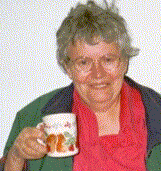
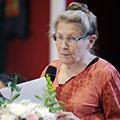
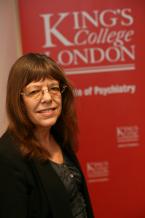
Joan Hughes 1928-2008 Survivor historian
leaflets and downloads
contact
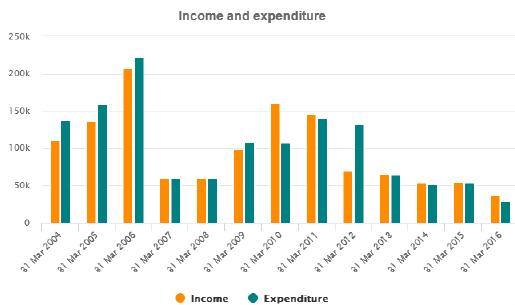
Annual Reports
members' forum
Nottingham 2010
Birmingham 2010
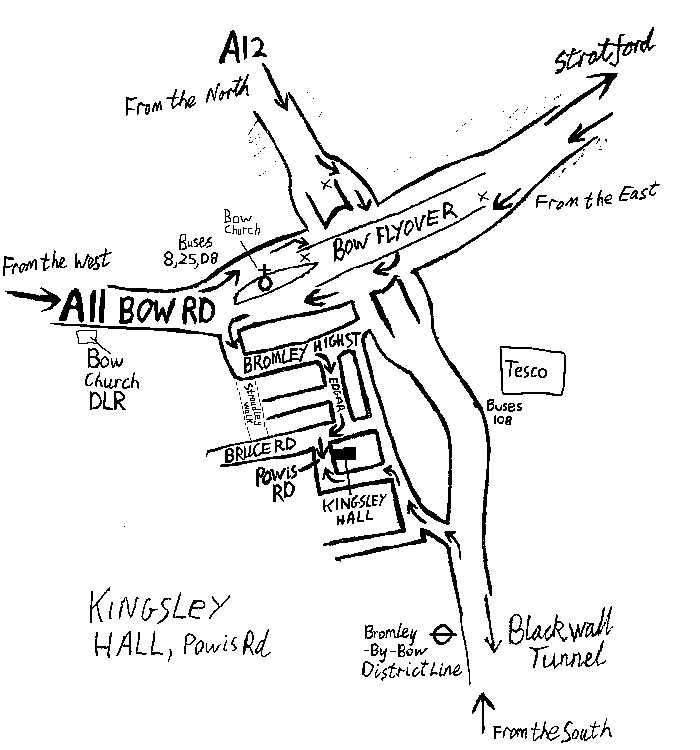
Kingsley Hall 2010
Asylum 2010
Birmingham International 2009
Hendon 2009
Brighton 2009
Bristol 2009
Canterbury 2009
London 2009
State of Mind
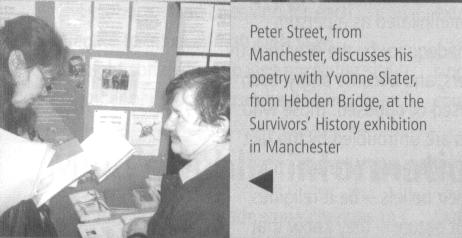
Manchester 2008
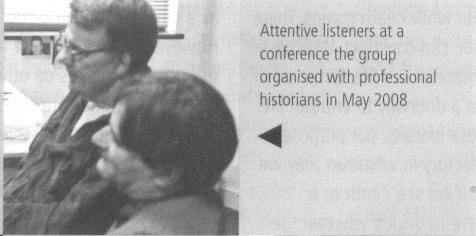
May 2008 conference report
Essex 2008

This website will be preserved by the UK Web archive and the (international) Internet Archive. See links from Andrew Roberts' home page or go directly to the 11.7.2007 archive of this page. The UK Web Archiving Consortium, who run the web archive, aim to preserve sites for at least one hundred years. Andrew Roberts plans to preserve the orginal location for ten years or more.
The website includes, or will include:

  • The story/stories of the movement in the form of a timeline.

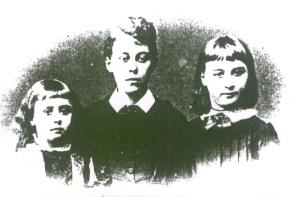
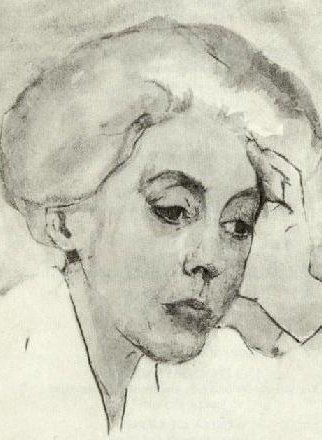
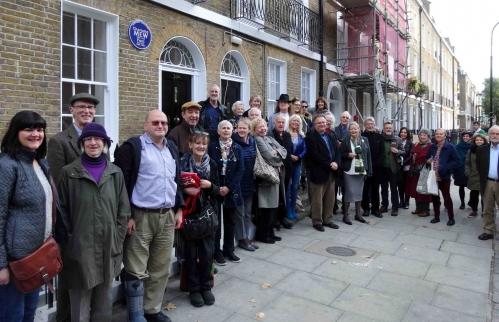
  • Individuals' stories inter-related to the story of the movement. See, for example, Charlotte and Freda Mew - Eric Irwin - Joan Hughes - Valerie Argent - Frank Bangay - State of Mind.

  • Information boxes about particular features such as Survivor's Poetry

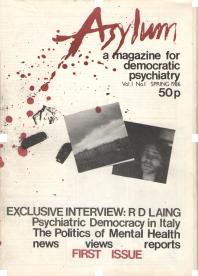
  • Indexes such as that of survivor history features in Asylum magazine.

  • Reviews and summaries of books, articles and other printed material that record and discuss the story. See, for example, Contesting Psychiatry (2005)

  • Copies of articles about the movement and its history. Some of which are listed in the leaflets and downloads section. Others - for example, Mark Cresswell on the self-harm movement - are listed separately.

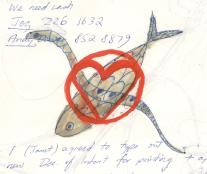
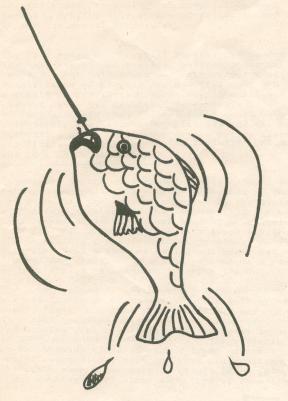
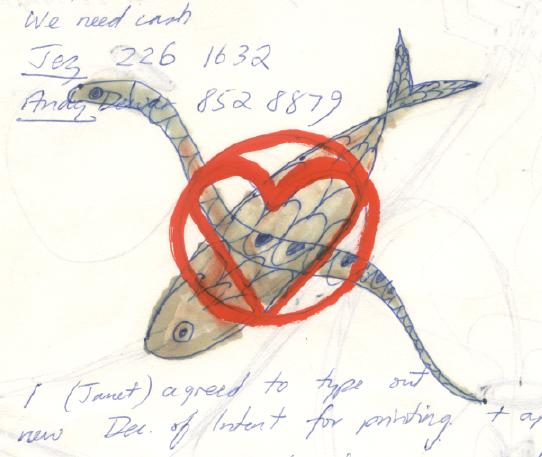
  • Copies of documents from the movement's history. Including - Perceval's narrative (extracts) - Ken - The General Grievances of Patients in Hartwood - the Fish Pamphlet - MPU Declaration of Intent - Edale Charter -

  • Lists of paper records about groups in the movement that individuals and others have preserved - See histories - libraries - archives

  • Book and pamphlet lists. See libraries - especially the Anne Plumb Collection

  • Records of where papers, books and pamphlets are preserved.
    See listed archive listed archives

    Building this record has to be a collective effort, and we hope you will help us.

  • Leaflets and other material to download

    About the Survivors History Group

    Leaflets - newsletter/leaflet - leaflet - exhibition

    Articles - Survivor History

    General histories

    From the Survivors History Group: Survivor Voices 1908-2008 - A timeline from the Survivors History Group

    From Beyond the Water Towers Sainsbury Trust 2005 From Little Acorns - The mental health service user movement by Peter Campbell

    From the Mind website: user/survivor empowerment leaflets

    Report on Conference with Historians - May 2008
    Celebrating our history - Valuing ourselves. A pdf of the whole report
    Part one as a web page

    Histories with a special theme

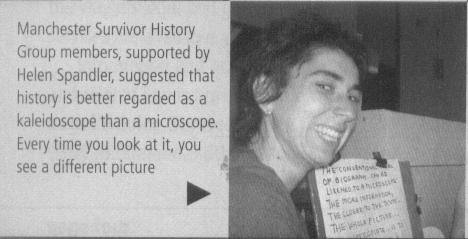
    From the Greater Manchester Survivors History Group: Greater Manchester leaflet and timeline

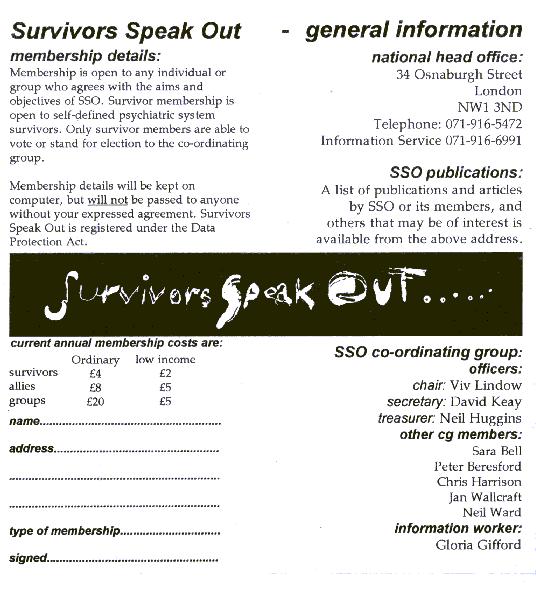
    History of Survivors Speak Out

    From Time Together (Together: Working for Wellbeing) - Andrew Roberts' articles relating individual survivor lives to the movement - "The Story of Valerie Argent" Winter 2008 - "The Story of Joan Hughes" Summer 2009 - "The Story of Freda and Charlotte Mew" Winter 2009 - "A Celebration of Survivor History" Summer 2010 -

    "Scotland the Brave - User movement roots" by Andrew Roberts

    Tools for teaching survivor history

    Compiled by Clare Ockwell for CAPITAL:

  • A reading list
  • A Quiz
  • 1973 Demands - What have we achieved?

    By Peter Campbell

  • Teaching and learning survivor movement history

    Questions for discussion

  • Five questions
  • Lots of questions

  • Survivor Timeline

    Several items in this timeline (chronology) link to fuller items further down the page or on other pages. Use it as one index to the page. There is another index in the margin.

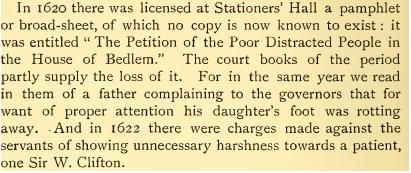
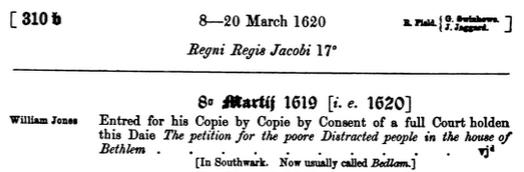
    Survivor mythology? Known examples of collective action are exceedingly rare before the 19th century. A 1620 "Petition of the Poor Distracted Folk of Bedlam" is often mentioned, but we have not seen an original source cited. By contrast, the Alleged Lunatics Friend Society, founded in 1845, is well documented.

    1772 Pageant: James Albert Ukawsaw Gronniosaw's life narrative

    1803

    14.2.1803 John Thomas Perceval, founder of the Alleged Lunatics Friend Society born (Gault, H. 2010, p.49). He died 1876.

    Christmas 1830 In Dublin, John Thomas Perveval was "unfortunately deprived of the use of reason". He was admitted to a private asylum (in England) in January 1831

    1838 A narrative of the treatment experienced by a gentleman, during a state of mental derangement: designed to explain the causes and the nature of insanity, and to expose the injudicious conduct pursued towards many unfortunate sufferers under that calamity by John Thomas Perceval published.

    12.6.1844 Pageant: John Clare's The Nightingale

    1845

    1.7.1845 Perceval's petition presented to the House of Commons

    7.7.1845 Alleged Lunatics Friend Society formed. (Gault, H. 2010, p.190)

    1870

    Archie Meek, who first suggested a union of mental patients to Thomas Ritchie, was born about 1870

    1873

    Lunacy Law Reform Association

    1876

    28.2.1876 Death of John Thomas Perceval (Gault, H. 2010, p.194).

    1878

    "Rachel" met her husband to be "Martin Grant-Smith". She became Rachel Grant-Smith (pseudonym) in 1881. - See Cheadle 1900 - 1914 - The Experiences of an Asylum Patient 1922

    1880s Charcot's work on hysteria. Foucault (23.1.1974) says "we salute the hysterics as the true militants of antipsychiatry".

    1884

    Hippolyte Bernheim published De la suggestion dans l'état hypnotique et dans l'état de veille. Foucault (1974) argues that "the age of anti-psychiatry begins with the suspicion that... Charcot actually produced the hysterical fit he described"

    1884 Birth of Sabina Spielrein, an asylum patient who became a psychoanalyst.

    1894

    click for Charlotte Mew The sisters' kiss - both sublime and ghastly - A page of the gospel which the priest never read.

    1908

    March 1908 America A Mind that Found Itself. This was published by Longmans Green in New York - But London, Calcutta and Bombay are also listed. The date is shown as 1908, but the copyright as Clifford Whiitingham Beers 1907. The book was published in New York and London and reviewed in British papers.

    1912

    "Arnold Schoenberg composed Pierrot Lunaire, a suite of semi-spoken songs for a moon-touched loon" (Ben Wilson 14.11.2002) - Listen over the internet

    10.11.1912 William Smart Harnett admitted to a private asylum - In 1922 he was awarded damages.

    1913 Charlotte Mew had written Ken, but it could not be published because magazine editors "believed in the segregation of the feeble-minded"

    1914

    1915

    12.6.1915 Christopher Paget Mayhew born London. As chair of the National Association for Mental Health from 1969 to 1978, in which time it became Mind, he is said to have drawn "on his own experiences of psychiatry in the 1940s and of his television work", including one into the mental effects of hallucinogenic drugs in 1955." (Robert Ingham DNB). Sometime in 1956 he spent a few days in a ward at Warlingham Park Hospital in preparation for the television series The Hurt Mind, which he presented in January 1957. He spoke in the debate on the Percy Report in July 1957.

    1916 Charlotte Mew On the Asylum Road published

    1917

    1918

    16.4.1918 Terence Alan [Spike] Milligan born in Ahmednagar, India.

    1919 Citizen soldiers: "in the aftermath of the war... ex-servicemen were drawn into recording their embittered experience at the hands of official agencies such as the war pensions authorities"

    1923

    about 1922 Edith Haithwaite born. See - See Rampton 1939 - Rampton 1957 - Rampton 1959

    1923

    Mary Barnes born - Died 29.6.2001

    1924

    Eric Irwin born in Belfast - See Fish Pamphlet - 1956 - 1960 - taped first MPU meeting - May 1975 Mind Conference - Eric's Info 23.1.1976 - Frank Bangay 1980s - Psychiatric Oppression - PROMPT Fund Raising - CAPO March 1985 - What They Teach in Song 1986 - Autumn 1987 - Before Christmas 1987 - Mike Lawson's poem -

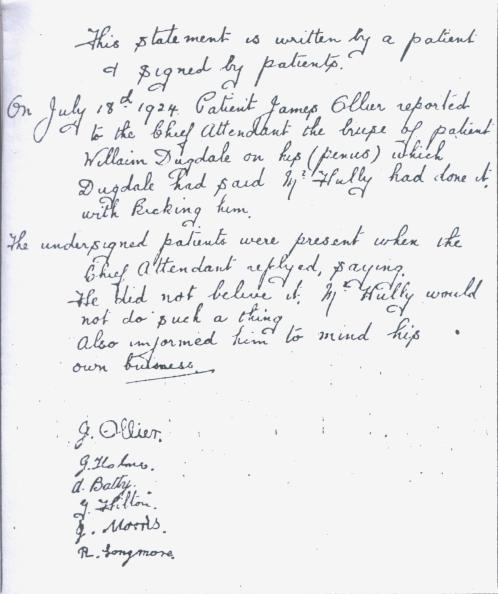
    The Royal Albert Institution for the Feeble-minded of the Northern Counties - Collective action 18.7.1924
    Patient James Ollier

    This statement is written by a patient and signed by patients.

    On July 18th 1924 Patient James Ollier reported to the Chief Attendant the bruise of patient William Dugdale on hip (penus) which Dugdale had said Mr Hully had done it with kicking him.

    The undersigned patients were present when the Chief Attendant replyed saying he did not believe it. Mr Hully would not do such a thing.

    Also informed him to mind his own business.

    J. Ollier
    J. Holmes
    A. Batty
    G. Hilton
    J. Morris
    R. Longmore

    1925 Evidence to the Royal Commission on Lunacy and Mental Disorder

    "The National Society for Lunacy Reform brought forward a number of ex-patients who wished to give evidence. After the first day's hearing in public, the Commission decided that the atmosphere was one of 'recrimination and controversy', and directed that future hearings of this kind should be held in camera. 'We do not find,' they record, 'that the evidence received from this source made any constructive contribution to the main purpose of our Inquiry" - "This evidence was published among the minutes of the Royal Commission" - Again, the Commission received over 360 letters from patients. 'Some of these,' they note, 'were unintelligible.' (Jones, K. 1960 pp 107-108

    1928

    About 1928: Thomas Ritchie, founder of SUMP, born. See September 1963 - Summer 1966 - September 1967 - 26.7.1971 - 7.4.1972 - 28.4.1972 - 7.6.1972 - 20.6.1972

    About 1928: Frederick Alexander Jenner (Alec Jenner) born. Nick Crossley's Interviewee 1?

    Joan Hughes' drinking
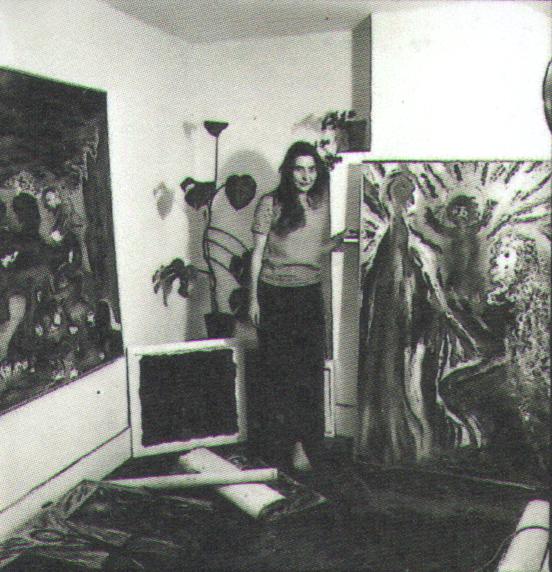
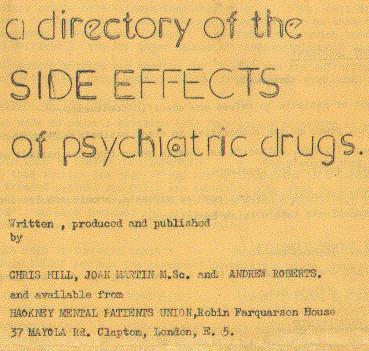
habits 25.2.1928 Joan Martin [Joan Hughes from October 1975] born. See - her autobiography - preservation of archives - Movements in the 1970s - 5.1.1993 - died 13.12.2008 - Joan was a pioneer of women in science - of the mental patients union - and of survivor history. She was joint author of A Directory of the Side Effects of Psychiatric Drugs (October 1975)
    About 1989, Joan wrote her own "Obit". So here it is:
    "
    Born in 1928 in a warm working class street where all the children played together. Did well at school. Remained child-like all her life, because that was fun, but had an adult side. She did some original work in chemistry. Had great fun in doing laboratory work. Studied and achieved a chemistry degree. Later on in life, after a break down, became concerned about other people with breakdowns in a house for homeless people from mental hospitals. Worked tirelessly to give people a better life. The policies worked out in these houses later became Government policy, and people who had breakdowns, when better, were able to have community care and live as equal members of the community. She was a catholic who was pro- life and against nuclear weapons. Worked in the peace movement and lived to see the withdrawal of nuclear weaponry by the super powers. Joan had a lot of friends, who were of all different types. Almost everyone came to the funeral, but I wouldn't expect those with more important duties to the living to come. The friends made friends with each other. The cat was also brought to the funeral, and scratched for joy on the grave."

    27.6.1928 Peter Michael Whitehead born in Queen Charlotte's Hospital, Hammersmith - See 1935 - St Joseph's and Besford Court - Rampton 1946 - NCCL 1947 - NCCL 1.11.1954 - 1955 - Rampton 1956 - 1958 David Roxan's Sentenced without Cause

    1929

    4.8.1929 Birth, Salford, of Hugh Lionel Freeman. Assistant Editor British Journal of Psychiatry 1978-1983, when he bacame editor. Vice-Chair Mind 1984 to November 1988.

    1930

    3.10.1930 Robin Farquharson born (died 1973). See - 1958 - 1959 - 1961 - 1964 - Kingsley Hall - 6.11.1967 - 1968 - 1968 - 1972 - 21.3.1973 - Bitman - 6.4.1973 - 4.7.1973 - See Wikipedia

    1931

    About 1931 Kathleen Rutty born. - See Rampton 1956

    1933

    Peter Thompson born. - Pakenham-Thompson Report 1961 Broadmoor 1965 - Books 1972 and 1974 - Matthew Trust 1976 - UK Federation of Smaller Mental Health Agencies 1996 - died 2003

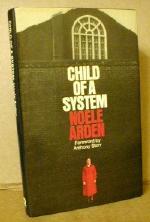
    About 1933 Noele Arden born. See Rampton 1948 - about 1953 - Moss Side 1954 - Rampton 1955 - Rampton 1957 - Child of a System 1977

    1934

    Peter Sedgwick born - on Schizophrenia From Within 1975 - PsychoPolitics 1982 - died 1983 - See also Mental Health and Civil Liberties and external link to memorial website

    1935

    " Peter Whitehead... has been certified as unsuitable for education in an ordinary elementary school, but not incapable by reason of mental defect of receiving benefit from instruction in a special school for mentally defective children." (minutes of Southampton Borough Council 27.6.1935, quoted by David Roxan) Finding a place took 15 months. See St Joseph's 1937

    1936

    2.2.1936 Marion Beeforth born - See Mindlink 1990 - Sainsbury 1990 - Mental Health Task Force 1993 - 1.3.1994 - died 29.7.200 - obituary by Jan Walcraft

    1938

    About 1938 Birth of Peter Richard Jameson, President of the Oxford Union Debating Society. "He suffered from schizophrenia and so was in and out of hospital, but he maintained lifelong friendships". First chair (1986) of the National Voices Forum. "He enjoyed the Edinburgh Festival and performed in theFringe". Died 11.2.2008, aged 70.

    1939 First edition of Alcoholics Anonymous - Also known as the Big Book. 300,000 copies were printed. They took sixteen years to sell out. (external link) - archive

    Some people argue (See external link) that Alcoholics Anonymous and Neurotics Anonymous are the grandparents of the recovery movement.

    1940

    1941

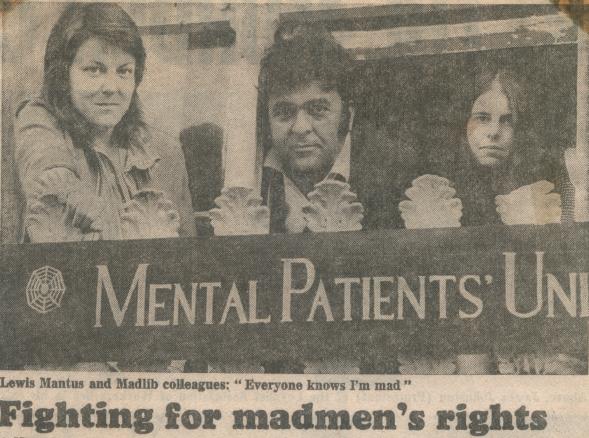
    About 1941 Lewis Mantus born - 1973 - 1988

    1941 David Brandon born. See North West Mind - Voices of Experience - Consumers as Colleagues - Died November 2001 - biography online

    1942

    1943

    1944

    September 1944 First issue of The Broadmoor Chronicle - Broadmoor patients' magazine

    1945

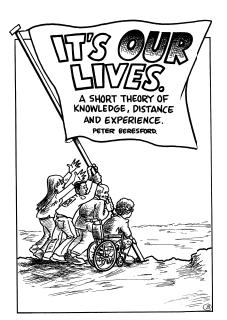
    Peter Beresford born - See SUN website and university story - lecturer in social administration at Lancaster University 1975 to 1977 - eight years poverty as a Battersea community activist - mental health service user 1980 to 1992 - Summer 1987 - Senior Lecturer in Social Policy at Brunel University in 1990 - Survivors Speak Out - Doing Disability Research - take hold of our past - Literature - Professor in 1998 - chair, Shaping Our Lives 1999 - INVOLVE - History meetings - User Controlled Research - 18.7.2005 - October 2005 - May 2006 - Manchester 2008 - individual or collective?

    1946 The Association of Parents of Backward Children formed

    17.9.1946 Anne Plumb born. See Anne Plumb Collection - Letter on racism, Autumn 1986 - Edale September 1987 - DATA Distress Awareness Training Agency. May 1988 - Survivors Speak Out June 1989 - Treasurer Survivors Speak Out 1991-1993 - London 10.4.1992

    1947 British textbook still says "In my opinion it would be an economical and humane procedure were their existence to be painlessly terminated"

    1947 Birth of Terence McLaughlin, editor of Asylum

    About 1947 Christine Andrew born - See - picture - experience - meaning - ECT - Voices and Survivors Speak Out

    1948

    25.5.1948 Mike Lawson born. External link to Testimonies Project - PROMPT Fund Raising - Mind 1985 - What They Teach in Song - Capital Radio "Breakdown" 1986 - We're not Mad - We're Angry - narrative poem - Vice-Chair Mind 1988 -1994 - Crisis Cards - 23.8.1991 - an archive of his website - See SUN website

    21.4.1948 Valerie Argent born - See also preservation of archives. Summary of life compiled summer 1985. An account in Time Together December 2008 specifically relates her personal biography to the development of the mental patients' movement. See Essex Hall and Ingrebourne - Escape from Belmont - shared house - CHAMH - Community Health Council - discarded poems - Patients Committee - Family History Group - death

    September 1948 Peter Barham born - See Literature Review - Winterton group (1969-1972) - schizophrenic thinking (thesis 1977) - thesis (1977) - schizophrenia and human value (1984) - Hamlet Trust (1988) - patient to person (1991) - Poland (1990) - closing asylums (1992) - human value new preface (1993) - Open Society Institute - patient to person relocated (1995) - Pathways to Policy 2002 - forgotten lunatics (2004) - 8.10.2004 - Albania (2005) - 27.4.2007 - March 2008 -

    December? 1948 Peter Campbell born - "a regular recipient of NHS psychiatric services since 1967" (Brackx and Grimshaw 1989). - See September 1970 - Testimonies - June July 1983 first letter in OpenMind - September 1983: activist - Camden Mental Health Consortium - November 1985: Spoke at MIND conference and his life begins a rapid change from obscurity to privilege - an officer of Survivors Speak Out from 1986 to 1996 - See his summary of Survivors Speak Out - Spring 1986: preparing for We're not Mad - We're Angry" - 17.11.1986 We're not Mad - We're Angry - historian of the movement - 27.6.1987 "dance floors of everyday life" - September 1987: holding the Edale Conference together - Brackx and Grimshaw 1989 describe as "actively involved in self-advocacy ... a member of Camden Mental Health Consortium ... Secretary of Survivors Speak Out and a nursery nurse" - November 1991: Survivors Poetry - Summer 1992: (Survivors Speak Out funding) - 1996 employed on Open University K257 - 1997: interviewed by Nick Crossley - 28.2.2001: UK Survivor Workers' conference Manchester - Martha Robinson poetry prize 2002 - 2003: On Our Own Terms - 14.1.2005: Survivors History Group - 17.5.2006: Diamond Champion

    7.12.1948 Jan Wallcraft born

    1949

    About 1949 Peter Lindley born in Yorkshire - External link to profile

    About 1949 Cherry Allfree born - See 1965 - Kingsmead - Lexden House - Essex Hall - Welby House - "Cherry met Julian Barnett in the mid 1970s. They formed a partnership whereby Julian would produce the PROMPT books and Cherry would sell them. (Frank Bangay, email 5.4.2010). R.D. Laing - A Day in the Life - PROMPT Dulwich - Mixed Emotions - "Cherry was the PROMPT representive who would go over to Holland to meet the Dutch survivors". (Frank Bangay, email 5.4.2010).

    1950

    1950 Peter Lehmann born - external link

    1950 David Pilgrim born. See literature - 1991 - 1993 - 1993 - 14.1.2005 - 2005 - (external link)

    About 1950 Philippe Bernardet born. (Died 15.4.2007, aged 57) - See Groupe d'information sur le Asiles

    1951

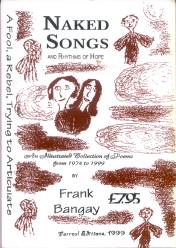
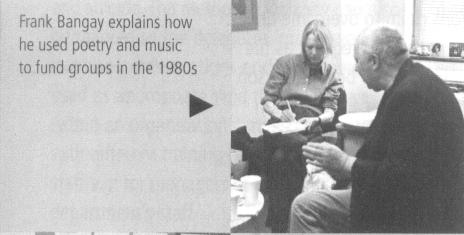
    Frank Bangay born Wandsworth 1951. Many of his poems relate back to growing up in a working class area of London. Frank left school at fifteen and in his early twenties started suffering from severe depression and anxiety. Expressing himself through poetry helped to disperse the gloom and he performed at Troubadour coffee house in Earls Court. His poem "Spring is Rising was first published in a hospital magazine. At the end of the 1970s, he collaborated with musicians in the Fighting Pigeons band. His work often combines either words and music or words and pictures. In 1979: he first read PROMPT booklets. From the early 1980s he distributed hand made poster-poems such as Solidarity (October 1982). Frank's poetry and music events to raise money for PROMPT began in 1984 and continued, on behalf of CAPO in 1985. By January 1985, Frank believed in "causing a fuss". Following an historic gatecrash in May 1985, Frank organised entertainment at the Mind conferences in the autumn of 1985 and 1986. Frank's obituary of Eric Irwin, who died in December 1987, is an early source of survivor history. Survivor poetry and music convinced Frank that "our poetry and other forms of creativity are our only voice, and the only way we really have of communicating our experiences." (Interview with Xochitl Tuck). The "original inspiration for Survivors Poetry" in 1991 derived from Frank "who organised numerous poetry events and published poetry magazines with great love and dedication throughout the 1980s". Frank was one of the four principle organisers. From 1992 to 1997 he organised workshops in hospitals, day centres, sheltered housing and similar grass-roots places. But as the organisation moved away from such activities, Frank relocated himself to work with Core Arts, in Hackney. He was interviewed by Nick Crossley in 1997:. Naked Songs and Rhythms of Hope, his collected works in 1999, contains in its annotations a history of the movement. It was launched at the first Mad Pride event. In 2000, Frank suprised the Mad Pride collective by pointing out that their movement had a long history. As a result, the "Fish Pamphlet" was republished in Mad Pride: A Celebration of Mad Culture and Frank contributed "An Uphill Struggle, But It's Been Worth It". In 2005 Poetry Express published "The Importance of Being Frank" by Xochitl Tuck. Working with Core Arts, Frank has published several CDs. His latest (Summer 2009) publication is Songs, Poems And Prayers, peformed with support from gospel singer Sophie Mirrel and other Core Arts artists.

    1952

    Terry Conway born Islington. In-patient Friern Hospital 1972-1973. Lived in Hackney from 1984. City and Hackney Mind (?) volunteer from April 1993. Co-founder of Hackney Patients Council 1994. Chair for three years. Contributor to Mad Pride 2000

    3.2.1952 Birth of Tony Glynn (died 5.3.2008) External link to staff profile at Birmingham University - named Suresearch - Glynn Rooms

    David (John) Hill (Dave Hill) born. See allies - 1983 - The Politics of Schizophrenia - British Network of Alternatives to Psychiatry - "Psychiatric Oppression" - Mind 1985 - Director Mind in Camden - London Alliance for Mental Health Action (October 1987) - 19.11.1988 - 20.6.1989 - 13.1.1993

    1952 Anne Beales born - CAPITAL - Together Service User Involvement Directorate - Survivor History Group - Early 2006 - May 2006

    1953

    About 1953 Andrew Hughes born - see North West Mind - visited Oldham Schizophrenia Fellowship - memories of 1985 - Founder of Distress Awareness Training Agency May 1988 - Survivors United Network 1999-2002 - worked on On Our Own Terms in 2003 -

    About 1953: Mary Nettle born. See SUN website - Edale - Mental Health Task Force - 29.5.1993 - Building on Experience - February 2000 - INVOLVE -

    About 1953 Premila Trivedi born. She has been a medical research biochemist - a primary school teacher - a member of the group who developed the Mental Health National Service Framework, which she describes as a "horrendous experience" - an interviewer on the Testimonies Project (an inspirational experience). She helped set up SIMBA (Share in Maudsley Black Action) - See 18.7.2005 - 15.9.2005 - articles

    Child of a System about 1953 Noele Arden told her fellow inmates in Rampton that
    "I'd write a book and let the outside world know what went on behind those high walls and locked doors. Although I meant it, I hardly thought I would ever get the opportunity to do so" Child of a System p.62
    Her book was published in 1977

    1954

    2.9.1954? Celia Hughes born. See 10.1.2005

    1.11.1954 Peter Whitehead, having escaped from Farmfield and seeking refuge with his uncle, was taken to the National Council for Civil Liberties offices in Westbourne Grove, Bayswater. Later the same day he was examined by a woman doctor who wrote "I cannot see how he can be deemed certifiably defective"

    1955

    Peter Whitehead January 1955 Peter Whitehead in solitary confinement at Rampton
    "I decided I was being wrongfully shut away, because I knew I wasn't mentally defective, and in spite of what had happened at Farmfield, I was not violent. I knew that I must go on believing this, and go on hoping that one day I would be set free. No matter how long I was imprisoned in Rampton, I was determined never to give up".
    Peter Whitehead advised other patients to
    "Write letters. Get people outside interested in you. Tell them you've been wrongly shut away. If you stay quiet, nobody will lift a finger to help you, however long you stay here"

    About twenty patients began writing letters and staff complained that Peter's campaign meant they had to spend all their time reading (and censoring) patients letters. Several time, Peter was warned:

    "Carry on like this, and you're heading straight for trouble"

    1956

    "In 1956, Eric Irwin says he narrowly escaped a leucotomy. At the time he was a voluntary patient, and he claims a doctor told him "I wish you were psychotic so I could do it". Irwin is convinced that under the "liberal" 1959 Act, he would have been put on a section and operated on"

    1956 Ben Watson born

    1956 Lorraine Bell born. See allies - Frank Bangay believes that Lorraine was at the Brighton Congress in July 1985, as was David Hill, but not Peter Campbell. She and Helen Smith may have secured funding for the meetings that established Survivors Speak Out after the July 1985 World Congress, and before the November 1985 Mind Conference. See MIND 1985 Seminar B4. In 2006 it was said of her that "In 1987 she published 'Survivors speak out' as a chapter in Good Practices in Mental Health; from this, she developed the national self-advocacy group for people with mental health problems, adopting her chapter title as their organisational title." See 1987 - 1988 - 2006 -

    1957

    United Kingdom Consumer's Association (publisher's of "Which?") founded.

    Recovery groups, now known as Grow began in Hurstville, Sydney, Australia. Started by former mental patients who met through Alcoholics Anonymous. Described now (2008) as a "community of persons working towards mental health through mutual help and a 12 step program of recovery. Small groups of people who have experienced depression, anxiety or other mental or emotional distress, come together on a weekly basis to help each other deal with the challenges of life. Some people come to GROW while struggling with the loss of a job, a loved one or a relationship". The organisation started in Ireland in 1969

    Veronica Dewan born 1957 - See Capital and 14.1.2005

    About 1957 Alison Faulkner born. See Rogers and Faulkner 1987 - Faulkner, A. and Field, V. 1993 - 1994 - user led research - February 1997 - Strategies for Living - A. Faulkner, 2000 - September 2002 - INVOLVE - 24.7.2004 - 16.11.2004 - 1.6.2009

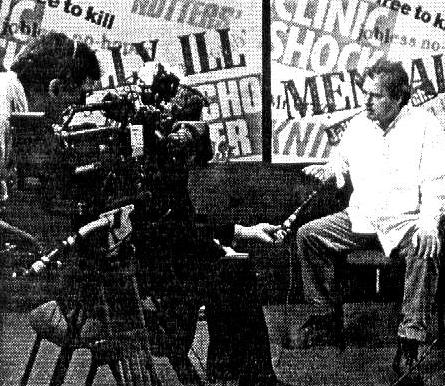
    January 1957 "Put Away", was the first programme of The Hurt Mind, the first British television series about mental illness. Much of it came from inside Warlingham Park Hospital, where the presenter, Christopher Mayhew, spent a few days "to get the feel of the place". No faces of patients were shown - Some individuals were pictured from the neck down, a group of patients were interviewed around a table without showing faces, one or more individuals were interviewed back to camera.

  • Gerald describes how the war drove him to alcoholism

  • Sidney describes how he became "persecuted by a wizard and became possessed by a familiar"

  • Mary, a teacher, tells of her "irrational fears" and how her parents found it "difficult to understand"

  • Mary also speaks for Marcia, a silent young woman; Mary says that Marcia "can't do anything without being told"

  • A woman explains that peculiar thoughts were put into her head by someone other than herself, how she had hallucinations of red devils and religious figures.

  • A young male patient speaks of his aversion to close proximity to other people, inordinate concerns about cleanliness, and a phobia about dirt and infections

  • A female patient talks about how she suffered deep depression after childbirth, her indecisiveness, her mistreatment of husband and child and unhappy childhood
  • 1958

    1958 Helen Smith born. See allies - July 1985 - Minstead Lodge - Collaboration for Change -

    1958 Ron Coleman born - See 1991 - 13.4.1994 - May 1994 - Handsell Publishing - Hearing Voices 1996 Conference - Recovery: an alien concept - Victim to Victor workshops - Working to Recovery Ltd - Essex April 2008

    1958 Clare Ockwell. See Society for the Advancement of Research into Anorexia - Eating Disorders Association 1992 - CAPITAL

    About 1958 Mark Greenwood born. He became a psychiatric nurse. Was involved in Harpurhey Resettlement Team.

    1958 Robin Farquharson's Doctor of Philosophy thesis An approach to a pure theory of voting procedure Nuffield College, Oxford

    1959 Robin Farquharson wrote the chapter "South Africa 1958" in David Butler's Elections Abroad (Macmillan; St. Martin's Press, 1959).

    1960s Breakdown in the taboo of silence - people with conditions usually regarded as taboo talking about their own experiences

    1960

    "In 1960, [Eric Irwin says a] psychiatrist told him he was a psychopath and that psychopathy was inborn and incurable. 'I was shattered by that. But when I came out I looked it up in every textbook I could find, and found it meant so many different things that anyone could be one'"

    From 1960 to 1962, Shulamit [Shula] Ramon was a student at the School of Social Work, Hebrew University of Jerusalem. See 1983 - MIND 1985 B2 - Interview 3 - Literature - December 1988

    1.5.1960 Someone had suggested to Moyna Peters' parents that psychiatric treatment might help her keep a job.

    1961

    Problems of the Ex-Prisoner. Report of the Pakenham/Thompson Committee published London, 1961 by the National Council of Social Service (Great Britain). 91 pages. Frank Pakenham Longford (1905-2001) (chairing) and Peter Thompson (1933-2003).

    January 1961 Michael Dummett and Robin Farquharson "Stability in Voting" Econometrica 29, pages 289-286. Stability in Voting'. Pp. 33-43 in: Econometrica, Vol. 29, No. 1, January 1961.

    In 1961, Robin Farquharson's thesis was awarded the Monograph prize of the American Academy of Arts and Sciences in the field of the social sciences.

    December 1961 Incentive contained an account by Bertram A. Miller of the orgin (1960) of the Sheltered Workers Group. This was rewritten for the June 1963 edition. See Ingrebourne box

    1962

    14.9.1962 Birth of Peter Shaughnessy - Southwark Mind 1997 - Suicide 14.12.2002

    Autumn 1962 Valerie Argent confined in Essex Hall. She was later moved to the Ingrebourne Centre (a therapeutic community). Her Ingrebourne medical notes say:

    "She has been an in-patient of the Royal Eastern Counties Hospital, Essex Hall, Colchester, which is a hospital for mental defectives. She was sent there as other suitable accommodation was not available, following an attempt at suicide by holding her head in a basin of water. She is an intelligent girl with an IQ of 120 and has been attending Hornchurch Grammar School" - "We really took her because it seemed so terrible to leave her in this environment"

    1963

    About 1963 Graham Morgan born - MBE 2004 when he had had "over 20 years experience in the field of mental health". First involved in the 1980s in Sheffield after witnessing the harsh and often undignified treatment of people with a mental illness. He initially became a volunteer with an organization helping young people live in the community. After this he helped set up a a user run drop in centre (McMurphys) for young people in Sheffield. He was a Director of McMurphys. Moved to Edinburgh about 1988 where he quickly became involved in a campaigning group. An active volunteer with Awareness which was one of the first collective advocacy groups in Scotland. He then worked in Lothian with CAPS where he helped establish the Lothian Users Forum and a network of other advocacy groups. Moved to the Highlands in 1997.

    28.5.1963 4pm: Inauguration Committee of The Ingrebourne Society by patients of the Ingrebourne Centre. Its first aim was to "help maintain contact after discharge, and to allow useful relationships to continue". A future aim was to "organise and run a Hostel for the rehabilitation of persons after mental illness".

    June 1963 Incentive edited by Jenny - Rosemary Glendenning having left for the Richmond Fellowship - [Described as "the Centre's magazine". The centre was Ingrebourne. The two copies owned by Andrew Roberts (June 1963 and November 1963) were produced entirely by patients, with very occasional, and minor, written contributions from two of the doctors]

    3.7.1963 Andrew Roberts admitted to the Ingrebourne Centre following a suicide attempt. He had (foolishly) taken an overdose in the catchment area of Warley Hospital. Fortunately, the ambulance took him to Romford.

    "I had three books that I was using to try to understand what was happening: Thomas Szasz, 1961 The Myth of Mental Illness (A library book) - James Drever, 1952 (Revised edition 1964) A Penguin Dictionary of Psychology and David Stafford-Clark, 1952 (second edition 1963) Psychiatry Today (Both bought in a Brentwood bookshop). Ingrebourne staff discouraged an academic approach. My habit of carrying the book I was reading around with me, and putting it by my chair in group, drew unfavourable attention - especially to Szasz."

    28.7.1963 Start of a camping holiday in France that had been planned in the Ingrebourne Centre by patients. In the event, three patients/expatients went. At one time it was thought held the centre's patients would go.

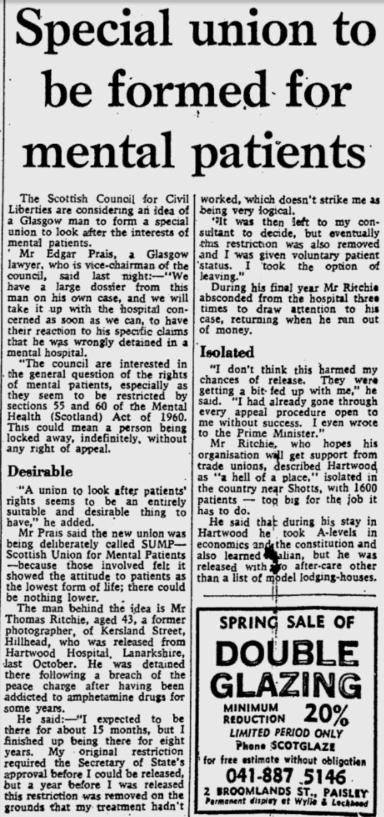
    September 1963 Thomas Ritchie detained in Hartwood Hospital, Shotts Lanarkshire under Part 5 of the Mental Health (Scotland) Act, "with a restriction on my discharge which could only be lifted by the Secretary of State for Scotland".

    November 1963 Incentive edited by Jenny

    1964

    about 1964 Kathy Sirockin born. She died in August 1991: Kathy taught us to hear with our eyes.

    1964 Dr Wolfgang Huber began work at the Psychiatric Hospital of the University of Heidelberg.

    1964 Robert Dellar born Watford. - 1987 onwards working for local Mind associations - 1983: City and Hackney Mind Advocacy Service - May 1994: Hackney Patients Council - April 1996: Spare Change Books and An Anthology of Punk - 1998? Development worker for Southwark Mind - June 1998: Seaton Point - June 2000: Mad Pride (the book) - 14.11.2002 exhausted -

    Ireland index 1964 Brian Hartnett born Limerick - 1991 - 1996 - Phrenz - 2003 - Phrenz of the Media - Hearing Voices Ireland (2006) - (external link to personal recovery story)

    1964: Robin Farquharson's Research Fellowship at Churchill College, Cambridge. "the wrench I felt resigning my Churchill College fellowship after one year and three nervous breakdowns. Marvellous folk, they gave me £3,000 journey money... under the control of two trustees... [who] let me take it out of the trust account to present to the Home Office, a little disturbed already by my two certification orders, with proof of my means". (Drop Out pages 10-11) [Robin had his South African passport withdrawn in 1965 and became a British Citizen in 1968]

    Tuesday 31.3.1964 to Wednesday 27.5.1964 Valerie Argent (aged 15/16) was a patient in Belmont Hospital. "... she was treated with Electro Convulsive Therapy and drugs, and it was suggested to her that the only way she would escape from her depressions would be a brain operation (Leucotomy). She was very tempted to accept this suggestion, but eventually decided to escape from the hospital instead" (source). Valerie's medical records show that Valerie was sent to Belmont to separate her and Andrew Roberts.

    12.7.1964 Esther Leslie born - Archives of her CV - Archives of the whole militantesthetix website - Mad Pride on militantesthetix - Current University web page

    end November 1964 Norman was admitted to Clyde Ward, St Bernards, Southall. "Very good treatment and nursing. Discharged after 13 weeks". The next November he went in for four and a half weeks and then, after a week, was readmitted for thirteen weeks. He was readmitted after four weeks and discharged after six weeks. He was admitted to another hospital in 1971:

    "My only complaint about hospitals is that some stroppy night nurses bully one back to bed when one cannot sleep. Instead they should be allowed to brew up and sit in the day room. I believe females get a rougher deal in this and many other respects than males... I have had some hairy episodes, but find the system works."

    1965

    Following a knife attack on three au pair girls, Peter Thompson was sent to Broadmoor under Section 60 of the 1959 Health Act. He was released by a Mental Health Review Tribunal in 1969.

    "There has been a lot written about ... institutions for the so-called subnormal. But little has been written about the reasons why people end up in these places. I want to tell you what happened to me when I was 16 years old. It all began in the year 1965" (Cherry Allfree explains why she wants her story published)

    May 1965 "9 p.m. on a Friday night was definitely the wrong time to be admitted". Judith Watson

    early summer 1965 "Unfortunately, the doctor decided to send me to Horton Hospital for a rest" - August 1965 "the doctor... informed me that he had already called an ambulance to take me to Rubery Hill Hospital". (Joan Martin - See also winter 1967)

    1966

    Fortnightly International Times (IT), alternative newspaper, founded in London.

    "I begged my GP to get me into hospital so as I could get some care and help" Daniel Morgan

    Summer 1966? Frank Bangay left school, aged 15.

    Scotland index Summer 1966 On Ward 22 of Hartwood Hospital, Thomas Ritchie wrote an account of his life up to his admission to Hartwood.

    Ireland index In Cork, Ireland, Tessa Redmond started "Friends Anonymous", a self-help therapy group in September 1966. It was run on the lines of Alcoholics Anonymous - whose open meetings Tessa attended, "to give me the right ideas". The group was the first of its kind in Cork. At least one doctor and a dentist used to send their nervous patients to the group.

    "I mentioned it when I appeared on a television program about 'phobias'. Sadly, it was an entertainment program, and not at all respectful towards us. Participants were asked about their specific phobias, and then unexpectedly presented with the object of their fear, which of course terrified them - I found this disgraceful" (Tessa Redmond)

    Recovery Groups (now Grow) in Ireland started in 1969.

    October 1966 Trace Methods for Sulphate and Nitrate by J.M. Martin, Graduate of the Royal Institute of Chemistry, a candidate for the degree of Master of Science. University of Birmingham. Joan's autobiography describes how her degree was preceded by a period in a mental hospital.

    1967 Declaration of a summer of love

    About 1967 that Cherry Allfree admitted to Kingsmead in Colchester.

    Release national drug helpline established in London. The ideas about mental distress and its relief that were expressed in COPE were often related to the images of drug experiences. People "freaked out" and needed a "crisis centre" to come through their experience in the friendly company of people who knew what was happening to them.

    Stephen Ticktin graduated B.A. Philosophy June 1967 - M.A. Philosophy December 1969 - M.D. June 1973 (University of Toronto, Canada). See May 1982 - 1983 - Psychiatric Oppression - MIND 1985 - Asylum Spring 1987 - Autumn 1987 - literature - Asylum Summer 1991 - Asylum Autumn 1991 - Asylum Spring 1992 -

    15.7.1967 to 30.7.1967 Roundhouse Congress on the Dialectics of Liberation

    September 1967 In "The Sick Room, Ward Seven" of Hartwood Hospital, Thomas Ritchie wrote an account of his life in Hartwood, concluding with his "grievances for redress". His case for a union (later) included that such individual grievances got him nowhere, but the collective complaints of patients were attended to.

    6.11.1967 Robin Farquharson dismissed from his job in computer programming for "taking liberties" - decision to "drop out" (leaving his money in the bank and his furniture with friends). The first entry in his book about this is Monday 20.11.1967 - Which may have been the day he walked into Anthony Blond's office and secured a £2 a week advance on a book about his experiences.

    Joan Martin: "I spent the winter of 1967 at Rubery Hill Hospital but did not get on too badly, because during this period I was not given heavy tranquillisers" - See November 1969

    1968

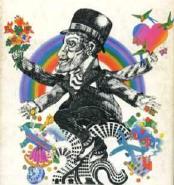
      The first edition of Drop Out by Robin Farquharson was published in 1968. Its cover had this cartoon of Robin. In the preface (dated 30.1.1968), he wrote
    "I am a manic-depressive. When I'm up, I have no judgement, but fantastic drive; when I'm down, I have judgement, but no drive at all. In between I pass for normal well enough." (See Chaos Invocation)

    At Heidelberg, Wolfgang Huber developed a Patientenkollektivs (Patient Collective) in 1968. Later development: Sozialistisches Patientenkollektiv (Socialist Patient Collective). This published SPK - Aus der Kranheit eine Waffe Machen [Make Your Illness a Weapon] in April 1972.

    External link to web page
    Wikipedia: Original 14.6.2006 entry by Milla from Ireland - current entry

    February 1968: Start of the democratic "anti-university". The mental health meetings, in which R.D. Laing and David Cooper were active, were called "anti-psychiatry". After the collapse of the anti-university (by 1969) the anti-psychiatry group continued to meet in a flat in Belsize Park. The term anti-psychiatry has also been used generally for the movement critical of the orthodox psychiatry of the 1960"s. (See Mental Health and Civil Liberties Article) In this very lose sense, COPE and even the Mental Patients Union have been described as part of the anti- psychiatry movement. However, some MPU members would warmly reject the title on the grounds that MPU groups were open to all patients and ex- patients, irrespective of their views on psychiatry and psychiatric treatment. The use of the term in the sense of holding society and psychiatry responsible for what is called mental illness was developed by PROMPT - which was not, initially, a patients' organisation.

    May 1968 Paris student rising

    16.5.1968 Article by Richard Boston in New Society about the Anti-University.

    June 1968 BIT 24-Hour Free Information and Help Service (London) started. Its name indicated that it evolved out of International Times (IT) and also related to BIT=Binary Information Transfer 'the smallest unit of information that can be processed by a computer'. COPE evolved out of BIT. They had similar styles of publication, with similar names (Bitman and Copeman for their magazines) and, at times, shared offices.

    The squatting movement began to develop in London from 1968. Initially it was housing families. Eventually, a diversity of people and groups were living in squats or short life properties "licensed" from councils. The death of Robin Farquharson, which overshadowed the start of the Mental Patients Union, was against the background of squatting. The first headquarters of the MPU at Prince of Wales Road, Camden, was in a squat. Robin Farquharson House was on a short life licence agreement.

    " Robin Farquharson in full cry was able to wreck havoc in a commune of freaks as well as in a straight organisation and when this happened to us and we could not get through to him or calm him down we also ended calling for men in white coats. It must have been a terrible blow for Robin to be rejected by his own tribe and although he did not bear a permanent grudge, I understand now he would rather anything than fall into the hands of the men in white coats. I heard he put up a good fight when they cornered him and about ten men were needed to subdue him on this occasion, tho' on the grapevine the story may have growed a bit I dunnow. Three years later in 1971 Robin came to Bath..." George Firsoff (1944-10.11.2004) in Bitman 8, September 1973

    1968: Nick Crossley born. See January 1998 - 19.6.1998 - Literature - 1999 - Contesting Psychiatry (2005) - information box

    1968 Clare Allan born. See Poppy Shakespeare - Guardian column - Disability Living Allowance 2010

    1969

    About 1969 that Cherry Allfree admitted to Lexden House in Colchester.

    Ireland index Recovery Groups were started in Ireland in 1969 by Father Seán O'Hanlon who had come in contact with the organisation whilst working as a missionary in Papua, New Guinea. He held the first meeting in Athea, Co. Limerick with the help of another Sacred Heart priest, Father Brian Dunleavy. From there, groups formed throughout the country, especially in the areas of Limerick, Cork and Dublin.

    Seán O'Hanlon was curate in the parish of Athea from 1971 to 1977. He died 8.2.1978. (parish website)

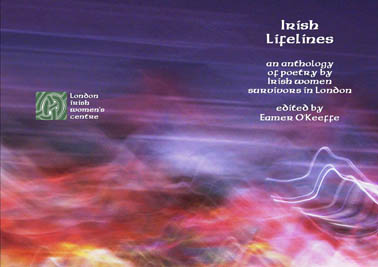
    Eamer O'Keeffe worked as an artist and film-maker in Ireland. She came to London in 1969 and "decided to stay after discovering feminism" - See 9.3.1999 - 25.10.2008

    1969 to 1972 - Peter Barham interviews and group discussions with patients diagnosed as schizophrenic in Winterton Hospital, Sedgefield, County Durham. Peter was researching "schizophrenic thinking"

    January 1969 The first "claimants union" met in Birmingham. This rapidly developed a participatory democracy style of organisation. A National Federation of Claimants Unions was formed in March 1970 by Birmingham, Brighton, East London, North London, West London and North Staffordshire claimants unions. Some members of the Mental Patients Union (1973) had experience in claimants unions.

    By 1969, the Anti-University had collapsed - the "Anti-Psychiatry" group was meeting at Ken Smith's flat in Belsize Park, and David Cooper rarely came, because he found members wanted therapy, not political action. Andrew Roberts went once.

    July 1969 People Not Psychiatry

    David Crepaz-Keay had his first psychiatric diagnosis in 1969. He worked at the Treasury and in the water industry from 1982 to 1991. He was Consultant on service user involvement, various health and social services departments from 1990 to 1998 - Chair of Survivors Speak Out - Consultant, deputy director and chief executive of charity Mental Health Media from 1997 to 2005 - Commissioner, Commission for Patient and Public Involvement in Health in 2003 - Head of Patient and Public involvement for the Mental Health Foundation from June 2005.

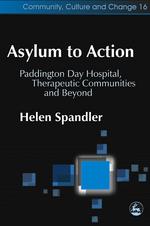
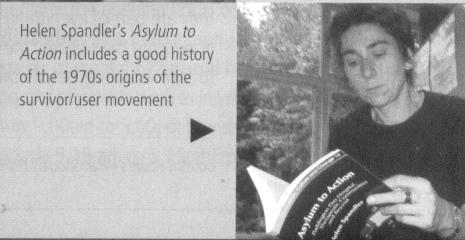
    6.8.1969 Helen Spandler born. See 1974 - July 1990 - Asylum 1992 - 42nd Street 1994-1996 - July 1995 - 1996 - Asylum to Action - Spring 2006 - 2008 - 29.5.2008 - Literature Review Notes - Helen Spandler Literature

    Late 1969 "My second admission, nearly five years later, was a quite different and much more positive experience." Judith Watson

    "Nothing that has happened to me since has ever been as bad as those two years between November 1969, and November 29th 1971." (Joan Hughes)

    1970

    In the United Kingdom, the 1970s saw the birth of several independent democratic organisations of mental patients, organised locally, but attempting to link together. These unions formed inside and outside of mental hospitals. There were similar developments in several other countries, including Camada and the United States. In European countries other than Scotland and England, the patients movement appears to have been generated by psychiatrists (sometimes called anti-psychiatrists). In Scotland it was started by patients. In England, some professionals (not psychiatrists) were involved in a pilot group. But much research is needed in all countries because the names of psychiatrists and anti-psychiatrists often attract an attention that those of patients do not.

    About 1970 that Cherry Allfree admitted to Essex Hall in Colchester. She was there for three years before moving back to Lexden House for two years and then to Kingsmead for two years.

    Hans Wiegant, in 1985, traced Dutch organisation back to 1970. A web history says that in 1970 "the first official patiëntenraad" (patient council) was formed in the (large) psychiatric hospital at Coudewater (western Netherlands) and says that "creating opportunities to participate in the psychiatric hospitals is a first important step towards recognition of the empowerment of patients". Organisations include the Clientenbond - "de Cliëntenbond in de geestelijke gezondheidszorg" (Customer/client association/union in the mental health care system), formed 11.1.1971, and De Gekkenkrant - [See external link to history: Geschiedenis van de Cliëntenbond]

    Recovery began to change to GROW about 1970 when the name G.R.O.W. (Group Recovery Organisations of the World) was adopted by an international federation of Recovery groups which included Australia, New Zealand and Ireland.

    February 1970 At Heidelberg, patients held several "assemblies", some with the press present. This may have bben the origin of the Sozialistisches Patientenkollektiv (Socialist Patient Collective)

    April 1970 (France) First issue of Cahiers pour la Folie, decribed by Jacques Lagrange as "a journal of the extreme left... which sought to struggle against 'class psychiatry'". (Foucault 1973/1974c p.365) See Fresnes Conference June 1973

    Bit Information Service (London) published Bitman. numbers 1 to 6 from May 1970 to May 1973. COPAC lists in British Library. No 6 (May 1973) was the "special Robin issue) following the death of Robin Farquharson. The British Library does not have numbers 7 and 8 (Late September 1973)

    May 1970 The Phobics Society established

    September 1970 to November 1970 Peter Campbell a patient in Murray Royal Hospital, Perth, Scotland

    October 1970 The Gay Liberation Front held its first meeting (At the London School of Economics). Seventeen people attended. (external source)

    1971

    Campaign for the Mentally Handicapped started in 1971. Its name changed in turn to Campaign for Mentally Handicapped People, CMH) - CMH (Campaigning for Valued Futures with People who have Learning Difficulties) - Values into Action (VIA) - (External link to present website) - Almost from the beginning, CMH ran small scale "participation events" for people with a mental handicap.

    About 1971 Diana Rose (a psychology graduate from Aberdeen University (?) had her first experience of treatment under the mental health services. She kept this quiet in her social science career. - See Grunwick picket line 1976 - Eventually (1980?) "she was medically retired from a research and teaching post at the age of 35. She then spent five years 'living in the community', an experience which was very distressing. In 1985 she became part of the fledgling service user /survivor movement in the UK." (source) - 1996 - 1998 - 1998 Workbook - 2.11.2000 - SURE 2001 - SRN 2001 - 23.1.2001 - January 2005 - 21.11.2006 - 19.10.2007 - 12.1.2009

    9.1.1971 In London, a very gay [meaning cheerful] contingent from the Gay [meaning homosexual] Liberation Front joined a march against the Industrial Relations Bill calling the slogan "Poof to the Bill". This proud, self-confident, public appearance was one of the inspirations for some MPU members who saw themselves as "coming out" publicly as mental patients rather than hiding it.

    8.2.1971 (France) Manifesto of the Le Groupe d'information sur les prisons (Groupe Information Prisons or GIP) (Group for information on the prisons) signed by Jean-Marie Domenach, Michel Foucault et Pierre Vidal-Naquet. (French Wikipedia)

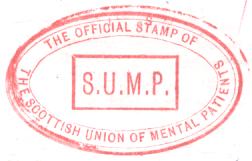
    SUMP Stamp 26.7.1971 "Petition for the Redress of Grievances put forward by the patients in Hartwood Hospital, Shotts Lanarkshire". - "The signatories to the petition are the Foundation and Permanent Members of SUMP" [Scottish Union of Mental Patients - see mental patients unions]

    Tuesday 27.9.1971 Politics of Psychology Conference. London School of Economics

    November 1971 In discussion with Noam Chomsky, on Dutch television, Michel Foucault said

    "I admit to not being able to define, nor for stronger reasons to propose, an ideal social model for the functioning of our scientific and technological society. On the other hand, one of the most urgent tasks, before everything else, is that we are used to consider, at least in our European society, that power is in the hands of the government and is exerted by some particular institutions such as local government, the police and the army, These institutions transmit the orders, apply them and punish people who do not obey.

    But I think that political power is also exerted by a few other institutions which seem to have nothing in common with the political power, which seem to be independent, but which actually are not. We all know that universities and the whole education system that is supposed to distribute knowledge, we know that university and the whole educational system maintain the power of a certain social class and exclude the other social class from this power. Psychiatry, for instance, is also apparently meant to improve mankind, and the knowledge of the psychiatrists. Psychiatry is also a way to implement a political power to a particular social group. Justice also.

    It seems to me that the real political task in a society such as ours is to criticise the working of institutions, that appear to be both neutral and independent. To criticise and attack them in such a manner that political violence that has always exercised itself obscurely through them will be unmasked, so one can fight against them. If we want right away to define the profile and the formula of our future society, without criticising all the forms of political power that are exerted in our society, there is a risk that they reconstitute themselves, even though such an apparently noble form as anarchist unionism." (Transcribed from You Tube)

    30.11.1971 "THREAT TO A COMMUNITY SERVICE" - Statement by Pam Elliot-Lord - Jane Pimlott - Jill Rynveld and Howard Taylor "Patients in the joint staff/patient protest group - Paddington Clinic and Day Hospital"

    10.12.1971 "Staff and patients at the Paddington Clinic and Day Hospital have formed a protest group"

    Friday 24.12.1971 "Christmas Day in the Nuthouse" edition of Time Out - [The film Family Life opened 13.1.1972] End piece said that 500 people a month go to Release, BIT, and Street Aid because they "feel themselves to be in kinds of mental trouble". An alternative to the NHS was being sought with "People not Psychiatry as the possible basis to the existing out-patient system... housing associations like the Philadelphia Association as alternative to the existing in-patient system."

    1971 (First edition?) Treatment And Care In Mental Illness edited by Edith Rudinger. Consumers' Association, London. 168 pages including index. A revised edition, with 176 pages, was published in 1973.

    Frank Bangay: "In my early twenties, through looking for work I took on employment in the Health Service as a Hospital Porter, then as a Hospital Orderly. Here I worked alongside people from the Caribbean and got to understand how hard these people worked, thereby getting away from the myth I grew up with, that these people were lazy and scrounging of the Welfare State. During this period I also experienced depression and started taking tranquillisers, which later led on to a dependence on anti-depressants and seeing psychiatrists on a regular basis. This later led to a breakdown and hospitalisation. Through this I learnt what it was like to be prejudiced against and stigmatised. (1997 footnote to "And We Can Learn" (August 1996), Naked Songs and Rhythms of Hope p.129)

    1972

    (France) Groupe d'information sur le Asiles (Groupe Information Asiles or GIA) (Group for Information on Asylums) formed in 1972. Jacques Lagrange says that this was formed, on the model of Groupe Information Prisons, by "young psychiatrists whose less pronounced corporatist concerns allowed them to take a more political position". He says it was "soon taken over by the 'psychiatrised' themselves to denounce the scandals of arbitrary confinement" (Foucault 1973/1974c p.353). At Fresnes in 1973, Lesley Mitchell said that the French Groupe Information Asiles and the English Mental Patients Union were the only groups "organised solely by patients and ex-patients".

    External link to the history website of the Groupe Information Asiles. It was founded by Dr Dimitri Crouchez (intern in psychiatry), with some colleagues of the CHS Perray-Vaucluse, in the Essonne, who disagreed with the traditional practices of psychiatry. They referred frequently to Roger Gentis (psychiatrist with the CHS Perray-Vaucluse), and his pamphlet: Les murs de l'Asile (The walls of the asylum) (Maspéro, 1970). They were joined by Philippe Bernardet, who joined as a student in 1973, was a long- time actvist. The first indication that it might be a group of the psychiatrised (psychiatrisés) comes in 1975: First [constitution?] under the official name of "APLP (Association pour la liaison des psychiatrisés). From 1975 to 1979, publication of journal of the GIA: Psychiatrisés en lutte

    Peter Thompson's Bound for Broadmoor published. It was followed, in 1974, by Back from Broadmoor

    1972 Women and Madness bu Phyllis Chesler published by Doubleday and company, Garden City, New York. A copy given to the Mental Patients Union by Pam Edwards in September 1974.

    Ellen Malos, Garden Flat, 1 Apsley Road, Bristol, BS8 2SH given as the contact for a Bristol woman's group that had been "going for some time" in The Body Politic - Women's Liberation in Britain 1960-1972. No details of group given. "Ellen became the hub of the thriving Bristol Women's Movement in the early 1970s. The basement of her house in Waverley Road became the Women's Centre" [See ] "where meetings of all sorts took place. It also became a refuge for women who were victims of domestic violence, the first of its kind in Bristol. On Saturdays the same space functioned as a pregnancy testing centre (in the days before home testing kits). After two years of campaigning the group acquired and managed three houses. So Bristol Women's Aid was born." (source). See also 1972 - Bristol University profile and Bristol Women's Studies Group

    Friday 3.3.1972 Paddington Day Hospital meeting

    12.3.1972 Politics of Psychology News Letter Number 3.

    SPK - Aus der Kranheit eine Waffe Machen [Make Your Illness a Weapon] written by the Socialist Patient Collective of Heidelberg University and published by Trikont Verlag, Munich, 1972. - April 1972 In a letter published with the Socialist Patient Collective book (above), Jean Paul Sartre described it as "the sole possible radicalisation of anti-psychiatry" and "also a coherent praxis which aimed at abolishing the alleged 'therapeutic methods' for mental illness". - Being translated into English Spring 1973

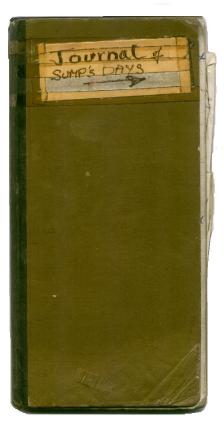
    SUMP Journal

    SUMP (Scottish Union of Mental Patients).
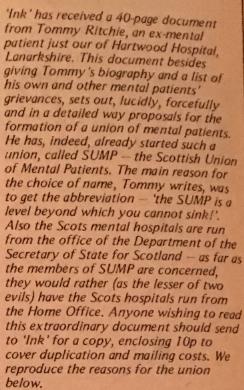
    Tommie Ritchie's "Journal of SUMP Days" begins Friday 7.4.1972, but the prefatory note says "We are late in the starting of recording SUMP's activities - But the Manifesto is only half finished and not yet recorded. Moreover we have had no General meeting yet." - See also 26.7.1971

    Friday 28.4.1972 Tommie Ritchie rang his Member of Parliament. "I told him I was speaking for Sump not Self". "Was he in favour of Sump being autonomously in the hands of patients?". He was not sure on this till he consulted experts. (Journal page eight)

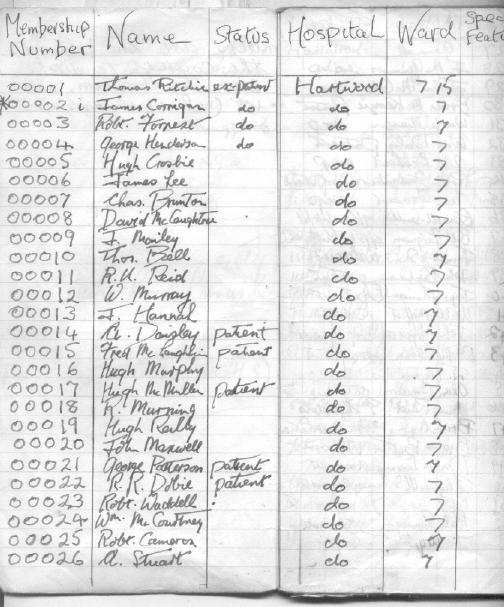
    SUMP membership records (page one below) were kept at the back of the journal

    SUMP membership

    Robin Farquharson is member number 00034 in the SUMP membership list. He is the first not from Hartwood. Under "hospital" it says " Gartloch (7) transferred to Epsom". The story I remember being told is that Robin was confined (on this occasion) after succesfully ordering a (military?) aeroplane - or aeroplanes.

    7.6.1972 Thomas Ritchie first visited Gartnavel

    after 20.6.1972 Thomas Ritchie came to London

    4.8.1972 PROP (Preservation of the Rights of Prisoners) called the first national prison strike [The Prison Strikes were called by the dates being given in reply to questions in television and radio interviews. It took the Home Office a long time to realise the simplicity of this - They were looking for a complex communication organisation. In the formation of the Mental Patients Union, Radio Four's Today Programme played an important role.]

    September 1972 Spare Rib "Agoraphobia" "At sixteen Carolyn Maniford became a patient in a psychiatric hospital because she was too frightened to leave home"... "At seventeen Carolyn Maniford is a patient in Goodmayes... and has been in hospital for three months"... "I don't think I'll ever get better. Sometimes I think I'm in here to get worse"...

    7.11.1972 to 19.12.1972 trial (and imprisonment) in Germany of doctors Wolfgang and Ursel Huber of the SPK.

    Before Christmas 1972 The group that produced The Need for a Mental Patients Union were meeting in Liz Durkin's flat.

    America Madness Network News first published - See Anne Swan - 1981

    1973

    "it is patients themselves who are the most likely people to influence future developments. Who better to advise how to make the struggle for sanity easier than the people who have been through the experience of modern madness and survived it?"

    De Gekkenkrant (Variuosly translated Crazy Parson's Newspaper - The Fool's Paper and Mad Magazine) started in Holland. It closed itself down on 21.2.1981

    Before Sunday 1.1.1973 First and last Inside Out produced by a group of mental health patients and workers from 10 Whately Road, off Whiteladies Road, Clifton. Bristol. "We fully support the hospital workers in their fight against the state". Included two pages "Woman's Realm" put together by Bristol Women's Liberation Group (Contact Betty Underwood or the Women's Information Centre at 11 Waverley Road)
    For 11 Waverley Road, see Ellen Malos - Womens Books Bristol and Mental Health in Bristol

    March 1973 Mental Patients' Union MPU   -   21.3.1973 Union formed (See minutes)   -   MPU questionnaire   -   29.3.1973 Union meeting at 97 Prince of Wales Road   -   7.4.1973 General Meeting agrees full Declaration of Intent.

    March 1973 Martindale - The Extra Pharmacopoeia reprint (with amendments) of 26th edition (July 1972) - 2320 pages The Pharmaceutical Press, London. A copy purchased in 1974 by Joan Martin. See Directory of Side Effects

    Spring [April] 1973 Mind Out Quarterly Mind magazine started with Denise Wynne as editor. Denise was sympathetic to the aim of forming a mental patients union and was allowed to attend one or more of the union's meetings to report on it.

    Spring 1973 A group including Petra Michaels translating Socialist Patient Collective book into English. Circulated to MPU in Spring 1974

    Summer 1973 Mind Out report on the Mental Patients Union

    June COPE: Community Organisation for Psychiatric Emergencies

    Fresnes Conference June 1973: Cahiers pour la Folie - Groupe d'information sur le Asiles - Association contre la repression medico-policiere - Rommittee gegen die Isolationsfolten - Des prisonniere de droit commun, 12 - Mental Patients Union

    4.7.1973 Robin Farquharson House (37 Mayola Road). Intended only as housing at first. Meetings began to be held here from January 1974. 37 Mayola Road was named Robin Farquharson House in accordance with an earlier decision to name the union's housing after Robin Farquharson

    27.8.1973 Manchester Mental Patients Union founded. The December 1974 list of Mental Patients Unions records it as meeting weekly at 3pm at 178 Oxford Road, Manchester. See Manchester index

    Autumn 1973 Mind Out - "A Leeds and area branch of the Mental Patients Union is being formed. Any patients or ex-patients who are interested in becoming members or any interested parties who would like to take out associate membership should get in touch with: I.S. Everton, 16 Quarry Mount, Leeds, LS6 1DN. The Mental Patients Union is concerned with fighting for patients' rights."

    September 1973 Spare Rib "With a Little Help from Ourselves" by Carol Morrell. "Re-evaluation counselling - more often called co- counselling - is perhaps the most radical of the radical therapies: it is peer group therapy".

    4.9.1973 Camden Council in court to evict squatters from 97 Prince of Wales Road.

    The Mental Patients Union met in a City office for some time, retreating to a pub across the road when that became too cold. It was during the period in the pub that I recall David Cooper (a full member by reason of his experiences in Argentina) attending meetings. In September 1973 he was a speaker at a meeting organised in Portugal to see if a European network of alternatives to psychiatry could be formed. He met Franco Basaglia and Robert Castel. Two other contacts persuaded him to move to Paris, where he remained.

    October 1973 Dundee Mental Patients Union founded with contacts inside and outside of the Royal Dundee Liff Hospital. It became the Westfield Association

    October 1973 "Women's Books, 11 Waverley Road, Bristol" Revised Literature List (MPU File Copy - 3 pages) lists Laing and Esterson Sanity, Madness and the Family (40 pence) - David Cooper Dialectic of Liberation (30 pence) and The Death of the Family (35p) and "Our Bodies Our Selves" by Boston Women's Health Collective (£1.50). There is a short list of "Journals" which includes "A Woman's Place (Brighton W.L.) 3p" - "Enough (Bristol) numbers 4 and 5 12p" - "Pent Up (Southampton W.L. 15p" - "Shrew (London W.L. Workshop) 10p" - (See Compendium 1975)

    6.12.1973 Portsmouth Mental Patients Union founded. The December 1974 list of Mental Patients Unions records it as meeting monthly at Portsmouth Community Advice Centre, 157 Lake Road, Portsmouth, PO1 4OY.

    7.11. 1973 to 6.2.1974 Michel Foucault gave weekly lectures in Paris on le pouvoir psychiatrique (psychiatric power). In these he used the term anti-psychiatry to describe a movement critical of psychiatry that arose within psychiatry. Hysteria was argued to be an element in the movement. In this, patients were said to be mimicking diseases in a counterattack on the truth of psychiatry.

    Winter 1973 Mind Out - The Mental Patients Union no longer has an address in Prince of Wales Road. For any information on MPU please write c/o 37 Mayola Road, Clapton, London E.5. or (if absolutely necessary) phone 01-986-5251.

    6.12.1973 BBC1 Play for Today: Baby Blues Seventy minutes from 9.25 (after the news) to 10.40. This dealt with post-natal depression. Response included the formation of Depressives Anonymous - This became Depressives Associated and is now Depression Alliance - (external link to history)

    1974

    Joseph Deacon's Tongue Tied published. It had been written, a few lines a day, over a long period of time.

    1974 Community Health Councils (CHCs) established. See 23.3.1981 - 9.4.1982 - July 1982 - 1.8.1984 - 20.11.1985 - 1986 - Spring 1986 - 9.5.1986 - 20.10.1986 - Spring 1988 - 5.4.1989 - June 1990 - new millennium -

    1974 Richard Shrubb born, Portsmouth. "I lived across the UK, Europe and the US until I went to university in Southampton in 1994. In 1997 I graduated with a 3rd Class in Maritime Business and a 1st in paranoid schizophrenia. I was diagnosed with mental illness in March 1999 and had a positive experience of the mental health system. In 2004 I started a Masters degree in broadcast journalism. Graduating in 2006, I have struggled with the stigma of mental illness." (source) - See DIO Media and 24.6.2007

    March 1974 Women and Psychiatry group formed by Vicky Randall, 115 Cannon Street Road, London, E1.

    Spring 1974 Mind Out - "News has been reaching the Mental Patients Union of prisons and psychiatric hospitals operating a 'censorship' policy with regard to incoming papers and magazines. If readers of Mind Out know of any hospitals where this is happening perhaps they could contact the Mental Patients Union, 37 Mayola Road, Clapton, London, E5.   NB: MPU General Meeting is to be held in Manchester on April 20, from 2.0-5.30 pm at The Music College, Manchester University, Oxford Road, Manchester 13"

    1.3.1974 South West London Mental Patients Union founded. The December 1974 list of Mental Patients Unions records that its meetings were usually held fortnightly at People Aid and Action Centre, 8 Falcon Road, SW11. - Croydon Mental Patients Union also founded - Meetings held monthly on the 18th - Horton Hospital MPU was founded earlier.

    Saturday 20.4.1974 Manchester General Meeting of the Mental Patients Union formed the Federation of Mental Patients Unions with Mayola Road MPU (Hackney) as the coordination centre.

    April/May 1974 Draft translation into English of part of the Socialist Patient Collective book sent to Mayola Road Mental Patients Union by Petra Michaels. Petra had been part of the group preparing the draft in the spring of 1973. This was used by Helen Spandler as the main source for her (1992) analysis of the theories and history of the Socialist Patient Collective.

    April 1974 Spare Rib "Liz: Alcoholics Anonymous". "They put a government health warning on cigarettes, but they don't on alcohol."

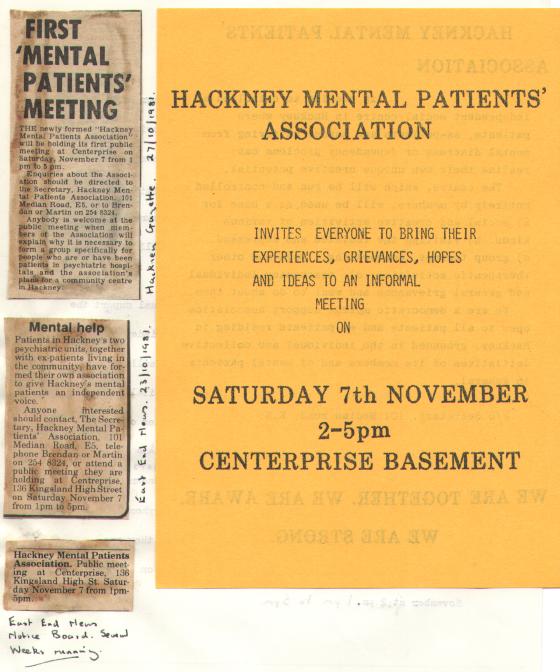
    Friday 6.5.1974 4.30pm First meeting of Hackney Hospital MPU "Alan Hartman explained what kind of things the mental patients union does. Refusing treatment, cruelty to patients, clothes grants, fighting against being discriminated against in jobs... Alice ill treated by nurses... "Resolved that a branch of the Mayola Road M.P.U. be formed in Hackney Hospital. proposed Alan Hartman, seconded Alice. 15 for - none against. Alan Hartman elected chairman.." The meeting was adjourned after the senior nursing officer attempted (unsuccessfully) to break it up.

    July 1974: Hackney Hospital Mental Patients Union won the right to meet in the hospital

    Hackney Gazette 6.8.1974

    MENTAL PATIENTS UNION IS NOW RECOGNISED

    The Hackney hospitals branch of the Mental Patients Union is the first in the country to achieve recognition. Psychiatric wings in both the German and Hackney Hospital are affected.

    The MPU aims to bring about a better deal for patients in mental hospitals, and improved status.

    Mr Andrew Roberts, of the Hackney branch, claims that several patients in Hackney Hospital psychiatric wing had spoken of better treatment by staff since the branch was recognised on July 18.

    After Hackney MPU ceased being active, Alan Hartman attempted to form a group with a slightly different name: [Not Hackney Mental Patients Association] - He went to Manchester in 1985

    Succesors within the hospital include: Hackney Day Hospital Patients Committee formed in the winter of 1984/1985 and Hackney Patients Council (1994 to the present)

    People's News Service 1.6.1974 "MENTAL PATIENTS' UNION MEMBER ESCAPES COMPULSORY DRUG TREATMENT. Last week Tony O'Donnell moved into the house of the Mayola Road Mental Patients Union in East London after a long struggle to find a place where he could live without having to undergo injections of modicate, an extremely strong drug used on people diagnosed as schizophrenic...". See also Hackney Union of Mental Patients

    5.7.1974 to 7.7.1974 A meeting held at Castle Priory College, which was reported by Paul Williams and Tim Gauntlett in Participation with mentally handicapped people, published by Campaign for the Mentally Handicapped - See 1975

    Late August 1974: "Fear" by Frank Bangay published in Troubadour 2, edited by Patrick Hayes. Troubadour Poets held Monday night poetry evenings at the Troubadour coffee har, 265 Old Brompton Road, Earls Court, London, SW5. Frank also organised gis there in the 1980s. See Wikipedia

    October 1974 Mind Out "Consumer issue". Based on a flood of letters in response to publicity that such an issue was planned. Most of the letters were negative and the editor said "We do not think psychiatrists will like being criticised by their patients". The issue also re-produced the MPU drug side effects list, but without the introduction explaining that the effects listed were possible (not necessary) effects. Ruptions in Mind.

    October 1974 First People First convention. Oregon, USA

    4.10.1974 to 6.10.1974 "First Women and Health Conference" held in Sheffield (following "Women and medicine workshop in Edinburgh"). About 250 women came. The 28 page report covers physical health (including VD - Childbirth - Breast Self-Examination - Alternative medicine - The Pill - Menopause - Nutrition). Mental health not mentioned, but a cartoon caption says "I was a well-adjusted woman 'till I discovered health conferences" (page 1).

    The December 1974 list of Mental Patients Unions includes the following unions inside hospitals: Roundway Hospital Mental Patients Union, Wiltshire - Horton Hospital Mental Patients Union, Surrey - Broadmoor Hospital (individual members unable to meet) - Hackney Hospital Branch - Shenley Hospital (contacts) - Dundee Mental Patients Union

    1974-1978 Gardes-Fous: French organisation and journal that attempted to unite low paid mental-hospital workers with patients in radical action. (Sedgwick, P. 1982, p.235). Gardes-fous (fools guards) are parapets or railings that prevent people falling into a hole or running of the road.

    1975

    1975 Schizophrenia From Within (an anthology of autobiographical accounts by patients) edited by J. K. (John Kenneth) Wing (1923- ) for the National Schizophrenia Fellowship, Surbiton. 65 pages. ISBN: 090485406X. Peter Sedgwick (1982, pages 242-243 and 288) comments that

    "Far more psychotic patients... must have participated in the work of the British NSF (with its 90 local groups) alongside relatives and other sympathisers, than have ever been seen in the 'patients' union' networks of more politicised repute".

    In 1975 Thurstine Basset, a student social worker at the London School of Economics, invited a mental patients union speaker. - His interest in the patients' movement continued: See May 1983 - July 1985 - November 2004 - May 2006 - 2007

    1975 Jason Pegler born. See Chipmunkapublishing

    A meeting in Brussels in January 1975 launched The International Network of Alternatives To Psychiatry (Resseau Alternatif A La Psychiatrie). - See 1982

    early 1975 Your Rights in Camden "aimed squarely at potential claimants rather than professionals" (Foreword by Tessa Jowell, chair of social services) The addresses included at the end of the mental health section are Friern Hospital, Tavistock Institute of Human Relations, Emergencies as Whittington Hospital, National Council for Civil Liberties, Mind, Camden Association for Mental Health, The Mental After-Care Association, Mental Patients' Union c/o 37 Mayola Road (A group organised by mental patients to represent the interests of their members) and COPE "Monday to Saturday 11am-8pm. Concerned with alleviating mental distress in modern society"

    Also in 1975: The Sunday Times Self-Help Directory edited by Judith Chisholm and Oliver Gillie, with a foreword by Jack Ashley, MP. Amongst the organisations listed are Al_Anon Familiy Groups, Alcoholics Anonymous, Anorexics Anonymous, Be Not Anxious, B.I.T. (information service), Depressives Anonymous, Disablement Income Group, Federation of Mental Patients' Unions, Friend (homosexual men and women), Gamblers Anonymous, National Federation of the Blind of the United Kingdom, National Federation of Claimant's Unions, National League for the Blind and Disabled, Neurotics Nominé, Patient's Association, Preservation of the Rights of Prisoners (PROP), Simon Community (homeless people), The Open Door (agrophobia), The Partially Sighted Society, The Phobics Society.

    March 1975 Spare Rib "Stretched to Breaking Point" feature recounts (first name only) women's experiences of psychiatric hospitals. "The staff objected when Susan built up a group of friends: 'They didn't like it. You see, we were supporting one another. We'd go on strike; wouldn't go to Occupational Therapy, wouldn't go to bed when lights went out and wouldn't eat shitty food".

    April 1975 Gardes-Fous (page 39-41), special international edition, re-published the (British) Mental Patient's Union's Declaration of Intent in translation, with some background briefing. (Sedgwick, P. 1982, p.286, note 83)

    April 1975 Mind Out "Discrimination - Andrew Roberts of the Hackney Mental Patients Union takes a look at job discrimination against mental patients"

    May 1975 - Mind Annual Conference "Psychiatry and Alternative Support Systems". Cope was invited to run a seminar. It prepared a leaflet, with West London Mental Patients Union, criticising Mind. The section by West London MPU was signed by Mary Hutchinson and Eric Irwin. (Heavy Daze no.6. pages 6-7 "Mind Games and More")

    7.5.1975 Planned Manchester Mental Patients Union Conference.

    June 1975 " Compendium Sexual Politics Stock Catalogue" contains under "Health, Childbirth etc" mainly works on childbirth. Exceptions include "Women and Health Conference Proceedings, Sheffield [October] 1974 (15 pence) - "Women Against E.C.T." (10 pence) - "Migraine; Evolution of a common disorder" by O. Sacks (£1.60) - "Our Bodies Our Selves" by Boston Women's Health Collective - "Put her down on drugs: prescribed drug usage in women" by L. Fiddell. - The Psychology section included - "Open Letter to Psychiatrists" by Nicole Anthony (3 pence) - "Women an Madness" (£1.15) - Psychoanalysis and Feminism - R. Seidenberg "Drug advertising and perception of mental illness" (25 pence) - M.Weaver "Bill of Rights for Insane, Abnormals and other deviants (so called) (3 pence)

    October 1975 A Directory of the Side Effects of Psychiatric Drugs

    June 1975 Campaign for the Mentally Handicapped's "participation weekend" at Castle Priory College. This was reported by Alan Tyne, Paul Williams and Tim Gauntlett in Working out: an account of CMH's participation weekend at Castle Priory College in June, 1975, with some comments published London by CMH, 96 Portland Place, W1N 4EX in 1975.

    June 1975 (Covering letter from Charles Hannam. University of Bristol School of Education)
    Mental Health in
    Bristol. Where to get help produced by Pearl Cook, Peter Durrant and Charles Hannam for the Bristol Association for Mental Health. Gives address for national Mental Patients Union. Entry for Bristol Womens Liberation Group ( The Women's Centre, 11 Waverley Road, Bristol 6) says "The Women's Centre is only tenuously involved in this field".

    31.10.1975 and 1.11.1975 Mind conference at Church House, Westminster in connection with the publication of volume one of Larry Gostin's A Human Condition. The Mental Health Act from 1959 to 1975. Observations, analysis and proposals for reform.

    Heavy Daze number 6: "Mental Patients Union - A federation of Mental Patients group[s] around the country, based on the ideas that mental patients organise and support each other and fight for the rights of each other. The National Info. Centre has recently moved out of London (a good sign?) to Hull MPU, 16 Clifton Gardens, St Georges Road, Hull, HU3 3QB. Write to them for their list of contacts across the country. East London MPU, 37 Mayola Road, E5 (page 31). The same issue includes (page 28) "Society, Psychiatry and the MPU - Personal responsibility? My View", by "Mike Smith, Hull MPU" and a notice about the Directory of the Side Effects of Psychiatric Drugs.

    December 1975 Mind Out "Voluntary patient - involuntary treatment" (A personal account by Andrew Roberts)

    20.12.1975 Angela Sweeney born. See 2001 - 2.6.2003 - Recovery In Sight Centre 2009 - This is Survivor Research 2009

    1976

    1976 Peter Thompson founded The Matthew Trust

    1.1.1976 Which? Books Understanding Mental Health

    11.1.1976 About half the patients at Paddington Day Hospital signed a letter of complaint, leading to an inquiry and (eventually, in 1979) the closure of the unit.

    13.2.1976 The telephone number used by the Mental Patients Union moved with Andrew and Valerie (Argent) Roberts to a house they later shared with Joan Hughes.

    29.3.1976/30.3.1976? Janet Cresswell stayed overnight with Joan Hughes at 37 Mayola Road. The following day, Janet stabbed Desmond McNeil, her former doctor, in the buttocks. Joan wrote (about 1993):

    "This news devastated me, but I had no time to dwell on it as I had to continue to occupy Mayola Road until a house had been obtained for Matthew O'Hara and others. I had to stay until the official eviction took place. In the meantime Matthew O'Hara, an amateur expert in legal matters, tried to help Janet, but she refused his offer of help. To this day Janet has remained a patient in Broadmoor Hospital."

    30.1.1976 150 squatters evicted by 100s of police from Hornsey Rise, GLC Estate, Hazelville Road: (Welby House, Goldie House, Ritchie House). Cherry Allfree was, at one time, a squatter in Welby House.

    Sunday 25.4.1976. Joan Hughes' diary entry that Mayola Road closed:

    "All the troubles with Mayola Road appear to be over. The place is empty now and bath and toilet have been smashed up by demolition men, awaiting the destruction of the entire building."

    Wednesday 28.4.1976 - 7.30pm Question put to the leader of Hackney Council by Councillor Lois Jacques "Will the Leader please state what policy decision has been taken regarding the request from the Mental Patients' Union for property to be provided by the Council for their use?" - Minutes in Joan Hughes' collection)

    Spring 1976 "Spring is Rising" by Frank Bangay. This was published in Springfield Words, a magazine produced by Springfield Hospital in 1978. Frank's 1985 poem "Food and Shelter" (Naked Songs and Rhythms of Hope pages 104-106) relates to experiences in 1976 to 1978 and "the revolving door system that we can get caught up in once we enter the psychiatric system".

    June 1976: PROMPT: Protection of the Rights of Mental Patients in Therapy - Became CAPO (Campaign Against Psychiatric Oppression) in March 1985.

    1977

    1977? Dunffermline Seniors, the first of the Express Groups (Fife) started. external link - See Beyond Diagnosis 6

    Peter Barham's thesis, Thinking about schizophrenia, thinking about schizophrenic thinking and schizophrenic thinking was awarded a Ph.D. by the University of Durham in 1977. It drew on his Winterton interviews and led to schizophrenia and human value in 1984.

    1977 National "Women and Mental Health Conference", London. "as far back as the late 1970s, whilst working as a trainee social worker, I helped to plan the first and only National Women and Mental Health Conference, in the hope that crisis provision and better support services could begin to be set up for women who feature more heavily in the psychiatric system" (Helen Shoenberg, 12.4.1994 Conference speech) - chronology

    February 1977 Larry Gostin's A Human Condition. The Law Relating to Mentally Abnormal Offenders: Observations, analysis and proposals for reform, the second volume of A Human Condition, published by Mind.

    The technology of political control by Carol Ackroyd and others, (Pelican 1977) listed p.41 of Manchester MPU's Your Rights in Mental Hospital. A Human Condition is also listed, but without reference to two volmes.

    January/February 1977 Mind Out "World leader meets his match - John Hooper says that sometimes, the compulsory powers of the Mental Health Act can be a blessing in disguise" (A patient's personal account)

    29.4.1977 Letter to Dave Hinchcliffe about the history of mental patients unions

    October 1977 Joan Hughes re-isued A Directory of the Side Effects of Psychiatric Drugs. Duplicated at Centerprise.

    Autumn 1977/Spring 1978 Hackney Worker's Educational Association course on "Mental Health and the Community" at Centerprise, in Dalston. It grew out of discussions at Centerprise about how to cope with customers with mental health problems. For the ex-Hackney MPU members who ran it, it grew out of a desire to create a dialogue between people of divergent views. The principle was that people could talk without agreeing and without compromising the purity of their respective principles. Psychiatrists, for example, could debate with anti-psychiatrists, and mental patients talk to mental health workers, on equal terms.

    Between the autumn of 1977 and the autumn of 1984, Hackney Workers Educational Association was involved in meetings on alternatives to prisons (with Alan Leader) - the local psychiatric unit - mental handicap (and the formation of Hamhp) - alternatives in mental health - mental distress in old age and a series of meetings with speakers who had physical or communication disabilities (Everybody's Hackney). Ex Mental Patients Union members were active in all of these.

    6.12.1977 Meeting arranged for this date when Manchester Mental Patients Union would show a Panorama programme about mental illness to patients.

    1978

    1978 On Our Own. Patient-Controlled Alternatives to the Mental Health System by Judi Chamberlin (born New York 1944 - see American index). Judi visited London, Holland and Iceland in 1982 - See 1981/1982 - Summer1982 - July 1985 - Barker and Peck 1987 - Her book inspired Mary O'Hagan in New Zealand - 1997: Anny Brackx prepares to publish a British edition 1988 - Summer 1990 (history) - Elsinore 1994 - Hearing Voices 1996 - National Empowerment Center (1997?) - Coercice Treatment Conference 2007 - 2009

    1978 Brian Davey (Nottingham) first experienced psychosis or non- ordinary state of mind. See Nottingham Advocacy Group - 10.9.1988 - Asylum April 1989 - Asylum Winter 1990/1991 - Asylum Spring 1991 - Asylum Autumn 1991 - Asylum Winter 1991/1992 - Asylum Autumn 1993 - Ecoworks

    19.10.1978: Leonard Roy Frank signed a copy of his The History of Shock Treatment and sent it to to Joan Martin

    October 1978 North West Mind established with the appointment of David Brandon as North West Campaigns Officer with offices in Blackburn and Liverpool. [Later combined at Preston]. Mind already had regional bases in Cardiff, Leeds, Gateshead and Sheffield. Mentions sixteen "active local associations for mental health in the area". David to mobilise concerns of "mental health volunteers and professional workers". (Mind Information Bulletin No.36. October 1978) See Manchester Mind - North West Schizophrenia Fellowship - October 1981 - early 1980s? - 1985 - Lindsey Dyer - 1987. The North West Mind regional council brought together individuals from local associations across the region. About 1986, Irene Harris and Andrew Hughes, "two of the more active recipients of mental health services" became chairperson and vice-chairperson. (email Andrew Hughes 17.4.2010) - 1988; North West Mind Consumer Network

    1979 re-structuring society

    About here that Manchester Mental Patients Union published Your Rights in Mental Hospital - A Mental Patients' Union (MPU) Pamphlet.

    The contacts list includes "Crisis Centre" 437-4594" - "Anorexic Aid: Mrs P. Hartley, 1 Pool End Cl. Macclesfield, SK10 2LD"- "MIND 226-2623" - "Phobic Society 881-1937" - " PNP (people not psychiatry) 226-8089" "MPU Address: We are trying to set up a houses, but until then contact c/o Grass Roots Bookshop, 109 Oxford Rd., Manchester MI. Telephone 236-3112"

    " Mind in Manchester was set up in 1979 by a group of people who had experienced mental ill-health and the damaging consequences of medical diagnosis and treatment at the time" (history on its website)

    Manchester Mind Newsheet (four times a year) probably started in the autumn of 1984 - Members of Manchester Mind made a presentation to the 1985 (national) Mind conference. See 1986. Mind Manchester Group wrote Developing an Alternative Community Mental Health Service in 1988. This mentions three "innovative" Manchester projects with a non-medical approach: 42nd Street - People not Psychiatry - Commonplace

    12.1.2010 First archive of Mind in Manchester's website. Archive goes to 24.8.2008.

    March 2010: Following noticed on website: "Following a difficult process, the members of Mind in Manchester have taken the decision to close the organisation with immediate effect. The reasons for this include not being able to secure enough funding to sustain the organisation. - We would like to take the opportunity to thank all our partners and associates who have worked with us over the last 30 years to enable us to deliver innovative mental health services for the people of Manchester."

    1979 Frank Bangay wrote the lyrics "Pretty Girl" to a song performed by the Fighting Pigeons

    Half The Sky: An Introduction to Women's Studies edited by the Bristol Women's Studies Group. London: Virago, 1979. Chapter on "Bodies and Minds" has excerpts on "Women and Mental Health" with a review (pages 95- 96) of Phyllis Chesler's Women and Madness (1972) and excerpts from Anne Karpf (1978) on 'depression' and Cathy Haw and Rosie Parker (1977) on feminist psychotherapy from Spare Rib.

    3.5.1979 Conservatives won the General Election in the United Kingdom - Market choice and consumerism became positive themes and state welfare was suspicious - The Conservative manifesto said

    "We must do more to help people to help themselves, and families to look after their own. We must also encourage the voluntary movement and self-help groups working in partnership with the statutory services."
    From May 1979, the mental patients' movement in the United Kingdom developed in a radically different political climate. This was not only due to the change of government, but also to new attitudes to mental patients amongst local authorities, voluntary groups and others attempting to defend alternative political views or threatened services. The patient as consumer who should be listened to took a decade to enter government policy (Griffiths Report 1989). In the meantime, our language had changed. We were no longer mental patients uniting, but survivors or users engaged in a diversity of speaking out - advocacy and user involvement. Half way through the decade, mental health users began to think about being empowered. People First, the movement of people with a learning difficulty, developed a strong autonomous existence in the United Kingdom (see 1982 and 1990) and the survivors' movement, unlike mental patients union (see MPU Declaration and Mind Out 2), developed separately. Attention to mental distress in old age involved an alliance of patients, carers and professionals.

    November 1979 - 42nd Street founded in Manchester. A community mental health project for young people aged between 15-25 years, living in Manchester. [An old website said it was founded in 1980]. In 1983 published Reflected images Self portraits of distress: "eleven people describe their experiences of stress and their search for understanding and support - 42nd Street, a Youth Development Trust project", Manchester: Youth Development Trust. 96 pages. By 1986 it was funded by the Urban Aid Programme. Published Principles into Practice. A developmental study of a community health service. (Aileen McDermott 1986). Tried, with limited success, to make its management structure accessible to young people in the belief that consumers of a service, should, if they wish to, participate in the decision making process. Helen Spandler was based ther as a research worker from August 1994 to August 1995. The report on her research Who's Hurting Who? Young people, self-harm and suicide was published in 1996. 2000: Bernard Davies StreetCred?: Values and dilemmas of mental health work with young people. Leicester: Youth Work Press. Published in association with 42nd Street. 2006 In and Out of Harm's Way by "Alex". Manchester: 42nd Street. 15 pages. Its website says: provides support service to young people experiencing stress and mental health problems.

    November 1979 Lawletter Quarterly magazine published by John Bagge, then at 90 Fawcett Estate, Clapton Common, London E5 9AX, from 1979 to 1983 (17 issues).

    "My first introduction to PROMPT came in 1979 when I found some PROMPT booklets in a bookshop either in Brixton or in Stratford. I might have found booklets in both places. My first PROMPT meeting in 1980 was a conference at the Conway Hall." (Frank Bangay)

    Early 1980s: Frank Bangay , a poet, became active in PROMPT alongside Julian Barnett and Eric Irwin. [External link: The Importance of Being Frank

    1980

    February 1980 The National Schizophrenia Fellowship appointed a group development officer (David Lynes?) for the North West based in Warrington

    The North West Schizophrenia Fellowship split from the National Schizophrenia Fellowship (NSF) in 1982, although the NSF also continued to operate in some parts of North West England too. I seem to recall that David Lynes was the 'boss' at North West Fellowship and was a very energetic figure. I think there was considerable competition between the Fellowship, based in Warrington, and North West Mind, based in Preston. I went to a meeting of the Oldham group of the NSF. It was difficult to sit through, as it was a carer support group. People present spent the evening comparing notes on the difficulties caused them by their relatives with a diagnosis of schizophrenia. I do not think they considered that the new member might have a diagnosis of his own. Ouch! Eventually Mind and the Fellowship did find a way to collaborate and then formed a quite considerable alliance." (email Andrew Hughes 1.8.2009)

    Thursday 26.6.1980: Matthew O'Hara found dead in an "MPU" house - house closed. This was really the end of the Hackney Mental Patients Union housing. Surviving members of Hackney MPU negotiated re-housing for the remaining tenants. The Matthew O'Hara Committee: for Civil Liberties and Community Care was founded in August 1981. Much of its educational work was carried on through the Hackney Workers Educational Association, continuing activities that Matthew had been involved in.

    Saturday 23.8.1980 PROMPT Conference on Anti-Psychiatry at Conway Hall

    1981

    23.3.1981 Official launch of CHAMH (City and Hackney Association for Mental Health) - Later City and Hackney Mind. The association had been formed in 1980 with administrative help from the Community Psychiatric Research Unit and under the chairmanship of Dennis Timms, chair of City and Hackney Community Health Council. User involvement was slow to be established. "Dr David Kessel" (a mental patient) was elected to the executive on 12.7.1982. Meetings were open to members, and Valerie Argent, Joan Hughes and Andrew Roberts were amongst those who attended.

    11.4.1981 Third meeting of "State Brutality Group" changes its name to Inquest (United Campaigns for Justice) The members of the group at this time were groups respecting Blair Peach, Mathew O'Hara, Jimmy Kelly and Richard Campbell. - [External link to Inquest website]

    29.4.1981 Start of "Mental Hospitals - Prisons - and Community Alternatives - A Hackney WEA and Matthew O'Hara Committee Class" at Centerprise. Case study one: The Death of Richard 'Cartoon' Campbell

    20.5.1981 "The Social Worker's Dilemma"

    28.5.1981 "Community Aternatives to Mental Hospitals"

    17.6.1981 "Community Aternatives to Prisons"

    Madness Network News Vol.6 No.2 Winter 1981 Page one: The European Movement from an ex-inmate perspective, by Swan, an American activist travelling in Europe.

    Madness Network News Vol.6 No.3 Summer 1981 Starting page 12: European Convention on Human Rights and An Evening with Frits Winterwerp, by Swan.

    Madness Network News Vol.6 No.4 Winter 1981-1982 Page 8: NAPA Pickets Shock Shop, Berkeley, California, by Anne Boldt and Disabled Hold Law Conference, Toronto, Canada, by Judi Chamberlin. Starting page 10: The European Movement, by Swan includes PROMPT, Inquest, Matthew O'Hara Committee and Hackney Mental Patients' Association Page 16: "Democratic" Psychiatry in Italy by Swan

    May 1981 Mind Out "Consumers' issue"

    about June 1981: The Advocacy Alliance set up.

    July 1981 Riots. Atmosphere of fear and tension in Hackney.

    Summer 1981 Matthew O'Hara Committee News

    October 1981 David Brandon Voices of Experience. Consumer Perspectives of Psychiatric Treatment. North West Mind, Miller House, Miller Arcade, Preston, Lancashire. 36 page pamphlet. Thurstine Basset's collection

    25.10.1981 to 31.10.1981 Scottish Mental Health Week. LINK announced the opening and successful development in Glasgow of the Mental Health Resource Centre, LINK social clubs and the new LINK Social and Activity Centre (to open in December)

    October 1981 Sylvia Jeffares died in a road accident. Sylvia had corresponded with and visited and Janet Cresswell throughout 1981 and wanted to campaign in some way around her situation. Joan Hughes inserted the following notice in the Morning Star for 1.12.1981:

    "JEFFARES, Sylvia. Died suddenly in October 1981, aged 32. Courageous fighter for women's liberation and for human rights for all prisoners. Remembered as dear friend and comrade - Joan."

    Saturday 7.11.1981. Inaugoration of Hackney Mental Patient's Association in the basement of Centerprise. Dave Kessel in the chair. Everybody sat in a large circle and said what they thought - in turn. See below 9.4.1982 - July 1982. See also Hackney Union of Mental Patients, which was, in some ways, a continuation, and Hackney Mental Health Action Group (which included a radical social worker).

    November 1981 Tony Smythe resigned as Director of Mind. Lindsay Knight, editor of Mind Out, left to prepare programmes for Channel 4 in January 1982. Mind Out closed down in February 1982. Chris Heginbotham became National Director of Mind sometime in 1982, and remained until 1988. During that time he "was an active member of the World Federation for Mental Health" and secured its congress for Brighton in 1985. Barbara Poole was conference administrator from 1983. Larry Gostin (Legal Director) remained until 1983, when he left to run the National Council for Civil Liberties. - Apart from the May 1981 consumer issue, it is difficult to find any indication of patients voices in Mind Out at this period. The periods that Mind publications gave mental patients a platform are the mid 1970s (under Denise Wynne) and after 1982.

    About here:

    London Women and Mental Health c/o AWP, Hungerford House, Victoria Embankment, WC2

    Islington Women and Mental Health, Caxton House, 129 St John Way, N19 (281 2345) [Chair: Jan Wallcraft] - "grew out of a group of local women who found existing services inadequate... Eventually the group applied for funding and in 1983 received a grant for one worker and running costs of an office." [By 1986] "We hold a weekly drop-in every Tuesday"... "We organise courses with the help of the Adult Education Institute" "We operate a women's help line" (28 trained volunteers) ... Jan Wallcraft 1986)

    Irish Women's Mental Health Group c/o Islington and Mental Health

    1982:

    1982 saw the publication of the first major UK history of the mental patients' movement, by Peter Sedgwick, and of Dale Peterson's collection of historic accounts of madness by those who experienced it from the inside. The movement also gained a new name as the USA concept of "self-advocacy" and the older concept of "citizen advocacy" were popularised in the United Kingdom by CMH The Campaign for Mentally Handicapped People. Judi Chamberlin visited patient activists in Hackney and elsewhere and The British Network of Alternatives to Psychiatry was conceived in Brussels. Patients prepared criticism of the parts of new Mental Health Bill that seemed to undermine voluntary treatment and Mind's financial crisis saw the closure of Mind Out and the end of MIND Information Bulletin in the form we knew it.

    Peter Sedgwick's Psychopolitics (1982) has two parts: Part One is a critical review of anti-psychiatry. Part Two, "Psychiatry and Liberation" is a thoughtful review of "Mental Health Movements and Issues: A Survey and Prospect" including a positive review of "movements among the mentally ill" in the United States, Germany, France, Holland, Belgium, Scotland and England. Sedgwick comments that "The continental patient-groups have found particular inspirations in the work of the Mental Patients' Union in Britain"

    A Mad People's History of Madness compiled by Dale Peterson.

    1982 Commonplace established by Manchester Mind. See Manchester index

    1982 Missing Link collective formed by women housing workers in Bristol to provide woman-only "intermediate second stage accommodation for single homeless women of all ages". Awarded Urban Aid for five years in April 1983 and appointed four full time workers in June 1983. By 1986 it had five communal houses in different parts of Bristol. "Most of the women we house come from a background of institutional care, Some have left home or a broken relationship; others are going through a crisis in their lives". (Finding Our Own Solutions 1986 pages 15-16). See present website.

    Thursday 7.1.1982 Hackney Action on Mental Handicap (HAMHP) formed. It included articulate local people with a mental handicap and organised its meetings so that they participated in discussions.

    About 1982? "Society for the Advancement of Research into Anorexia, (SARA)" founded by Clare Ockwell and her mother. Clare had herself been anorexic and used mental health services on and off since the age of nine. She ran the society for ten years before seeing through its merger with the Eating Disorders Association in 1992. Clare helped to found CAPITAL in 1997. On 1.9.2007 she came fourth, with 28 points, in the last edition of MasterMind. Her specialist subjects were anorexia nervosa, the Duncton novels and the rock group Genesis.

    14.1.1982 The New English Mental Health Bill A Lawletter Special Leaflet

    16.1.1982: A report of a PROMPT meeting

    February 1982 Final issue of Mind Out. Mind stopped it on financial grounds, after " run of nine years and 58 magazines". It was replaced by OpenMind in the spring of 1983.

    March 1982: Hackney Workers Educational Association "Alternatives in Mental Health" meeting in a series of "Alternatives" meetings organised by Sheila Rowbotham. Doug Tilbury, Andrew and Valerie Roberts led this one. After the meeting someone spoke about the idea of a course on psycho-geriatrics - This led to the Mental Distress in Old Age course.

    Tuesday 9.4.1982 Brent Community Health Council Public Meeting on Mental Health

    "Under Pressure - racism - no money - loneliness - inadequate housing and transport - unemployment - fuel bill - too few nursery places - stress - If you can't cope with the pressures in your life should you be labelled mentally ill?""
    . Andrew Roberts prepared a talk on
    " Community Approaches to Mental Distress and Insanity"
    which concluded with "some of the things that groups have done to help themselves" - Including relatives groups
    (National Schizophrenia Fellowship mentioned), the Mental Patients Union, Hackney Mental Patients Association, "a self-help group that runs a regular weekly social in a local day hospital and is campaigning for a patients controlled social centre" and classes run through the Workers Educational Association.

    May 1982 A meeting in Brussels of the The International Network Of Alternatives To Psychiatry (Resseau Alternatif A La Psychiatrie) which led to the formation of the The British Network of Alternatives to Psychiatry (external link - archive). The British Network was started by Stephen Ticktin. - See Mind November 1985

    July 1982 Valerie Argent (Roberts) elected to the City and Hackney Community Health Council on the nomination of Hackney Mental Patients Association - Hackney Workers Educational Association - the Matthew O'Hara Committee

    July-August 1982 Judi Chamberlin visited London (staying with MPU members), before travelling to Holland to meet Dutch activists. She was following in the footsteps of her friend Ann Boldt (Swan), who had frequently reported on the United Kingdom and European movement in Madness Network News. Judi then went on to Iceland. She returned to the United Kingdom in 1985 as a speaker at the World Congress of Mental Health

    Summer 1982 Mixed Emotions: A Collection of Angry and Peaceful Poetry

    August 1982 Frank Bangay's Seeing and Knowing, a poem that was pubished in What They Teach in Song

    Saturday 11.9.1982 The Annual General Meeting of CMH The Campaign for Mentally Handicapped People, in London, was devoted almost entirely to "Discussion of Self-Advocacy and the role for CMH in this movement" (Invitation letter from Morag Plank July 1982). We Can Speak for Ourselves. Self-Advocacy by Mentally Handicapped People, by Paul Williams and Bonnie Shoultz, published in The USA earlier in the year, was available at this meeting. [See advocacy]

    Frank Bangay's Solidarity Poster October 1982 Frank Bangay's Solidarity Poster. This was sold as A4 photocopied sheets. It has been sold and given a way in various formats since. The last stanza is

    "We cried together last night, but our tears were in solidarity with the sadness in the world, and through our solidarity through our tears we found strength"

    Another image and words leaflet self-published at this time was "Woman on a Park Bench with Birds"

    Tuesday 2.11.1982 Launch of Channel 4 (UK Television) to cater for minority interests not met by the mainstream channels. A demonstration video, Psychiatric Oppression, was produced to make the case to Channel 4 for a programme. This led, eventually, to We're Not Mad We're Angry

    November 1982 Eighth World Congress of the International League of Societies for Persons with Mental Handicap, held in Nairobi, was the first to fully involve people with mental handicaps. Thirty participants with mental handicaps came from Canada, England, France, Gaza, Germany, Kenya, Norway, Sweden and the USA. They spoke seven languages. They held their own discussions on the way they wanted to live, but made a presentation to the plenary session and made recommendations to the closing session. (CMH Newsletter 3, Spring 1983, pages 7-8)

    1983

    1983 to 1985 Liz Sayce studying at Royal Holloway, University of London. See 1988 - 1990 - 2000

    1983 Ted Curtis born

    1983 The Manic Depression Fellowshp started. (Later MDF The BiPolar Organisation - Link to website - See Perspectives on Manic Depression 1996 - On Our Own Terms 1997 - Strategies for Living 1997 - Meeting of Survivor Groups 2.3.2000 - web archive started September 2000 -

    Emergence of the allies Stephen Ticktin, in 1991, says that when Survivors Speak Out was set up (after 1985) "the impetus, ironically enough, came once again from a professional". The "once again" appears to refer to his own impetus in establishing British Network of Alternatives to Psychiatry. Later in the article he says that "for me the most exciting venture" was the establishment of the Asylum magazine, whose management, he says "is at present small and too top heavy with professionals". Professionals and non-users who developed the user-movement in these years acquired the name "allies". Notable allies included David Hill - Ingrid Barker - Edward Peck - Lorraine Bell (Southampton) - Helen Smith (King's Fund) - Rick Hennelly (Chesterfield)

    The British Network of Alternatives to Psychiatry ran from 1983 to 1988 (dates given by Stephen Ticktin in Asylum Summer 1991). Speaking of the importance of the British Network (May 2008), Peter Campbell said it "brought radical survivors and radical professionals together." Stephen Ticktin Asylum Summer describes himself as one of the founders and says "it was a loose affiliation of users and mental health workers who met on a monthly basis for purposes of both consciousness raising and campaigning. A number of working parties formed around particular issues such as the law, women, ECT, and major tranquillisers. In addition several study days were held ... one on the Closure of the Mental Hospitals, in 1985, and another on ECT and major tranquillisers, in 1987"

    Peter Campbell said (May 2008) that it included forceful characters like Shulamit Ramon and David Hill, who had both recently completed their Ph.D. theses (Shulamit in 1972). David was very important because of his trade union and political links. He got users into the Houses of Parliament and into conferences in Chesterfield organised around Tony Benn. These links were lost after David left.

    8.2.1983 Royal Assent to the 1983 Representation of the People Act. The possibility of staff organising mental patients to vote worried those members of parliament whose constituencies contained large mental hospitals. This fear was assuaged by requiring registration from one's previous address. The movement towards enfranchising long-stay mental patients must have had some effect on the willingness of policy makers to listen to patients.

    February/March 1983 First edition of OpenMind [See index], the replacement for Mind Out. It was launched and edited by Anny Brackx who, at this time, had been a journalist for about nine years. It was redesigned and relaunched in 1997 under the editorship of Sara Dunn (now described as Executive Editor). Kathryn Perry became editor in 2002. Closed April 2010

    It was during 1983 that Barbara Poole became administrator in Mind's conference office, which, I think, was part of the Training and Education Department (Tessa Jowell head). The tutors were Corrine Brewer, Charles Patmore, Chris Borne, then Auborn Wiseman. Peter Campbell has suggested that much of the rapid change in Mind with respect to user participation was due to the tutors' interest in this.

    March 1983 to August 1983 Coventry Crisis Intervention Team initial six months. [It was continued]. There was a "Follow Up Consumer Survey - 1 month after the closure of our research cases". - The "first fifty consumers" were asked to "share their views of the service they had been offered" (Ann Davis, December 1988) - "After feedback from the Consumer Research" the length of time clients could be seen for was increased from 6-8 to 10-12 weeks. [March 1984 report from S.M. Newton, Project Leader] - Featured in Speaking from Experience (1985).

    9.5.1983 Royal Assent to the 1983 Mental Health Act (England and Wales)

    Thurstine Basset trained social workers to be approved under this Act. He started the Brighton and Eastbourne Good Practices in Mental Health studies, the report of which was "especially" useful for social workers training to be approved (SSC 1985 volume 2, page 150). The training courses Thurstine ran involved clients as well as professionals (SSC 1985 volume 2, page 158).

    June/July 1983 Ron Lacey, in Open Mind claims that mental patients in France, Italy and Holland have organised lobbies. Contrasts unfavourably with England. - Also a letter form Peter Campbell.

    August/September 1983 Peter Cambell in Open Mind

    8.9.1983 Peter Sedgwick found dead near his home in Shipley, York

    September 1983 - November 1985 Mental Distress in Old Age (Hackney)

    September 1983, Peter Campbell moved to Cricklewood [33 Lichfield Road, London, NW2"] and became involved in Camden Mind as a "volunteer" almost at once. David Hill was not the director at Mind in Camden at that time.

    "The material for the "Psychiatric Oppression" video was shot over a period of time (after Autumn 1983 as my bit was shot in my flat in Cricklewood) and was preparatory to We're Not Mad We're Angry, but when it was actually edited together into the video I am not quite sure" (Peter Campbell)

    Monday 24.10.1983 Chamh Annual General Meeting at Shoreditch Health Centre. Amongst those nominated and seconded for the executive were a number of patient activists who were taking a leading role in suggesting resolutions to organisational problems associated with the way Chamh had been generated within the system (Community Psychiatric Unit) and did not have complete control of its own affairs. Those elected included David Kessel and Valerie (Argent) Roberts. Also active at the meeting were John Wilson, Andrew Roberts and Joan Hughes. The patient reformers brought in Felicity Tregear (not a patient) to attempt to sort out Chamh's finances.

    November? 1983 Annual Conference of Mind. Members of Glasgow Link Clubs attended and were somewhat amazed and angry that none of the presentations, seminars or workshops were presented by patients. They made their own presentation in 1984.

    December/January 1983/1984 Peter Cambell in Open Mind "Open Mind seems to be heavily weighted in favour of the expert".

    1984

    Multiple Image Productions Ltd., Faringdon House, Swindon (Company 1914764) operated from 1984 to 1988. We're Not Mad We're Angry (17.11.1986) was the result of a two year collaboration betwwen the company and "a collective of present and former psychiatric patients" (Channel Four Press Release). The original collective was PROMPT. Multiple images wanted a more socially diverse group, with a lot more women. PROMPT felt marginalised in the new group, and withdrew.

    Bristol "The first open meeting of Women and Mental Health in 1984 brought together well over 50 women" - See MIND 1985 - Finding Our Own Solutions 1986 - Campbell, P. 1989b. See Womankind and Bristol Crisis Service for Women

    Mental Health Services Project, Chesterfield
    Tontine Road Centre
    North Derbyshire Mental Health Services Project
    Contact Support Group

    A. Milroy and Rick Hennelly prepared a background paper "Exploiting Infinity" for the Mind Annual Conference in September 1984 and another, "Changing our Ways", for the Mind Annual Conference in November 1985. Both published by "Mental Health Services Project, Chesterfield". Rick Hennelly (1988), page 210, refers to these as "earlier descriptions of the service and the tensions between ideology and practice"

    From beside the Chesterfield Community Centre in Tontine Road one can look up at the famous bent spire. The centre houses a large number of projects, one of which was a North Derbyshire Mental Health Services day centre for people becoming reestablished in the community. In the mid-1980s this became run on increasingly democratic lines and was known as the Contact Support Group [first half of 1985] - Ivy Buckland from the centre was the first Survivors Speak Out Treasurer. Rick Hennelly, a social worker at the centre was very active in the formation of Survivors Speak Out

    "The Education and Action Group - a group of ex-mental patients... met in 1984 to produce a tape and slide show based on their experience of mental illness and recovery entitled Life After Mental Illness (see Inside Out Issue 6)" (Christine Cowan Inside Out Issue 8, p.5) - Presented MIND 1984 - Grimsby 11.4.1985.

    Camden Mental Health Consortium (CMHC), possibly not with that name, was founded in 1984. in response to the planned closure of Friern. (Campbell, P. 1987)

    1985? Diana Rose "became part of the fledgling service user/survivor movement in the UK" by joining Camden Consortium. See 2000 paper.

    The first Draft Constitution for Consortium is dated 1985, before the MIND conference. It contains no provision for users to be the only members, or a special, full category of member but refers to promoting a 'strong consumer voice'. ( Rose, D. 2000).

    Survivors Speak Out: See summer 1986 Asylum) -

    "Don't ask me why people in Survivors Speak Out should live in Camden" ( Rose, D. 2000)

    Before September 1987? Campbell, P. 1987 "Giants and Goblins. A Description of Camden Consortium's Campaign to Change Statutory Plans" - Peter Campbell was "Public Relations Officer of Camden Consortium and secretary of Survivos' Speak Out. - Camden Mental Health Consortium's address was c/o Emma Baatz, 8 Burgess Hill, London, NW2 2WA

    The group remained active until 2009, describing itself as "the largest User Group in the London Borough of Camden. Its members are people who use or have used the Mental Health services and live or work in the Borough. Associate Members are people or organisations who for some reason have an interest in the Mental Health Services provided in the Borough and support the objectives of CMHC. Membership is free."

    Closed 29.3.2009

    1984 Peter Barham's Schizophrenia and Human Value (based on his thesis) published.

    1984 Anne Rogers graduated from the Polytechnic of Central London. She took her M.Sc at Bedford College. "Subsequently I gained employment as a research officer in the Legal Department of National Mind, exploring the implementation of Section 136 of the Mental Health Act and became interested in a broad range of mental health issues including civil commiment, coercion, drug treatments and user involvement". (external link) - 1987 - literature - 1991 - 1993 - 1993 -

    Wednesday 9.5.1984 C. Heginbotham and Chris Shaw from Mind questioned by Social Services Committee. No mention of consumer's voice. Miss Shaw spoke about " annual conferences directed towards a very large professional audience with topical themes each year, for example the forthcoming one is going to be on the whole range of after care and is there life after mental illness and the rehabilitation services which are available" (SSC 1985 volume 2, page 142).

    Wednesday 16.5.1984 Alison Wertheimer, Tom McLean and Derek Thomas from Campaign for Mentally Handicapped People questioned by Social Services Committee. The memorandum submitted by the group contained recommendations (SSC 1985 volume 2, pages 190-191), including

    1) All policy-making and planning ... should take the principle of normalisation as the starting point

    2) Consumer involvement Far greater consumer involvement is needed at all levels of service planning, management and delivery. The consumer is primarily the person with mental handicap although some people may also need or wish others (families, friends) to advocate on their behalf. We should like to see much greater support for the growing self-advocacy movement in this country."

    Wednesday 25.5.1984: mental handicap schemes are on the move ... mental illness schemes remain ... stuck in the ... tramlines

    Summer 1984 Hackney Mental Health Action Group formed "by local patients, ex-patients and other people". Doug Tilbury, a Hackney Social Worker who had been a friend of Hackney Mental Patients Union, was a key person in this group. Apart from Doug, the activists I remember were patients: Including Cathy Pelican - Ian Ray-Todd - Lisa Haywood - Jim Read - David Kessel - Jim has suggested that the group was a spin-off from the Hackney Day Hospital Patients Committee - But that does not fit the sequence here.

    Lisa Haywood: First written mention found 14.3.1986 - Chamh AGM 1986 - Meeting with Chris Higginbottom - Day Hospital Committee - Mind Consumers Advisory Panel - 9.10.1987 election - 1989 to December 2006: Member of National Mind Council of Management - Mindlink South East Steering Group - January 1994 Advice and Outreach Manager, City and Hackney Mind - Mind election 1994 - Mind election 1995 - Vice Chair, Policies, National Mind - August 1998 - October 2004 Director, City and Hackney Mind. - January 2006 Mind support - 6.12.2006 ceased being vice-chair and management committee member of Mind. About here that Haywood Consultancy established - involvement in National Survivor User Network

    Saturday 23.6.1984 Launch of The Phoenix patients' publication at the "Conference on Normality, Normalism and Mental Health" - alternatively billed as Phoenix Cooperative Discussion on "Mental Health and Illness". 2pm-6pm Stoke Newington Community Centre, Old Fire Station, Leswin Road, N16.

    August 1984 Women and Mental Health group meeting in Hackney

    1.8.1984 Following an overdose, Valerie (Argent) Roberts was admitted to Hackney Hospital. Discarded poems were rescued from the waste paper bin. She was a psychiatric inpatient until November, after which she was a day patient for several years. This was a period of poetic and organisational creativity. The organisational creativity may have been helped by her being a Community Health Council member. - See Hackney Day Hospital Patients Committee

    26.9.1984 The Guardian: "'The agony of tranquillity': Jim Read and Kath Arnold, who both once took tranquillisers and now run groups for users, cite Tamara's case to show the pitfalls of withdrawal and how to cope with them". - See - 1.11.1984 - 28.1.1985 - 3.7.1985 - 16.7.1985 - October/November1985 - 8.1.1988 - October/November 1988 - - 1996 employed on Open University K257 - 2003: On Our Own Terms -

    1.11.1984 Community Care "Not so tranquil" by Kath Arnold and Jim Read. It ends: "The Government recently announced life sentences for heroin pushers. What is to be done about the entirely legal, highly profitable and even more destructive trade in tranquillisers?"

    22.10.1984 to 23.10.1984 Mind Annual Conference (Kensington Town Hall). Theme "Life after Mental Illness? Opportunities in an Age of Unemployment" - Possibly the first with a user presentation (By members of Glasgow Link clubs) - Also Chesterfield presentation. The conference notices mention three "special features" this year:

    • Greater opportunity for conference members to make their own contribution to the conference.
    • Particular attention to the potential of voluntary groups like MIND associations.
    • Listening to what former sufferers from mental illness say about what really matters where life after mental illness is concerned.

    end of 1984 Conference in Wakefield, West Yorkshire, on plans to close the mental hospitals. It "became apparent" that an open, democratic, forum for debate about all mental health issues was needed and, out of this, the magazine Asylum was conceived

    1985

    In the United Kingdom, the mid 1980s saw a revitalisation of locally organised democratic organisations of mental patients, linked together in networks. Support and funding for these developments from national organisations, notable Mind, meant that the movement had the potential to grow and that some user/survivors could develop a career as advocates of one kind or another.

    Something exciting beginning to happen? . The perception of dramatic national change, between September 1983 and the summer of 1986, focused on November 1985, was the subjective experience of Peter Campbell, moving from "isolation" to being "privileged at conferences". Peter argued, in the summer of 1986, that his subjective experience mirrored "the comparative rapidity of the consumer movement's advance out of obscurity" (A View from the Gatehouse, by Peter Campbell Asylum Summer 1986, pages 8-9

    For four years prior to 1989 (An October 1989 Report) "the development team at Good Practices in Mental Health (GPMH)... focused on establishing district-wide user-only mental forums. Examples include the Islington Forum, Lewisham Users Forum and, most recently, Connections in Harrow"

    Winter 1984/1985 - Hackney Day Hospital Patients Committee established. [Note that in February 1987, Lisa Haywood said this had existed for "2+ years"]. Those active in estabishing this included (I believe) Valerie (Argent) Roberts - Sheila Nash - Connie - Kathy (Cathy Pelican?) and Sylvia. Alan Leader joined sometime later.

    1985 Alan Hartman went to Manchester. See Manchester index.

    Ireland index Aware "formed in 1985 by a group of interested patients, relatives and mental health professionals, whose aims are to assist that section of the population whoses lives are directly affected by depression". (website)

    January 1985 Frank Bangay's Stigma No.3, a poem that was published in What They Teach in Song - "You see, I believe in causing a fuss - at least we can... make someone think".

    28.1.1985 Social Work Today 'Fighting mad' by Jim Read, who describes it as his "personal manifesto" and comments that he "cannot imagine getting such an article into a professional journal today". It ends "But what will also be required is a challenge to the basic structures of our social, political and economic system. Capitalism depends too much on turning love and happiness into rare commodities. The change we want, the wresting back of control over our lives, will come more readily if everyone recognises the part the mental health system plays in keeping us all in place, and we challenge it at every opportunity".

    30.1.1985 Printing of the Second Report from the Social Services Committee - 1984-1985 session - on "Community Care with special reference to adult mentally ill and mentally handicapped people". [Government response was Series: Cmnd.; 9674]

    Consumer voice paragraph 31:

    "...we have had difficulty in hearing the authentic voice of the ultimate consumers of community care. There have been considerable advances in techniques designed to enable and encourage mentally ill or handicapped people to speak for themselves... But there is a long way to go. Services are still mainly designed by providers and not users, whether families or clients, and in response to blueprints rather than in answer to demand. Matching the service to the consumer rather than vice versa should be the one central aim of community care in the future. We recommend that all agencies responsible ensure that plans for services are devised with as well as for mentally disabled people and their families"

    Consumer view paragraph 148:

    "Too little attention has been paid in the past to the views of those most closely affected by the policy of community care - mentally ill and mentally handicapped people and their families... Many of the less severely disable are able to express their needs and wishes most articulately, as the Committee saw and heard on visits. For those unable to express their own wishes, some form of advocacy may be very helpful."

    We recommend that the Department lay an obligation on authorities to ascertain so far as practicable, and give due consideration to, the wishes and feelings of mentally disabled individuals for whom a service is provided, and in particular where closure of a long-stay facility is contemplated. We also recommend that efforts be made to facilitate the participation of individual mentally disabled people in the planning and management of services

    [Bold in original. In examining the report and the evidence, it is clear that the impetus for the "consumer view" did not come from organisations like Mind, but from organisations like Campaign for Mentally Handicapped People, and from the Committee itself.]

    MIND Consumer Network (idea for)
    "the idea of a Consumer Network has been around for some time and was in fact presented to the policy committee in
    January 1985. The idea was endorsed by the Council of Management in July 1985" (Ballot 1 Autumn 1986) - See 30.11.1985 - 18.4.1986 - Autumn 1986 - Summer 1987

    March 1985 PROMPT changed its name to CAPO

    5.3.1985
    Defeated miners return to work.
    Contesting Psychiatry argues that the survivors' movement is a consumers' movement that is post-unionism.

    16.3.1985 British Network for Alternatives to Psychiatry Study day on Closure of the Mental Hospitals ("in which we looked at the processes and objectives of current plans for the closure of large psychiatric institutions.)

    11.4.1985 Annual General Meeting of the Grimsby Cleethorpes and District Local Association for Mental Health Presentation of Life after Mental Illness by the Education and Action Group. In Inside Out Issue 8, p.5, Christine Cowan) adds that the show will be presented at Brighton in July. "Graham Kennedy, Christine Cowan and Thomas Graham who appear on the slide show have been invited to participate in the conference along with LINK/GAMH's Assistant Director, Jo Burns. All will be taking an active role in the presentation and anticipate a lively audience discussion afterwards. The... Congress... is a unique opportunity for users of psychiatric services to air their views and be taken seriously. Money is the real problem for financing the trip, and any donations would be greatly appreciated. Please send to Education and Action Group, LINK/GAMH, 2 Queen's Crescent. Glasgow". It is not clear if they got to Brighton. Jo Burns spoke on "New Approaches to Women and Mental health in Scotland".

    Summer 1985 Family History Group at the Hackney Day Hospital (Mondays). Members co-counselled for support. Each drew up a family chart and a chronology of his or her life. Valerie Argent's work has fed into this chronology.

    July 1985 British Network for Alternatives to Psychiatry paper "How would you plan a psychiatric service in Britain, and for what end?"

    Summer 1985 "Empowering the patient", a two day workshop organised jointly by Nottingham Mind and Nottingham Health Authority. Ingrid Peck (Ingrid Barker) was Development Officer for Nottingham Mind and her partner, Edward Peck, was Sector Team Adminsitrator, Mental Illness Unit, for Nottingham Health Authority.

    See World Congress 1985 - 16.7.1985 - meeting after the World Congress - Barker and Peck 1987 - Literature - 16.5.1988 - 22.6.1991

    "Ingrid Barker is committed to user involvement and advocacy particularly in mental health services and she led the establishment of the first mental health Patients Councils and Advocacy projects in Britain". (external source) - See allies


    July 1985 World Congress of Mental Health in Brighton.
    Speaking from Experience - a video about user involvement compiled and presented by Thurstine Basset

    Thurstine recalls that in 1985 there was very little interest in the training video and in service user participation amongst the mental health professions. This was "not on their agenda and if anything they were opposed to the idea". Barbara Poole, Mind's conference organiser, was concerned that not enough service users would come to the Patients to People conference in November. To help, Thurstine phoned a day centre in Brighton, which was known to be quite radical, and spoke to the manager. He asked her if she could get together a group of staff and service users to go to the conference. She was not keen and he thinks her response "but we go to conferences to get a break from the clients" says a lot about staff attitudes at the time.

    The following is the text of a handwritten leaflet distributed at the conference by some ex-patients from Holland:
    The Congress Mental Health 2000 is supporting injustice

    by not rejecting 'expert' knowledge of psychiatrists

    By calling human suffering illness the oppression is obscured.

    Consumers are not mad, BUT ANGRY

    By continuing the idea that you can talk for somebody else.

    Make it possible for all consumers movements to come and to speak for themselves.

    The need to change all this will be really helped by:

    - no 'generous' moneygiving to some consumers (the English CAPO was hidden away between the entrance and the elevator).

    GIVE FREE ENTRANCE TO ALL CONSUMERS

    and offer to share all their costs

    - not only rational stilted talks but moveable emotional/warm meetings too, where you can shout, scream, touch, cry, to express your anger!

    - TO CHOOSE TO CONFRONT the Conflicts rather than to pretend "harmony". Conflicts are necessary to change unequality, which is denied. But: out of their 'expert' superior position psychiatrists define real conflicts as "personal problems".

    It is significant that the elitist nature of the Cngress is reflected in its having been held at such venues as the Brighton Cnference Centre and hotel Metropole etc. Why not organise it during the holidays in empty school buildings, where each group can cook once??

    Joyce, Monique, Aukje, Doetie

    Translated and corrected by Siobhan Kilgurriff

    Monique vld Mye / ex-consumer, worker in "patient movement"

    Doetie Bakker / starter of some mad things, no more consumer

    Aukje Westra / have been "mad", now working for "opatients" councils

    Joyce Huugland / starter of a run away house, unemployed full of activities

    3.7.1985 Peace News "To be ourselves - challenging the abuses of psychiatry" by Jim Read. It included a list of resources such as the videos Speaking from Experience - We're not Mad - We're Angry [??] - and Psychiatric Oppression

    16.7.1985 Jim Read attended a branch meeting of Hackney Workers Educational Association to discuss running a class on "Your Mind in their Hands - Politics of Mental Health" at Centerprise. The course ran on Tuesdays from 17.9.1985.

    Summer 1985 Ceramic Hobs band started. Members are largely current or ex-psychiatric patients. Bedrooms and Knobsticks in 1988 contained one of their songs. After 1988 their existence ceased until relaunched in 1995. Four albums since - Psychiatric Underground (1998), Straight outta Rampton (2001), Shergar is home safe and well (2004) and Al Al Who. Psychiatric Underground was their first album in 19 and Straight Outta Rampton

    5.9.1985 Victoria Helen Smith born. External link to biography - 2002 website

    October/November 1985 OpenMind No 17 "Getting Back to the Starting Line" - Jim Read's personal story about being in The Cassel therapeutic community, with some more general comment about its strengths and weaknesses.

    Monday 8.10.1985 Chamh Annual General Meeting at Shoreditch Health Centre. Jim Read had been appointed as Chamh's (first) counsellor and was due to start in November.

    Wednesday 20.11.1985 Mental Distress in Old Age: Time for Action published by City and Hackney Community Health Council.

    1995/1996 was the official start of the survivor movement in England

    That is - it is the date that has been celebrated as the start by bodies such as Mind and the Centre for Excellence in Birmingham.

    Thursday 28.11.1985 and Friday 29.11.1985 Mind Annual Conference From Patients to People

    Saturday 30.11.1985/Sunday 1.12.1985 Sixteen service users and four workers had a weekend meeting - Barbara Gill (from Mind) joined them on Sunday morning and told them about a "consumer network" that Mind planned to establish. On 12.12.1985, Lorraine Bell used East Dorset Health Authority notepaper (but on behalf of the group) to write to Chris Heginbotham (National Director of Mind) about the organisation of conferences and the proposed network

    Charlie Reid (left) - Elvira Ridley (top) - Thomas 'Tam' Graham (front) - Kathy (top right) - and Vince Edkins (far right), members of Glasgow Link group, feature on the cover of Social Work Today on Monday 9.12.1985. With Viorel Vernea, they had made a presentation at the Mind conference in Kensington Town Hall. With them in the photograph are (centre) Jo Burns, a worker from Glasgow Link clubs - and a gentleman we have not identified (bottom right) who is holding the slides used to make the presentation. They are sitting on the steps of Kensington Town Hall after making the presentation.

    4.12.1985 Lord Ennals in the House of Lords: "a two-day national conference organised last week by MIND, under the heading "Patients become People"... I believe that people who are patients must be consulted about their own future. They are people as well as patients... There is no question of patient power. It is saying that patients are people. They should be consulted about their own future. Often of course they are in no position to decide their own future, but they should be consulted about it... full consumer participation in service planning and delivery should take place as of right

    Lord Mottistone House of Lords: "I have here the programme of the conference that he chaired last week. I must confess that the titles of the subjects spoken about frighten me. It seemed to be a conference more on the politics of civil liberties than on care for the mentally disabled."

    December/January 1985/1986 Peter Cambell in Open Mind "It seems MIND wants to run things on their terms. It is MIND for the mentally ill not MIND with the mentally ill."

    1986

    Finding Our Own Solutions: Women's experience of mental health care by Women in Mind, published by Mind in 1986.

    Mentions - Women's therapy in Yorkshire begining 1979 (pages 77-81) - White City Estate, West London, project, initiated by Sue Holland in 1980 (pages 81-83) - Birmingham Women's Counselling and Therapy Centre, planned 1981-1983 (pages 84-85) - Bristol Women and Mental Health (first open meeting 1984) generated Womankind (pages 102-103) - 1983 Scottish Women's Health Fair and Glasgow Women's Health Fair (pages 103-104) - Islington Women and Mental Health (grant 1983). Jan Wallcraft - Womantalk, York, Summer 1985, the first women's studies class for women receiving psychiatric treatment. Organised by Marilyn Crawshaw. A second class started in Leeds. (pages 71-4). -


    Womankind

    Womankind, Bristol Women's Therapy Centre was established in 1986 as a registered charity. "We provide counselling, group therapy and on-going support to women in the Bristol area" (2009). (website)

    Finding Our Own Solutions 1986 description: . A Woman and Mental Health group set up in May 1985 to explore funding possibilities secured "funding under the DHSS Helping the Community to Care scheme". Womankind is "based at the university settlement in Bristol" [website] "accountable to the settlement but managed by a separate committee". Aims to provide effective mental health resources for women - to initiate self-help groups - to assess need accurately - to promote health - to provide information - to liaise with other agencies. "It is a multi-racial project which aims to confront racism, oppressive stereotypes and prejudices of all kinds. Womankind evolved because women from different backgrounds wanted to gain an overall picture of how women are seen and treated inside and outside the mental health system. We hoped to develop and understanding of what it is about women's lives that leads so many to seek help from the medical, psychiatric and social services." "There are three paid workers - two development workers (one black, one white), and a coordinator". (Finding Our Own Solutions pages 102-103)

    August 1988 description: A women and mental health self-help project, employing workers with special responsibility for working [with?] Black women and women from other ethnic minorities, a volunteer coordinator and a worker helping woman coming off tranx. Support for self-help groups, information, contacts, workshops, talks on women's mental health needs, drop-in groups, resources for black women. (Mindwaves August 1988) See Summer 1986 - Asylum Summer 1987 - Address List May 1988 - Survivors Speak Out 10.9.1988


    Bristol Crisis Service for Women

    "Bristol Crisis Service for Women is a voluntary organisation and a charity. We were set up in 1986, to support women in emotional distress. We particularly help women who harm themselves (often called self-injury). This is how some people cope with their feelings and problems." (source old website, now redirects - archive - new website)

    Founder members included Maggy Ross and Diane Harrison."for the first time in my life" [I] "met other people who self-injured. I no longer felt a freak, I found some people who understood because they shared similar experiences" (Diane Harrison)

    Notes from Mark Cresswell:

    1986 - a group of women , mostly self-harmers, meet under the auspices of BWMHN [Bristol Women and Mental Health?]. At this stage the membership of the group seems to have been Maggy Ross, Diane Harrison, 'Jane', 'Sally', 'Holly' and 'Anne' (see Ross, 1988).They provide mutual support and 'begin to discuss the possibility of starting a telephone crisis line run exclusively by women for women facing these crises' (Ross, 1988: 46; see also Harrison [in Pembroke], 1994: 8).

    1987 - this planning and support continue. Tamsin Wilton (1995 p.28) informs us that she was "active in setting up and running the helpline from 1987-89"

    January 1988 Telephone crisis line started.

    Spring? 1986 Ealing Mental Health Action Group

    Probably 1986 that David Hill became director at Mind in Camden. "He is certainly signing himself as director in early 1987" (Peter Campbell)

    1986 Pageant: Survivors Speak Out
    January 1986 A series of weekend meetings at Minstead Lodge in the New Forest were paid for by the
    King's Fund, on the initiative of Lorraine Bell. Survivors Speak Out was set up. The first meeting (January 1986) was of about twenty people - much larger numbers came to later ones (August 1986 - January 1987). Users of a Chesterfield day centre were bused down, picking up people from Nottingham on the way. [Interview 11 in Contesting Psychiatry]. The Chesterfield connection was an important point in establishing the autumn 1987 event at Edale - Helen Smith from the King's Fund Centre remained an ally, and the King's Fund Centre continued to make a financial contribution to Survivors Speak Out for a period of at least four years (Anne Plumb). Lorraine described an animated discussion in which the name Survivors Speak Out was decided on - with survivor defined as

    "survivors of a mental health system which eroded our confidence and dignity, and survivors of difficult life experiences which took us into the system (Power in Strange Places p.16)"

    On Our Own Terms 2003 Table 4 speaks of the emergence of the "first national networks of service users/survivors" (But see the Federation of Mental Patients Unions). "Survivors Speak Out network ... initially for mental health service users/survivors and allies in UK, eventually allies' role reduced. Peak membership 950."

    Until 1988, Survivors Speak Out was the main network available to mental health service users. Mind Link formed in 1988. The National Advocacy Network (later UKAN) in 1990. Voices started in 1986, but only became a network in the 1990s.

    Survivors Speak Out
    by
    Peter Campbell February 2010

    Peter was active in the formation of Survivors Speak Out (from the November 1985 preliminary meeting). He was its first "Newssheet" editor (from summer 1986) and played a lead role at Edale in September 1987. He was (formally) elected Secretary at the first Annual General Meeting in September 1988. Louise Pembroke was elected Education Officer. Peter appears to have remained Secretary and (with assistance) Newssheet editor, until 1996, when Louise became secretary.

    Survivors Speak Out was founded early in 1986. For more than ten years it was an important networking organisation for the growing survivor movement. It owes its foundation to concerns that no UK service were represented at the important World Federation for Mental Health conference in Brighton in the summer of 1985. Some money was found to enable two [?] meetings of survivors and their allies to take place and at the second of these, at Minstead Lodge in the New Forest, the organisation was established and its name chosen. [The name was chosen at the January 1986 meeting - the first at Minstead Lodge.]

    Survivors Speak Out had an individual membership with groups being able to affiliate. There were two categories of individual membership - survivor and ally, an ally being someone who supported the group's aims and objectives but did not define themselves as survivors/service users. A number of allies played an important role in helping the organisation get on its feet but when the constitution was developed [See 1988] and voted through allies were given no vote at AGMs and could not stand for the coordinating group [See 1990]. Nevertheless, Survivors Speak Out continued to have an ally membership throughout the remainder of the 1980s and the 1990s.

    The main objectives of the organisation in the beginning was to produce a newsletter [Began summer 1986] and, most importantly, to organise a national conference where survivor activists could come together. This eventually took place over a weekend at Edale Youth Hostel in the Peak District in the autumn of 1987. The event was important as it brought people from different parts of the UK together for the first time. About 100 people attended, including a small number of allies. Not all the attendees were members of Survivors Speak Out. A Charter of Needs and Demands was unanimously agreed and a public statement opposing Community Treatment Orders was also agreed.

    In the months following the Edale Conference it became clear that Survivors Speak Out did not have the resources to adopt a regional structure. Apart from anything else, Mindlink was fast developing, building on Mind's [then] regional structure. Nevertheless, Survivors Speak Out played an important part in spreading the word about the possibilities of "self-advocacy" by sending speakers to local events where service users were discussing action and by producing and selling a Self-Advocacy Action Pack [early 1989] with practical advice about how to set up and run a local action group.

    Anne Plumb (Manchester member) says that the two activities that did most to hold the national group together were the Annual General Meetings and the newsletters.

    Although Survivors Speak Out had coordinating group members from different parts of the country, most of its core group came from London and the South East. As a result it was often seen as a London group. For the first few years [1986-1992] the organisation had no office or paid worker but operated from the Secretary's front room. Eventually it acquired an office base and an information worker [1992] who ran an information service. She was later joined by an administrative worker. Throughout its history Survivors Speak Out was being run on relatively small funds.

    Gloria Gifford was Information Network Co-ordinator from 1992 to 1996.

    In addition to the Self-Advocacy Action Pack, Survivors Speak Out produced three other publications - Eating Distress [1992] - Stopovers on my Journey Home From Mars [1993] (a comparison of service user/survivor action in the USA, United Kingdom and Europe - Self Harm: Perspectives From Personal Experience [1994]. The latter was the most successful publication, proving to be a pioneering work that is still in demand.

    Survivors Speak Out was more involved in facilitating action than in traditional campaigning. It did campaign and lobby to promote "self- advocacy". It did not, by and large, have agreed policies that it campaigned around. One exception to this is compulsion and the Mental Health Act where the group was always active, opposing any extension of compulsory powers in the Act. For some years it seemed that its work was helping to slow the move towards greater compulsory power but eventually, the 2007 amendments to the Mental Health Act, including the introduction of Community Treatment Orders proved a defeat for its long-held position. A position it shared with much of the service user/survivor movement. Survivors Speak Out's influence waned towards the end of the 1990s. This was partly due to an inability to effectively replace the original core group when they stood back from involvement and partly due to funding drying up. It seems that Survivors Speak Out was never formally wound up but it no longer plays an active part in the survivor movement as we enter the second decade of the new millennium.


    January 1986: Start of Nottingham Patients Council Support Group. This group led to the establishment of Mapperley Patients Council in September 1986 and the Nottingham Advocacy Group in 1987 - [See advocacy] - On Our Own Terms 2003 Table 4 says this was an early example of the "first patients' councils and user-led advocacy projects" (starting 1986). A meeting organised by Nottingham Advocacy Group, in 1990, led to the formation of the United Kingdom Advocacy Network.

    Another patients' council identified by On Our Own Terms 2003 Table 4 is Hackney Patients' Council. This may refer to the Day Hospital Committee (see above and below. The organisation called Hackney Patients Council dates from 1994.

    The video Speaking from Experience was used as an aid in the setting up of patients' councils in Nottingham and Newcastle in 1986.

    January 1986 DHSS Draft Circular Collaboration between the NHS, Local Government and Voluntary Organisations [See Joint Planning]

    "planning should be directed towards meeting the needs of individual patients and clients... Service providers, clients, their families and community representatives including those of ethnic minorities are to have the opportunity to make a contribution to planning, ensuring the plans are seen by consumers..." (quoted Collaboration for Change p.4)

    Friday 14.3.1986 Lisa Haywood was the contact person (it circulated each month) for the Hackney Mental Health Action Group meeting at The Old Fire Station.

    March? 1986 Barnet Action for Mental Health (BAMH) established. The Community Health Council being the prime mover. The initial input was mainly from professionals. By September 1988, more users were involved. They had grants from National Mind, the local authority and the King's Fund.

    North West Mind conference at Crawshawbooth, Lancashire
    18.4.1986 to 20.4.1986 "over the weekend of" - "concerned totally with involving consumers in Mind services" -
    Crawshawbooth resolution conceived towards end.

    Spring 1986 (Before 17.5.1986) Inside Out! Hackney's Mental Health Newsletter No.1. "Some of us have been 'inside' and now we are 'out' as survivors of the mental health system." This carried a notice about "We're not Mad - We're Angry", inviting people interested in being interviewed to contact Dee Kraijj, Andy Smith or Peter Campbell. Inside Out could be contacted at the City and Hackney Community Health Council.

    Spring 1986 Asylum - A Magazine for Democratic Psychiatry
    Asylum - A Magazine for Democratic Psychiatry sought to be "the freest possible non-partisan forum for anyone in any way involved in mental health work" The first issue had substantial material on or including the Campaign Against Psychiatric Oppression. The second included some opposite points of view

    Spring 1986: The first membership of Survivors Speak Out enrolled at a meeting in Ivy Buckland's hotel bedroom at a conference in Newcastle. (Survivors Speak Out Newsheet December 1988 , p.6)

    9.5.1986 Meetings starting at Hackney Psychiatric Day Hospital under the umbrella of the City and Hackney Community Health Council, Mental Health Working Group. They were a developement of the Hackney Day Hospital Patients Committee established by patients over a year before. As one of the participants, I (Andrew Roberts) see this as revisiting the meetings first set up in July 1974. Valerie Argent (Roberts) and Lorna Mitchison were active in setting the meetings up and Sheila Nash chaired. There is a report of the meetings from Alan Leader in minutes of 2.11.1986 and a newsletter in Spring 1987 reported on the development of this Patients Committee.

    Saturday 17.5.1986 HMHAG (Hackney Mental Health Action Group) public meeting: Psychiatric Treatment: Are Drugs Really Necessary? Homerton Library.

    Saturday 2.8.1986 - Sunday 2.8.1986

    "Will anyone wanting to go to MINSTEAD LODGE for the Survivors Speak Out weekend (AUGUST 2-3) contact Peter immediately on 450 4631 - DAVE KESSEL please note !! - or you won't get a place - Peter will answer any queries." (Hackney Mental Health Action Group notice for its own meeting on Friday 11.7.1986)

    Summer 1986 Asylum number 2: page 11 notice:
    Survivors Speak Out Survivors Speak Out Conference 1986 is to be organised after discussion between members of the following groups
    Link: Glasgow Association for Mental Health
    Contact: Tontine Road Centre, Chesterfield
    Bristol Women and Mental Health Survivors Group
    Womankind, Bristol
    CAPO (Campaign Against Psychiatric Oppression)
    Camden Mental Health Consortium
    British Network for Alternatives to Psychiatry
    Nottingham Mind
    Hackney Mental Health Action Group
    South West Mind

    Survivors Speak Out wishes to launch a national self-advocacy movement for users of the psychiatric services. Our first goal is to hold the national conference, for which we are currently raising funds. [Contact Ivy Buckland, Tontine Road Centre]

    Summer 1986 Survivors Speak Out No.1 - 50p

    16.7.1896 First Meeting of the Independent Living Committee of Hackney Forum for Disability. Sheila Nash represented mental health serivce users.

    Late summer 1986? Alan Leader became a mental health service user in Hackney Day Hospital - and an instantaneous patient activist.

    Autumn 1986? Crisis Line - Bristol set up for women in distress. Took calls from women all over the country.

    November 1986 Wouther van de Graaf interviewed Eric Irwin and Frank Bangay for Asylum. The interview was arranged because of Eric and Frank's concern about criticisms of CAPO in Asylum. Wouther van de Graaf unintentionally returned to the Netherlands with the tape of the interview and, consequently, it was not published until April 1989. In the interview, Eric gave the first account I have traced of the 1973 Mental Patients Union as an origin of anti-psychiatry and the proginator of PROMPT and CAPO:

    "The anti-psychiatry movement of which CAPO is a part goes back to 1973, with the emergence of the Mental Patients' Union and also, in the same year, independently, COPE, which was the Community Organisation for Psychiatric Emergencies. Both these movements ran for three years or so. Then some of us who were in COPE and MPU got together and found PROMPT, which stands for the Promotion of the Rights of Mental Patients in Treatment. That continued until April 1986" [March 1985?] "when it was decided that we no longer wished to have the words 'patients' and ,treatment' in the title. At my suggestion we decided to change it to The Campaign Against Psychiatric Oppression (CAPO)"

    Monday 20.10.1986 Chamh Annual General Meeting at Shoreditch Health Centre. Andrew Roberts listed present as a Chamh member; Lorna Mitchinson as from City and Hackney Community Health Council; Lisa Haywood and Ian Ray-Todd with their addresses rather than an organisation. Lisa Haywood was appointed to one of the two positions on the Executive Committee for representatives of "former/current users". The other position remained vacant. These positions had been created by a constitutional amendment at the same meeting, which Lisa had seconded. Jim Read was not listed as present.

    MIND's Annual Conference and AGM 1986
    Mind Annual Conference - Hammersmith 13.11.1986-14.11.1986
    Public Image - Private Pain
    Hammersmith Town Hall, London, W6
    This was another consumer dominated conference. Peter Campbell recalls that "there was a strong negative vibe with people getting up from the floor and saying how badly they had been treated. Nursing Times did an article afterwards accusing us of having nothing positive to offer." (email 4.4.2010). Full (plenary) sessions included a charismatic one by David Brandon (director of North West Mind at the time) and one run by three or four members of Survivors Speak Out. The collective who made We're not Mad - We're Angry ran a workshop about the making of the film. Survivors Speak Out and the The British Network of Alternatives to Psychiatry both ran stalls. This may have been the first time survivor groups had stalls at the conference, as they did in many subsequent years (and I expect still do). Survivors Speak Out lobbied Mind for a survivor run quiet room at conferences. Peter cannot recall if one was provided at this conference (email 6.4.2010). Entertainments, organised by Frank Bangay, took place in a pub in Parsons Green, Fulham. A handbill for the survives.

    MIND Consumer Network (ballot for)
    Friday 14.11.1986 Ballot 1: "As a matter of urgency MIND (NAMH) should develop a broad based consumer network to ensure that Mind's policy and work is informed by and reflects the views of consumers of mental health services". Ballot 2: The
    Crawshawbooth resolution to Mind National Conference: "All local associations must include at least one consumer of mental health services on any management or executive committee by 1.4.1987".

    On Our Own Terms 2003 Table 4 says: "1986 onwards Media impact is made by the emerging movement: Many individuals speak out on radio, TV and in published articles."

    17.11.1986 We're Not Mad We're Angry 70 minute TV programme/video on Channel 4 from 11pm to ten minutes past midnight. (See Multiple Image Productions. Led by survivors, it was critical of the biomedical model of mental illness. White and black survivors give their perspectives on mental health services. Shown as part of the MIND'S EYE season (a critique of Britain's psychiatric system from the patients perspective), it is the result of two years collaboration with a collective of present and former psychiatric patients. The producer was Tim Langford and the director John Hay. - A 64 minute version is available from Concord Media

    Re-shown in September 1987

    November 1986 Breakdown on Capital Radio, produced by Peter Simmons and Mark Halliley. Mental breakdown as experienced by two young Londoners. The man is Mike Lawson, who put the programme online in August 2009. - offline - The woman remained anonymous. "A marvellous example of sound employed to open up another realm of consciousness" (The Times of London). Breakdown won Gold at the New York Radio Festival was specially commended in the Prix Futura Berlin. Mind distributed a tape of the programme. Cover illustration: Phill Ellinston. Capital Radio PLC. 1986. Thurstine Basset's collection.

    21.11.1986 Meeting of Hackney Mental Health Action Group received a report from "Alan (who is on the committee)" [Alan Leader] relating to the Patients Committee at the Day Hospital. "We also discussed the effectiveness of the Patients' commitee and the Dutch model of Patients' Councils. Jim will contact Lorraine Bell to see if she knows about videos or speakers about the patients councils. Lorraine was the contact for the next national meeting of Survivors Speak Out, noted at the same meeting.


    24.11.1986 Meeting that established The National Voices Forum. Established by the National Schizophrenia Fellowship - See 1988 - It changed its name to The National Perceptions Forum Link to website about 2007, when it celebrated its 21st birthday. This is a network of people with the diagnosis of schizophrenia for mutual support and recovery, and to eliminate stigma and misunderstanding. On Our Own Terms 2003 Table 4 gives its "peak membership" as 500. The Forum's magazine Perceptions started in 2000 - Some web archive links: - official site started 20.4.2001 - The leaflet on the web is first recorded 3.8.2001 - Zyra's copy started on 25.12.2001.

    26.11.1986 "Removing labels - Psychiatric nurses were given a dressing down by the users of the service at the mental health pressure group MIND's annual conference. Martin Vousden found out why." Nursing Times. 26.11.1986. "many of those who spoke from the floor and conference platform, also appeared in the Channel 4 television programme We're Not Mad, We're Angry, transmitted a week after the conference. Which is appropriate timing because the conference was ... intended to look at how public images of mental illness are formed".

    Heart 'n Soul was founded in 1986 and based at the Albany Theatre in Deptford. It consisted of a small band and 12 performers. All people with learning difficulties.

    London Disability Arts Forum was founded in 1986 (website)

    See Cresswell, M. 2004 for some of the following

    1986 What They Teach In Song - Poetry About Psychiatric Experience - The first? CAPO collection.

    1987

    In 1987 Mary O'Hagan set up Psychiatric Survivors, in Auckland, New Zealand, after reading On Our Own by Judi Chamberlin.

    Stichting Weerklank (Foundation Resonance). See Wikipedia on the Hearing Voices Movement - See below 1988

    1987 Althea and David Brandon Consumers as Colleagues Mind. 34 page pamphlet. Thurstine Basset's collection

    From 1987, Robert Dellar was working for "various Mind affiliations". (Mad Pride 2000, p.211)

    9.1.1987 Minutes of Hackney Mental Health Action Group Item 11: "Users Meeting with Chris Higginbottom of MIND Lisa [Haywood] had attended this meeting with users groups from different areas about issues of concern to them. She will now be on the Planning Group for the next MIND Annual Conference ". At the same meeting there was discussion of setting up an in-patients committee at the hospital.

    23.1.1987 - 25.1.1987 A Survivors Speak Out weekend at Minstead Lodge

    18.2.1987 Meeting: " Val Roberts spoke for the Day Hospital Patients' Committee on the problems as seen by the patients, and Lisa Heywood spoke on CHAMH and its involvement with the patients committee over the 2+ years of the committee's existence.

    Saturday 7.3.1987 British Network for Alternatives to Psychiatry Study day on the Use, Abuse and Alternatives to E.C.T and Major Tranquillisers.

    March 1987 Insight (Brighton) formed. In the summer of 1987 about fifteen people were involved and they were seeking funding. "Write to Richard Pennel, Brighton Mental health Group, 17-19 Ditchling Rise, Brighton, BN1 44L" ( Asylum Summer 1987). By September 1988 it consisted of up to 30 users/ex-users and some allies. It met weekly "bi- weekly there is a business meeting where users and workers from the locality are invited to share experiences, knowledge and initiatives". "Insight are quite involved in service planning. Members also have input to ASW training and run other workshops. Members of Insight drew up a draft Charter of Rights" and work was done on rights issues in liason with a local Law Centre. (Survivors Speak Out AGM September 1988)

    Joan Hughes, Tony O'Donnell, David Kessel Tuesday 5.5.1987 Constitution of Hackney Union of Mental Patients set up "for the purpose of obtaining or devising useful and gainful ways of work"

    Joan Hughes, Tony O'Donnell (the founder) and David Kessel prepare to leave the Old Fire Station, Stoke Newington for a Hackney Union of Mental Patients expedition to Walthamstow Marshes

    May? 1987 Bristol Survivors started after a large meeting to find out what people wanted. - Address May 1988 - Notes for AGM August 2005 say "Bristol Survivors Network started off as a branch of Survivors Speak Out over 20 years ago. Survivors Speak Out folded and closed its London office a few years ago, but we kept going mainly due to the commitment of Viv Lindow who unfortunately can't be with us tonight. This is our first AGM, although we have a constitution, we do not follow it to the letter. A Chair is usually decided upon at the meeting and we usually have a Secretary (thanks to Claire Barnard) and a Treasurer. This was Liz Macmin, now Pauline Markovitz with Susan Rooke-Mathews as assistant Treasurer."

    MIND Consumer Advisory Network (Steering Group for)

    Summer 1987 Notice that a steering group had been set up for a MIND Consumer Advisory Network. It had been decided that the co-ordinator would necessarily be a consumer.

    Peter Campbell was a member of this steering group. Not all the members were survivors. Others who were included Lisa Haywood, Colin Gell and Peter Beresford. When Jan Wallcraft became the first paid worker (part-time), Peter Campbell decided he could not be a mindlink person and a Survivors Speak Out person, so he dropped out of any major involvement in MindLink. Although he has always been a member.

    Mind established its Consumer Advisory Panel before Jan Wallcraft's appointment. She says she

    "worked with the existing Consumer Advisory Panel, meeting a host of stars such as Peter Beresford, Lisa Haywood, Graham Estop and Anna Neeter"

    On Our Own Terms 2003 Table 4 says:
    "1987-present Mindlink: service-user network within Mind - peak membership 1,200." [The "1987" may refer to Jan Wallcroft's appointment in December 1987. MindLink started in 1988]

    Summer 1987 Islington Mental Health Forum, set up with assistance from Good Practices in Mental Health, was "now well established" and had "secured premises to operate from". "They are particularly concerned about the closure of Friern-Barnet Hospital and have started a Friern Interest Group which meets at the hospital". For information contact The Old Darkroom, The Laundry, Sparshott Road, Islington, London, N19 ( Asylum Summer 1987)

    Asylum Summer 1987 says
    New Patient's Council Support Group being established at Southampton.
    The Southampton group was set up after a Nottingham Patients Council Support Group Workshop. Southampton Patients Council Support Group was started by a local user group in the Department of Psychiatry. "The groups hold regular ward meetings to discuss whatever the patients want to talk about - there are no minutes or agendas, which patients do not want. There is Joint Fiance funding for three years with a promise of lifetime funding if all goes well. They have a say in Joint Planning but no office or other facilities" (Mindwaves, December 1988)

    September? 1987 Ingrid Barker and Edward Peck, editors, (1987). Power in Strange Places - User Empowerment in Mental Health Services. London, Good Practices in Mental Health - Discussion includes patient councils and advocacy - Articles include: Colin Gell, "Learning to Lobby, The Growth of Patients' Councils in Nottingham" - Lorraine Bell, "Survivors Speak Out. A National Self-Advocacy Network" - Ivy Buckland, "Power Through Partnership. An Account of the Contact Group in Chesterfield" - Peter Campbell, "Giants and Goblins. A Description of Camden Consortium's Campaign to Change Statutory Plans" - Judi Chamberlin, "The Case for Separatism. Ex-Patient Organising in the United States - 30 pages - Anne Plumb collection. - COPAC lists copies in several libraries. - Review by Peter Tyrer in Psychiatric Bulletin

    "The Self-Advocacy Movement in the UK" by Peter Campbell probably describes the period before Edale. He speaks of Survivors Speak Out "acting as an umbrella organisation, campaigning and fund-raising towards a national conference of service users and their allies" (page 209). People like himself had adopted the terms "self- advocacy" and "self- advocate" over the eighteen months or so since Autumn 1985 (page 209). He speaks of "over a dozen groups in this country speaking and acting for themselves in the area of mental health". Ealing, Barnet, Camden, Islington and Hackney have self-advocacy groups, CAPO and BNAP are based in London. "Outside of London" Glasgow, Chesterfield, Nottingham and Bristol also had "large and flourishing groups". "In other cities like Southampton there are the beginnings of groups run by users" (page 209) [Compare with Summer 1986 list of groups planning the conference]. He did not think "more than 400 people at the most are directly and actively in Britain at present". (page 212). "The majority of existing groups are alliances of users and workers with a small element of 'carers', each alliance weighted in a different way" (pages 206-207) Only CAPO and Sagacity in Community Care (SICC) claim to be user only (page 206).

    "In broad terms", Peter says,"there are three main types of group"

    1) The national campaign groups: CAPO (Campaign Against Psychiatric Oppression) and British Network of Alternatives to Psychiatry

    "Although based in London they address themselves to the whole of Britain, do not concentrate on local matters but campaign on major issues affecting the whole of the psychiatric system such as the abolition of ECT, no compulsory element in psychiatry, the provision of adequate facilities for withdrawal from major tranquillizers.They are limited in size...but increasingly active in certain areas where they are now being noticed..."
    The locality based group London examples: Camden Mental Health Consortium - Barnet Action for Mental Health - Hackney Mental Health Action Group. "...often set up with initial involvement by community health councils, concentrates on its local area and on the problems of the psychiatric systems expressed in the local services".

    "Groups connected to existing service provisions or which are themselves supplying significant services"

    " Link attached to Glasgow Association for Mental health and Contact at Tontine Road Centre in Chesterfield are examples of the former, whilst Bristol Women and Mental Health - an umbrella covering a number of services for women in Bristol - is a notable example of the latter." (page 211)

    "Finally mention must be made of the Nottingham Patient Council Support Group (NPCSG) which is establishing the idea of patients'councils within psychiatric hospitals along lines inspired by the example of the Patients' Councils in Holland" (page 211)

    Edale Conference and Edale Charter
    Friday 18.9.1987 to Sunday 20.9.1987
    Survivors Speak Out organised the first United Kingdom conference of mental health service users/survivor activists over a weekend at an Edale Youth Hostel.

    The team largely responsible for organising thigs were Lorraine Bell as "coordinator" - Ivy Buckland as treasurer - Peter Campbell as secretary - Jackie Biggs "publicity" - Rick Hennelly (local transport).

    Friday evening: social gathering

    Saturday Groups on topics suggested by people there, including * Women and mental health * Major tranquilisers * The Community Treatment Order * How to achieve user-involvement * Surviving without medication * The role of allies in self-advocacy and their relationship to users.

    The conference produced a list of 15 "needs and demands" (Survivors Speak Out 1987, Charter Of Needs And Demands (Edale Conference Charter), London, Survivors Speak Out)

    " Mary Nettle entered the mental health system in 1977. There was no discussion about medication or someone's problems. Treatment was totally drug oriented. One day her Community Psychiatric Nurse gave her a leaflet about the Edale conference. She felt the description "survivor" was just right and felt herself to be a survivor of life. She warmed to the friendly but efficient style in whcih the leaflet was written, and went to the conference with a group of people. It was a most amazing experience. A great array of ideas was expressed, "and there was Peter Campbell, holding it all together". (Two decades of change conference)

    "The grass roots movement that created the Edale Charter, also created the UK Advocacy Network (UKAN) in the early 1990s" (Terry Simpson, UKAN)

    Manchester Survivors Speak Out formed after Edale. The formation of the Distress Awareness Training Agency (DATA) followed this. See Manchester index. The May 1988 address list says contact Steve Brown, Flat 4, 107 Withington Raad, Whally Range, Manchester, for information about the Manchester group.


    Autumn 1987 Towards the end of his life Eric Irwin spent a lot of time in the library at the Westminster Mind headquarters on the Harrow Road. It was here in the autumn of 1987 that he collapsed and was rushed to hospital. For a while, Stephen Ticktin looked after Eric in his (Stephen's) own home. Eric died in St Joseph's Hospice, Hackney (see below).

    October 1987 Publication of Asylum to Anarchy by Clair Baron.

    Thursday 8.10.1987 Inaugural meeting of the London Alliance for Mental Health Action (LAMHA pronounced llama) [Has also been stated as 1.10.1987] - See 5.12.1987 - 17.9.1998 - 4.3.1989 - 20.6.1989 - Active until 1991/ 1992. - See Rogers and Pilgrim June 1991.

    9.10.1987
    Hackney Mental Health Action Group AGM elected Lisa Haywood and Ian Ray- Todd as co-chairs and Lisa Haywood to the "MIND Consumer Advisory Panel"

    Saturday 5.12.1987 London Alliance for Mental Health Action anti Community Treatment Order demonstration. March from Marble Arch to the Royal College of Psychiatrists.
    Hugs Not Drugs 11.12.1987 "Hugs not Drugs" Greenford, Northolt and Southall Recorder

    1987 Compulsory Community Treatment Orders Survivors Speak Out Information Sheet by Dave Lowson. (Anne Plumb collection). -

    Just before Christmas 1987 Eric Irwin died in St Joseph's Hospice, Hackney after a year long struggle with undiagnosed cancer. CAPO was continued until 1991 largely by Eric's friend Frank Bangay. After Eric's death it decided to affiliate to Survivors Speak Out. Frank's tribute to Eric was published in Asylum Volume 3, No 1, Summer 1988. His poem "The Laughing Flowers" ("Never really felt so sad before - I try to reach myself through my craziness") was written in the Spring of 1988. Naked Songs and Rhythms of Hope pages 17-18)

    1988

    Mind Consumers Network
    Newsletter: Mindwaves in August

    1988: Wokingham and District Mind founded. It affiliated to National Mind in 1989. Crisis House in Station Approach, a user run crisis centre, opened by Pam (Pamela) Jenkinson on 2.4.1991. It is now West Berkshire Mental Health Association. (website)

    Hamlet Trust established by Peter Barham - Its first project was to establish the Bradford Mental Health Advocacy Group (now Bradford and Airedale Mental Health Advocacy Group)

    Changes in organisations 1988/1989 - From Rogers and Pilgrim 1991

    Voices - the National Schizophrenia Fellowship funds an ex-patient as an organiser. It describes its meetings (Voices Forum) as a support group 'run by and for schizophrenics'. At the time of the research it had a membership of around fifty people. [Presumably just users]

    Survivors Speak Out - a national users' organisation with over fifty local groups. "It aims to facilitate communication between local groups of users and their professional allies promoting self-advocacy. In June 1988 the paidup membership of this group was 230" [Presumably, allies and users]

    Mindlink an information network facilitated by an ex-patient salaried by national MIND. At the time of the research it had around two hundred members.

    January 1988 Collaboration for Change - Partnership between Service Users, Planners and Managers of Mental Health Services King's Fund Centre Discussion Paper by Helen Smith. The outcome of regular group meetings of people form Good Practices in Mental Health - the National Council for Voluntary Organisations, Waltham Forest Health Authority and the King's Fund

    January to March 1988 Survey of City and Hackney Psychiatric Services carried out following "intense criticism" by the City and Hackney Community Health Council and others. "The patient questionnaires were distributed through a specially briefed team of patient advocates drawn from Community Health Council Staff, Hackney Mental Health Action Group, Federation of Consumers of the Mental Health Services and the Family Centre Staff (HCRE). One further advocate was an Administrative Worker from CHAMH". April 1988: "Mental Health Services - Initial Report on Survey of Views of Psychiatric Patients Mid January to End of February 1988" (CHCHC Mental Health Working Group). Later: City and Hackney Health Authority Psychiatric Services. Survey of Mental Health Facilities as perceived by the Providers and Clients 1988 Michael Lung - Support Nurse.

    Mark Cresswell describes "1988-1996" as "a period that witnessed a first phase of self-harm survivor activism in England."

    January 1988 Bristol Crisis Line opened by Bristol Crisis Service for Women - Telephone Bristol 354105 Friday and Saturday evenings, 9 to 12.30 - run by women for women in the Bristol area. Counselling service for women feeling isolated and distressed - "received media attention with articles focused on women and self-harm. The line receives up to 12 calls a night, and women who have phoned often become volunteers with the project. Volunteers are doing education work in hospitals - talking to psychiatrists and social workers - and aim to negotiate suitable consultancy fees" (Mindwaves December 1988) [Mark Cresswell says BCSW starts to run a national telephone help-line for women. - Address May 1988 - See Guardian 28.6.1988

    8.1.1988 New Society "Asylums with Long Arms: Last month mental health patients groups demonstrated outside the Royal College of Psychiatrists in Belgrave Square. Jim Read explains why". This was about opposition to community treatment orders. A brief extract: "A recent national conference of Survivors Speak Out, which attracted 100 participants, voted unanimously to oppose CTOs, and set up regional coalitions to campaign against these."

    February 1988 Conference on Co-ordinated Care organised by what became The Sainsbury Centre for Mental Health. Have we got views for you (1994) says "the views of service users were largely overlooked". This was illustrated in the language of "cases" and "case managment". "This led to The Sainsbury Centre's first efforts to bring in a user perspective. A group of users from around the country began to meet together to produce a response to Towards Co-ordinated Care" See 1990 - 1.3.1994 - Diana Rose - Perspectives on Manic Depression - 1998 - workbook - Jan Wallcraft (2001) - 23.1.2001 - 2.6.2003 - 12.9.2003 - 30.11.2004 - 2005 - 2006 - 2007

    May 1988 First Survivors Speak Out Newssheet
    Survivor Speak Out Address List May 1988 (Known groups)

    survivor/user enterprises: see DATA (1988) - CAPITAL (1997) - ARISE and developing partners and Raise (2006) -

    May 1988 Distress Awareness Training Agency (DATA) established. "Individuals with personal experience of emotional and mental distress who provide service-user and survivor led training, research and consultancy". Describes itself as "the UK's longest established group of this kind". - Three founder members were Andrew Hughes - Anne Plumb - and Tony Riley. Helen Gibb joined during 1988.
    20.6.1988 Date on proposal to formally set up a Mental Health Awareness Trainers Group which accompanied the first application (late 1988?) from DATA to the Disabled Employment and Training Action Fund (DETAF) administered by the National Council for Voluntary Organisations. (Anne Plumb collection). The application was to undertake initial organisational development work, to look at ways of establishing contacts within the North West, to produce a training course and to look at the type of organisational structure that might suit DATA. It was designed to create 10 weeks of part-time work for DATA members. "I had to drop out early days as I was busy with a spot of madness" (Andrew Hughes). See November 1991 - Autumn 1992 - 29.5.1993 - late 1993 - June 1994 - Asylum Spring 1995 - 6.10.2001 (website) - Asylum 2002

    21.5.1988 Oldham meeting of "North-West Mind Consumer Network" - The first of the regional networks. Irene Whitehill was a founder member.

    28.6.1988 Michelle Hanson's article in The Guardian "Letting out the big scream inside" "self-destructive behaviour is not uncommon among women. Their numbers are growing and there is little help for them", She interviewed interviewed Maggy Ross, Diane Harrison and 'Ellie'. Also about this time (mid-1988) Maggy Ross published an article in a woman's lifestyle magazine called The Company.

    8.7.1988 Consumer Advisory Panel Workshop - Harley Street

    August 1988 Issue one of Mindwaves - The Newsletter of the MIND Consumer Network. At this stage, the network claimed about 200 members. Members were entitled to two years free membership of Mind. "So do fill in the forms and send them back and you will be able to come to the AGM on 19th November in London to vote for the Council of Management" (page 1).

    Autumn 1988 First interviews by Anne Rogers and David Pilgrim in research that led to Pulling down churches. The names of interviewees have not been stated. Peter Campbell and Jan Wallcraft believe they were interviewed. Mike Lawson also appears to have been interviewed. Frank Bangay believes he was not. Eric Irwin was dead. See opinions and Voices

    Saturday 10.9.1988 Survivors Speak Out Annual General Meeting at Hampden Community Centre. Contact was Lorraine Bell, Southampton.

    Saturday 17.9.1988 LAMHA street theatre event "Psychiatry on Trial"

    Monday 26.9.1998 to Thursday 29.9.1988 Common Concerns: International Conference on User Involvement in Mental Health Services

    Autumn? 1988 "About a dozen users from all over England" met with "staff at the National Unit for Psychiatric Research and Development who are preparing a report on "The Co-odination of care for People Disable by Long Term Illness" for the DHSS"

    October/November1988 OpenMind No 35: "ECT - A controversial treatment: counsellor and former mental patient, Jim Read, argues that Mind has failed to present the case against ECT and ignored the viewpoint of many people who have received treatment." (A response to Mind's special report which 'cautiously condoned the use of ECT'.)

    19.11.1988 Mike Lawson elected vice-chair of Mind at the MIND A.G.M, replacing Dr Hugh Freeman. Served until 1994, when he was replaced by Judith Morgan-Freer. In his Testimonies' interview, Mike Lawson refers to "me being elected Vice Chair of National Mind as a collective action, you know amongst survivors and our groups and lobbies". Mike says (in an email) that his election "was immediately challenged by the Royal College of Psychiatrists because of a claim against David Hill for promoting my candidacy by mailshot from Camden Mind. So my inception was delayed and a re-election announced. However my rival failed to stand." Anne Plumb remembers "reading in the pages of The Guardian, Hugh Freeman (already/later deposed as vice-chair of Mind by Mike Lawson) defending his take on psychiatry against survivors and allies (the correspondence was carried over several days).

    Asylum Winter 1988. The cover of this edition is displayed on the wall behind the Survivors Speak Out stand at the November 1988 Mind Conference below. The edition contains a report headed "Mind 1987 Conference Report" which also reports on the AGM that elected Mike Lawson (above)

    Tam 1988

    "A "Scottish Users Interest Group" first met in December 1988 with a view to forming a national network. From this inaugural meeting the Scottish Users Network was formed, which has a current membership of 45 people, drawn from all over the country. The Scottish Users Network adopted a constitution in October 1990, and charitable status has been obtained. (from a letter from Brian Sinclair, the then Secretary of the Scottish Users Network, undated but written in the aftermath of the 1991 conference, which he had attended." (UKAN archives). - See also July 1989 - March1994 - Asylum 1995

    December 1988 First edition of Psychiatry in Transition: the British and Italian Experiences. Contains some acknowledgment of users' opinion. Section on "The Users' Perspective" contains an article by Ann Davis called "Users' Perspectives" about Britain and one by Maria Grazia Giannicheda" called "A Future of Social Invisibility" about Italy. Both are mostly about mental health policy in their country, but the issue of a consumers' view is addressed.

    1988 Mind the Gap Theatre Company inclusive theatre group for actors with and without a learning disability

    1988 First United Kingdom Hearing Voices group established in Manchester - See Hearing Voices Network box - On Our Own Terms 2003 Table 4 says: "1988-present The Hearing Voices network (based on the work of Professor Marius Romme in Holland) began holding national events in 1990/1991 and now has 100 groups across the country." See Asylum July 1989 - October 1989 - Asylum Summer 1990 - Asylum Winter 1990/1991 - Conference November 1990 - Independent Hearing Voices 6.1.1991 - Asylum Spring 1991 - Asylum Summer 1991 [??] - 1991 Conference - Asylum Winter 1991/1992 - 1992 Conference - 1993 Conference - Late 1993 Newsletter 10 - February 1994 Newsletter 11 - 13.4.1994 - May 1994 - August 1994 Newsletter 13 - 1994 Conference - December 1994 Schizophrenia Media Agency - April 1995 Horizon - 1995 Conference - 1996 Conference - 1997 Conference - 2000 Terence McLaughlin Thesis - First "World Hearing Voices Day"

    On Our Own Terms 2003 Table 4 says: "1988 Influential publications by service users/survivors emerge: A notable influence on the movement" was the publication by Mind of a British edition of "On Our Own by Judi Chamberlin - an exploration of the rise of the survivor movement in the US." "Numerous local publications and newsletters by service user/survivor groups begin to emerge, critically examining services and describing personal experiences."

    1989

    TerrySimspon Terry Simpson survived psychiatry before working as an advocate for Leeds City Council Health Unit from 1989 to 1993, during which time he helped set up the Leeds Mental Health Advocacy Group. He was Co-ordinator, then National Director, of the UK Advocacy Network from 1993 to 2002, rejoining the board in 2004. He has written two plays about the mental health system and is an active member of Survivors Poetry. Martha Robinson poetry prize 2001

    "It was Survivors Speak Out members who came up to early meetings in Edinburgh when the movement was getting started here. Through these early meetings Lothians' first user group was formed, Awareness, in 1989." (Kirsten's blog)
    Royal Edinburgh Hospital Patients' Council
    Royal Edinburgh Hospital
    Morningside Terrace
    Edinburgh
    EH10 5HF (website)

    "The Patients' Council was set up in 1989 and continues to be based in the Royal Edinburgh Hospital. It facilitates collective advocacy for patients and former patients of the hospital, bringing about change in the way that services and treatment are provided"

    Department of Health (January 1989) Working for Patients (Griffiths Report). (Cm. 555) London: HMSO, "recommended that consumers of health care should be involved in future developments and evaluation of services provided by the NHS" Since then "successive governments have sought to strengthen the role of patients as active participants in their relationship with those who provide services." (Mike Crawford, March 2001)

    Lucy Johnstone Users and Abusers of Psychiatry: A Critical Look at Traditional Psychiatric Practice, London: Routledge, 1989. See Asylum Spring 1992 March 1993 - OpenMind 1994 - Asylum 1994 - Asylum 1999 - Asylum 2000

    Early 1989 Self Advocacy Action Pack: Empowering Mental Health Service Users first produced by Survivors Speak Out.

    4.3.1989 London Alliance for Mental Health Action anti- SANE advertising demonstration at the Imperial War Museum. Included Street Theatre.

    16.3.1989 "Mental health split" City Limits

    24.3.1989 "Groups lock horns over schizophrenia posters" Hampstead and Highgate Gazette?

    Ireland index 1.4.1989 IMPERO (Irish Mental Patients' Educational and Representative Organisation) founded - (external link)

    27.4.1989 Jan Wallcraft's article "Winning through against fear and contempt" in Community Care described the Mind consumer network. (Anne Plumb collection).

    5.4.1989 First session of Having a Voice Conference for people who use Mental Health Services in North Manchester. Organised by Manchester Users' Support Group, North Manchester Community Health Council and North Manchester Health Authority. There were three sessions in all. The other two were on 19.4.1989 and 17.5.1989. See Manchester index.

    20.6.1989 Members of the London Alliance for Mental Health Action were involved in setting up and participating in a meeting in the House of Commons between Robin Cook MP (then Shadow Minister for Health), Harriet Harman and Keith Vaz, and "forty or more mental health service users, representing most of the mental health action groups, Patients' Councils, Consumer Networks and advocacy projects". "The meeting was chaired by David Hill, Director of Camden MIND, who has put in a great deal of work and effort to convince the Labour Party to give greater priority to mental health issues and the importance of consulting the 'users'." (Jan Wallcraft Mindwaves Summer 1989, page 7)

    Asylum July 1989
    Nottingham Patients Council Support Group appoint a worker. [Colin Gell]
    Mention similar developments in Brighton, Leeds, Newcastle.
    Scottish Users' Network established.

    July 1989 Romme and Escher 1989. "Effects of mutual contacts from people with auditory hallucinations". Perspectief no 3, 37-43, July 1989. In 1989 they also published "Hearing Voices" in Schizophrenia Bulletin 15 (2): 209 - 216

    Paddy McGowan recovered from Schizophrenia with the support of other survivors and participated in the original study (Romme/Escher, 1989) into hearing voices. See - UKAN1992 - 1994 - Irish Advocacy Network 1999

    September 1989 Patient advocacy- Report for Public Policy Committee of the Royal College of Pschiatrists. offline - This policy was reviewed in 1999

    5.9.1989 Looking at self-harm: the first national conference on self-harm to be held in the UK, "entirely organised by the recipient movement" at the International Students House in Great Portland Street in North London. Louise Pembroke organised the conference as Education Officer of Survivors Speak Out. Alan Leader spoke a few words of introduction and Louise Pembroke "chaired and co-presented with the other speakers." One of the speakers was Maggy Ross:

    "I'm Maggy and I started to cut my body 5 years ago. I go to casualty and get hauled onto the psychiatric bandwagon. I am then given a nice little 'label'. The current label is Schizophrenia. That's how the professionals see me. I'm a self-destructive Schizophrenic. But how do I see myself? I am a survivor of sexual abuse and a survivor of the system. I know why I self-injure. When I feel I am losing control, I reach for a razor and prove to myself that I can have control over my body. When I am lost for words, my cuts speak for me. They say - look - this is how much I'm hurting inside ... I'll tell you what self-injury isn't - and professionals take note. It's not attention seeking. It's not a suicide attempt. So what is it? It's a silent scream. It's a visual manifestation of extreme distress. Those of us who self-injure carry our emotional scars on our bodies." (Quoted in Self-Harm Perspectives. This is an edited quote from Cresswell, M. 2004)

    "I found it incredible to listen to individuals talking about their...inwardly directed aggression and then to learn that in accident and emergency departments some of them have been deliberately stitched up without the use of anaesthetic". (Peter Campbell reflecting on the conference in Open Mind December 1989).

    Asylum October 1989, p.16 says "Congratulations for the pioneering efforts of the City and Hackney Federation of Consumers of the Mental Health Services who went ahead and organised the conference against all the odds". It notes, on page 17, that "following the success of the Self-Harm Conference" a conference on "Hearing Voices" is being organised for 18.4.1990. Information from Alan Leader, City and Hackney Federation of Consumers of the Mental Health Services, c/o City and Hackney CHC.

    Self-Harm: Perspectives from Personal Experience (1994) was a consequence of this conference.

    Crisis cards - Launched by the International Self-Advocacy Alliance and Survivors Speak Out in 1989, crisis cards are intended as an advocacy device to be carried by the person who has written it, to be used in mental health emergencies.

    Crisis Cards were the invention of Jackie Biggs (journalist) and Mike Lawson, living at that time in Jackie's cottage in west Wales. They called themselves the International Self-Advocacy Alliance [Rhiadle, Llangrannog, Llandyssul, Dyfed SA44 6BG, Wales, UK - Telephone 0239 78661]. The idea was patented and, being short of money, Mike sold it to Survivors Speak out for about £75. (Information from Mike 31.10.2008). Survivors Speak Out launched the card at its Annual General Meeting.

    Saturday 16.9.1989 Survivors Speak Out AGM "Sixty-five members, including individuals from the UK, Holland, Italy and West Germany attended". Reference made to "more than a dozen local groups". (Asylum October 1989, p.16)

    16.9.1989: Press Release: "Crisis Card Launched" made by International Self Advocacy Alliance

    October 1989 Article by Chris Halford in Voluntary Voice explained that Good Practices in Mental Health (GPMH) "now offer a resource to mental health user groups across London"

    1990

    In the United Kingdom, the 1990s saw the further development of a recognised and professionalised user movement. There are now statutory requirements for consultation and the providers need someone to consult with. Some survivor groups received significant funding. (See King's Fund support from 1985). In June 1990, a relatively small grant from what became the Sainsbury Centre helped to start the National Advocacy Network. The substantial (and continuing) investment of The Arts Council in the users movement began in 1991. That of the Mental Health Foundation began in 1992. See £11,750 for Survivors Poetry in 1991, £30,000 for Survivors Speak Out in 1992, £50,000 for a National Advocacy Network in 1992. £25000 for Hearing Voices Network in 1994.

    One of the main reasons for the spread of practical user involvement, as opposed to theoretical, was the work of people from Nottingham going around the country in the early 1990s and supporting others to get started. Much as the Dutch folks helped us... (Colin Gell... email 1.8.2008)

    Early 1990s The idea of AdvoCard is conceived by service users and research and meetings are happening.

    1990 Whose Service is it Anyway? Users' views on co-ordinating community care Edited by Marion Beeforth - Edna Conlan - Vida Field - Brian Hoser - and Liz Sayce, London: Research and Development for Psychiatry (RDP). - Reviewed by Tony Whitehead in the Psychiatric Bulletin June 1991

    Brian Hoser was, or became, the treasurer for the National Advocacy Network - Edna Conlan, from Milton Keynes Advocacy Group, was, or became the first chair. See Mental Health Task Force 1993 - Have We Got Views for You 1994 - Scottish Users Network AGM 1994 - Advocacy - A Code of Practice 1994 - National Advocacy Network 1998 - Royal College of Psychiatrists 1999

    Rhythm of Struggle - Song of Hope

    Justice for Women began in 1990

    1990 Hamlet Trust in Poland

    Thursday 15.3.1990 - Friday 16.3.1990 User Involvement - The Way Forward conference organised by Nottingham Advocacy Group which led, eventually, to setting up the United Kingdom Advocacy Network (UKAN)

    April 1990 Relaunch of Bristol Mind. See website - Bristol index - Jeff Walker - April 2002 UFM report - 2004 -

    18.4.1990 Date for which London Hearing Voices Conference was planned.

    May and June 1990 Donations from Nottingham Advocacy Group (£400) - Survivors Speak Out (£200) and Research and Development in Psychiatry (£1,000) enabled the planning group for a National Advocacy Network to meet.

    Asylum Summer 1990

    June 1990 Annual Report of Camden Mental Health Consortium (Anne Plumb collection) includes an example of user-professional research - A user for Consortium devised a simple questionnaire with a senior nurse to find out what users had been told about medications, and what information they would like, as a contribution to Bloomsbury Community Health Council's attempt to raise awareness of the need for improved practice. Results (75 respondents) "indicated much disappointment with the quality of information, and a particular need for guidance on long term effects". Action on recomendations had already been taken on acute wards at St. Pancras.

    29.6.1990 1990 National Health Service and Community Care Act first established requirement for service user involvement in community care planning. (On Our Own Terms 2003 Table 4) - See section 46

    July 1990 Helen Spandler's (unpublished) paper "An attempt to analyse the anti-psychiatry and mental patients movements with regard to the social and political period of the sixties". She concludes

    "The mental patients movement in many ways helped pave the way for organisations such as Survivors Speak Out and the various "consumer networks" in Britain. Some ex-patients and activists joined Mind local groups and have helped influence them towards a more radical approach to treatment, legal rights etc. The most recent campaign was that against the proposed Community Treatment Orders in 1987 (compulsory psychiatric 'treatment' in the community)."

    Wednesday 4.7.1990 Launch of magazine Beyond Diagnosis - The first "Summer issue" "The Voice in Scotland of people who have been diagnosed mentally ill - and those with related experiences". The Steering Group, John and Anne Macdonald, Marion Donovan, Vincent Donnelly, Jeff Frew, Julia White, Jeff Haddow and Jimmy Milroy, held a wine and cheese party at the Stafford Centre, Edinburgh, to celebrate the launch. Also an autumn edition in 1990. The intention was quarterly, but issue seven did not appear until 1994. See also Asylum Summer 1992 - issue 6 - January 1994 - issue 7 - Scottish Users Network March 1994

    John Macdonald: 27.5.1994 - 2008

    August 1990 First United Kingdom People First Conference held in Twickenham. Betty Steingold, Susan Baldwin, Susan Jennings and Elani went from Hackney. They spent a whole week there and discussed many things. Betty went to a conference last year, so many people knew her. Betty, an active member of Hackney Action on Learning Difficulties (Previously Hackney Action for Mentally Handicapped People) told the Conference, that she did not want people to say "mental handicap". Other people spoke about living independently and about getting jobs. Food and the accommodation were good.

    Asylum Autumn 1990

    November 1990 First National Hearing Voices Conference held in Manchester. See Manchester index.

    Autumn 1990 issue two of Beyond Diagnosis. Editor now Marion Denovan, 146 Morningside Road, Edinburgh, EH10 4PX - who remained editor for some years.

    October 1990 Workshop on researching user involvement, Nuffield Institute, University of Leeds. A collection based on this was edited by Marian Barnes and Gerald Wistow (1992).

    Asylum Winter 1990/1991

    1991

    CAPS Consultation and Advocacy Promotion Service has been working with groups of people who use mental health services since 1991. It has office bases in Edinburgh, Midlothian and East Lothian. The majority of members of CAPS management committee are people who have experience of using mental health services. Projects supported by CAPS include Lothian Users Forum - East Lothian Involvement Group (1992) - Beyond Diagnosis - Edinburgh Users Forum - Service Users Midlothian - Oor Mad History (2008) - See CAPS 2005/2006

    Alan Baker 1991 "On Hearing Voices and other Phenomena" in Libellus Dementum (issue one?). Oxford Survivors. (Anne Plumb Collection). See Asylum Winter1991/1992. A letter was published in Beyond Diagnosis 6 from Sarah Bell, OS Publishing, Oxford Survivors, c/o Littlemore Hospital, Oxford, OX4 4XN, She enclosed "issue 2 of our magazine Libellus Dementum which mentioned Beyond Diagnosis and hoped it would mention Libellus Dementum. "Beyond Diagnosis will shortly be made available to all members of OS in our new office".

    Ireland index Brian Hartnett (in London) "Around 1991, at the same time as the company I worked for closed and I lost my job, I started to retreat into myself. I am not sure when I started hearing peoples voices and exhibiting signs of ill health. It crept into my life gradually. Thoughts began to become vocalised in my head and I began to hear voices in the babble of conversation in crowded places."

    Sunday 6.1.1991 the Independent on Sunday published a report by Christine Assiz, "Heard but not seen", on a Hearing Voices conference arranged by five mental health activists, connected to Manchester Mind. (Asylum Spring 1991)

    Ron Coleman "Any recovery journey has a beginning, and for me the beginning was my meeting with Lindsay Cooke my support worker, it was her who encouraged me to go to the hearing voices self-help group in Manchester at the start of 1991." (source)

    April 1991 "The Mental Illness Specific Grant (MISG) was introduced under the NHS and Community Care Act 1990, providing from April 1991 revenue grant for the development of social care services for individuals with mental health problems" (external source)

    2.4.1991 Wokingham and District Mind's Crisis House in Station Approach, Wokingham, a user run crisis centre, opened by Pam Jenkinson. - source

    Asylum Summer 1991

    "The Users' Voice in Mental Health Services - towards a democratic psychiatry" Asylum Summer 1991

    " Ealing and Barnet now have local Mental Health Action groups. Islington has a mental health users' forum which is trying to negotiate the setting up of a Patients' Council at the Whittington Hospital. Camden has a Consortium.

    User groups exist in Bristol index Bristol, Leeds and Manchester. Patients' Councils now exist in Nottingham, Newcastle, and Southampton.

    June 1991 Anne Rogers and David Pilgrim (1991) "'Pulling down churches': accounting for the British mental health users' movement" Sociology of Health and Illness 13, 2, pp 129-148 - See Literature List. - offline - The authors describe themselves as "professional commentators on, or allies of the MHUM" [Mental Health Users Movement]. They explain that they were members of Mind and of the London Alliance for Mental Health Action. Between Autumn 1988 and 1989, they interviewed ten people (seven users, three professionals) who were also members of the London Alliance for Mental Health Action and/or Mind - MindLink - CAPO - Survivors Speak Out - Voices - British Network of Alternatives to Psychiatry - Good Practices in Mental Health - Afro-Caribbean Mental Health Association - Nottingham Patients Council.

    6.6.1991 From the Mental Patient to the Person by Peter Barham and Robert Hayward, Routledge -

    22.6.1991 Letter from Ingrid Barker (now Newcastle Health Authority) and Richard Greave in the British Medical Journal. "As part of our work establishing contracts for mental health services, both in Newcastle and in other places around England, we have attempted to get a range of users to help plan and to comment on contracts".

    23.8.1991 World Federation of Psychiatric Users - First committee meeting - This was at the World Federeation for Mental Health Congress. Mike Lawson attended the congress as Vice-Chair of Mind, but was not minuted as attending tthe users meeting

    28.8.1991 Orville Blackwood, aged 31, died after being given injection of calming drugs in a secure unit at Broadmoor. See 26.8.1994.

    September 1991: Louise Pembroke (for Survivors Speak Out) organised an Eating Distress conference. The Eating Distress booklet published by Survivors Speak Out came out of that. (Louise Roxanne Pembroke (editor) Eating Distress - Perspectives from Personal Experience. Conference Papers. Survivors Speak Out 1992 (1st edition) - 1993 (2nd edition. 23 main pages) - 1994 (Revised and reprinted edition). ISBN: 1898002002 (paperback) - COPAC lists copies in several libraries.

    27.10.1991 European Network of those Affected by Psychiatry. [Europäisches Netzwerk von Psychiatrie-betroffenen] formed in Amsterdam. (Press Release 12.11.1991 - exernal link in German) - This evolved into the European Network of (ex-) Users and Survivors of Psychiatry

    November? 1991 Second National Hearing Voices Conference held in Manchester

    November? 1991 Distress Awareness Training Agency (DATA) applied for further DETAF funding to host a "Training the Trainers" event. Initially scheduled for Autumn 1992, it was delayed to 29.5.1993 whilst DATA obtained further support from Rochdale Council's Equal Opportunities and Central Training sections.

    By the early 1990s, CAPO was no longer in existence

    Survivor's Poetry

    November 1991 Survivors Poetry founded 'to foster and promote poetry workshops and performances for and by survivors of the mental health system'. 16.11.1991 Survivors' Poetry event with: Ferenc Aszmann (MC Poet) - Paulette Ng (Poet) - Raz and Sam (Music/poetry duo) - Peter Campbell (Poet) - Pauline Brady (Singer) (source) - See also Poetry index

    Survivors Poetry was Arts Council funded. It received £11,750 from Disability Projects for the financial year 1991/1992, There was no grant in 1992/1993, but from 1993/1994 there was continuous funding apart from the crisis year of 2006/2007

    On Our Own Terms 2003 Table 4 says "1991 Emergence of networks and groups for survivor art, poetry and drama: A major network is Survivors' Poetry, which runs workshops and performances, and publishes collections of survivor poetry."

    Asylum Autumn 1991

    Autumn 1991 Reclaim the Streets originally formed in London. (external source) Its philosophy and methods were influential in the development of Reclaim Bedlam and Mad Pride, later in the decade.

    Asylum Winter 1991/1992

    1992

    On Our Own Terms 2003 Table 4 dates (some?) user-run services from 1992. It says user-run drop-ins were established, including McMurphys in Sheffield and Brixton Community Sanctuary in Lambeth. - Brixton Community Sanctuary and Lambeth Community Fourum were projects closely associated with Alan Leader

    "By 1992 more than a hundred local survivor groups had come into being, stimulated by the 1990 NHS and Community Care Act and the introduction of Mental Illness Specific Grant (MISG) in 1991. These groups became linked up through the creation in 1992 of the United Kingdom Advocacy Network (UKAN)" (A4MHD history)

    Department of Health consultation document Inspecting Social Services (1992) said

    "There is a valuable and up to now under-recognised role [in inspection] for people who actually use the services, those close to them and able to speak for their interests, and for other lay people" [Lay Assessors]"


    In 1992, Clare Ockwell oversaw the merger of the Society for the Advancement of Research into Anorexia (SARA) into the Eating Disorders Association.

    Nigel Rose Romme and Escher : the Dutch experience : an examination of the research and development work on voice hearing in the Netherlands. Manchester : National Hearing Voices Network, 1992. 14 pages/

    Paul Monks, a local artist, used an abandoned ward at Hackney Hospital as his studio. With limited funding, an open studio was created. "Several successful exhibitions later, Core Arts was officially born, gaining charitable status in 1994."

    external links: website - history.
    See Frank Bangay and Sophie Mirrel

    The first Scottish Users Conference was held in 1992. The second was held in November 1993.

    East Lothian Involvement Group ("Our voice on mental health services") formed 1992 with funding from CAPS (Consultation and Advocacy Promotion Service). The group had guest speakers from East Lothian Mental Health Forum, Disability Scotland and others) and took part in consultation processes including curriculum planning for Mental Health Nurse students at Napier University, Edinburgh. It became an independent group on 1.4.2000 - See new website 2008

    International Journal of Social Psychiatry, Vol. 38, No. 1, 30-35 (1992) "Changes ? What Changes? The Views of the European Patients' Movement" by Ed Van Hoorn - Clients' Union in Mental Health Care, The Netherlands

    "People on the receiving end of mental health services have an increasingly important role to play in the transformation of mental health care. It is argued that user involvement in itself does not guarantee a good outcome, but we need to take the views of (ex-)patients seriously without trying to fit them into theories. Dealing with the, often uncomfortable, relationship between patients and mental health professionals, and that between patients and relatives' organisations, two main strands in the European patients' movement are identified: those who seek to abolish psychiatry (abolitionists) and those who seek to reform it (reformists)." (source)

    9.4.1992 to 11.4.1992 A London conference of the National Schizophrenia Fellowship, organised by Pam Jenkinson, included Judi Chamberlin, Rae and Jim Ouziker from the USA and Peter Campbell from London. Anne Plumb and Andrew Roberts involved on the sidelines.

    Friday 10.4.1992 Andrew Roberts' diary: Met Peter Campbell. Went with Judi Chamberlin, Rae and Jim Ouziker, Peter Breggin and David Cohen to an organ recital by Dewi M. Lewis at St Margaret's Church, Westminster. Heard Jackie Etheridge sing "I know that my Redeemer Liveth" (7.30-8.30pm). Afterwards to an Italian Restaurant in Greek Street, where we may have been when the IRA bomb went off (9.20pm) in the City of London.

    Asylum Spring 1992

    MINDWAVES Summer 1992, pages 8 and 14:

    National Networks

    Survivors Speak Out were recently given £30,000 by the Mental Health Foundation towards employing a worker. Their main activities at the moment include looking for an office base in London and producing the updated Self-Advocacy Pack which it is hoped will be ready for the Mind conference in November. Survivors Speak Out's Annual General Meeting will be on Saturday 31.10.1992 at Hampden Community Centre, Ossulston Street, Euston. Details from Peter Campbell (home postal address).

    National Advocacy Network Additional funding of £50,000 has been received from the Mental Health Foundation. The National Advocacy Network is also looking for an office. Elections to the first management Commitee are proceeding apace, and an inaugural General Meeting will be held on 29.9.1992 at the ICC Nottingham

    Asylum Summer 1992

    July 1992 Survivor's Poetry - From Dark to Night, an anthology edited by Frank Bangay, Hilary Porter and Joe Bidder, was the first publication of the Survivors Press (London). 124 pages. ISBN: 1874595003 (paperback). A copy in the British Library is the only one listed on COPAC. - See Mixed Emotions

    August 1992 MAD premiered at the Edinburgh Festival Fringe. Written and directed by Jeremy Weller. The play was based on the experiences of and acted by eight women who had suffered mental health problems. MAD was covered by the BBC's Late Show and Channel 4 News. Won a Scotsman Fringe Award and Evening News Award

    Asylum Autumn 1992

    18.9.1992 to 20.9.1992 "Psychiatries' Presumptions: European Philosophy and Psychiatry". Conference organized jointly by the University of Sheffield Department of Philosophy, the Section of ... Sheffield. Reported in Asylum Winter 1992/1993 and Spring 1993 [May gave been jointly organised with The Royal College of Psychiatrist's Philosophy Group] Followed by "fat cats" correspondence in Asylum 1 1994 and 2 1994

    Tuesday 29.9.1992 Inaugural General Meeting of the National Advocacy Network

    November? 1992 Third National Hearing Voices Conference.

    Autumn 1992 or later A "Training the Trainers" event in Nottingham, jointly organised by UKAN - MindLink - and Nottingham Patients Council. This, and the DATA event in May 1993, were very early examples of service user Training the Trainers events.

    ... a Mental Health User Task Force organised 11 events at which over 1,000 service users got their first introduction to the possibilities of being involved. (Colin Gell... email 1.8.2008)
    The Government set up a Mental Health Task Force in September 1992 to help build up a balanced range of locally based services. The full membership of the group and its support groups was still being finalised in January 1993
    On Our Own Terms 2003 Table 4 says "1992- 1994 Mental Health Task Force Service User Group (part of Department of Health's Mental Health Task Force) set up. Produced publications: guidelines for service user charters and advocacy, ran a series of regional service user conferences and Training the Trainers events."
    Anne Plumb: The User Group had three representatives each from Survivors Speak Out, the United Kingdom Advocacy Network and Mind Link; with the brief of preparing publications on Guidelines for a local Charter for users of a mental health service; Advocacy - a code of practice; and Building on experience, a training pack for mental health service users working as trainers, speakers and workshop facilitators. The Charter working group was Marion Beeforth, Colin Gell, Jim Read and Jan Wallcraft - The Advocacy working group was Edna Conlan, Colin Gell, Roberta Graley, Ian Mooney and Tony Day - The Training working group was Roberta Graley, Mary Nettle and Jan Wallcraft. See 19.10.1992 - 29.4.1993

    10.10.1992 "World Mental Health Day 1992 was a turning point for mental health service users, when representatives of three national groups, Mindlink, Survivors Speak Out and the United Kingdom Advocacy Network (UKAN) met the then Secretary of State for Health, Virginia Bottomley"

    19.10.1992 Minutes of a meeting on or about the Mental Health Task Force Service User Group

    Asylum Winter 1992/1993

    1993

    Leeds Mental Health Advocacy Group started 1993 - External link to its history and the history of advocacy

    Stopovers on my way home from mars. Reflective journey through the psychiatric survivor movement in the USA, Britain and the Netherlands by Mary O'Hagan.

    IT! Poems by Paulette NG copyright 1993. A tape in Thurstine Basset's collection. Paulette NG was a member of Survivors Poetry

    Beyond Diagnosis, c/o CAPS, The Engine Shed, 19 St Leonard's Lane, Edinburgh, EH8 9SD 1993? Beyond Diagnosis issue six produced after an "extremely lengthy delay". It included a letter about Libellus Dementum (Oxford, England) (p. ) - a "Self help" article about Express Group (Fife), which focused on a theatrical performance at its Annual General Meeting in May 1992 (pages 10- 11) - A personal account of mental illness by Carolyn Raeburn, one of the actrors in Mad at the Edinburgh Festival Fringe in August 1992.

    Begining of 1993 City and Hackney Mind Advocacy Service established at Hackney Hospital. Coodinator: Robert Dellar

    1993 Open Society Institute founded by George Soros in New York. Peter Barham sent him a letter which eventually led to substantial funding for Hamlet Trust work in central and eastern Europe.

    5.1.1993 Joan Hughes' diary: "One hour phone-in on Community Care on Radio Four. Only five minutes devoted to calls from ex-patients living in the community - and 55 minutes devoted to calls from relatives and professionals. Emphasis is always on the worst cases."

    29.1.1993 Letter from Virginia Bottomley to Peter Campbell, responding to a letter of 7.1.1993. "I very much appreciated meeting last month with you and the Chairs of the other two organisations. It is so important that mentally distressed people are actively involved both in their own treatment plans and in the development of mental health services." "I know that both Mrs Conlan and Ms Haywood are in contact with officials and that you are all involved in the Mental Health Task Force Support Group."

    Community Care Support Force

    February 1993 Two day event "when people from five local areas (professionals and service users) came together to discuss their progress so far in developing assessment and care management and how user participation could be promoted."

    26.2.1993 Participants at meeting: Pam Barette: Power House - Nasa Begum - Blodwen Brewster: Community Care Support Force - Brian Brianstocker: People First - Jane Campbell: British Council of Organisations of Disabled People - Alice Ethrington: People First - John Evans: British Council of Organisations of Disabled people - Phil Friend - Roberta Grayley: UK Advocacy Network (UKAN) - Millee Hill: Black Disabled People Group (Action) - Michael Jeewa: Asian people with Disabilities Alliance - Cheryl King: Power House: Facilitator - Viv Lindow: Community Care Support Force - Lucille Lusk: British Council of Organisations of Disabled People - Sandra Martin: People First: Facilitator - Narendra Mehta: Apna Ghar Housing Association - Jenny Morris: Consultant and meeting chair - Andy Smith: Survivors Speak out - Albert Thompson: British Deaf Association and Deaf Services Participation Project.

    31.3.1993 User Participation in Community Care Services - A series of documents prepared by Jenny Morris and Vivien Lindow on behalf of the Community Care Support Force

    March 1993 Peter Breggin visited the United Kingdom. He "did a conference in Bristol with Lucy Johnstone" which Peter Campbell was supposed to attend, but did not, and "spoke at an event organised by Hackney Mind", which is where Peter Cambell heard him. (email Peter Campbell 31.7.2009). At some time, a Peter Breggin/David Cohen Conference was organised in London by Pam Jenkinson (Anne Plumb emails)

    Asylum Spring 1993

    April 1993 Short article in Hackney Gazette said someone (City and Hackney Mind?) was looking for volunteers who had used psychiatric services to work in Hackney Hospital. Terry Conway read and responded. This role led to Hackney Patients Council

    April 1993 Mission statement of the (USA) National Association of Consumer/Survivor Mental Health Administrators (NAC/SMHA) which "represents state mental health department senior managers who are current or former recipients of mental health services". archive

    29.4.1993 Meeting of Mental Health Task Force Service User Group at which David King explained the objectives, and users listed their concerns. Jan Wallcraft wrote a memorandum

    29.5.1993 and 30.5.1993 Distress Awareness Training Agency (DATA) "Training the Trainers" two day event. Mary Nettle, who had recently become a full-time user consultant, delivered part of the programme. Sarah Berry, then at North West Mind, helped with pre-publicity. One of the trainees, Munir Lalani, is a current member of DATA.

    First half of 1993 Experiencing Psychiatry: User's Views of Services by Anne Rogers, David Pilgrim and Ron Lacey. Based on evidence from a survey of the views of 500 users of psychiatric services. Macmillan in association with Mind. 205 pages.

    Asylum Summer 1993

    27.8.1993 "Terms of Reference of the Voices Forum National Committee". National Schizophrenic Fellowship. (Anne Plumb collection).

    28.7.1993 Meeting of the Charter Group (of the Mental Health Task Force Service User Group) at Richmond House. Terry Simpson says "There seemed at the time something very symbolic in survivors meeting at the heart of the Department of Health, at Richmond House". He still has the early draft of the Charter that was discussed at the meeting.

    Asylum Autumn 1993: "All Survivor Issue. Diana Her Survivor Story".

    "I had to more or less drop out of DATA by late 1993 through domestic commitments". (Anne Plumb)

    The second Scottish Users Conference was held in November 1993. The theme was community care. Workshops were held to determine gaps in services and to prioritise real needs as identified by users. Tishe Shaw spoke on black and ethnic minority issues and Maria Fyfe MP was the other speaker. A report was published in March 1994.

    November? 1993 Fourth National Hearing Voices Conference.

    December 1993 - March 1994 Survivors' Poetry UK tour: Manchester, Leeds, Liverpool, Bristol, Wolverhampton (source)

    Late 1993 Hearing Voices Newsletter no 10. Editorial Nigel Rose Groups continuing to grow. Some survive only a short while, some go from strength to strength. Hearing Voices Network National Office (Manchester). Groups - Manchester, Liverpool, North Wales, Kirkcaldy, Edinburgh, Wakefield, Oxford, South London, North London.

    1994

    Self-Harm: Perspectives from Personal Experience edited by Louise Roxanne Pembroke. London : Survivors Speak Out, 1994. 71 pages. Illustrated. ISBN: 1898002029. Includes bibliographical references (p. 72). COPAC lists copies in several libraries.

    1994 Louise Roxanne Pembroke called for the setting-up of a National Self-Harm Network in order to campaign more effectively for 'rights for self-harmers'. The network was established shortly afterwards with Pembroke the first Chair. (Cresswell, M. 2004, incorrectly ascribed to 1994. On Our Own Terms 2003 Table 4 says it was "set up for mutual support, information and education of mental health workers and general public on self-harm issues".

    The address of the National Self Harm Network was c/o Survivors Speak Out 34 Osnaburgh Street. (1999 source) - Later PO Box 16190, London NW1 3WW - website 2002

    External link to National Self Harm Network website
    The network is now based in Nottingham

    Advocacy Information Pack published by Good Practices in Mental Health in 1994. A copy in the British Library is the only one listed on COPAC.

    Wolf Howls [poems] by Paulette NG. copyright 1994. A tape in Thurstine Basset's collection.


    On Our Own Terms 2003 Table 4 says: "1994-present Black service users/survivors begin setting up separate groups and organisations: These include Awaaz in Manchester, Buddies in Bradford, and Share in Maudsley Black Action (SIMBA) and Black Women and Mental Health in London."

    1994 Carol Jenkin started BUDDIES and Pat Butterfield started ECT Anon. "...if it hadn't been for the support we both gave each other, we couldn't have made it through the negativity being aimed towards us at our development stages." (Carol Jenkin, email 6.8.2008)

    The BBC places the start of ECT Anon about 1995/1996. See The North West Right to Refuse Electroshock Campaign - ECT Anon website 16.1.2001 - Winter 2002/2003


    Ireland index 1994 Paddy McGowan established a mental health service users group in Ireland.

    1994 "When I" [Alison Faulkner] "first arrived at the Foundation in 1994, June McKerrow (the then chief executive) said: "Let's do some research that is user-patient led". I was well connected with service users so got together different people from user organisations such as Speak Out and the UK Advocacy Network as well as Mind Link and the Brent user group, who had done so much work involving members of the whole community. We also had people from the African-Caribbean Mental Health Association - We designed the questionnaire by committee and I did all the work in-between." (Alison Faulkner 2.2009) - This led to Knowing Our Own Minds

    1994 Awaaz users group was set up in 1994 with the support and help of Having a Voice. Source website. Hanif Bobat sometime Development Director of the "national charity group" AWAAZ.

    1994 Self-help alternatives to mental health services by Vivien Lindow 78 pages ISBN: 1874690219 and Purchasing mental health services: self-help alternatives by Vivien Lindow, 33 pages, ISBN: 1874690227, published by Mind. 76 pages.

    January 1994 The editorial team of Beyond Diagnosis began to meet again. "We spoke about the possibility of a relaunch and in the meantime... got on with producing another issue"

    February 1994 Hearing Voices Newsletter no 11. Editorial Nigel Rose

    March 1994 Hackney Patients' Council founded. The founders were Robert Dellar (coordinator for the City and Hackney Mind advocacy team, whose office was on the ground floor of F Block) - Terry Conway, social worker - Deb Percy, retired psychiatric nurse - Earil Hunter, ex-patient - and Debbie MacNamara ex-patient. (Robert, Terry and Debbie have articles in Mad Pride 2000.

    At this time, there were only two other patients councils in the country known to the group. The founders made a grant application to the health authority and gained temporary funding for three months. At the end of the three months, Hackney Patients Council was offered an annual grant of £30,000 on condition that certain targets were met and certain pre- requisites honoured.

    for predecessors in Hackney Hospital - see above - See below 2001

    1.3.1994 Have We Got Views for You - User Evaluation of Case Management by Marion Beeforth - Edna Conlan - and Roberta Graley. Sainsbury Centre for Mental Health.

    End of March 1994 Annual General Meeeting of the Scottish User Network. Edna Conlan, chair of the United Kingdom Advocacy Network, was the speaker.

    Issue 7 of Beyond Diagnosis reports on the above conference.

    13.4.1994 Accepting Voices. Understanding the Voice Hearing Experience Brixton - The Hearing Voices Network. (Asylum 1 1994). This was the first Hearing Voices conference to be aimed at psychiatrists and mental health professionals. Speakers included Marius Romme and Sondra Escher - Consultant psychiatrist Philip Thomas (University of Wales) on The British Experience; Clinical psychologist Gillian Haddock (University of Manchester) who developed the 'focusing' approach to coping with hearing voices on Psychological Therapies; Alan Leader, Helen Heap (chair HVN), Anne Walton on the HVN (aims, objectives, work) and Ron Coleman from HVN on coping with the experience.

    27.4.1994 "Forging Our Futures" conference at the Forte Crest Hotel on Manchester Road in Sheffield - part of the Mental Health Task Force process - Organised by Roberta Graley and Terry Simpson of UKAN

    May 1994 Hearing Voices Newsletter no 12. Karina Carlyn, voice hearer takes job as editor from Nigel Rose. "We thought it was time that a voice hearer took over the job as editor. There is a wind of change blowing through the whole of the Hearing Voices network and we voice hearers are taking on more and more responsibilities in the running of our organisation at every level. We believe it is time we were in control of our destiny." Funding of £25000 received from Mental Health Foundation.

    May 1994 Ron Coleman (Manchester HVN) and Alan Leader (South London HVN) attending conference in Maastricht organised by Foundation Resonance

    27.5.1994 Annual General Meeeting of the Lothian Users Forum. Issue 7 of Beyond Diagnosis reports. Groups mentioned include "E.A.M.H." - MIND - Lothian Mental Health Forum - CAPS - the Patients Council - Sprout - UKAN - Awareness - John Macdonald said that UKAN "seems to have no representatives from Scotland" [John MacDonald was on the UKAN board for several years as a Scottish representative - Two UKAN tresurers were from Scotland and for many years UKANs links with Scotland were strong. (Terry Simpson 2.6.2009)

    June 1994 "Forging Our Futures" conference at Manchester Airport - part of the Mental Health Task Force process. Andrew Hughes outlined history of the Distress Awareness Training Agency (DATA) (as since reused on this web page). "A volunteer scribe from the audience that day, Caroline Hellewell, is now DATA's most senior member". (Andrew Hughes - former coordinator and treasurer DATA)

    2.7.1994 Founding conference of Psychology, Politics, Resistance (Asylum 2 1994)

    "Psychology Politics Resistance was founded in 1994 as a network of people who are prepared to oppose the abusive uses of psychology. Members of PPR in different places have organised meetings and have been involved in a number of different campaigns. The purpose of PPR is not to duplicate or replace but to network the many different groups and individuals who have already been organising. Now our newsletter is incorporated in Asylum magazine" (discourse unit website)
    Beyond Diagnosis c/o CAPS, 5 Cadzoow Place, Edinburgh, EH7 5SN Summer 1994? issue 7 of Beyond Diagnosis - "I'll stick my neck out here and say that issue 8 should be out before the end of the year"

    August 1994 Hearing Voices Newsletter no 13.

    26.8.1994 Orville Blackwood Community Campaign "In memory of all those who have not survived psychiatry". A picket of survivors to be held outside the Royal College of Psychiatry... 11am to 1pm.

    November 1994 Appointment of Hackney Patient Council workers: Eileen Philip - Julie Hathaway - Phil Murphy - and Andy Martin (the present coordinator)

    November? 1994 Fifth National Hearing Voices Conference.

    November 1994 Judith Morgan-Freer, another user, elected vice-chair of Mind, in place of Mike Lawson. Mike had been asked to step down by Tim Durkin (retiring chair) who had proposed Judith Morgan-Freer as Mike's replacement. Judith served for one year and was succeded by another user, Lisa Haywood.

    3.11.1994 and 4.11.1994 Conference of the British Medical Association on Core Values for the Medical Profession in the 21st Century.

    "recognising that paternalism is no longer an appropriate model for the doctor-patient relationship... argued that the relationship should be a 'partnership of mutual trust' in which doctors should encourage patients to help decide treatment and care." (Mike Crawford, March 2001)

    29.11.1994 and 30.11.1994 Conference "Forging our Futures" held at Derby by the Mental Health Task Force User Group to mark the culmination of their work. A transcript was published in 1995 Forging Our Futures: Lighting the Fire. London: Mental Health Task Force User Group - Conference proceedings, discussing work of the mental health task force user group. Details examples of user involvement in service planning and delivery.
    On Our Own Terms 2003 Table 4 says: "1994: National Service User Conference in Derby, attended by over 200 service users representing the movement, endorses national charter and publications."

    Building on Experience: A training pack for mental health service users working as trainers, speakers and workshop facilitators NHS Executive Mental Health Task Force User Group. Roberta Graley, Mary Nettle and Jan Wallcraft. 27 pages and 11 training handouts (Or "with 7 training pack handouts in a pocket at the end".

    Guidelines for a local charter for users of mental health services. Mental Health Task Force,

    Advocacy - a code of practice : developed by UKAN (United Kingdom Advocacy Network). Edna Conlan, Colin Gell, Roberta Graley, Mental Health Task Force User Group. 33 pages

    December 1994 Launch of Schizophrenia Media Agency, c/o Hearing Voices Network, 1st Floor, Fourways House, 16 Tariff St, Manchester M1 2FN. Tel: 061-228 3896. Health Matters Feature. See Manchester index.

    1995

    Kathryn Church: Forbidden narratives : critical autobiography as social science published. Republished 2003. 160 pages - (Google books extracts) - "about her personal involvement with the user movement - and how it resonated with her own experiences of women's oppression and also her own experience of physical/mental breakdown" (Helen Spandler)

    "Madness and Feminism: Bristol Crisis Service for Women" by Tamsin Wilton. Chapter two in Gabriele Griffin Feminist Activism in the 1990s pages 28 - 40

    1995 Start of Having a Voice (Manchester)

    February/March 1995 Louise Pembroke "National self-harm network" in OpenMind 73, page 13.

    Is the Writing on the Asylum Wall? by Ron Coleman published under the imprint of his "Action Consultancy and Training (ACT)" in 1995. Other publications followed under the same imprint: Celtic Madness - The Voice Inside and Killing Me Softly. Ron Coleman and Andy Gilbert formed Handsell Publishing in 1997. Handsell organised a conference to mark ten years of the Hearing Voices Network in 1998 and then conferences on "Recovery" in 1999 - 2000 - 2001

    Asylum Spring 1995

    April 1995 Under the Asylum Tree - 15.4.1995 Survivors Poetry 150 Ossulston Street, Special Anthology Launch

    April 1995 BBC Horizon programme for and about people who hear voices. Many more people contacting the Hearing Voices Network.

    10.5.1995 Beautiful Octopus Club, The Albany, Deptford, SE8, launched by Heart 'n Soul - 'the first cabaret club to open in London to give expression to the culture of learning disabled people'. (source)

    Asylum Summer 1995

    July 1995 National Conference in Manchester that was the culmination of Helen Spandler's research at 42nd Street into the needs and experiences of young people who attempt suicide or self-harm.

    August 1995 Survivors Poetry Scotland launched as part of the Out of Sight - Out of Mind Exhibition at Kelvingrove Art Gallery (Glasgow). - See Sweet Sourand Serious (1996)

    November? 1995 Sixth National Hearing Voices Conference.

    November 1995 Lisa Haywood elected vice-chair of Mind. She served until 2006.

    Two Survivors Speak Out information sheets by Adina Halpern, solicitor, were published in 1995: "The Survivors Speak Out Crisis Card" and "Advance Directives". (Anne Plumb collection). - See Mind Advice on Advance Directives

    Five or six years after the launch of crisis cards at the Survivors Speak Out AGM in 1989, Peter Campbell recalls someone from Mind coming to Survivors Speak Out and saying "Mind are not interested in the idea of Advance Directives - Will you take it up?"

    Alan Leader (1995) Direct Power: A Resource Pack for People Who Want to Develop Their Own Care Plans and Support Networks. London: Brixton Community Sanctuary, Pavilion Publishing and Mind

    On Our Own Terms 2003 Table 4 says: "1995-present Service users/survivors as workers: Employment campaigns and programmes are developed by service users, including EcoWorks in Nottingham, and service user employment programme to support service users to find work within the South West London and St George's NHS Trust."

    1996 consumer research NHS

    Internet: "The only way I knew there was any survivors activism was by finding the online Madness list in the US in 1996. There were only 3 of us from the UK on the list and I kept wishing we had a UK movement like them. I didn't know about you guys. So historically speaking the internet has made a big change in the ways we can communicate." Jill Goble

    Significant further development of a recognised and professionalised user movement took place from the mid 1990s. These included Diana Rose's user-led research and the first service user development worker in 1996 and the Capital Project Trust in 1997 for service user training. Aspects of the user movement were becoming institutionalised as part of the system of social administration.

      1996 was the official start of user-led or survivor research Diana Rose has said (Summer 2009) that "Survivor research in mental health can be traced back to two programmes of work in Non Governmental Organisations (NGOs) - Strategies for Living at the Mental Health Foundation, and User-Focused Monitoring at the Sainsbury Centre for Mental Health. These were established in 1996, the same year that INVOLVE was founded as Consumers in NHS Research".

    For examples of user led research before 1996, see the MPU questionnaire in 1973 - Society for the Advancement of Research into Anorexia, (SARA) in 1982 - the Hackney Survey in January 1988 - Distress Awareness Training Agency (DATA) in May 1988 - Camden Consortium in June 1990 - UKAN's survey of attitudes to ECT in 1994 - Research leading to Knowing Our Own Minds 1994 to 1997

    10.1.1996 Living in the Community by Diana Rose, published by Sainsbury Centre for Mental Health described itself as "the first survey of users' experiences of day-to-day living based on interviews conducted by users". Brian Hoser and Brian Rhodes helped Diana with the interviewing. (external - offline - Reviewed by Tom Burns in Psychiatric Bulletin October 1997, Volume 21, Issue 10 ( external - offline)

    1996 Representations of madness on British television : a social psychological analysis. Ph.D.(London) thesis 1996 LSE. Diana Susan Rose. (See below)

    On Our Own Terms 2003 Table 4 dates user-led research from 1996, saying

    "a number of programmes and projects were set up where research is led and carried out by service users/survivors".

    It lists the

  • User Focused Monitoring programme at the Sainsbury Centre for Mental Health (external link - internet archive) [carried out in Kensington, Chelsea and Westminster as a pilot project in 1996 by Dr Diana Rose. Published 1998] -

  • Strategies for Living at the Mental Health Foundation - which was managed by Alison Faulkner - See 1994 - February 1997 - newsletter 1.1 - Big Alternative Conference March 1998 - newsletter 2.2 - Big Alternative 1999 - 2000 - Big Alternative 2000 - January 2001 - newsletter 12 - February 2001 - Big Alternative 2001 - (Alison Faulkner left) - newsletter September 2002 - Big Alternative 2002 - newsletter December 2002 - newsletter March 2003 - newsletter June 2003 - newsletter 20 Autumn 2003 - October 2003 -

  • Service User Research Enterprise (SURE) [Co-director Diana Rose] at the Institute of Psychiatry, which started in 2001

  • In 1996 Peter Relton became Service User Development Worker with the new "Bradford Home Treatment Service". He says he was "the first service user in the UK employed to provide a user perspective within a team of mental heath professionals". He also speaks of "post-psychiatry, which has its origins in the work pioneered by the Bradford Home Treatment Service." (external source)

    Southwark Mind (website)

    "We have been a pioneering and radical group since 1996" (Denise Mckenna). Pete Shaughnessy one of Southwark Mind's original user members and was its first chair. Denise Mckenna joined acouple of months later in 1996 and they became co-chairs.

    Southwark Mind had been almost user led for about a year before the 1997 AGM - with the enabling help of Anna Carver of the Independent Advocacy Service - and we had all been working towards it becoming fully user led for some time. There was no opposition to it becoming user led. (Denise Mckenna)

    Besides being involved in Southwark Mind, Pete was involved in many other user activities, some of which involved users from Southwark Mind, but many were distinct from Southwark Mind. (Denise Mckenna) See Reclaim Bedlam

    24.8.1997 Southwark Mind AGM that converted it into a user run group.

    [The following is misleading in at least two respects: Pete Shaughnessy, with the help of Denise Mckenna, "carved up" the 1997 Annual General Meeting of Southwark Mind, turning it into a user-lead charity. This led to Robert Dellar being appointed as a development worker "to take ideas forward including Pete's" (source)]

    And the World Really Had Changed (ISBN: 1901045005) published by Leeds Survivor Poets. LSP Press, Leeds, 1996. Paperback. 25 Cms x 18 Cms. 135 pages, 99 poems written by members of The Leeds Survivors' Poetry group, who describe themselves as survivors of "mental health system involvement". The poetry varies from humorous to touching to painful, and is the first anthology by this group.

    Sharon Lefevre, Killing me Softly. Self harm, survival not suicide Gloucester: Handsell Publishing, 1996. 95 pages. ISBN: 1903199069

    1996 Perspectives on Manic Depression - A Survey of the Manic Depression Fellowship, by Robert Gareth Hill, Pollyanna Hardy and Geoff Shepherd The Sainsbury Centre for Mental Health, - external download - offline - The most recent leaflet was one on the self-management of manic-depression. This concept was picked up by the Self Harm Network and Voices

    about 1996 that Tina Coldham walked out of her psychiatrist's room thinking "Is this all there is?" A local charity helped her set up and run a self-help group, which she did for eight years. About 1999 she began working as a Mental Health User Consultant/Trainer. She coordinated user evaluations of a city centre day centre (2000), mental health day services in the rural areas of South Winchester, and a hybrid service (CAB, Advocacy, Housing, and legal advice) in an inpatient setting (2001). She was elected to the Mind Link National Advisory Panel in 2003 and is vice-chair of the National Survivor User Network

    1996 [Daniel] Kofi Sunu became Head of Supported Housing and Care Services, Kush Housing Association, Hackney. About 1997 Kush Housing established the Nile Centre, a mental health crisis centre for people of African and Afro-Caribbean origin, living in Hackney. This aim to reduce the number admitted to hospital as schizophrenic. [BBC link]. About ten years later, Kofi Sunu helped to start Haywood Consultancy"

    Aya or fern is a symbol of endurance and resourcefulness. In 1996, Hammersmith and Fulham Black User Group (Hand f Bugs) chose this symbol "because we thought it was apt for the experience of the members of the group". (website)

    Tower Hamlets African and Caribbean Mental Health Organisation (THACMHO) was established in 1996. Its projects include "The Health Through History Initiative". One of its symbols is Tabono representing strength, confidence and perseverence. Another is the Sankofa bird that flys forward while looking backward with an egg in its mouth. The egg symbolizes the future. We must go back and reclaim our past so we can move forward; so we understand why and how we came to be who we are today. website
    See
    2000 - 2001 - 2004 - 2005 - 30.10.2009 - 19.3.2010 - 14.7.2010

    1996 Black Women's Mental Health Project set up: "Two women - Mary Ampah and Hyacinth Dapaa - set up the group. They registered the name as a company. All they had, when I joined them in 1996, was one community room in Stonebridge, which they were given, plus four chairs which they provided themselves." - [Currently] "We are at Park Royal Business Centre in Harlesden... We have proved over and over again that The Black Womens' Mental Health Project is a beneficial, valuable addition to community welfare in Brent." (Angela Linton-Abulu contact person March 2003) -

    Ireland index 1996 Brian Hartnett returned home to Limerick, where a doctor diagnosed him as schizophrenic. "For the first time ever I realised that everything going on in my head could possibly be attributed to an illness and that this illness might be treatable". "When he said he could prescribe medication that would stop this nightmare, a glimmer of hope appeared on the horizon. I was worried though about what this drug, would do to me. Would it turn me into a vegetable, would I be sedated to a state of numbness. He reassured me by saying it was a relatively new drug and that it was the best thing for me. He mentioned hospital saying I could go there but I agreed to be treated as an out patient under my parents supervision. He also gave me a prescription for side effects." "The effect of the medication was to subdue the voices and delusions to a state where I could function to a relatively normal degree, but I found that I also had to be careful to avoid stressful situations. I had to eat, sleep and exercise on a regular basis. I also had to take the medication twice a day every day. If I didn't look after myself in this way the voices and delusions would rise up and start to interfere in my life again."

    January 1996 "Some Points to Consider when Putting your Crisis Card into Use" Survivors Speak Out Information sheet. (Anne Plumb collection).

    February 1996 The UK Federation of Smaller Mental Health Agencies - "Representing the Unrepresented" formed as a result of a Forum organised by the Matthew Trust in the House of Lords in February 1996. Founder and President Peter Thompson. More than 120 representatives of 86 agencies attended and agreed that the Federation should be formed. As many again wrote in with support after that meeting. The Federation is a Company limited by Guarantee (number 3236769). It is a membership-based Charity (number 1058342) set up to support its locally based and independent Members who develop and provide mental health services in their community. At its peak it had 250 voting and associate members, representing more than 150,000 service users.

    Federation website. Not updated since November 2005 but the Federation may still be active. The Trust Deed of The O'Hara Trust (On the Side), a family charity which supports the Federation, is dated 21.3.1997. "On The Side is a charity which mainly supports the efforts of small user-led mental health groups."

    March 1996 Pembrokeshire Hearing Voices Group (Grwp Clywed Lleisiau Sir Benfro formed. Between April 1998 and March 2000 the group produced a monthly newsletter (edited by Hywel Davies). These were later bound as Hearing and Belonging. The Newsletter Pack 2000. Hywel also produced Hearing Voices: An Information Pack in 1998 and the Mental Health Factfile (Ffeil Ffeithiau Iechyd Meddwl).

    April 1996 Robert Dellar's Gobbing, Pogoing and Gratuitous Bad Language!: An Anthology of Punk Short Stories published by Spare Change Books.

    4.4.1996 Launch of Brixton Community Sanctuary Anthology, by Survivors Poetry at Diorama. (source).

    June 1996 Highland Users Group (HUG) established. See website

    Summer? 1996 Press launch of Helen Spandler's Who's Hurting Who? Young people, self-harm and suicide. "During that launch, a story was touted around the tabloid press with the headline 'voluntary sector encourages people to self harm', and a psychiatrist, on local television, indicated that we were out of our depth. Following this publicity, we also learnt that some services mistakenly believed that 42nd Street had 'cutting rooms.' Accepting that self harm may be 'functional' for some young people at particular times in their lives did not mean that we actively endorsed or encouraged self harm, nor provided places where young people could 'cut up'. Despite these misunderstandings and attempts to undermine our work, we knew from our experience that young people responded positively to a less controlling approach." (42nd Street Forward to Spandler and Warner 2007)

    October 1996 launch of the Millennium Awards scheme by the Millennium Commission. The Millennium Commission was set up under the National Lottery Act of 1993. It met between February 1994 and November 2006. Millennium Awards were small (typically about £2000) grants to individual people for projects which benefited themselves and their community. They were administered by charities, including Mind. Mind Millennium Awards made 514 awards from a total grant of £1,011,629 - See weblink. Awards made included to Jason Pegler - Andrew Hughes - Peter Munn

    10.10.1996 Sweet, Sour and Serious: illustrated anthology Survivors' Poetry Scotland. Glasgow: Survivors' Press Scotland, 1996. 136 pages. 22 cm. Includes portraits. Includes indexes. ISBN: 095291400X. Launched on World Mental Health Day, which was also National Poetry Day. COPAC lists two copies: One in the National Library of Scotland and the other in Bristol.

    15.11.1996 and 16.11.1996 Seventh? Eighth? National Hearing Voices Conference. Who Owns Voices, Who Owns Psychosis. Language in Crisis. Birmingham. Hearing Voices Network in association with Action Consultancy and Training. Speakers included Phil Barker, Richard Bentall, Lisa Blackman, Thomas Bock, Judi Chamberlin, Ron Coleman, Jenny Day, Sondra Escher, Gill Haddock, Sharon Le Fevre, Loren Mosher, Ian Parker, Eoro Riikonen, Marius Romme, S P Sashideran, Tholene Sodi, Phil Thomas, Sara Vatsala.

    K257 Mental Health and Distress: Perspectives and Practice, Open University second level undergraduate course, started. Peter Campbell was amongst those employed in its preparation.

    Mental Health Matters: A Reader edited by in T. Heller, J. Reynolds, R. Gomm, R. Muston and S. Pattison, Buckingham: Open University Press, contained Peter Campbell (1996) "The History of the User Movement in the United Kingdom"

    20.11.1996 Speaking Our Minds - An Anthology Edited by: Jim Read and Jill Reynolds. Palgrave Macmillan. 240 pages £18.99

    1997 Reclaim Bedlam - Reclaim History
    See Histories - libraries - archives

    1997 is remembered for iconic collaborations and conflicts in survivor culture which continue to provide foci for debate. The year began peacefully with a lottery grant to "document and disseminate people's strategies for living with mental health problems". This helped fund the Big Alternative conferences from March 1998. Collaborative events coinciding with the 750th anniversary of Bethlem included The Bethlem Gallery "for artists who have experienced mental health problems" and Beyond Bedlam: Poems written out of Mental Distress. But the celebrations also engendered cultural conflict in the Reclaim Bedlam campaign, eventually leading to Mad Pride. Reflecting on these events, Peter Beresford argued (Summer 1998) "If mental health service users/survivors are to take charge of our future, then we must also regain control of our past"

    On Our Own Terms 2003 Table 4 says: "1997-present Service user/survivor-led innovations for self-managing mental health problems are developed by service users/survivors: Service user/survivor-led crisis projects emerge in Devon, Brighton, Birmingham, London, Wokingham, Corby, Leeds and elsewhere. Advance directives are developed as means of ensuring choice of treatment in crisis. Manic Depression Fellowship develops self management programme. The Strategies for Living project runs annual 'Big Alternative' conferences, [from March 1998] which become the focus for service user/survivor-led alternatives."

    LUNA: an arts-based mental health project established in Dundee. See the film Recovering Lives: Mental health, gardening and the arts: A film by LUNA and Hester Parr (Dundee University)

    The Afiya Trust was established as a charity in 1997 website

    INTERVOICE, the International Network for Training, Educcation and Research into Hearing Voices, was established 1n 1997. (website)

    1997 Skallagrigg House opened in Birmingham, with funding from the Mental Health Foundation's crisis programme. Later, in diferrent premises, it was called Anam Cara (Celtic for 'soul friend'). A crisis house run by "C.H.A.N.G.E." to provide an alternatives to acute hospital inpatient admission. All staff had experienced their own mental health crises. Only staffed during the day (weekdays) and limited support at weekends. Piers Allott is described as the "main developer".

    February 1997 Alison Faulkner, Knowing Our Own Minds - Users Views of Alternative and Complementary Treatments in Mental Health, Mental Health Foundation

    Why do you think Knowing Our Own Minds was important?

    "The Foundation was making a transition away from being a committee-led organisation funding doctors, so it was a way of trying to change the emphasis and say: "It's all very well what research says about what's effective but what do we find helpful, what do we think about these different treatments and therapies?" There wasn't much research asking people their opinions about services and treatments. I think it was ground breaking because it really was designed by us." (Alison Faulkner 2.2009)

    Strategies for living came with a logo and a website. The logo appears on its website "last updated" 18.2.1997

    "The Strategies for Living research project followed on from the Knowing our own Minds survey by investigating in greater depth the key issues raised by the survey, through face-to-face interviews with 71 people." [source?]

    How did the Strategies for Living program follow-on...?

    "Our aim was to document and disseminate people's own ways and strategies for managing mental distress, primarily through user-led research. The core piece of work was the Strategies for Living report, but we also then invited applications from service users to do their own research. I think that was the most innovative and exciting part, because we were giving people training in skills and understanding research. I think it had a huge impact." (Alison Faulkner 2.2009)

    In 1997 the National Lottery Charities Board made a grant to the Mental Health Foundation for a three year programme of work led by service users, to "document and disseminate people's strategies for living with mental health problems". (Newsletter 1)

    May 1997 Steering group established with members from UK Advocacy Network - the Manic Depression Fellowship - Depression Alliance - African-Caribbean Users Forum - Mind Link - and the Scottish Users Network. (Newsletter 1)

    September 1997 Jim Green's report on consultations with users groups in England, Wales, Scotland and Northern Irelend. Jan Wallcraft's report on published and unpublished work on the role of alternative and complementary therapies in mental health.

    October 1997 First newsletter. Jan Wallcraft appointed researcher for the strategies for living project.

    "Since 1997 the Mental Health Foundation has played a key role in supporting and promoting user/survivor-led research in the mental health field across the UK through its Strategies for Living initiative." Phase one of the initiative ran from 1997 to 2000 and phase two from 2000 to 2003. ( (Mental Health Foundation, November 2003))

    "The Survivor Researcher Network began as part of the work of the Strategies for Living project hosted by the Mental Health Foundation (confirm with Alison Faulkner) in the very late 1990s. S4L no longer exists but the SRN continues to be supported by the MHF who provide a room and travelling/subsistence expenses and administrative support." (David Armes, email 1.8.2008) - See 2001 - website 29.9.2002: "Research Support News Newsletter of the 'Research Support Network', part of the 'Strategies for Living' programme from the Mental Health Foundation. The Research Support Network aims to encourage people with experience of mental health problems to find out more about what helps them."

    Website established July 2009 with this text: Survivor Researcher Network (SRN) The SRN is an informal network of people who have experience of mental health problems or emotional distress. They are interested in sharing thier experiences as researchers in the mental health field. Feel free to join if you are a service user or survivor doing research. They meet up in London every quarter. Reasonable travel expenses will be paid. Also, some of the SRN members have been involved with the production of the book This is Survivor Research ISBN 978 1 906254 14 8.

    Survivor Researcher Network, c/o Mental Health Foundation, 9th Floor, Sea Containers House, 20 Upper Ground, London, SE1 9QB.

    Coverage of Organisation National

    March 1997 Veronica Dewan appointed by West Sussex Social Services to set up a Users as Trainers' Project as a training project for people in West Sussex who use mental health services. This became the Capital Project Trust in 1998 ( website - archive - history - contact details). CAPITAL stands for "Clients and Professionals in Training and Learning". In August 2005 it had just under 100 members, many of whom work as volunteers delivering service user focused training or are involved in consultancy and research. Clare Ockwell, one of its founders, is an active member of the Service Users History Group, as is its ex-Director, Anne Beales.

    May 1997 "The North West Right to Refuse Electroshock Campaign was formed following a packed public meeting organised by Psychology Politics Resistance in May 1997 at Manchester Town Hall. The founding meeting heard members of ECT Anonymous describe the effects of this `treatment'" (external source)

    Reclaim Bedlam?

    Summer and Autumn 1997 Reclaim Bedlam campaign (protest against the celebration of Royal Bethlehem Hospital anniversary), eventually leading to formation of Mad Pride, a group that organises demonstrations and celebrations of 'mad culture'. (On Our Own Terms 2003 Table 4) - but incorrectly given as 1999

    750th anniversary celebrations of Bethlem Hospital

    These were publicised in March (Probably earlier).

    Pete Shaughnessy (Evening Standard Magazine 17.3.2000) "I was involved in the Maudsley at the time. They came and talked to us, as an afterthought, and said we'll have a "Users' Day" on the third day. I thought that was really token, that we were tacked on at the end of this really naff event. And then they said we're having a Thanksgiving Service at St Paul's, and I think that's probably when I snapped. We called that a Commemoration, for the people who have died and the sadness they've lived in."

    Pete Shaughnessy and colleagues in Southwark Mind countered the idea of "celebration" with that of "commemoration" in what he later described as a "battle with the Maudsley PR machine". "We spoke at Reclaim the Streets and political events. We gatecrashed conferences... I know we pissed users of with our style..". A picket of the staff ball and following "Fun Day" (Family Spectacular) was planned. However, when Pete heard that users were willing to cross the picket line in order to run a stall at the Family Spectacular - "I lost my nut, which meant I threatened to bring Reclaim the Streets down to smash up their stall." The police were called and the pickets had to be called off.

    Friday 21.6.1997 Staff Summer Ball at Bethlem

    Saturday 22.6.1997 Family Spectacular "An open afternoon at Bethlem"

    Sunday 23.6.1997 Proposed third day to be devoted to users? (see above)

    Saturday 5.7.1997 Gay Pride March and Festival on Clapham Common. (See Independent 6.5.2007). "A few survivors of the mental health system said "we could do with a festival like this". And so a motley collection of individuals got together and slowly started organising themselves so as to put on events". - source. See Mad Pride 1999

    "The first events were ... a rally and march from the Imperial War Museum to the Maudsley in Camberwell; and a picket of the service at St Paul's, which involved a minute's silence on the steps outside". (Pete Shaughnessy 17.3.2000)

    "We had our first picnic at the Imperial War Museum... Simon Hughes MP came and spoke. There were features in the Big Issue and Nursing Times, and we were afloat... Our next event was to screw up the the thanksgiving service at St Paul's Cathedral" (Pete Shaughnessy Mad Pride (2000) page 22)

    Monday 21.7.1997 "Happy Birthday Bedlam?" The Big Issue

    Wednesday 23.7.1997 "Two sides to every story" Nursing Times

    24.8.1997 Southwark Mind AGM

    Thursday 23.10.1997 Service of Thanksgiving at St Paul's Cathedral 11am

    See index

    Sunday 31.8.1997 Although nothing appears to happened in the world for 24 hours except the death of Diana Princess of Wales, in fact many dependent people suffered neglect as staff watched television.

    September 1997 Issue one of The Camden Bugle - Monthly Newsletter of Camden Mental Health Consortium

    19.9.1997 A Framework for Mental Health Services in Scotland was the first of the national frameworks for what would follow the closure of the mental hospitals in the United Kingdom.
    User involvement was an explicit aim of the frameworks for Mental Health for Scotland (1997) - England (1999) - Wales (2002) - and Northern Ireland (2003). The National Health Service plans for each nation also put patients at the centre. Each nation has also established separate policies and structures to support general user involvement in the NHS, some of which encourage service user involvement in research as one of several 'involvement' strategies.

    September 1997 Doing Disability Research, edited by Colin Barnes and Geoff Mercer, published by The Disability Press, Leeds. Available online. See chapter five Psychiatric System Survivors and Emancipatory research: Issues, overlaps and differences by Peter Beresford and Jan Wallcraft - ( offlinecopy)

    October 1997 Strategies for Living Newsletter Volume 1 Issue 1. [Issue 2 January 1998 - [Issue